Oatmeal and Cereal Stand Up Pouch: ALOX Barrier, Matte Finish, Clear Window and Shelf Life Considerations
Technische Redaktion von Huasheng Packaging · Veröffentlicht: · Aktualisiert:
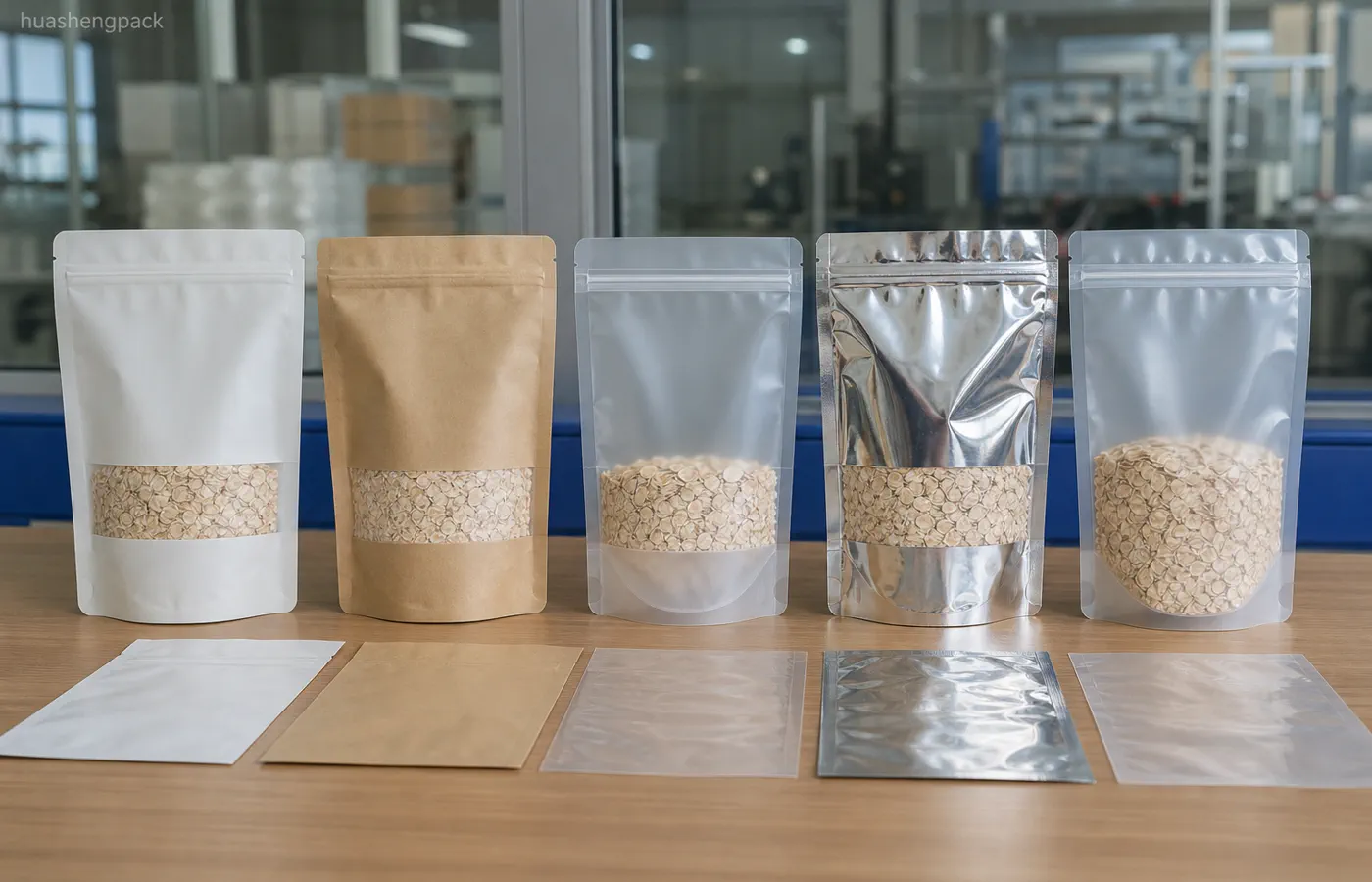
 Matte clear-window stand up pouch concept for oatmeal and cereal packaging.
Learn how to choose oatmeal and cereal stand up pouches with ALOX barrier film, matte finish, clear window design, zipper options and quotation checklist.
Direkte Antwort
Dieser Abschnitt gibt projektspezifische Hinweise zu oatmeal cereal stand up pouch alox window matte und verbindet die Beschaffung mit Produkt, Abfüllmethode und Zielmarkt. Diese technischen Bezeichnungen und Werte sind in der Spezifikation unverändert beizubehalten: ALOX, 24.
Technischer Leitfaden mit geprüften Quellen
2026-08-12 · Huasheng Packaging Technical Content Review
Evidenzumfang
Clear-window artwork, matte-varnish boundaries, transparent-barrier material directions and converted-pouch validation for oatmeal and cereal.
Geltungsbereich und Grenzen
No film, window size or matte design is universally suitable. Final clarity, barrier and shelf life require the exact artwork, laminate and filled pack.
Kernaussagen
- A clear window and an all-transparent barrier pouch are different routes.
- Conversion can change oxide-coated film performance.
- Final clarity depends on film, ink, white layer, varnish and the converted sample.
What Oatmeal and Cereal Brands Usually Need from Packaging
Bei der Bewertung von oatmeal cereal stand up pouch alox window matte sind zuerst Anwendung, technische Grenzen und der zu beherrschende Fehlermodus festzulegen. Diese technischen Bezeichnungen und Werte sind in der Spezifikation unverändert beizubehalten: 24 months.
What Is ALOX Barrier Film — and How It Compares with Other Barrier Options
Bei oatmeal cereal stand up pouch alox window matte darf die Auswahl nicht nur nach Preis oder Optik erfolgen; Material, Maschine und Einsatzbedingungen müssen zusammenpassen. Diese technischen Bezeichnungen und Werte sind in der Spezifikation unverändert beizubehalten: PET/PE, PET/VMPET/PE, PET/AL/PE, VMPET/PE, ALOX, PET, VMPET, EVOH, OTR, WVTR, PE, AL, SiOx.
Transparent and opaque barrier directions should be evaluated against the oatmeal product, window design and storage target.Clear Window Design for High Barrier Pouches — Useful but Needs Careful Planning
Für oatmeal cereal stand up pouch alox window matte sind die Optionen nach Funktion und geforderter Leistung zu vergleichen und mit einem repräsentativen Muster oder Produktionsversuch zu bestätigen. Diese technischen Bezeichnungen und Werte sind in der Spezifikation unverändert beizubehalten: VMPET.
Matte Finish and Soft-Touch Appearance for Premium Cereal Packaging
Die Qualitätskontrolle für oatmeal cereal stand up pouch alox window matte benötigt messbare Kriterien für Material, Druck, Siegelung und das Verhalten der gefüllten Verpackung. Diese technischen Bezeichnungen und Werte sind in der Spezifikation unverändert beizubehalten: OPP, PET, COF.
What to Prepare Before Requesting an Oatmeal or Cereal Pouch Quotation
Für eine belastbare Kalkulation von oatmeal cereal stand up pouch alox window matte werden Produktdaten, Format, Aufbau, Menge, Druckdaten, Maschine und Zielmarkt benötigt. Diese technischen Bezeichnungen und Werte sind in der Spezifikation unverändert beizubehalten: ALOX, VMPET, 250g, 500g, 1kg, 2kg, 12 months, 18 months, 24 months.
Verwandte Produkte
Verwandte Verpackungsleitfäden
Claim-to-source evidence matrix
| Reviewed claim | Support | Sources | Boundary |
|---|
| Printing, lamination and pouch conversion can change transparent oxide-coated film performance. | direct | [1], [2] | Commercial grades still require supplier and converted-sample data. |
| EVOH oxygen-barrier behavior is sensitive to humidity and laminate design. | direct | [3] | No universal EVOH structure or thickness is assigned. |
| Transparent candidates should be compared with defined OTR and WVTR conditions. | direct | [4], [5] | Transmission data does not establish visual clarity or product shelf life by itself. |
JSON · CSV
Technische Quellen
- Conversion of Aluminium Oxide Coated Films for Food Packaging Applications - From a Single Layer Material to a Complete Pouch · Food Packaging and Shelf Life · peer-reviewed
AlOx-coated transparent film performance can change during printing, lamination and pouch conversion - Aluminium Oxide Barrier Films on Polymeric Web and Their Conversion for Packaging Applications · Thin Solid Films · peer-reviewed
AlOx and SiOx are transparent inorganic barrier directions whose final behavior depends on coating and conversion - Effect of Humidity on Mechanical, Thermal and Barrier Properties of EVOH Films · Journal of Membrane Science · peer-reviewed
EVOH oxygen-barrier behavior is sensitive to moisture and therefore to laminate design and use conditions - ASTM D3985-24: Oxygen Gas Transmission Rate Through Plastic Film and Sheeting Using a Coulometric Sensor · ASTM International · standard
OTR is measured for a defined specimen under a named method and agreed test conditions - ASTM F1249-25: Water Vapor Transmission Rate Through Plastic Film and Sheeting Using a Modulated Infrared Sensor · ASTM International · standard
WVTR applies to defined flexible barrier specimens and stated test conditions
Häufig gestellte Fragen
What pouch type is suitable for oatmeal and cereal packaging?
Stand up zipper pouches and flat bottom pouches are both excellent for oatmeal and cereal. Stand up pouches work well for smaller portions (250g–1kg) and provide good shelf display. Flat bottom pouches have a box-like shape with five printable panels and larger capacity, suitable for family-size portions (500g–2kg) and premium shelf presentation.
Is ALOX barrier film suitable for transparent high barrier food packaging?
ALOX (aluminum oxide) coated film is one transparent high-barrier direction. It provides improved oxygen and moisture barrier compared with uncoated PET film while remaining transparent. It is not the only option — EVOH co-extruded film is another path. The actual barrier performance depends on the specific film grade, coating quality, lamination structure and thickness. Discuss your shelf life target with the supplier to evaluate whether an ALOX-based structure is appropriate.
What is the difference between ALOX, VMPET and aluminum foil barrier?
ALOX (on PET film): transparent, improved barrier vs uncoated film, allows product visibility, higher material cost than basic PET/PE. VMPET (metallized PET): opaque with metallic look, good moisture and light barrier, moderate cost. Aluminum foil (AL): opaque, highest moisture/oxygen/light barrier among common structures, highest cost. ALOX is chosen when transparency and barrier are both needed. VMPET is chosen for metallic appearance and good barrier. Aluminum foil is chosen when maximum protection is required and transparency is not needed.
Can a clear window be added to a high barrier pouch?
Yes, but with a trade-off. The window area does not have the opaque barrier layers (VMPET or aluminum foil) that the rest of the pouch has, so the window portion has lower barrier performance. For long shelf life targets, the window creates a barrier difference that should be evaluated. A smaller window minimizes the barrier impact. For ALOX-based transparent structures, the entire pouch can be transparent while maintaining improved barrier — a window may not be needed at all.
Is matte finish suitable for oatmeal stand up pouches?
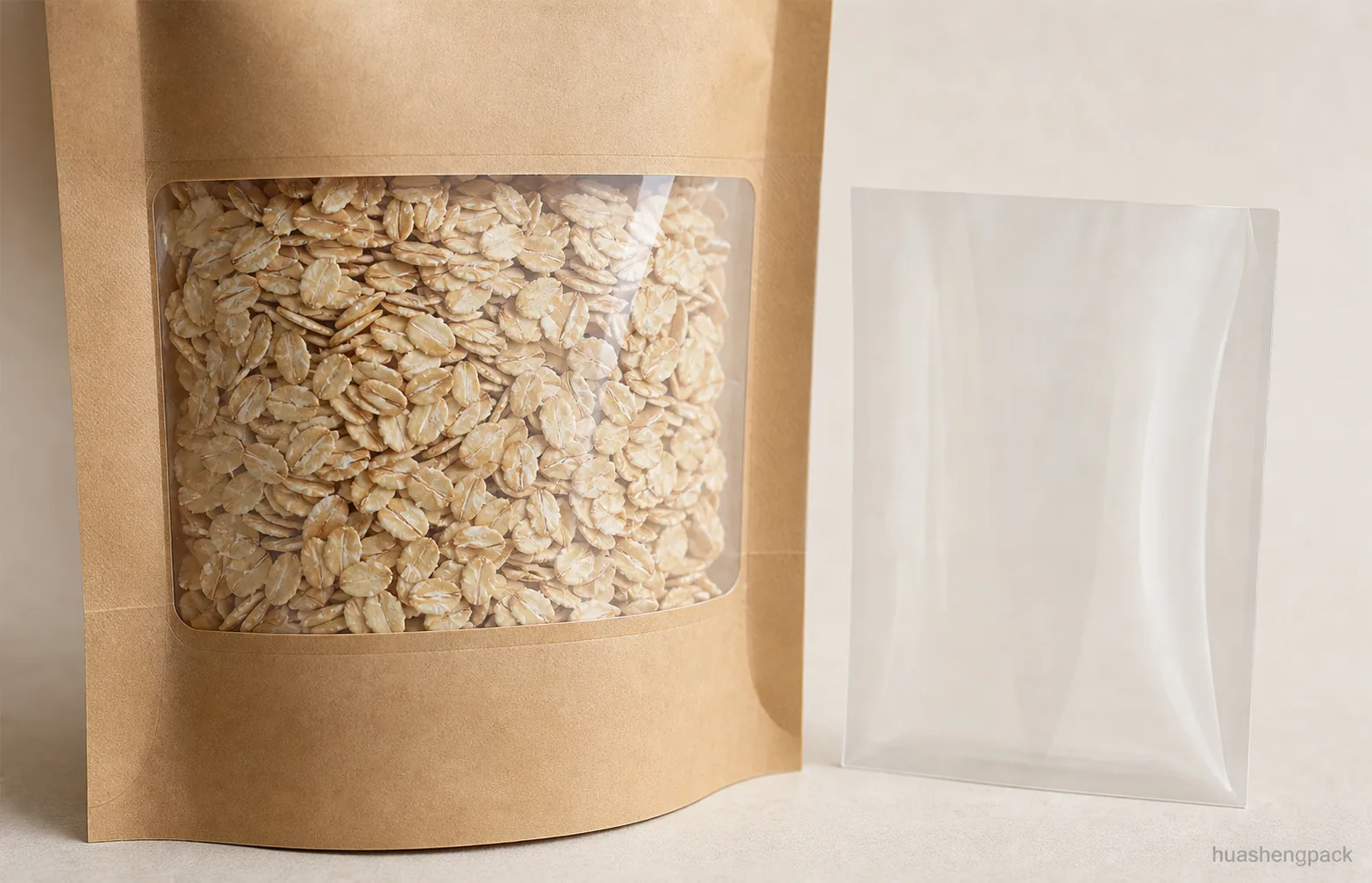
Matte finish is popular for premium oatmeal, granola and health food brands. It provides an understated, non-shiny appearance that many consumers associate with natural and premium products. Considerations: matte surfaces may show scratches more visibly than glossy surfaces, and matte films are typically more expensive. Soft-touch coating adds a velvety tactile feel at additional cost.
Can packaging guarantee 24-month shelf life for oatmeal?
Packaging material can support moisture and oxygen barrier performance, but the actual achievable shelf life depends on the product itself: moisture content, fat level, formulation (preservatives, antioxidants), processing environment, filling atmosphere, seal integrity, and storage/distribution temperature. Packaging is one factor in the shelf life equation. A 24-month target should be validated through product-specific shelf life testing under realistic storage conditions.
What information is needed for an oatmeal pouch quotation?
Provide: product type and characteristics, filling weight, target shelf life, pouch type and size (or filling weight for size recommendation), zipper preference, clear window requirement (size/position if yes), barrier preference (ALOX, VMPET, aluminum foil or open to recommendation), surface finish (matte/gloss/soft-touch), printing colors, artwork status, quantity, and target market. A sample photo of existing or reference packaging is very helpful.