Retort Pouch Material Structure Guide for High Temperature Sterilization
Technische Redaktion von Huasheng Packaging · Veröffentlicht: · Aktualisiert:
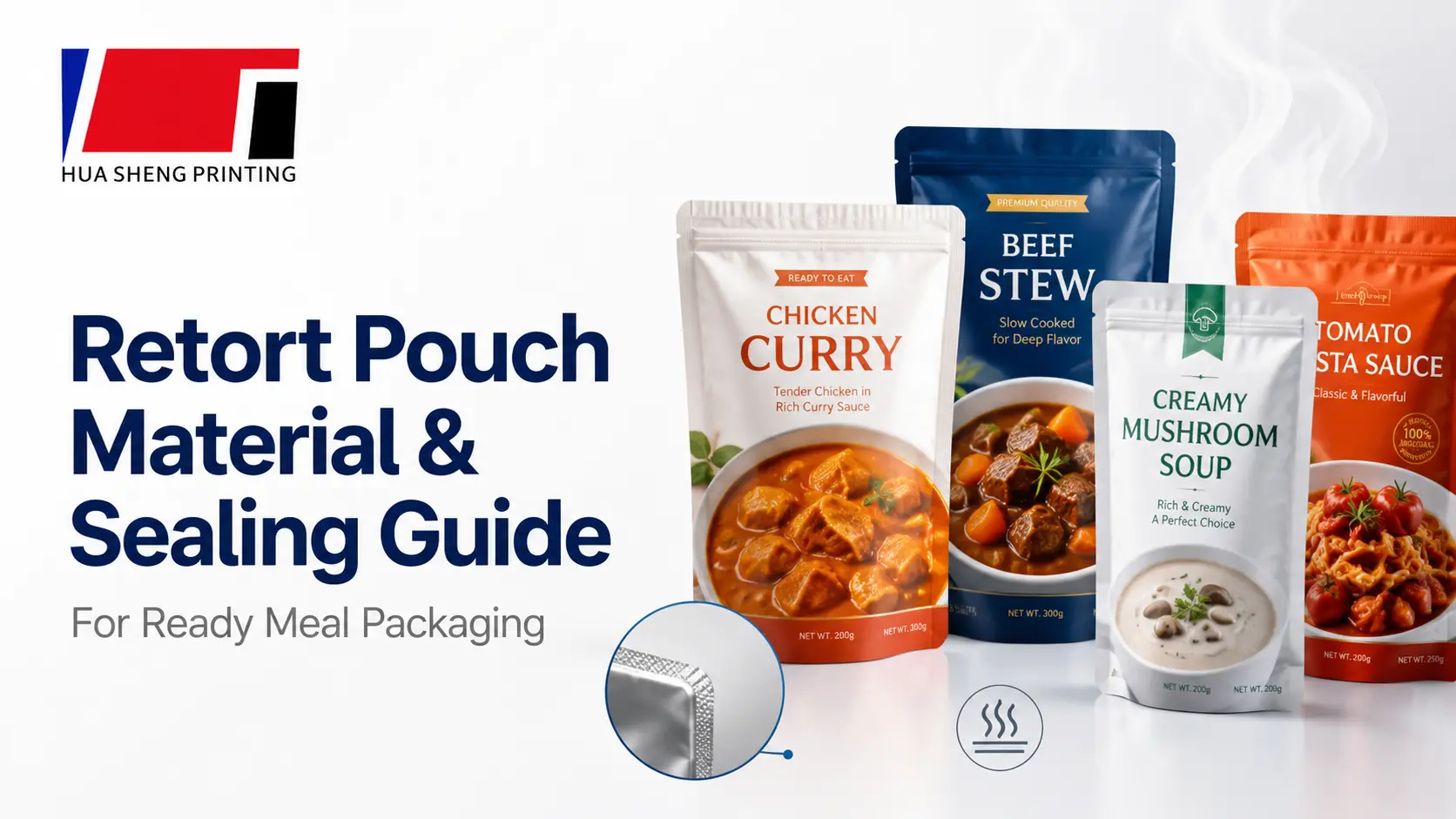 Technical guide visual for Retort Pouch Material Layers: PET, Aluminum Foil, Nylon and RCPP.
Retort pouch material structure guide for 121-135 degree sterilization. Explains PET/AL/NY/CPP, PET/NY/CPP, sealing strength and quality control tests.
Direkte Antwort
Dieser Abschnitt gibt projektspezifische Hinweise zu Retortenbeutel Materialstruktur-Leitfaden für Hochtemperatur und verbindet die Beschaffung mit Produkt, Abfüllmethode und Zielmarkt.
Why Retort Pouch Material Structure Matters
Bei der Bewertung von Retortenbeutel Materialstruktur-Leitfaden für Hochtemperatur sind zuerst Anwendung, technische Grenzen und der zu beherrschende Fehlermodus festzulegen. Diese technischen Bezeichnungen und Werte sind in der Spezifikation unverändert beizubehalten: 121°C, 135°C.
Common Retort Pouch Failures and Their Causes
Bei Retortenbeutel Materialstruktur-Leitfaden für Hochtemperatur darf die Auswahl nicht nur nach Preis oder Optik erfolgen; Material, Maschine und Einsatzbedingungen müssen zusammenpassen. Diese technischen Bezeichnungen und Werte sind in der Spezifikation unverändert beizubehalten: CPP, RCPP, AL, VMPET, 1, 2, 3, 4, 5, 6.
Common Retort Pouch Material Structures
Für Retortenbeutel Materialstruktur-Leitfaden für Hochtemperatur sind die Optionen nach Funktion und geforderter Leistung zu vergleichen und mit einem repräsentativen Muster oder Produktionsversuch zu bestätigen. Diese technischen Bezeichnungen und Werte sind in der Spezifikation unverändert beizubehalten: PET/AL/CPP, PET/NY/CPP, PET/AL/NY/CPP, PET, AL, CPP, NY, 121°C.
Quality Control Points for Retort Pouch Production
Die Qualitätskontrolle für Retortenbeutel Materialstruktur-Leitfaden für Hochtemperatur benötigt messbare Kriterien für Material, Druck, Siegelung und das Verhalten der gefüllten Verpackung. Diese technischen Bezeichnungen und Werte sind in der Spezifikation unverändert beizubehalten: QC, AND, NY, 121°C, 135°C.
What to Prepare Before Retort Pouch Quotation
Für eine belastbare Kalkulation von Retortenbeutel Materialstruktur-Leitfaden für Hochtemperatur werden Produktdaten, Format, Aufbau, Menge, Druckdaten, Maschine und Zielmarkt benötigt. Diese technischen Bezeichnungen und Werte sind in der Spezifikation unverändert beizubehalten: MOQ, AI, PDF, PSD, 1, 2, 121°C, 135°C, 3, 4, 5, 6, 7, 8, 9, 10, 30,000, 11, 12, 13.
Verwandte Produkte
Verwandte Verpackungsleitfäden
Häufig gestellte Fragen
What material is used for retort pouches?
Retort pouches use multi-layer laminated structures with heat-resistant outer layers (PET or NY), barrier layers (AL or VMPET), and retort-grade inner sealing layers (CPP or RCPP). Common structures include PET/AL/CPP, PET/NY/CPP, PET/AL/NY/CPP and customized retort structures depending on sterilization temperature and product requirements.
Can retort pouches withstand 121°C sterilization?
Yes. Standard retort pouch structures using retort-grade CPP sealing layers and appropriate adhesives are designed for 121°C sterilization. The specific structure, sealing conditions and sterilization time should be confirmed and tested with the actual product before bulk production.
What is the difference between 121°C and 135°C retort pouch structures?
135°C sterilization places higher demands on material heat resistance, sealing layer stability and adhesive performance. Structures for 135°C typically require higher-grade CPP or RCPP sealing layers and may need additional material reinforcement. The structure must be specifically designed and tested for the target sterilization temperature — a 121°C structure should not be assumed suitable for 135°C.
Can retort pouches be transparent?
Yes. Transparent retort structures without aluminum foil (such as PET/NY/CPP) are available for products where consumer visibility or microwave reheating is important. However, barrier performance is lower without the aluminum layer, so shelf life expectations should be discussed and confirmed.
What testing should be done before mass production?
Key tests include: sealing strength before and after simulated sterilization, lamination strength after sterilization, leakage test, pouch appearance after sterilization, puncture resistance if applicable, and most importantly, testing with the customer actual filling product and sterilization process. We recommend a pilot production run with full sterilization testing before bulk order confirmation.
What information is needed for a retort pouch quotation?
Please provide: product type, sterilization temperature and time, sterilization equipment type, filling weight, preferred pouch size and format, expected shelf life, storage condition, material structure preference if known, quantity, printing colors, artwork file and target market.