Clear Window Pouch Design Guide: Window Position, Barrier Impact and Sealing Considerations
Equipo de revisión técnica de Huasheng Packaging · Publicado: · Actualizado:
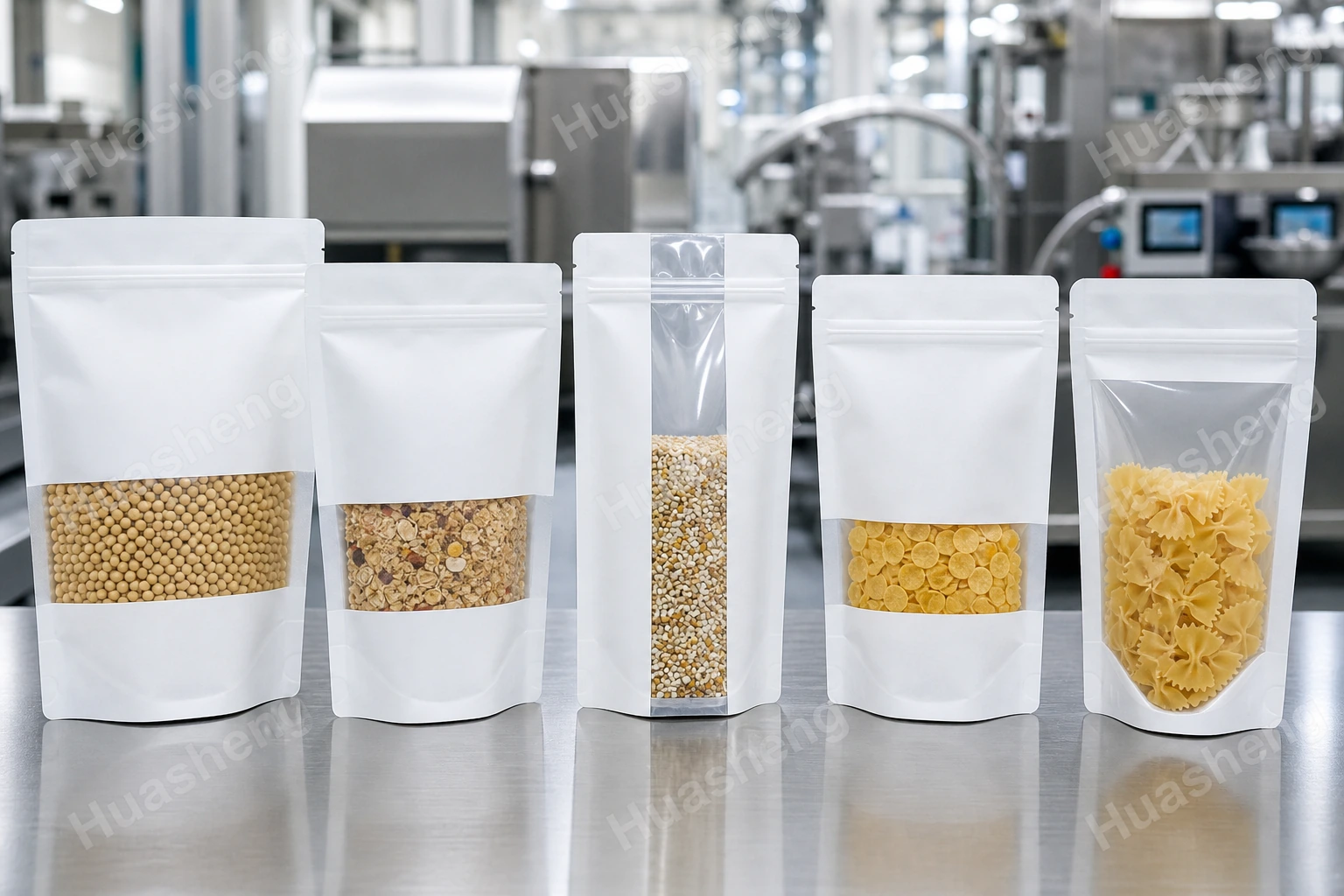 Clear window pouch hero image for barrier and sealing guide.
Learn how to design clear window pouches for dry food, snacks and cereals, including window position, barrier impact, sealing area and quotation details.
Respuesta directa
Esta sección ofrece orientación específica sobre clear window pouch design barrier sealing y vincula la compra con el producto real, el método de llenado y el mercado de destino.
Guía técnica con evidencia revisada
2026-08-11 · Huasheng Packaging Technical Content Review
Alcance de la evidencia
Window artwork, transparent-barrier direction, seal-area control and the evidence needed before a window pouch is approved.
Alcance y limitaciones
No window size, laminate or varnish design is universally suitable. Final clarity, barrier and seals require the actual artwork, converted sample and filled-pack validation.
Conclusiones clave
- Window clarity depends on film, ink coverage, varnish and conversion.
- Transparent-barrier film data must be checked after printing, lamination and pouch making.
- Keep window, white-ink, varnish, zipper and seal boundaries explicit in the approved artwork.
Why Food Brands Use Clear Window Pouches
Al evaluar clear window pouch design barrier sealing, defina primero el uso real, las limitaciones técnicas y el modo de fallo que debe controlar la especificación.
Window Position: Front Lower Window, Side Window or Shaped Window
En un proyecto de clear window pouch design barrier sealing, no decida solo por precio o apariencia; revise también la compatibilidad del material, la máquina y las condiciones de uso.
Barrier Impact of Clear Window Design
Para clear window pouch design barrier sealing, compare las opciones por función y rendimiento requerido, y confirme la elección con una muestra o prueba representativa de producción. Mantenga sin cambios estos términos técnicos y valores en la especificación: ALOX, EVOH, SiOx.
 Clear window and barrier structure comparison for dry food packaging.
Sealing and Production Considerations
El control de calidad de clear window pouch design barrier sealing necesita criterios medibles para material, impresión, sellado y comportamiento del envase lleno.
Sealing area and safe zone concept for window pouches.What to Prepare Before Quotation
Para cotizar clear window pouch design barrier sealing con precisión, prepare datos del producto, tamaño, estructura, cantidad, arte, máquina y mercado objetivo.
Productos Relacionados
Guías de Envasado Relacionadas
Claim-to-source evidence matrix
| Reviewed claim | Support | Sources | Boundary |
|---|
| Transparent oxide-coated film performance can change during conversion into a printed laminate and pouch. | direct | [1] | The cited study concerns AlOx-coated films and does not qualify every transparent substrate. |
| EVOH barrier behavior must be interpreted with humidity and laminate design. | direct | [2] | The article does not assign a universal EVOH thickness or target. |
| Barrier decisions require defined OTR/WVTR methods and specimens rather than visual transparency alone. | contextual | [3], [4] | The methods support measurement discipline, not a shelf-life guarantee. |
| Window design must preserve a seal system that can be validated on the final package. | contextual | [5] | Exact clearance and acceptance limits remain project-specific. |
JSON · CSV
Evidencia técnica y referencias
- Conversion of Aluminium Oxide Coated Films for Food Packaging Applications - From a Single Layer Material to a Complete Pouch · Food Packaging and Shelf Life · peer-reviewed
AlOx-coated transparent film performance can change during printing, lamination and pouch conversion - Effect of Humidity on Mechanical, Thermal and Barrier Properties of EVOH Films · Journal of Membrane Science · peer-reviewed
EVOH oxygen-barrier behavior is sensitive to moisture and therefore to laminate design and use conditions - ASTM D3985-24: Oxygen Gas Transmission Rate Through Plastic Film and Sheeting Using a Coulometric Sensor · ASTM International · standard
OTR is measured for a defined specimen under a named method and agreed test conditions - ASTM F1249-25: Water Vapor Transmission Rate Through Plastic Film and Sheeting Using a Modulated Infrared Sensor · ASTM International · standard
WVTR applies to defined flexible barrier specimens and stated test conditions - Understanding the Factors Affecting the Seal Integrity in Heat Sealed Flexible Food Packages: A Review · Packaging Technology and Science · peer-reviewed
Seal integrity is affected by material properties, process parameters and contamination
Preguntas Frecuentes
Can high barrier pouches have a clear window?
Yes, but the window area changes barrier behavior and should be reviewed against the product and shelf-life target.
Is a larger window always better?
No. A larger window shows more product, but it can reduce the barrier area and create more design risk near the seals.
Where should the window be placed?
The lower front area is common, but side windows or shaped windows can also work depending on the pouch style and artwork.
Does a clear window affect shelf life?
It can. The window design should be checked together with the product, filling and storage conditions before final order.
Will matte varnish affect a transparent window?
It may reduce visual clarity if it covers the window. Buyers should confirm whether the window remains clear and whether matte varnish is applied only outside the window area.
How should the artwork show a clear window?
The window should be identified as an ink-free area, and opaque printed graphics may need a separate white-ink layer. The final setup should be checked against the supplier dieline and production sample.
What products are suitable for window pouches?
Dry food, cereal, snacks and pet food often use window pouches when product visibility is important.
What information is needed for quotation?
Please provide product type, bag type, filling weight, target shelf life, window size and position, material preference, quantity, artwork and target market.