Retort Pouch Material Structure Guide for High Temperature Sterilization
Équipe de révision technique Huasheng Packaging · Publié: · Mis à jour:
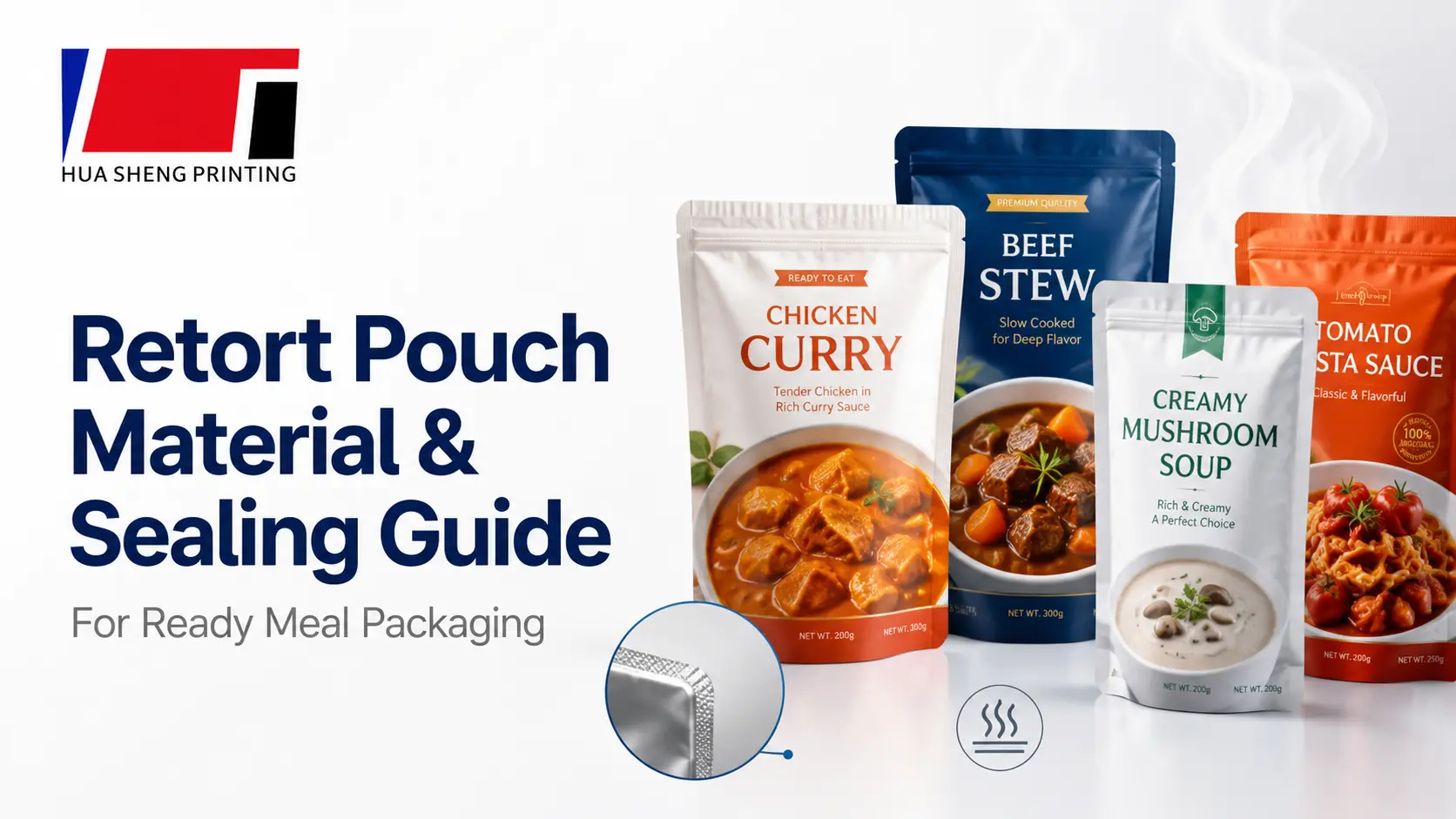 Technical guide visual for Retort Pouch Material Layers: PET, Aluminum Foil, Nylon and RCPP.
Retort pouch material structure guide for 121-135 degree sterilization. Explains PET/AL/NY/CPP, PET/NY/CPP, sealing strength and quality control tests.
Réponse directe
Cette section fournit des repères spécifiques sur Guide des structures de matériaux pour poches retort haute température et relie l’achat au produit réel, au mode de remplissage et au marché visé.
Why Retort Pouch Material Structure Matters
Pour évaluer Guide des structures de matériaux pour poches retort haute température, définissez d’abord l’usage réel, les contraintes techniques et le mode de défaillance à maîtriser. Conservez sans modification ces termes techniques et ces valeurs dans la spécification : 121°C, 135°C.
Common Retort Pouch Failures and Their Causes
Pour Guide des structures de matériaux pour poches retort haute température, ne choisissez pas uniquement selon le prix ou l’apparence ; vérifiez aussi la compatibilité du matériau, de la machine et des conditions d’utilisation. Conservez sans modification ces termes techniques et ces valeurs dans la spécification : CPP, RCPP, AL, VMPET, 1, 2, 3, 4, 5, 6.
Common Retort Pouch Material Structures
Pour Guide des structures de matériaux pour poches retort haute température, comparez les solutions selon la fonction et la performance requise, puis confirmez le choix avec un échantillon ou un essai représentatif. Conservez sans modification ces termes techniques et ces valeurs dans la spécification : PET/AL/CPP, PET/NY/CPP, PET/AL/NY/CPP, PET, AL, CPP, NY, 121°C.
Quality Control Points for Retort Pouch Production
Le contrôle qualité de Guide des structures de matériaux pour poches retort haute température exige des critères mesurables pour le matériau, l’impression, le scellage et le comportement de l’emballage rempli. Conservez sans modification ces termes techniques et ces valeurs dans la spécification : QC, AND, NY, 121°C, 135°C.
What to Prepare Before Retort Pouch Quotation
Pour chiffrer précisément Guide des structures de matériaux pour poches retort haute température, préparez les données produit, le format, la structure, la quantité, le fichier graphique, la machine et le marché cible. Conservez sans modification ces termes techniques et ces valeurs dans la spécification : MOQ, AI, PDF, PSD, 1, 2, 121°C, 135°C, 3, 4, 5, 6, 7, 8, 9, 10, 30,000, 11, 12, 13.
Produits associés
Guides d'emballage associés
Questions fréquentes
What material is used for retort pouches?
Retort pouches use multi-layer laminated structures with heat-resistant outer layers (PET or NY), barrier layers (AL or VMPET), and retort-grade inner sealing layers (CPP or RCPP). Common structures include PET/AL/CPP, PET/NY/CPP, PET/AL/NY/CPP and customized retort structures depending on sterilization temperature and product requirements.
Can retort pouches withstand 121°C sterilization?
Yes. Standard retort pouch structures using retort-grade CPP sealing layers and appropriate adhesives are designed for 121°C sterilization. The specific structure, sealing conditions and sterilization time should be confirmed and tested with the actual product before bulk production.
What is the difference between 121°C and 135°C retort pouch structures?
135°C sterilization places higher demands on material heat resistance, sealing layer stability and adhesive performance. Structures for 135°C typically require higher-grade CPP or RCPP sealing layers and may need additional material reinforcement. The structure must be specifically designed and tested for the target sterilization temperature — a 121°C structure should not be assumed suitable for 135°C.
Can retort pouches be transparent?
Yes. Transparent retort structures without aluminum foil (such as PET/NY/CPP) are available for products where consumer visibility or microwave reheating is important. However, barrier performance is lower without the aluminum layer, so shelf life expectations should be discussed and confirmed.
What testing should be done before mass production?
Key tests include: sealing strength before and after simulated sterilization, lamination strength after sterilization, leakage test, pouch appearance after sterilization, puncture resistance if applicable, and most importantly, testing with the customer actual filling product and sterilization process. We recommend a pilot production run with full sterilization testing before bulk order confirmation.
What information is needed for a retort pouch quotation?
Please provide: product type, sterilization temperature and time, sterilization equipment type, filling weight, preferred pouch size and format, expected shelf life, storage condition, material structure preference if known, quantity, printing colors, artwork file and target market.