Résistance des soudures des emballages souples : pourquoi elle compte pour l’alimentaire
Équipe de révision technique Huasheng Packaging · Publié:
 Seal results require the test method, specimen conditions, failure mode and filled-package validation context.
Examinez la portée de l’essai, les conditions des éprouvettes, les risques de soudure, la validation en ligne et le plan d’acceptation.
Réponse directe
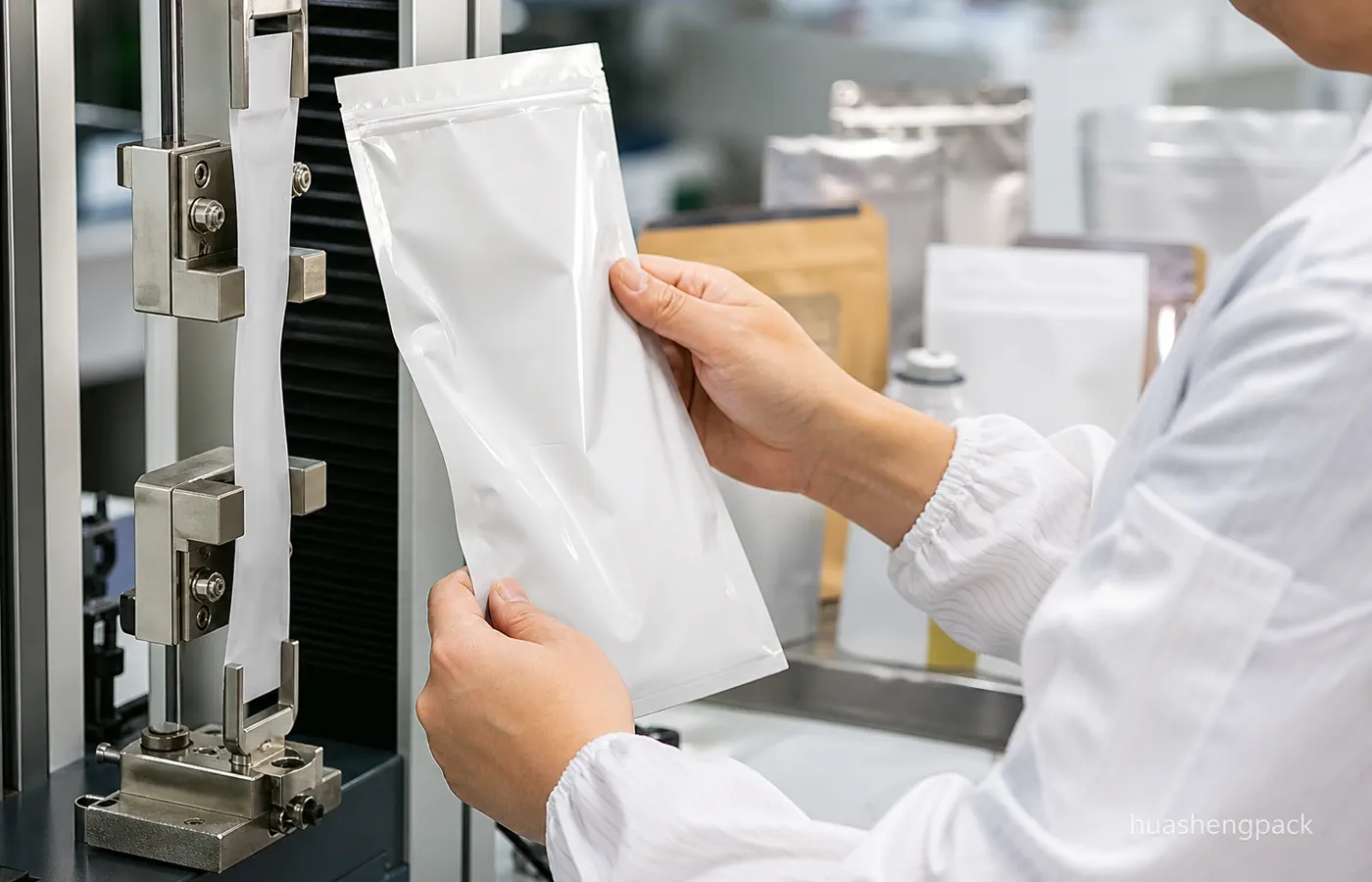
Seal strength testing measures how a prepared seal specimen separates under defined test conditions. A result is only comparable when the method, specimen width, conditioning, pull rate, seal direction and failure mode are recorded together.
There is no single seal-strength value that is suitable for every pouch. Product weight, seal width, laminate structure, filling contamination, distribution stress and opening requirements should be considered before an acceptance range is agreed.
Guide technique avec preuves examinées
2026-08-21 · Huasheng Packaging Technical Content Review
Portée des preuves
Seal-strength purpose, specimen and condition records, failure-mode interpretation, laboratory-to-production boundaries and a buyer approval record for flexible packaging.
Portée et limites
The guide does not prescribe a universal force value, sample count, material structure, machine setting or shelf-life conclusion. Public method summaries do not replace licensed standards or project-specific validation.
Points clés
- Seal-strip force and failure mode are process evidence, not a complete leak or shelf-life verdict.
- Laboratory heat-seal screening supplies a starting relationship rather than production-line approval.
- Visual, strength and gross-leak methods answer different questions and require a project-specific acceptance plan.
What seal strength testing measures
Seal strength testing measures how a prepared seal specimen separates under defined test conditions. A result is only comparable when the method, specimen width, conditioning, pull rate, seal direction and failure mode are recorded together.
There is no single seal-strength value that is suitable for every pouch. Product weight, seal width, laminate structure, filling contamination, distribution stress and opening requirements should be considered before an acceptance range is agreed.
Why flexible packaging seals become weak
Weak seals may result from an unsuitable sealing layer, insufficient dwell time, pressure or temperature, excessive heat damage, wrinkles, product contamination, poor jaw alignment or variation in film thickness. The observed failure location helps distinguish an interfacial seal failure from film tearing or laminate failure.
A flat laboratory specimen can confirm material behavior, but it does not reproduce every production risk. Filled samples should also be checked for channels, folds, zipper or spout interference and seal contamination under representative packing conditions.
Seal risks differ by pouch format
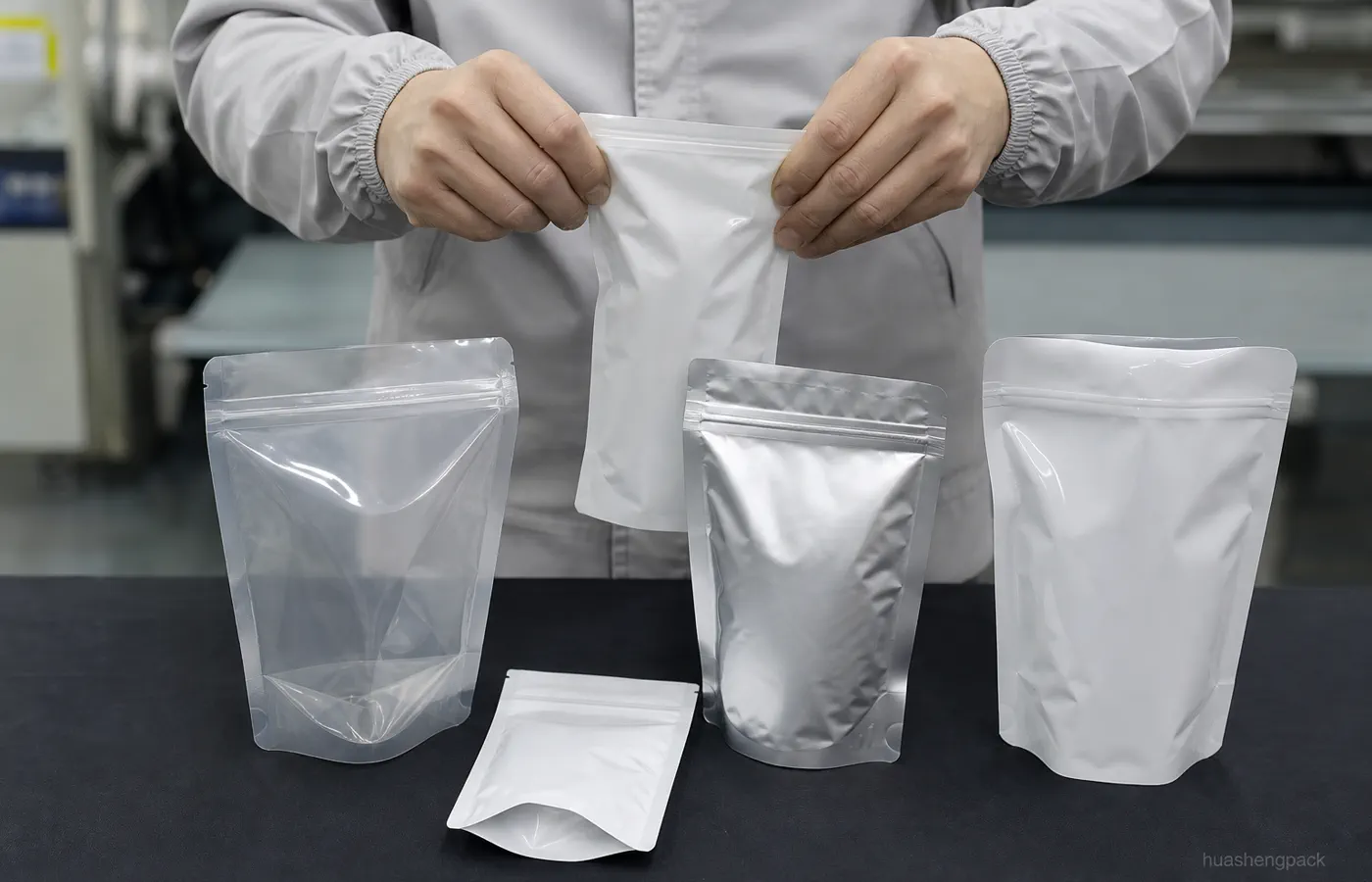
Three-side-seal and stand-up pouches require consistent side, bottom and top seals. Zipper pouches also need enough clearance between the zipper and final top seal. Spout pouches require separate review of the fitment weld and pouch seals. Retort pouches require validation before and after the intended thermal process.
Confirm the heat-seal window on the actual line
The usable heat-seal window depends on the laminate, sealant layer, jaw design, pressure, dwell time and line speed. A setting that works on a hand sealer may not provide stable hot tack, tracking and seal appearance on a production machine.
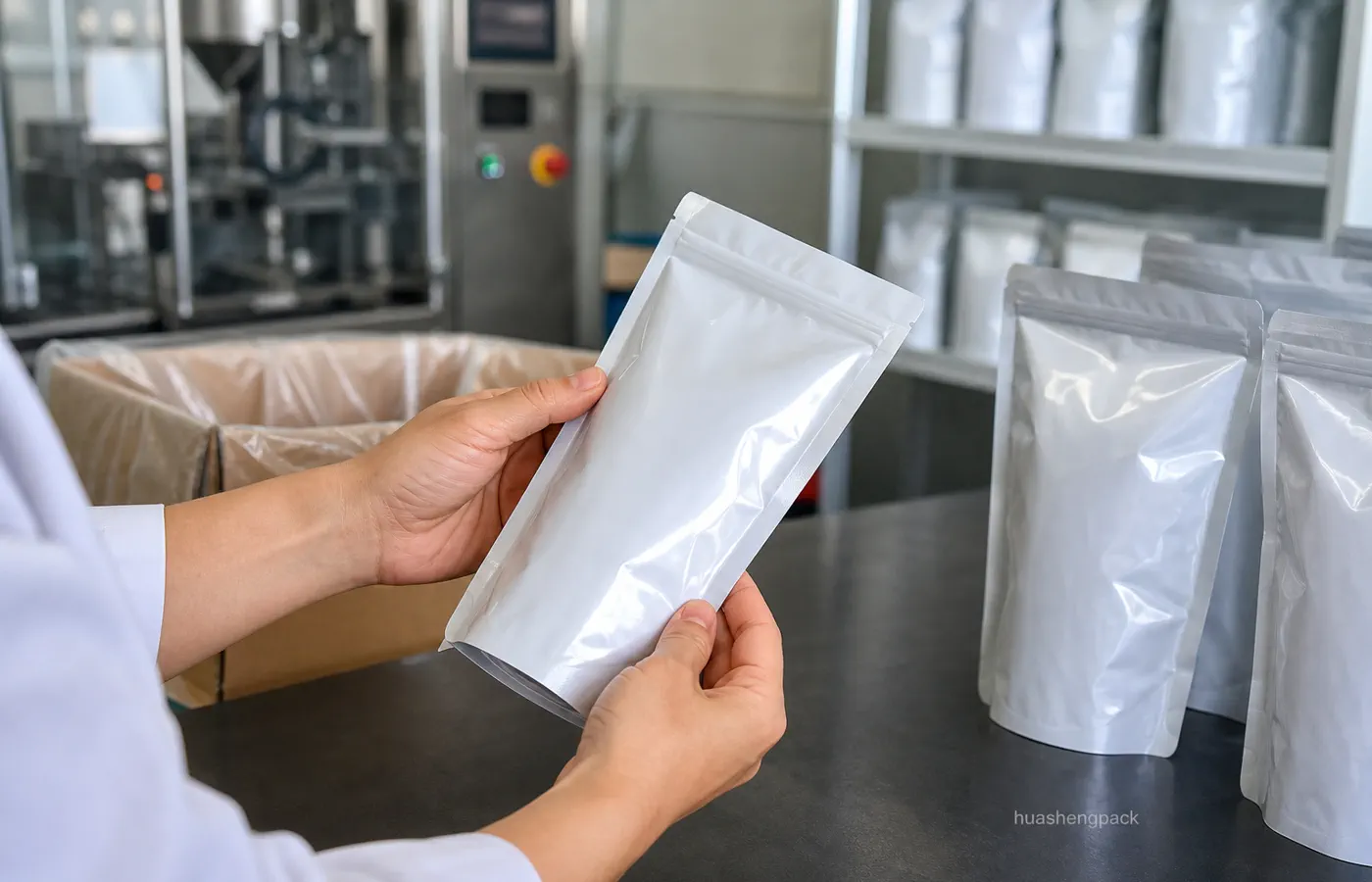
Before bulk approval, trial the proposed film or pouch with the actual product or a representative fill. Record machine settings and inspect seal continuity, leakage, deformation and opening behavior after conditioning and relevant handling tests.
What buyers should include in an approval plan
Define the test method, sample conditioning, specimen direction, number of specimens, reporting unit, failure mode and acceptance range. Also record the product, filling weight, pouch format, material structure, seal width and production settings used to prepare the samples.
Final acceptance should combine measured seal results with filled-pack checks appropriate to the product and process. Material structure and nominal thickness alone cannot confirm finished-package performance.
Produits associés
Guides d'emballage associés
Claim-to-source evidence matrix
| Reviewed claim | Support | Sources | Boundary |
|---|
| Seal strength is a quantitative process measure interpreted with the specimen, test technique and failure mode. | direct | [1] | The method does not establish a universal force target or prove whole-package leak integrity. |
| Laboratory heat-seal relationships provide starting information and do not replace production-equipment validation. | direct | [2] | Actual material, product, jaw geometry, speed and operating conditions remain project inputs. |
| Visual inspection can identify potential seal anomalies but cannot establish their root cause by itself. | direct | [3] | Visibility depends on the package, defect and inspection conditions. |
| Gross-leak examination and seal-strength measurement answer different package questions. | direct | [4], [1] | The project must select methods and acceptance rules for the relevant failure risks. |
JSON · CSV
Preuves techniques et références
- ASTM F88/F88M-23: Seal Strength of Flexible Barrier Materials · ASTM International · standard
Seal strength is a quantitative process measure whose interpretation depends on the specimen, technique and failure mode - ASTM F2029-16(2021): Laboratory Heat Seals for Determination of Heat Sealability of Flexible Barrier Materials · ASTM International · standard
Laboratory heat-seal curves provide starting relationships and do not replace production-equipment validation - ASTM F1886/F1886M-25: Integrity of Seals for Flexible Packaging by Visual Inspection · ASTM International · standard
Visual inspection can identify potential seal anomalies within the method scope but does not establish their root cause - ASTM F2096-11(2019): Detecting Gross Leaks in Packaging by Internal Pressurization · ASTM International · standard
Internal pressurization is a destructive method for examining packages for gross leaks and is distinct from seal-strength measurement
Questions fréquentes
Is higher seal strength always better?
No. The acceptable range should balance package integrity, material behavior and opening requirements for the actual product and process.
Can seal strength results from different laboratories be compared directly?
Only when the test method, specimen preparation, conditioning, pull rate, width, direction and reporting method are aligned.
Why should the failure mode be recorded?
The force value alone does not show whether the seal interface opened, the film tore or the laminate failed. Failure mode helps identify the underlying risk.
Should roll film be tested on the packing machine?
A representative machine trial is recommended because line speed, jaw geometry, dwell time, web handling and contamination can affect the finished seal.