Kemasan dendeng dan camilan daging: stok atau cetak khusus
Tim tinjauan konten teknis Huasheng Packaging · Terbit: · Diperbarui:
 Stock pouch and custom printed pouch options for meat snack brands.
Bandingkan pouch stok berlabel dan pouch cetak khusus berdasarkan barrier, MOQ, peluncuran, dan data penawaran.
Jawaban langsung
Dendeng memerlukan perlindungan dari kelembapan dan oksigen, sedangkan volume awal merek baru mungkin belum cocok untuk cetak khusus. Pilih menurut tahap, anggaran, dan pertumbuhan.
Mengapa kemasan dendeng berbeda
Daging kering masih mengandung kelembapan, minyak, dan protein sehingga risikonya berbeda dari keripik atau biskuit.
Persyaratan utama:
- Kelembapan: cocokkan barrier dengan aktivitas air untuk menjaga tekstur dan stabilitas.
- Oksigen: oksidasi lemak dapat mengubah rasa dan mutu.
- Minyak: pastikan lapisan seal terhadap kadar minyak sebenarnya.
- Integritas seal: seal kuat dan konsisten mencegah bocor dan retur.
- Tusukan: uji tepi keras selama penanganan, pengiriman, dan pajangan.
- Nitrogen: bila oksigen headspace diganti, barrier dan seal harus menjaga atmosfer.
Merek atau produsen makanan wajib memvalidasi umur simpan dengan formula, aktivitas air, proses, struktur, dan penyimpanan; pouch saja tidak dapat menjamin.
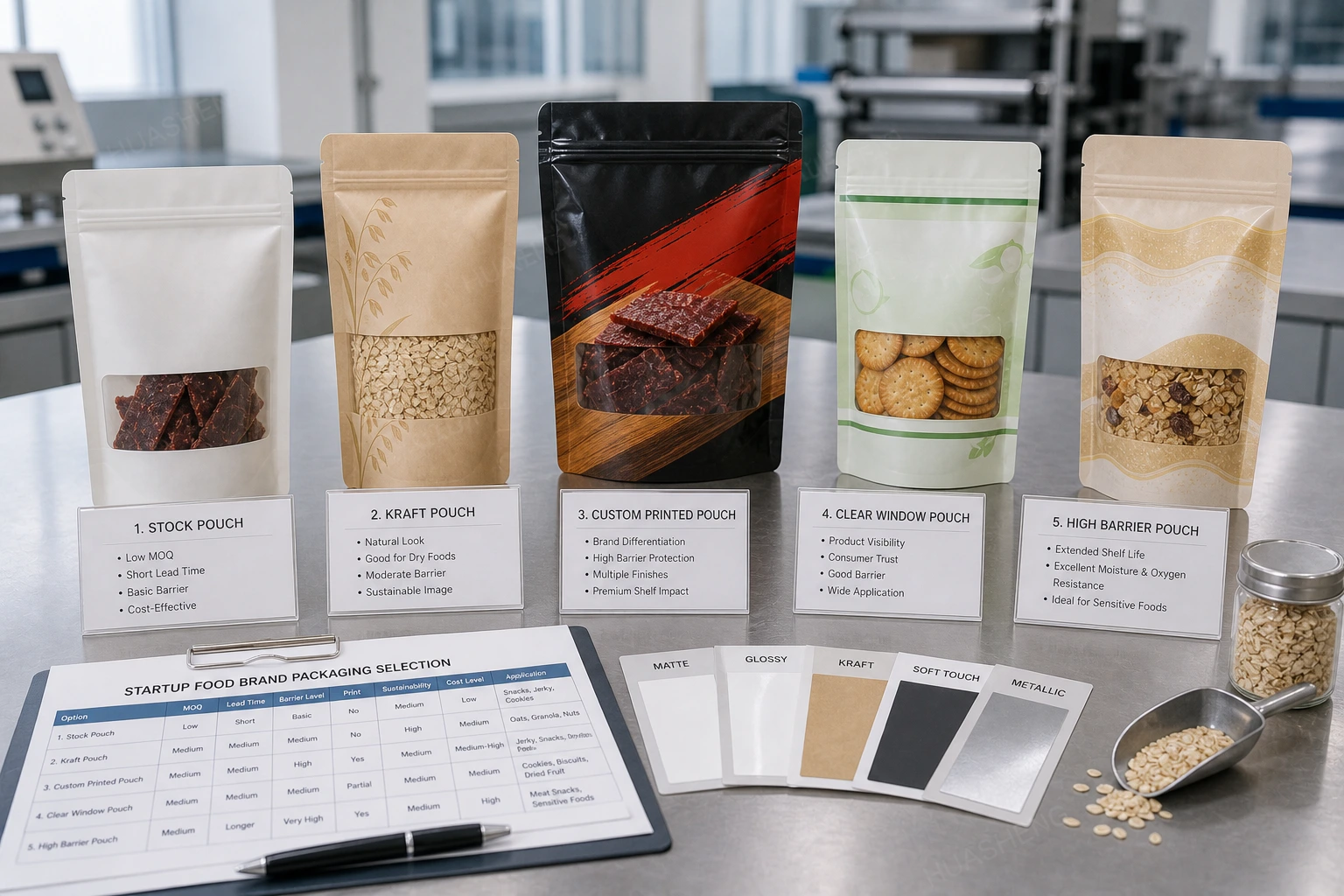
Opsi 1: pouch stok dengan label
Pouch stok dibuat lebih dahulu dalam ukuran, bahan, dan warna umum lalu diberi label.
Saat sesuai:
- Peluncuran awal: menguji permintaan sebelum produksi besar.
- Jumlah kecil: menghindari MOQ cetak dan biaya silinder.
- Desain berubah: memperbarui label tanpa silinder baru.
- Ketersediaan: rencanakan stok setelah ukuran, struktur, jumlah, dan pengiriman dipastikan.
Batasan:
- Tampilan merek: tepi dan lem label kurang menyatu.
- Ukuran dan bahan: memilih yang tersedia, bukan selalu yang optimal.
- Pemasangan label: posisi dan daya lekat dapat berubah dan menghambat volume.
- Kesan premium: pouch generik mungkin tidak mendukung harga tinggi.
Cocok untuk SKU pertama, uji pasar atau rasa, dan batch kecil dengan spesifikasi tersedia.
Opsi 2: pouch cetak khusus
Pouch khusus dibuat untuk merek dan desain dicetak langsung pada film.
Saat sesuai:
- Desain stabil untuk beberapa produksi.
- Volume terencana memenuhi MOQ menurut ukuran, struktur, dan warna.
- Kemasan memengaruhi pembelian di toko atau marketplace.
- Dibutuhkan tampilan seragam tanpa variasi label.
- Pesanan ulang membagi investasi silinder.
Sebelum memesan:
- Silinder: rotogravure biasanya memerlukan satu per warna.
- MOQ: berubah menurut format, ukuran, bahan, dan kerumitan.
- Perencanaan: pastikan bahan, silinder, artwork, dan jadwal sebelum menetapkan peluncuran.
- Artwork: kirim file editable yang disepakati, CMYK, dan resolusi sesuai.
Cocok untuk desain dan volume stabil serta tampilan profesional jangka panjang.
Struktur bahan untuk camilan daging
Struktur mengikuti produk, target umur simpan, pengisian, dan penyimpanan.
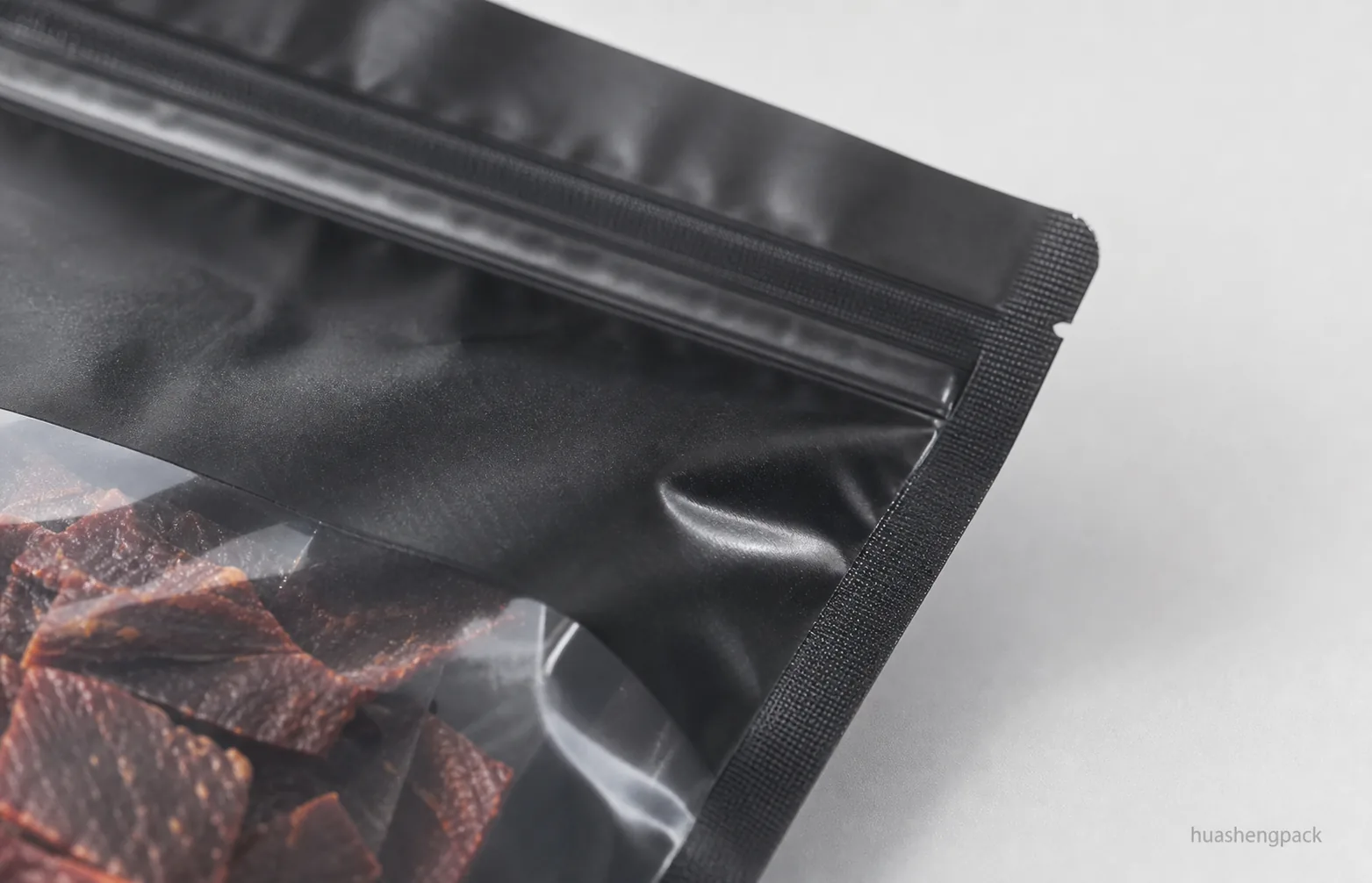
PET/PE: arah ekonomis dasar; PE menyegel dan PET menerima cetak.
PET/VMPET/PE: meningkatkan barrier kelembapan dan cahaya serta tampilan metalik.
PET/AL/PE: barrier lebih tinggi tetapi buram dan tanpa jendela.
Kraft/VMPET/PE: tampilan kertas dengan barrier metalisasi.
PA/PE: arah ketahanan tusuk untuk potongan tajam.
Validasi dengan produk, pengisian termasuk nitrogen, suhu, dan distribusi sebenarnya.
Data yang disiapkan untuk penawaran
Berikan data lengkap:
- Jenis daging atau camilan.
- Kelembapan, minyak, ukuran dan bentuk.
- Berat isi.
- Target umur simpan hanya untuk panduan bahan.
- Nitrogen, penyerap, vakum atau udara.
- Jenis pouch.
- Lebar, panjang dan gusset.
- Jumlah uji dan volume tahunan.
- Pouch stok atau cetak khusus.
- Status artwork.
- Zipper, tear notch, lubang dan jendela.
- Matte atau gloss.
- Pasar tujuan.
- Foto referensi.
Produk Terkait
Panduan Kemasan Terkait
Pertanyaan Umum
Pouch apa yang cocok untuk dendeng?
Pouch berdiri beritsleting, alas datar, dan tiga sisi untuk porsi kecil umum dipakai; struktur mengikuti kelembapan, oksigen, dan produk.
Apakah pouch stok cocok untuk peluncuran pertama?
Ya jika ada struktur kompatibel. Ini menghindari silinder dan dapat mendukung jumlah kecil, tetapi membatasi tampilan dan bahan; pastikan stok dan pengiriman.
Kapan beralih ke cetak khusus?
Saat desain dan volume stabil, MOQ terpenuhi, tampilan seragam mendukung penjualan, dan ekonomi mampu menanggung silinder.
Struktur apa yang cocok?
Evaluasi PET/PE, PET/VMPET/PE, PET/AL/PE buram, Kraft/VMPET/PE, dan PA/PE untuk tusukan menurut risiko nyata.
Bisakah memakai zipper dan tear notch?
Bisa; setujui posisi, ruang seal, dan pembukaan pada pouch terisi.
Apakah pouch menjamin dua belas bulan?
Tidak. Validasi produk, aktivitas air, formula, proses, atmosfer, barrier, seal, dan penyimpanan.
Data apa untuk penawaran?
Kirim produk, sifat, berat, target, pengisian, format, ukuran, jumlah, jalur merek, artwork, warna, fitur, finish, pasar, dan foto.