Coffee Bag with Valve and Zipper: Material and Structure Guide
Huasheng Packaging 기술 콘텐츠 검토팀 · 게시: · 업데이트:
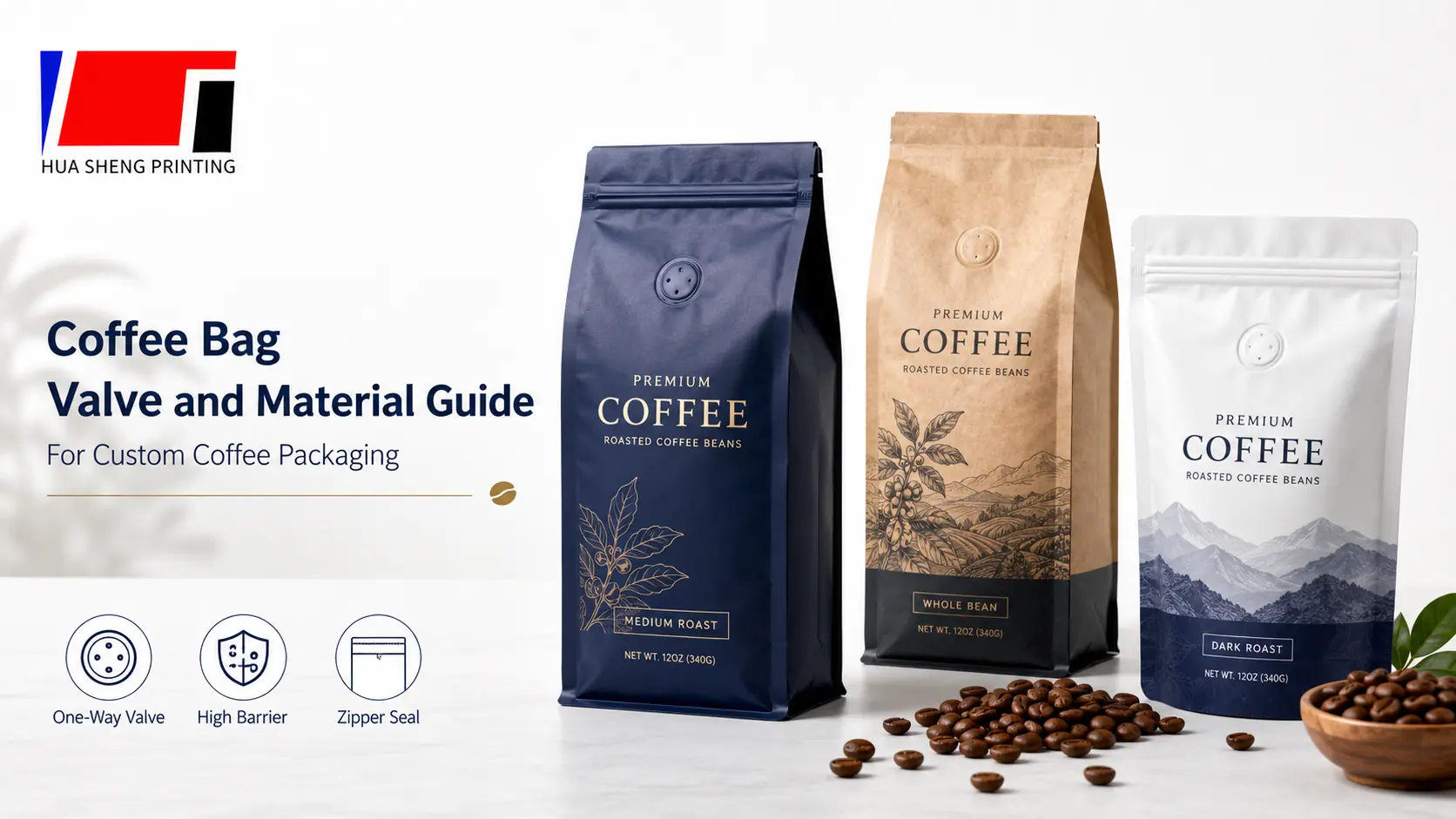 Technical guide visual for Coffee Bags with Valve and Zipper: Selection and Testing Guide.
Coffee bag material and structure guide covering one-way valve, zipper, PET/AL/PE and Kraft/VMPET/PE options for roasted coffee and ground coffee.
핵심 답변
Coffee packaging needs to protect aroma, release CO2 from fresh roasted beans, block oxygen and moisture, and present the brand on retail shelves. This guide explains one-way degassing valve function, material structures for whole bean and ground coffee, and quality control points.
Why Coffee Bags Need Valve and Zipper
Freshly roasted coffee beans release carbon dioxide for days after roasting. Without a one-way degassing valve, CO2 builds up inside the sealed bag, causing ballooning, potential seal failure and inconsistent package appearance on shelf. The valve releases excess gas while preventing outside air from entering, protecting coffee aroma and freshness. A resealable zipper adds consumer convenience — once opened, the bag can be reclosed to maintain freshness between uses. For coffee brands, the combination of valve and zipper is not just a functional feature; it directly affects product quality perception, shelf presence and repeat purchase behavior. Huasheng Packaging produces custom coffee bags with valve and zipper in flat bottom, stand up, side gusset and kraft paper formats for roasted whole bean and ground coffee.
Common Mistakes When Choosing Coffee Bag Structure
1. Using standard pouch without valve or high barrier for roasted coffee. Freshly roasted coffee releases CO2 and needs a one-way valve; the structure must provide oxygen and aroma barrier.
2. Choosing valve position without considering filling process and shelf display. Valve placement affects degassing efficiency and bag stacking on retail shelves.
3. Not confirming coffee type — whole bean vs ground coffee. Whole bean releases CO2 more gradually; ground coffee degasses faster and may need stronger aroma barrier.
4. Ignoring surface finish requirements — matte, glossy, soft-touch or kraft paper appearance. Surface finish affects brand perception and shelf appeal.
5. Choosing bag format only by cost without considering shelf display. Flat bottom provides stronger shelf presence; stand up is more flexible for different filling lines.
6. Not testing valve bonding and zipper function with actual coffee filling before bulk production.
Coffee Bag Formats and Material Structure Guide
Coffee bags come in different formats, each with specific advantages for different coffee products and brand positioning. Below is a guide to common coffee bag formats and material structures.
Coffee Bag Format Comparison:
Flat Bottom Coffee Bag — Best for premium whole bean and ground coffee retail packs. Features: 5 printable panels, excellent shelf stability, box-like shape. Notes: higher unit cost; recommended for premium brands.
Stand Up Zipper Coffee Bag — Best for medium retail coffee packs, flexible filling options. Features: bottom gusset, resealable zipper, cost-effective. Notes: good balance of display, function and cost.
Side Gusset Coffee Bag — Best for larger volume coffee, bulk packs. Features: expandable sides, larger capacity, stable base. Notes: suitable for 500g+ coffee packs.
Kraft Paper Coffee Bag — Best for specialty, organic and artisan coffee. Features: natural paper look, matte finish, eco-style branding. Notes: kraft combines with inner barrier layer (VMPET or AL).
Small Sample Coffee Pouch — Best for trial packs, 50g-250g samples. Features: three side seal or small stand up format, cost-effective for small portions. Notes: can include valve depending on coffee type.
Material Structure Guide:
PET/VMPET/PE — Best for standard roasted coffee. Main benefit: good aroma and moisture barrier at moderate cost. Notes: suitable for medium shelf life retail coffee.
PET/AL/PE — Best for premium coffee, long shelf life. Main benefit: maximum aroma, oxygen and moisture protection. Notes: higher cost; best for whole bean premium coffee.
Kraft/VMPET/PE — Best for specialty coffee with natural look. Main benefit: paper appearance with good barrier. Notes: kraft outer layer with VMPET barrier inside.
Kraft/AL/PE — Best for premium organic or specialty coffee. Main benefit: natural look with maximum barrier. Notes: combines kraft appearance and aluminum foil protection.
PET/PE — Best for short shelf life or simple dry products. Main benefit: basic protection, lower cost. Notes: not recommended for roasted coffee without additional barrier.
Valve, Zipper and Quality Control Points
Valve decisions: Valve position — typically top corner or center top; confirm based on bag format and filling line. Valve quality — one-way degassing valve should release CO2 at designed pressure and prevent air backflow. Valve bonding — must be firmly attached to the bag inner layer; bonding strength tested before shipment.
Zipper decisions: Zipper type — press-to-close or slider zipper; choose based on consumer experience and bag format. Reseal performance — zipper should close smoothly and maintain seal after multiple uses. Zipper position — below the tear notch and valve area; should not interfere with filling or sealing.
At Huasheng Packaging, coffee bag quality control includes: valve position and bonding strength check, zipper function and reseal performance test, heat sealing strength verification, bag bottom stability and standing test, lamination strength check, printing color and surface finish inspection, and leakage/burst test before shipment. We recommend sample filling with actual coffee product before bulk production.
What to Prepare Before Coffee Bag Inquiry
Before sending a coffee bag inquiry, prepare these details:
1. Coffee type — whole bean or ground coffee
2. Filling weight — grams per bag
3. Preferred bag size — width × height + bottom gusset if applicable
4. Bag format — flat bottom, stand up, side gusset or kraft paper
5. Valve requirement — yes or no; if yes, preferred valve position
6. Zipper requirement — yes or no; if yes, press-to-close or slider type
7. Material structure preference if known — or we can suggest based on your coffee type and shelf life
8. Surface finish — glossy, matte, soft-touch or kraft paper
9. Quantity — typical MOQ 20,000 pcs for custom printed coffee bags
10. Printing colors — up to 9-color gravure printing
11. Artwork file — AI, PDF or PSD format
12. Target market — for market compliance and handover reference
관련 제품
관련 포장 가이드
자주 묻는 질문
Why do coffee bags need a valve?
Freshly roasted coffee beans release CO2 for days after roasting. A one-way degassing valve allows CO2 to escape while preventing outside air from entering, protecting coffee aroma and preventing bag swelling. Whole bean coffee typically needs a valve; ground coffee may or may not need one depending on degassing time before packing.
Do all coffee bags need a zipper?
Not all coffee bags require a zipper, but it adds consumer convenience. After opening, a resealable zipper helps maintain freshness between uses. Small sample packs or single-use sachets may not need a zipper. For retail coffee packs, zipper is a recommended feature for better consumer experience.
What material structure is best for coffee bags?
PET/VMPET/PE works well for standard roasted coffee. PET/AL/PE provides maximum aroma and oxygen barrier for premium and long shelf life coffee. Kraft/VMPET/PE combines natural paper appearance with good barrier. The best structure depends on your coffee type, shelf life and brand positioning.
Flat bottom or stand up pouch for coffee — which is better?
Flat bottom pouches provide stronger shelf display with 5 printable panels and a box-like shape — ideal for premium coffee brands. Stand up pouches are more cost-effective and flexible for different filling lines. Both formats support valve and zipper. Choose based on your brand positioning and shelf display priorities.
Can kraft paper coffee bags provide high barrier protection?
Yes. Kraft paper is combined with inner barrier layers. Kraft/VMPET/PE provides good barrier with a natural paper appearance. For maximum barrier, Kraft/AL/PE combines the kraft look with aluminum foil protection. The barrier performance comes from the inner laminated layer, not the kraft paper itself.
What information should I prepare before coffee bag quotation?
Please provide: coffee type (whole bean or ground), filling weight, preferred bag size, bag format (flat bottom, stand up, side gusset or kraft), valve requirement, zipper requirement, material preference, surface finish, quantity, printing colors, artwork file and target market.