Flexible Packaging Material Structure Guide: PET/PE, VMPET, Aluminum Foil and Seal Layers
Equipe de revisão técnica da Huasheng Packaging · Publicado: · Atualizado:
 Technical guide visual for Flexible and Soft Packaging Materials: How to Choose a Laminate Structure.
Learn how to choose flexible packaging material structures for food, snack, coffee, refill and OEM projects, including PET/PE, PET/LLDPE, VMPET, aluminum foil, transparent windows, matte finish and seal layer checks.
Resposta direta
Material structure is one of the most important decisions in custom flexible packaging. A pouch that looks correct may still fail if the barrier layer, sealing layer, stiffness, window area or machine compatibility does not match the product. This guide gives overseas food, beverage, daily chemical and personal care buyers a practical way to discuss PET/PE, PET/LLDPE, PET/VMPET/PE, PET/AL/PE, nylon structures, transparent windows and matte finish options with Huasheng Packaging.
Start with product sensitivity, not only thickness
Thickness alone does not define packaging performance. Buyers should first confirm whether the product is sensitive to moisture, oxygen, aroma loss, oil migration, light, puncture, heat, freezing or filling pressure.
Dry snacks, chocolate-coated nuts, coffee powder, protein powder, sauce, shampoo refill, facial mask liquid and frozen food can all need different structures. A possible PET/PE or PET/LLDPE pouch may work for some dry products or moderate barrier projects, while PET/VMPET/PE, PET/AL/PE, PET/NY/PE or other structures may be reviewed when stronger barrier, puncture resistance, stiffness or sealing performance is needed.
There is no single universal structure. The final material should be confirmed based on product formula, shelf life target, filling method, storage condition, pouch size and sample testing.
Common structure directions buyers should understand
Common laminated structures have different roles:
- PET/PE or PET/LLDPE: PET supports printability, pouch stiffness and flatness. PE or LLDPE provides the inner heat-seal layer. This direction may be reviewed for transparent areas or moderate barrier needs.
- PET/VMPET/PE: VMPET is metallized PET. It can improve light and barrier performance compared with clear structures, but it is not the same as real aluminum foil.
- PET/AL/PE: aluminum foil is a real foil layer and is usually reviewed when stronger oxygen, moisture, aroma and light barrier is required. It also changes cost, stiffness and converting behavior.
- PET/NY/PE or PA/PE: nylon can improve puncture resistance and toughness, which may matter for frozen food, heavy products or sharp-edged contents.
- CPP or RCPP seal layers: may be reviewed for heat resistance or retort directions depending on processing conditions.
Buyers should avoid saying only "foil bag" without confirming whether the intended layer is VMPET, aluminum foil or another high barrier film.
Window, matte finish and shelf display considerations
Transparent window pouches need extra review because the visible window area normally has no printing ink and may not have the same light barrier as the printed area. Window clarity depends on film type, ink coverage, varnish area, lamination and pouch-making process. If a matte finish is required, buyers should confirm whether matte varnish covers the window or only applies outside the clear window.
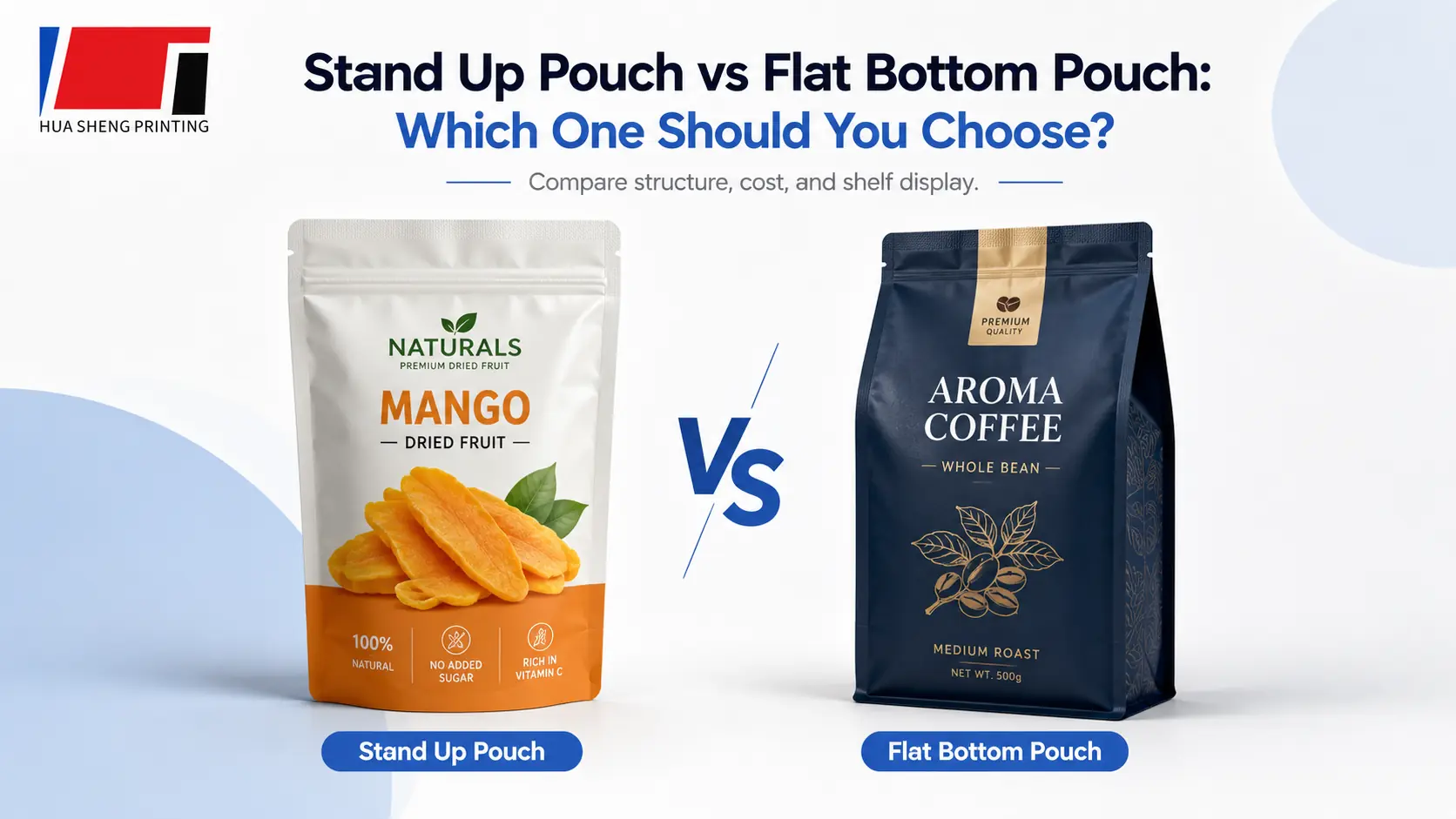
For flat bottom pouches, stand up pouches and larger filling weights, stiffness and flatness also matter. Increasing PET thickness or changing the laminate direction may improve shelf display, but it can also affect transparency, sealing behavior and cost. For roll film, the material must also match machine requirements such as COF, sealing temperature window, roll direction and eye mark registration.
Quality and sample checks before final structure
Before confirming bulk production, buyers should review finished pouch or roll film samples where possible. Important checks include film thickness, lamination bond, seal strength, leakage, drop resistance, zipper or spout function, window clarity, matte or gloss appearance, print registration and machine trial results.
For China OEM or private label workflows, the receiving filling factory should also confirm the structure against its filling line. Premade pouch projects may need checks for opening width, filling mouth, bottom gusset, zipper height and standing stability. Roll film projects need roll width, core ID, maximum roll diameter, winding direction, repeat length and eye mark position confirmed by the packing machine side.
What to prepare for material structure review
Prepare these details before asking for a material recommendation:
- Product type and formula category
- Filling weight or volume
- Pouch type or roll film format
- Size or target capacity
- Shelf life target
- Storage condition: ambient, refrigerated, frozen or heated process
- Product sensitivity: moisture, oxygen, aroma, oil, light, puncture or heat
- Material structure if already specified
- Thickness requirement if known
- Transparent window requirement and window position
- Matte, gloss or soft-touch finish preference
- Zipper, spout, valve, tear notch or hang hole requirement
- Packing machine data if roll film is used
- China OEM filling factory or nominated warehouse requirements if applicable
- Artwork file, quantity per design and number of variants
Huasheng Packaging can review possible structures, but the final choice should be validated with samples and the buyer's actual product and filling process.
Produtos Relacionados
Guias de Embalagem Relacionados
Perguntas Frequentes
Is PET/PE enough for every food pouch?
No. PET/PE or PET/LLDPE may be reviewed for some dry or moderate barrier products, but products with stronger oxygen, aroma, light, puncture or heat requirements may need other structures.
Is VMPET the same as aluminum foil?
No. VMPET is metallized PET with a thin metallized layer. Aluminum foil is a real foil layer. They differ in barrier performance, stiffness, cost and converting behavior.
Can transparent window pouches use matte finish?
Yes, but the window area should be reviewed carefully. Matte varnish over the window may reduce visual clarity, so buyers should confirm full matte or partial matte design before production.
Why does the sealing layer matter?
The inner layer controls heat sealing and food or formula contact performance. PE, LLDPE, CPP, RCPP or other seal layers should be matched with the product, filling temperature and machine conditions.
Should roll film material be confirmed with the packing machine?
Yes. Roll film must match roll width, COF, seal layer, sealing temperature, winding direction, eye mark and machine speed. A sample roll or machine trial reduces risk.
Can Huasheng Packaging help with China OEM handover requirements?
Yes. If packaging will be handed over to a China OEM factory, filling plant or nominated warehouse, buyers can provide receiving factory requirements so the material and format can be reviewed together.