Biscuit Packaging Roll Film Specification: WVTR, OTR, Roll Core, Met BOPP and Large Volume Procurement
Группа технической проверки Huasheng Packaging · Опубликовано: · Обновлено:
 Biscuit packaging roll film specification for barrier and machine compatibility.
Learn how to specify biscuit packaging roll film with WVTR, OTR, Met BOPP, roll core, film width, repeat length and automatic packing machine requirements.
Краткий ответ
В этом разделе приведены рекомендации по теме «biscuit packaging roll film specification wvtr otr roll core met bopp» с учетом реального продукта, способа фасовки и требований целевого рынка. Сохраните в спецификации без изменения следующие технические обозначения и значения: WVTR, OTR, 10MT, 30MT, 50MT.
Техническое руководство с проверенными источниками
2026-08-12 · Huasheng Packaging Technical Content Review
Область доказательств
Biscuit product-risk translation, reel interface data, OTR/WVTR reporting conditions, COF interpretation and production-line trial requirements.
Область и ограничения
The guide does not prescribe a laminate, barrier target, COF value or machine setting. All remain dependent on product, film grade and equipment.
Основные выводы
- State method and conditions before comparing OTR or WVTR.
- COF supports quality control but does not prove machinability.
- Reel geometry, artwork interface and representative line trials belong in one approval record.
Why Biscuit Packaging Film Is More Than Just Printed Roll Film
При оценке «biscuit packaging roll film specification wvtr otr roll core met bopp» сначала определите фактическое применение, технические ограничения и риск, который должна контролировать спецификация. Сохраните в спецификации без изменения следующие технические обозначения и значения: PET/PE, BOPP/CPP, PET, PE, BOPP, CPP, ID, COF, WVTR, OTR.
Key Barrier Indicators: WVTR and OTR
Для «biscuit packaging roll film specification wvtr otr roll core met bopp» нельзя выбирать решение только по цене или внешнему виду; проверьте совместимость материала, оборудования и условий применения. Сохраните в спецификации без изменения следующие технические обозначения и значения: WVTR, OTR.
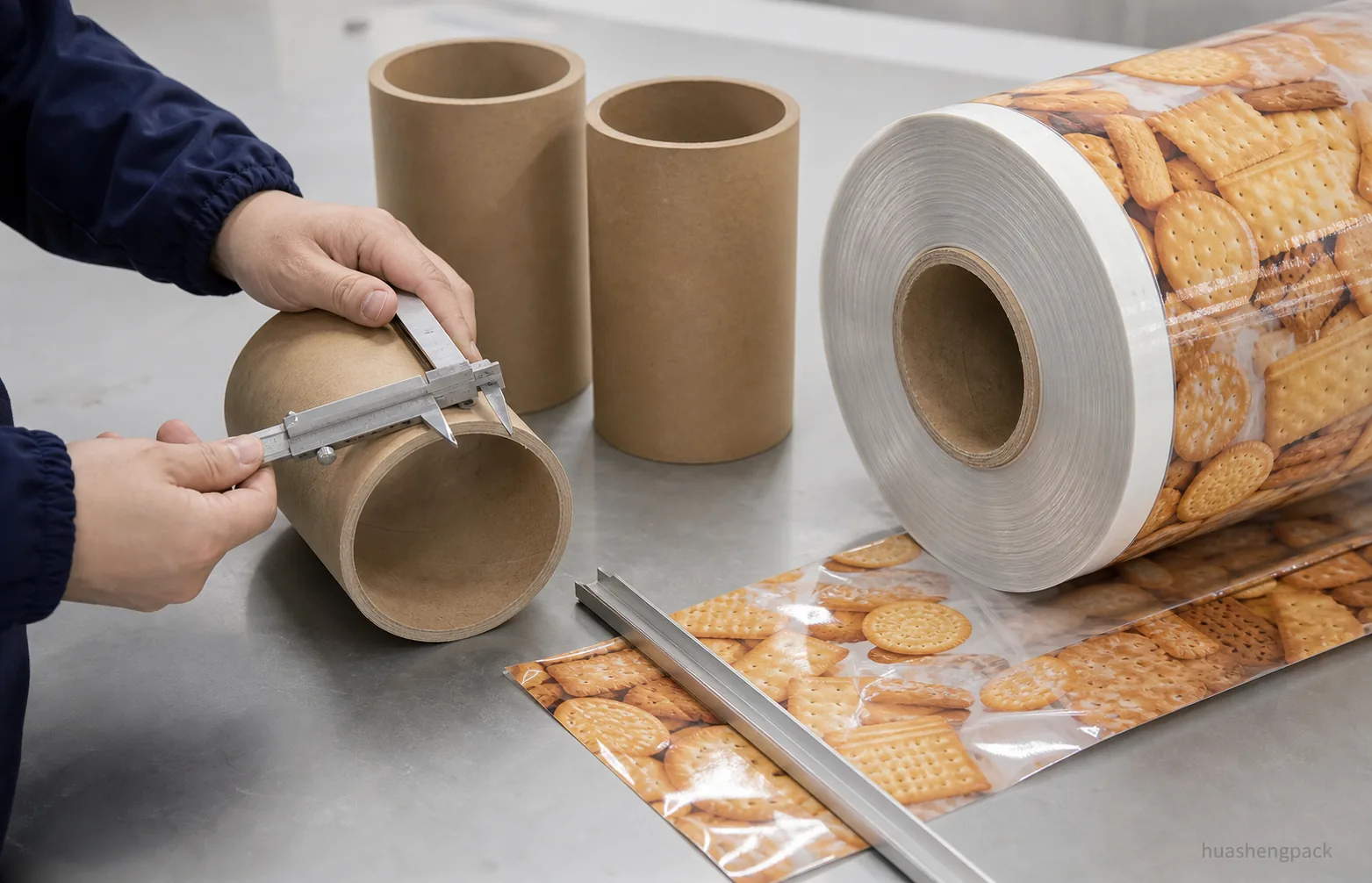
Common Material Structure Directions for Biscuit Roll Film
Для «biscuit packaging roll film specification wvtr otr roll core met bopp» сравните варианты по функции и требуемым характеристикам, затем подтвердите выбор репрезентативным образцом или производственным испытанием. Сохраните в спецификации без изменения следующие технические обозначения и значения: BOPP/CPP, PET/PE, PET/VMPET/PE, BOPP, CPP, PET, PE, VMPET, AL.
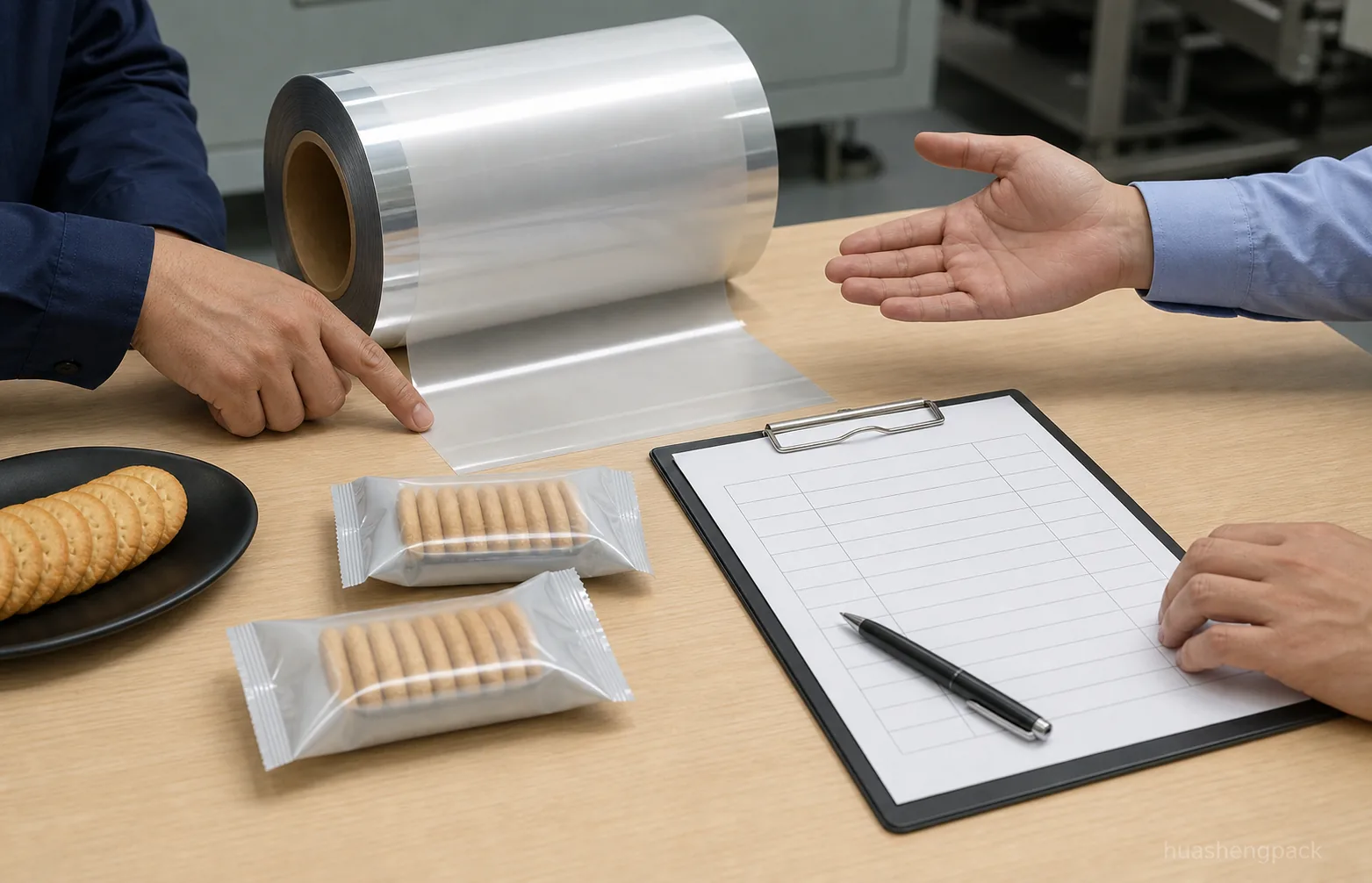
Roll Data That Buyers Should Confirm Before Quotation
Контроль качества «biscuit packaging roll film specification wvtr otr roll core met bopp» требует измеримых критериев для материала, печати, швов и поведения заполненной упаковки. Сохраните в спецификации без изменения следующие технические обозначения и значения: ID, COF, 76mm, 3, 152mm, 6.
 Reel fit, print registration, film behavior and line evidence should be controlled in one approved specification.
Large Volume Procurement and What to Prepare Before Quotation
Для точного расчета «biscuit packaging roll film specification wvtr otr roll core met bopp» подготовьте данные о продукте, размере, структуре, количестве, макете, оборудовании и целевом рынке. Сохраните в спецификации без изменения следующие технические обозначения и значения: WVTR / OTR, ID, WVTR, OTR, BOPP, 10MT, 30MT, 50MT, 76mm, 3, 152mm, 6.
Сопутствующие товары
Связанные руководства по упаковке
Claim-to-source evidence matrix
| Reviewed claim | Support | Sources | Boundary |
|---|
| OTR and WVTR results require defined methods, conditions and specimens. | direct | [1], [2] | The sources do not set biscuit-specific target values. |
| Metallized film and aluminum foil laminates are distinct structures that require complete-laminate comparison. | direct | [3] | The comparative principle is used; coffee study results are not assigned to biscuit products. |
| Coefficient-of-friction testing supports quality control but does not comprehensively establish machinability. | direct | [4] | Machine tracking and forming require line evidence. |
| Laboratory heat-seal curves provide starting information rather than full-scale machine validation. | direct | [5] | Production speed, jaw geometry and product conditions remain relevant. |
JSON · CSV
Технические источники
- ASTM D3985-24: Oxygen Gas Transmission Rate Through Plastic Film and Sheeting Using a Coulometric Sensor · ASTM International · standard
OTR is measured for a defined specimen under a named method and agreed test conditions - ASTM F1249-25: Water Vapor Transmission Rate Through Plastic Film and Sheeting Using a Modulated Infrared Sensor · ASTM International · standard
WVTR applies to defined flexible barrier specimens and stated test conditions - Comparing Optimum Barrier Variables of Aluminium and MPET Foil Based Laminates for Coffee Packaging · Journal of Applied Packaging Research · peer-reviewed
Aluminum-foil and metallized-PET laminates are distinct structures whose barrier behavior must be compared as complete laminates - ISO 8295:1995: Plastics - Film and Sheeting - Determination of the Coefficients of Friction · International Organization for Standardization · standard
Coefficient-of-friction testing supports quality control but does not by itself establish film machinability - ASTM F2029-16(2021): Laboratory Heat Seals for Determination of Heat Sealability of Flexible Barrier Materials · ASTM International · standard
Laboratory heat-seal curves provide starting relationships and do not replace production-equipment validation
Часто задаваемые вопросы
What film is commonly used for biscuit packaging?
Common structures reviewed for biscuit packaging include BOPP/CPP for lightweight dry biscuits (good machinability, economical), PET/PE for general laminated biscuit film (good printing and sealing), PET/Met BOPP for improved light and moisture barrier with metallic shelf appearance, and PET/VMPET/PE for higher barrier needs. Paper-based laminates are also used for craft or artisanal brand positioning. The final structure depends on product type, shelf life target, barrier requirements and packing machine compatibility.
Why are WVTR and OTR important for biscuit packaging film?
WVTR (Water Vapor Transmission Rate) measures moisture barrier — important because biscuits absorb moisture from the air and lose crispness. OTR (Oxygen Transmission Rate) measures oxygen barrier — important because fats and oils in biscuits can oxidize, causing rancidity and off-flavors. Target WVTR and OTR values depend on the specific product formulation, expected shelf life, storage climate and distribution conditions. Buyers who need specific barrier targets should communicate the required range to the film supplier.
What is Met BOPP film?
Met BOPP (metallized BOPP) is BOPP film with a thin metallized coating that provides improved light and moisture barrier compared with standard clear BOPP. It gives a metallic appearance without the cost of aluminum foil lamination. Met BOPP is common in biscuit, cookie and snack flow wrap packaging. It is not equivalent to aluminum foil — the barrier level is between clear film and foil. Not transparent.
What roll data should buyers provide before quotation?
Key roll data includes: film width (web width), repeat length, core ID (typically 76mm or 152mm), max roll diameter, max roll weight, roll direction (printed side in or out), eye mark position and type, printing colors, sealing temperature window (if known), and COF range. These parameters directly affect whether the film can run on the buyer's specific packing machine.
Can biscuit roll film be used on any automatic packing machine?
No. Roll film specifications must match the specific packing machine. Different machines have different requirements for film width, core ID, roll diameter, eye mark position, sealing temperature, film tension and COF. Using film that does not match the machine specifications can cause tracking issues, sealing failures, miscuts or production downtime. Always confirm film specifications against machine requirements.
How should large volume roll film procurement be planned?
For large monthly volumes (10MT+), buyers should discuss: batch-to-batch consistency tolerances, production planning and delivery schedule (weekly, bi-weekly or monthly), roll packing method and pallet configuration, print color consistency across production batches, core quality standards to prevent damage during shipping, and handover coordination for container loading.
Is thickness enough to compare biscuit packaging film?
No. Thickness is one parameter among many. Two films with the same total thickness can have different layer structures, barrier performance, seal strength and machinability. A thicker film is not automatically better — it may add unnecessary cost, reduce film length per roll, or cause sealing issues on the machine. Compare films by structure, barrier data (WVTR/OTR), sealing performance and machine compatibility, not thickness alone.