Kraft Paper Packaging Bags: Material Structures, Custom Options and Buying Guide
Группа технической проверки Huasheng Packaging · Опубликовано: · Обновлено:
 Kraft appearance, pouch format and inner laminate performance are separate project decisions.
Learn about kraft paper packaging bag material structures, custom options for coffee, tea, snacks, and dry food.
Краткий ответ
В этом разделе приведены рекомендации по теме «Крафт-бумажные пакеты: структуры» с учетом реального продукта, способа фасовки и требований целевого рынка.
Техническое руководство с проверенными источниками
2026-08-12 · Huasheng Packaging Technical Content Review
Область доказательств
Kraft-style laminate description, food-contact inner layers, window conversion, sealing checks and post-approval change control.
Область и ограничения
No paper, laminate or window route is universally suitable. Barrier, odour, migration, seal and shelf-life results require the exact materials and intended use.
Основные выводы
- A kraft appearance does not identify the full laminate.
- Food-contact status depends on each component and its conditions of use.
- Converted-pouch sealing and window performance require sample validation.
Overview
При оценке «Крафт-бумажные пакеты: структуры» сначала определите фактическое применение, технические ограничения и риск, который должна контролировать спецификация.
Key Points
Для «Крафт-бумажные пакеты: структуры» нельзя выбирать решение только по цене или внешнему виду; проверьте совместимость материала, оборудования и условий применения. Сохраните в спецификации без изменения следующие технические обозначения и значения: B2B.
Recommended Next Steps
Для «Крафт-бумажные пакеты: структуры» сравните варианты по функции и требуемым характеристикам, затем подтвердите выбор репрезентативным образцом или производственным испытанием.
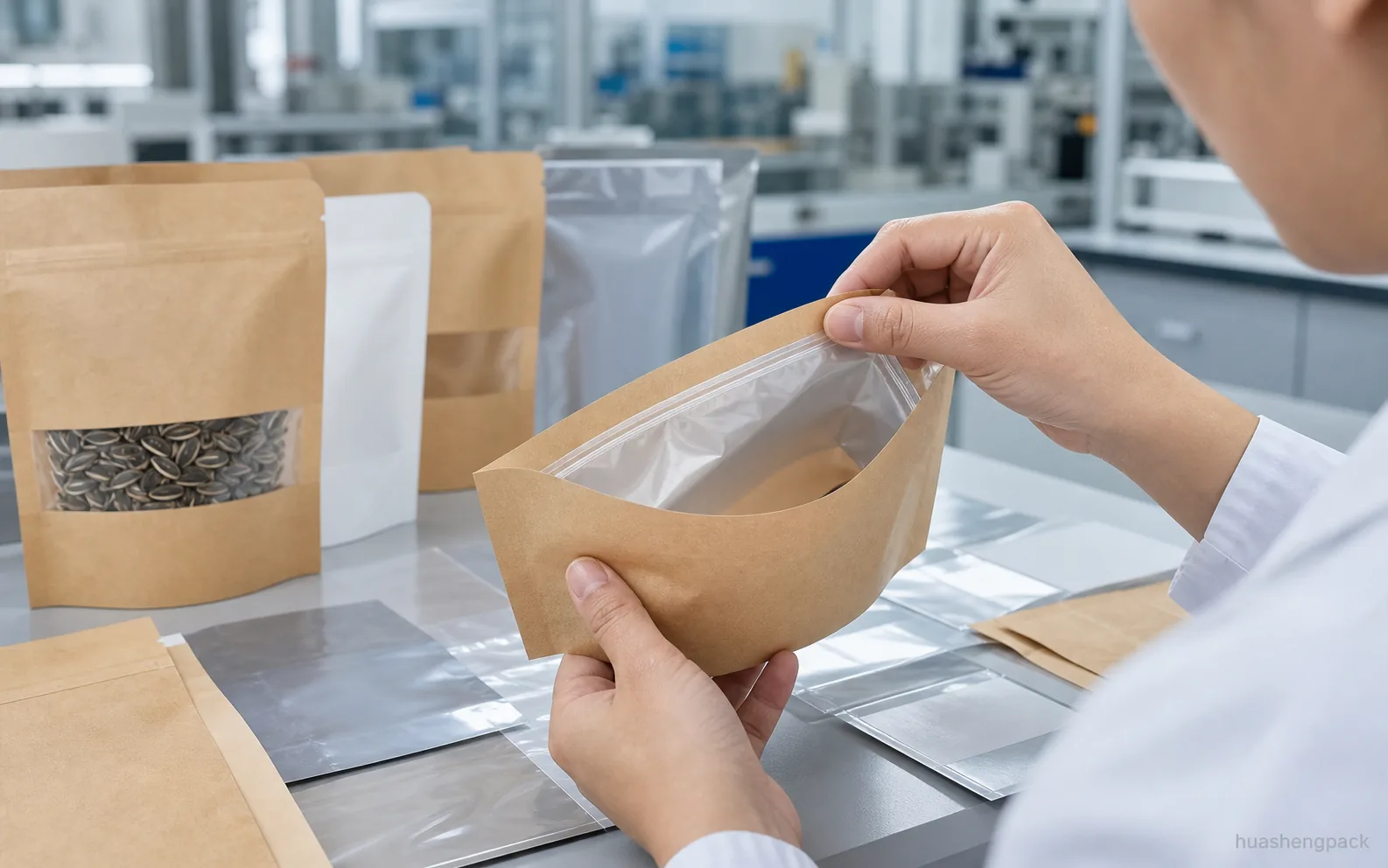
Quality Control
Контроль качества «Крафт-бумажные пакеты: структуры» требует измеримых критериев для материала, печати, швов и поведения заполненной упаковки.
What to Prepare
Для точного расчета «Крафт-бумажные пакеты: структуры» подготовьте данные о продукте, размере, структуре, количестве, макете, оборудовании и целевом рынке. Сохраните в спецификации без изменения следующие технические обозначения и значения: OEM.
Сопутствующие товары
Связанные руководства по упаковке
Claim-to-source evidence matrix
| Reviewed claim | Support | Sources | Boundary |
|---|
| Food-contact status depends on each component, authorization and condition of use. | direct | [1], [2] | This does not establish finished-pouch barrier or shelf life. |
| Food type, temperature and storage conditions belong in intended-use review. | direct | [3] | Non-food applications need separate compatibility evidence. |
| Material, process and contamination can affect the finished seal system. | direct | [4] | Paper appearance alone provides no seal-performance evidence. |
JSON · CSV
Технические источники
- Determining the Regulatory Status of Components of a Food Contact Material · U.S. Food and Drug Administration · government
Food-contact status depends on each component, its authorization, specifications and conditions of use - Commission Regulation (EU) No 10/2011 on Plastic Materials and Articles Intended to Come into Contact with Food · EUR-Lex · regulation
Plastic food-contact compliance is tied to authorized substances, restrictions and migration rules - Food Types and Conditions of Use for Food Contact Substances · U.S. Food and Drug Administration · government
Food-contact review depends on the food type and the intended temperature and storage conditions - Understanding the Factors Affecting the Seal Integrity in Heat Sealed Flexible Food Packages: A Review · Packaging Technology and Science · peer-reviewed
Seal integrity is affected by material properties, process parameters and contamination
Часто задаваемые вопросы
Are kraft paper bags fully paper?
Most are laminated structures with inner PE, VMPET or AL films for sealing and barrier.
Can kraft paper bags have a zipper or valve?
Yes. Zipper, valve, tear notch and window options are available depending on the bag format.
What products suit kraft paper bags?
Coffee, tea, dry snacks, powder, bakery products and natural-look retail packaging.