Common Filling and Sealing Issues for Flexible Packaging
ทีมตรวจทานเนื้อหาทางเทคนิค Huasheng Packaging · เผยแพร่: · อัปเดต:
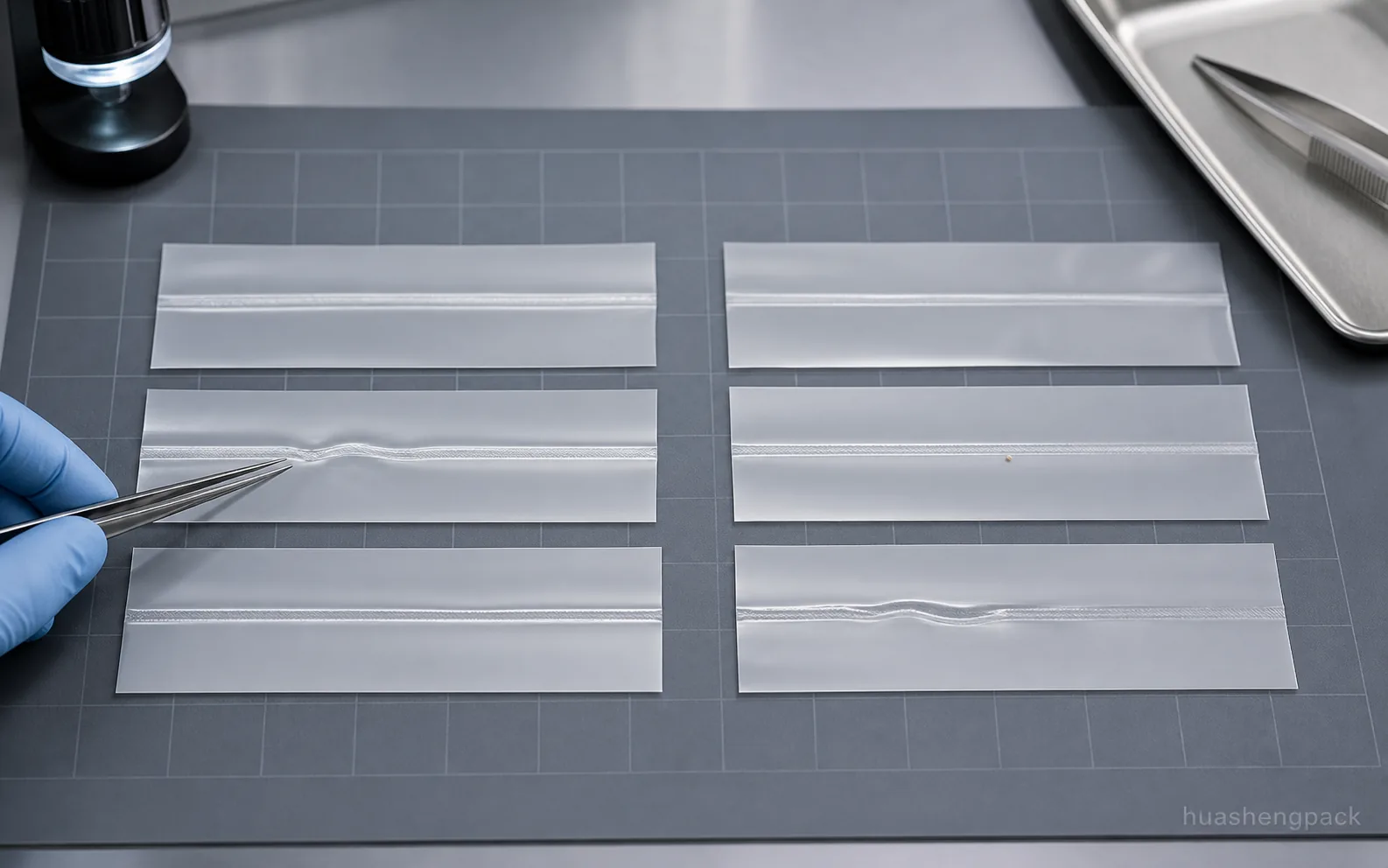
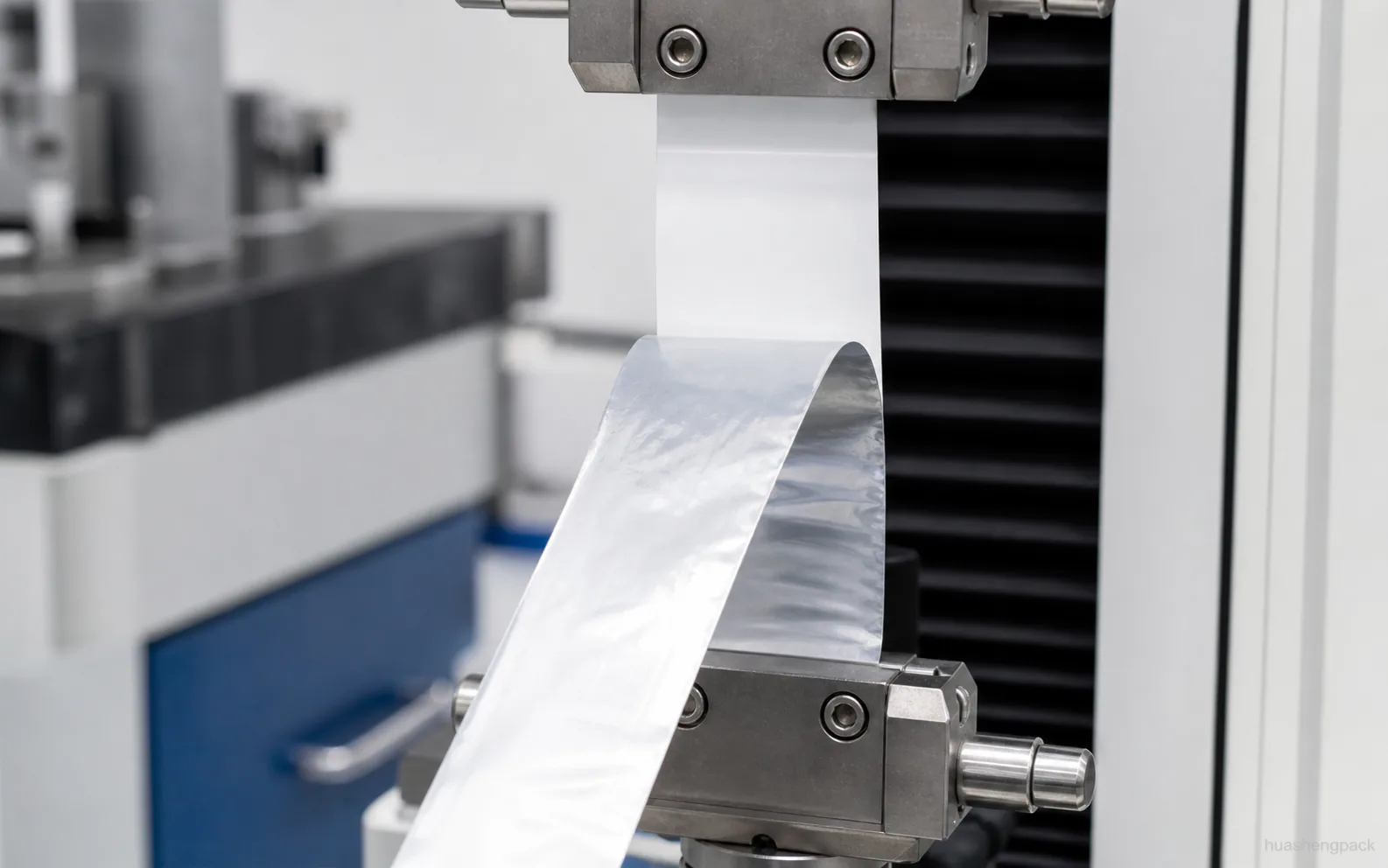
 Seal performance should be reviewed with defined specimens, conditions and failure observations.
Learn common filling and sealing issues for flexible packaging pouches and how to review sealing temperature, pressure, material and pouch design.
คำตอบโดยตรง
Flexible packaging performance is not only decided by the pouch itself. Filling method, sealing temperature, pressure, product residue, machine setting, material structure and storage condition can all affect the final sealing result. When customers meet filling or sealing issues after receiving bags, it is important to review possible causes step by step instead of assuming only one reason.
คู่มือทางเทคนิคที่ตรวจสอบหลักฐานแล้ว
2026-08-11 · Huasheng Packaging Technical Content Review
ขอบเขตหลักฐาน
Symptom isolation across material, machine, process and product variables, followed by controlled seal and leak verification.
ขอบเขตและข้อจำกัด
The guide does not prescribe machine settings or acceptance limits. Methods, specimens and limits must be agreed for the actual package, product and line.
ข้อสรุปสำคัญ
- A visible seal defect can have more than one cause.
- Seal strength, visual integrity and gross-leak tests answer different questions.
- Use representative filled packs and change one controlled variable at a time.
Problem Scenario
Some customers receive custom pouches and start filling products manually or by machine. During production, they may meet problems such as:
- Weak sealing.
- Leakage.
- Wrinkles near the seal.
- Product residue in the sealing area.
- Bag not standing well after filling.
- Zipper difficult to close.
- Spout or cap leakage.
- Heat seal distortion.
These issues often require reviewing both packaging structure and filling conditions.
Common Mistakes
Common mistakes include:
- Using the same sealing temperature for different materials.
- Filling too much product into the pouch.
- Leaving oil, powder or liquid in the sealing area.
- Not testing sealing pressure and dwell time.
- Choosing material without considering filling temperature.
- Using unsuitable pouch size.
- Not confirming whether the filling machine matches the pouch.
- Ignoring storage and transportation conditions.
Many sealing problems can be reduced by confirming filling and sealing requirements before production.
Recommended Solutions
For dry products:
- Stand up pouch with zipper.
- Flat bottom pouch for better shelf stability.
- PET / PE or PET / VMPET / PE structures depending on barrier needs.
For liquids or sauces:
- Spout pouch.
- Strong sealing structure.
- Material selected based on product type and filling temperature.
For automatic packing:
- Printed roll film.
- Material and film width matched with machine requirements.
- Clear eye mark for machine detection.
For retort or high temperature products:
- Retort pouch.
- High temperature resistant material structure.
Quality Check Points
Check before production:
- Material structure.
- Filling temperature.
- Sealing method.
- Bag size and capacity.
- Zipper, spout or valve function.
- Sealing edge width.
- Product residue risk.
- Machine compatibility.
Check during use:
- Sealing temperature.
- Pressure.
- Dwell time.
- Filling volume.
- Seal cleanliness.
- Storage condition.
What to Prepare Before Inquiry
Prepare:
- Product type.
- Product state: dry, liquid, powder, oily, frozen or hot-filled.
- Filling method: manual or machine.
- Sealing method and machine type.
- Filling temperature.
- Target pouch size and capacity.
- Shelf life requirement.
- Quantity.
- Photos or videos if you have filling or sealing issues.
ผลิตภัณฑ์ที่เกี่ยวข้อง
คู่มือบรรจุภัณฑ์ที่เกี่ยวข้อง
Claim-to-source evidence matrix
| Reviewed claim | Support | Sources | Boundary |
|---|
| Seal strength is a quantitative process measure rather than a complete leak assessment. | direct | [1] | The test method does not establish a universal acceptance value. |
| Visual seal defects can provide early evidence of process variation or compromised integrity. | direct | [2] | Visual inspection has material, contrast and inspector limitations. |
| Gross-leak testing is a separate destructive examination and should not be conflated with seal-strength measurement. | direct | [3], [1] | The appropriate method depends on package construction and the agreed failure question. |
| Material properties, process settings and contamination can all affect heat-seal integrity. | direct | [4] | The review supports systematic isolation, not a universal troubleshooting setting. |
JSON · CSV
หลักฐานและเอกสารอ้างอิง
- ASTM F88/F88M-21: Seal Strength of Flexible Barrier Materials · ASTM International · standard
Seal strength is a quantitative measure used for process validation, control and capability - ASTM F1886/F1886M-09: Integrity of Seals for Flexible Packaging by Visual Inspection · ASTM International · standard
Visual seal defects can indicate process variation or a possible package-integrity problem - ASTM F2096-11: Detecting Gross Leaks in Packaging by Internal Pressurization · ASTM International · standard
Internal pressurization is a destructive method for examining packages for gross leaks - Understanding the Factors Affecting the Seal Integrity in Heat Sealed Flexible Food Packages: A Review · Packaging Technology and Science · peer-reviewed
Seal integrity is affected by material properties, process parameters and contamination
คำถามที่พบบ่อย
Why does my pouch leak after sealing?
Leakage may be related to sealing temperature, pressure, dwell time, material structure, seal contamination or pouch design. Review step by step.
Can the same sealing temperature be used for all bags?
No. Different materials and structures may require different sealing conditions.
What causes weak sealing?
Low temperature, insufficient pressure, short sealing time, product residue, unsuitable material or incorrect machine settings.
Can Huasheng Packaging help after delivery?
We provide follow-up support based on customer feedback, photos, videos and usage conditions.
Should I tell the supplier my filling method before production?
Yes. Filling method and sealing conditions are important for selecting suitable packaging structure.