How to Test and Evaluate Retort Pouch Samples: Sterilization Validation, Seal Strength and Barrier Checklist
فريق مراجعة المحتوى الفني في Huasheng Packaging · النشر: · التحديث:
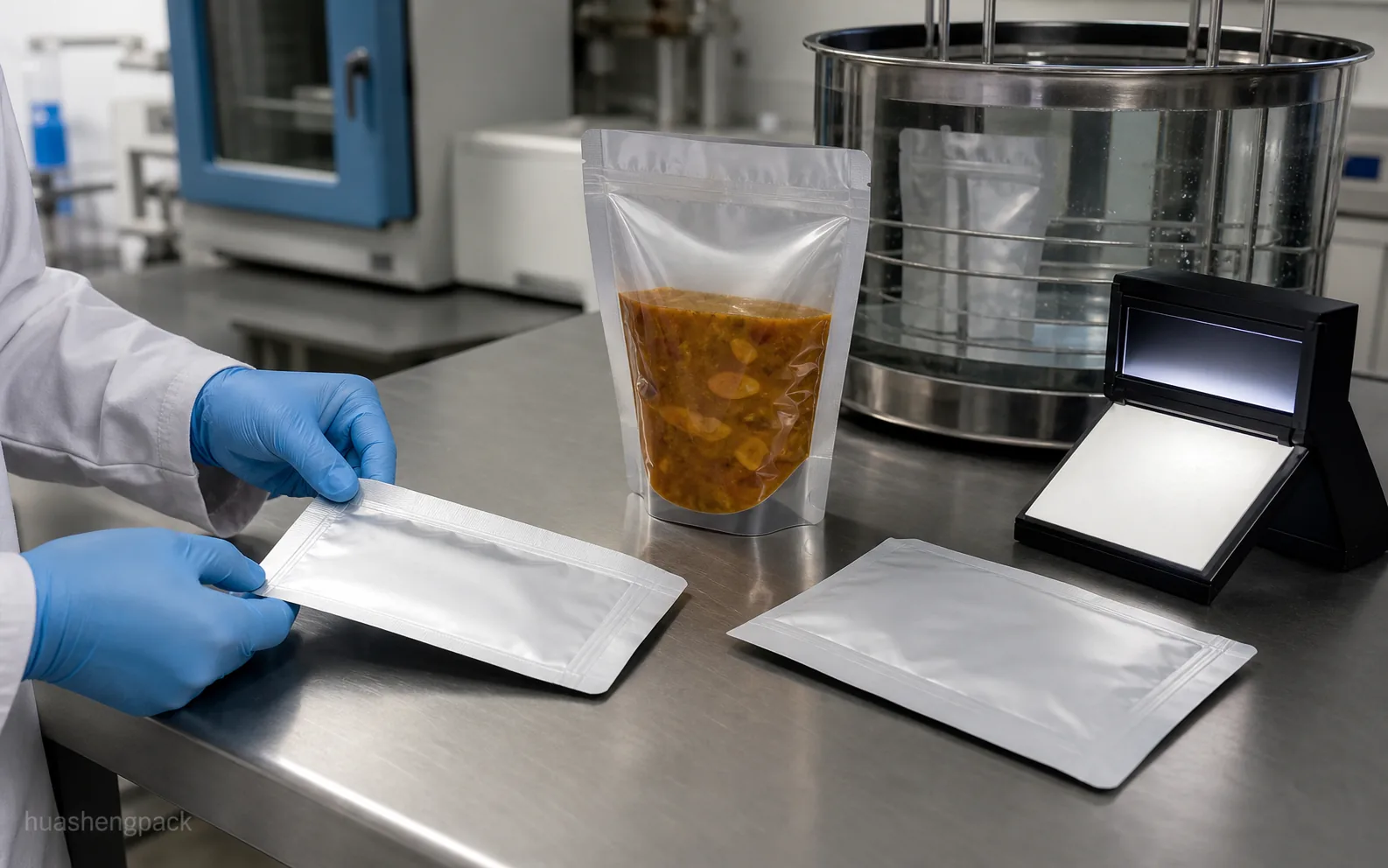 Retort pouch samples should be evaluated with the intended product, sealing equipment and validated processing conditions.
Learn how to evaluate retort pouch samples with real product filling, sealing, sterilization validation, leakage checks, seal strength and shelf-life observation.
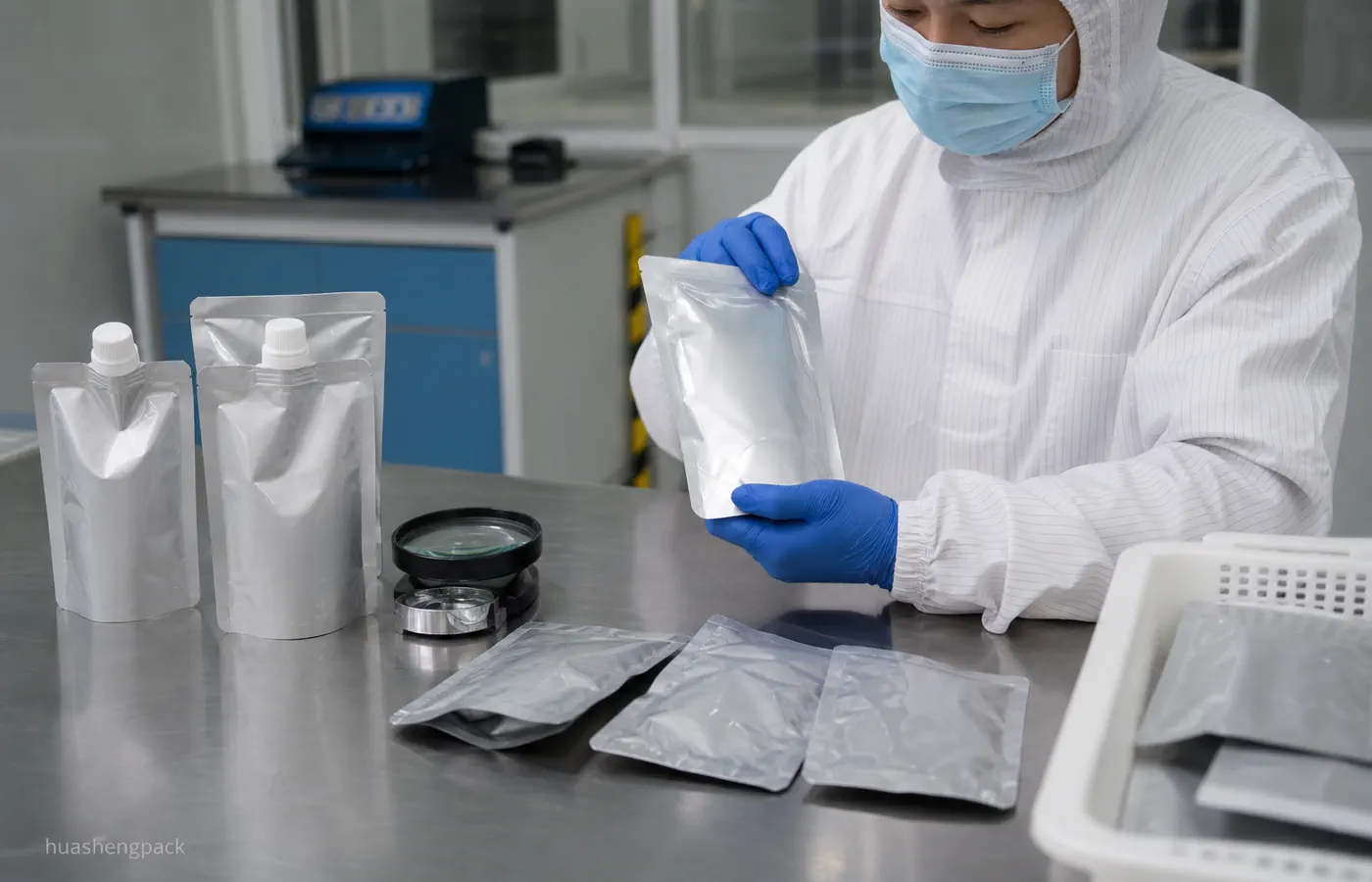
الإجابة المباشرة
يقدم هذا القسم توجيهاً مخصصاً حول test evaluate retort pouch samples sterilization seal strength، ويربط قرار الشراء بالمنتج الفعلي وطريقة التعبئة ومتطلبات السوق.
Why Retort Pouch Samples Must Be Tested Before Bulk Order
عند تقييم test evaluate retort pouch samples sterilization seal strength، يجب أولاً تحديد حالة الاستخدام والقيود الفنية ومصدر الخطر قبل اعتماد المواصفة. المصطلحات والأرقام التي يجب إبقاؤها كما هي في المواصفة: 121°C, 30, 60.
What to Check Before Filling the Sample
في مشروع test evaluate retort pouch samples sterilization seal strength، تجنب الاختيار على أساس السعر أو المظهر وحدهما، وراجع توافق المادة والآلة وظروف الاستخدام. المصطلحات والأرقام التي يجب إبقاؤها كما هي في المواصفة: PET/AL/PA/CPP, PET, AL, PA, CPP.
Filling and Sealing Test with the Real Product
بالنسبة إلى test evaluate retort pouch samples sterilization seal strength، قارن البدائل وفق وظيفة العبوة والأداء المطلوب، ثم أكد الاختيار بعينة أو تجربة ممثلة للإنتاج.
Retort Sterilization Validation and Post-Retort Inspection
يتطلب ضبط جودة test evaluate retort pouch samples sterilization seal strength معايير قبول قابلة للقياس وفحص الخامة والطباعة والإغلاق وأداء العبوة المملوءة.
Post-process visual inspection should be performed with representative pouch samples and agreed evaluation criteria.Seal Strength, Burst Testing, Leakage Checks and Shelf Life Observation
لطلب عرض دقيق بشأن test evaluate retort pouch samples sterilization seal strength، جهز بيانات المنتج والمقاس والبنية والكمية والعمل الفني والآلة والسوق المستهدف.
منتجات ذات صلة
أدلة تغليف ذات صلة
الأسئلة الشائعة
How should buyers test retort pouch samples?
Test with the actual product at the target filling weight, sealed on production-representative equipment, and processed through the intended retort sterilization cycle. Check seal integrity, leakage, delamination, visual appearance and odor after retort. Shelf life observation under controlled conditions provides additional confidence. Sample testing with water alone cannot replicate real product behavior.
Is 121°C suitable for all retort pouch products?
No. Retort sterilization conditions depend on product type (meat, seafood, sauce, ready meal), filling weight, piece size, target shelf life and regulatory requirements. 121°C is a common reference point, but other temperature-time combinations are used depending on the product. The final sterilization process must be validated by the food producer or a qualified third party for the specific product and packaging combination.
What should be checked after retort sterilization?
Key checks include: leakage (the most critical), seal deformation, pouch delamination (layer separation), wrinkles or tunneling, print color change, unusual odor, pouch swelling, corner damage or pinholes, and easy-opening performance if the pouch has a tear notch. Any leakage found in sample testing should be investigated before proceeding to bulk production.
Can packaging suppliers guarantee final shelf life?
No packaging supplier can guarantee final shelf life alone. Retort processing can achieve commercially sterile products, but actual shelf life depends on product formulation, sterilization process validation, seal integrity, barrier performance of the complete package, and storage/distribution conditions. Shelf life must be validated by the food producer through product-specific stability studies.
What causes retort pouch leakage after sterilization?
Common causes include: product residue (oil, sauce, powder) in the seal area during filling, incompatible sealing parameters for the specific pouch structure, seal area stress from overfilling or product expansion during retort, pouch delamination at the seal interface, pinholes or damage from sharp product pieces (bone, hard spice), and inadequate seal area width for the pouch size and product weight.
Should real food be used for retort pouch sample testing?
Yes. Real food behaves differently from water or simulant in terms of heat penetration, expansion during retort, oil or sauce interaction with the seal area, and physical stress from product pieces. Testing with real product provides the most representative evaluation of how the pouch will perform in actual production and distribution.
Do retort pouch samples need third-party testing?
It depends on the product category, destination market regulations and buyer requirements. Some export markets or retail customers may require test reports from accredited laboratories. Discuss testing requirements with the supplier. If third-party testing is needed, confirm which party arranges and covers the cost, and what specific tests are required.