Pet Food Packaging Bags: Material Selection, Puncture Resistance and Custom Options
Guide to pet food packaging bags covering material selection, puncture resistance, odor barrier, zipper options, bag formats and ordering checklist for dry pet food and treats.
Published: 2026-05-24
What Makes Pet Food Packaging Different?
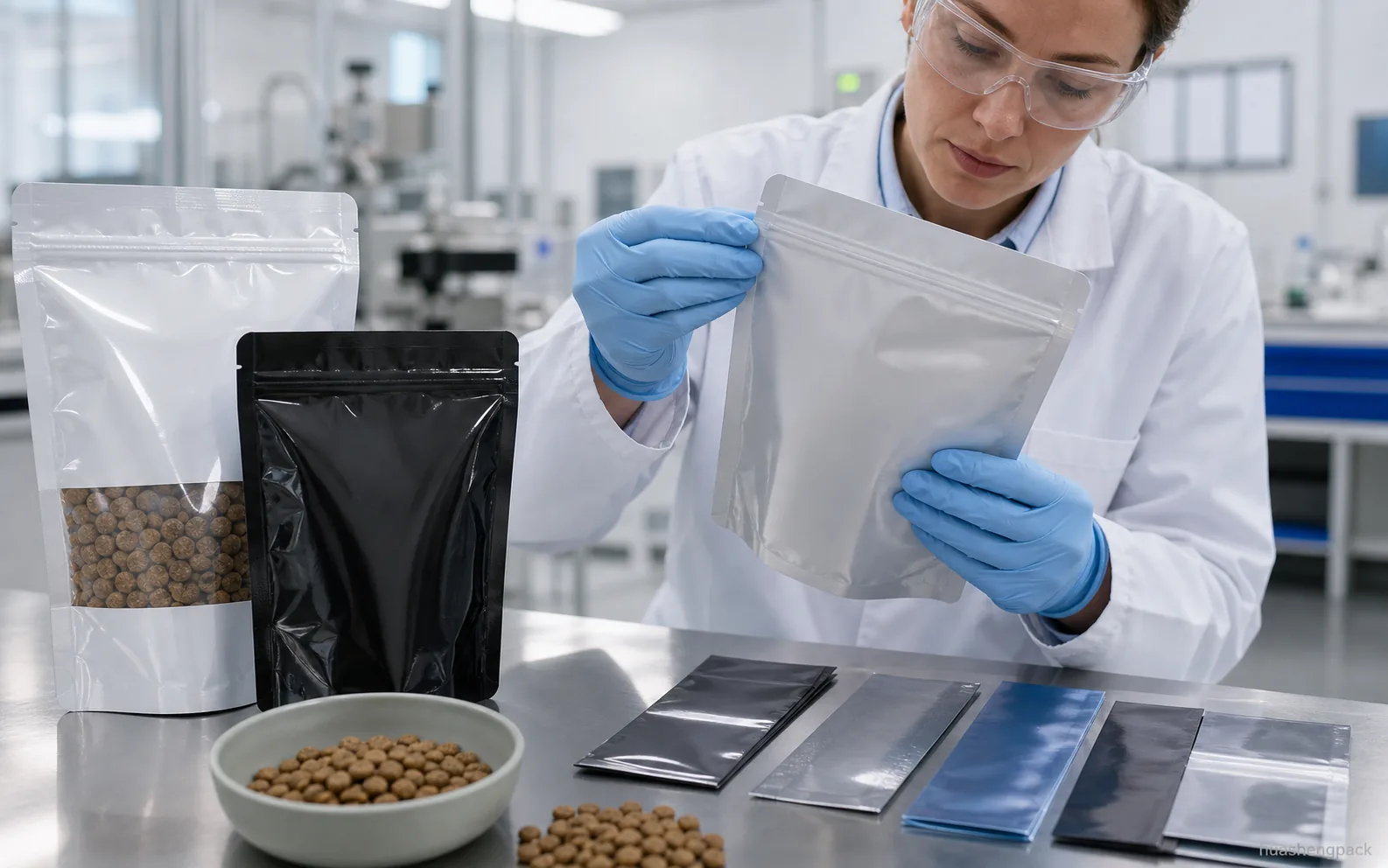
Pet food packaging bags have different requirements compared to standard snack or food pouches. Dry pet food kibbles are heavier, often have sharp edges and are filled in larger quantities. The packaging needs to handle higher filling weights, resist puncture from hard kibbles, provide odor and grease barrier, withstand repeated opening and closing, and maintain shelf appearance in retail environments.
Wet pet food in retort pouches requires high-temperature sterilization resistance. Pet treats and jerky products may need specific moisture barrier levels to maintain texture. The packaging format, material structure and sealing parameters should be confirmed based on the specific pet food product type, filling weight and distribution conditions.
- Higher filling weights require stronger seals and thicker material structures.
- Sharp or hard kibbles need puncture-resistant film layers.
- Link: /products/pet-food-packaging-bags
Common Pet Food Packaging Bag Formats
Several pouch formats are used in pet food packaging. The choice depends on filling weight, retail display format, consumer convenience features and brand presentation goals.
- Stand-up zipper pouch — good for small to medium packs, retail display, zipper for consumer reclose.
- Flat bottom pouch — wider base, stable standing, good for medium to large packs, premium shelf look.
- Quad seal pouch — rigid side panels, strong shelf presence, suitable for larger or heavier packs.
- Side gusset bag — expandable capacity, good for bulk or larger format pet food bags.
- Roll film — supplied to factories for VFFS/HFFS automatic packing of small to medium pouches.
Material Structures for Dry Pet Food and Treats
Common material structures for dry pet food bags include PET/PE for basic moisture protection, PET/VMPET/PE for added barrier against oxygen and moisture, and PET/AL/PE for high-barrier requirements or longer shelf life products. Nylon (NY) layers may be added for improved puncture resistance when the product has particularly hard or sharp kibbles.
The right structure depends on the product's fat content, expected shelf life, storage and transport conditions, and whether the bag will be displayed in climate-controlled retail environments or shipped through varying temperature and humidity conditions.
- PET/PE — basic structure for dry food with moderate barrier needs and short-to-medium shelf life.
- PET/VMPET/PE — improved oxygen and moisture barrier, good for products with higher fat content.
- PET/AL/PE — high barrier for longer shelf life or sensitive formulations.
- Adding NY layer — improved puncture resistance for hard kibbles or heavy packs.
Zipper, Handle and Opening Options
Resealable zippers are common on pet food bags because consumers typically open and close the package multiple times. For larger bags, a handle or reinforced opening area may be considered for easier carrying and pouring. Tear notches provide a clean opening point without requiring scissors.
The zipper type — press-to-close or slider — should be selected based on the target consumer experience and budget. Slider zippers are easier to use but add cost. The zipper should be compatible with the bag format, material structure and filling process.
Quality Control Points
Pet food packaging quality control should cover: heat seal strength testing to confirm seals can hold the filled weight during transport, lamination bond strength to ensure layers do not separate, puncture resistance testing especially for hard kibble products, film thickness measurement, zipper function testing, print color consistency and registration, and drop or transport simulation testing for larger format bags.
ISO22000 provides a framework for food safety management in the packaging production process. Buyers should discuss quality expectations and testing requirements with the packaging supplier before production begins.
Pratik Satın Alma Kontrol Listesi
- Product type — dry kibble, semi-moist, treat, jerky or wet food
- Filling weight — this determines material thickness and seal strength requirements
- Target bag size and format
- Material structure preference if known
- Zipper type — press-to-close or slider
- Handle or easy-carry feature needed for larger formats
- Printing colors and artwork file
- Order quantity
- Destination country and transport conditions
İlgili Ürünler
İlgili Ambalaj Kılavuzları
Sıkça Sorulan Sorular
What material is commonly used for dry pet food bags?
Common structures include PET/PE, PET/VMPET/PE and PET/AL/PE depending on barrier needs and shelf life. Nylon layers may be added for improved puncture resistance with hard kibbles. The right choice depends on filling weight, product fat content and expected shelf life.
Can pet food packaging bags have resealable zippers?
Yes. Resealable zippers are common on dry pet food and pet treat bags so consumers can open and close the package multiple times. Press-to-close and slider zippers are both available, with slider zippers being easier to use but adding cost.
Which bag format is suitable for larger pet food packs?
Flat bottom pouches, quad seal pouches and side gusset bags are commonly considered for larger or heavier pet food packs. They provide better standing stability and higher capacity compared to standard stand-up pouches. The choice also depends on retail display format and filling line setup.