How to Test and Evaluate Retort Pouch Samples: Sterilization Validation, Seal Strength and Barrier Checklist
Nhóm rà soát nội dung kỹ thuật Huasheng Packaging · Đăng: · Cập nhật:
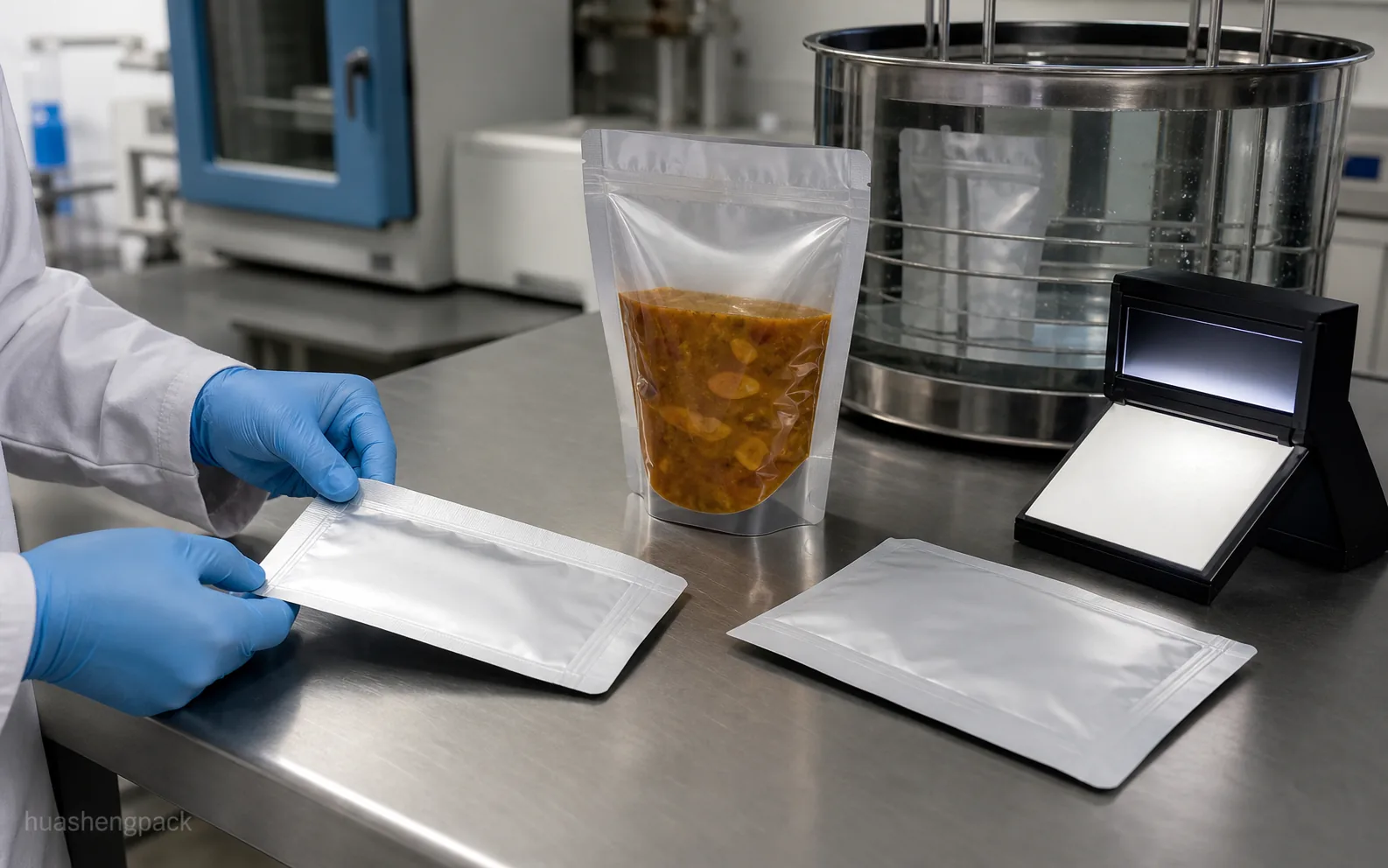 Retort pouch samples should be evaluated with the intended product, sealing equipment and validated processing conditions.
Learn how to evaluate retort pouch samples with real product filling, sealing, sterilization validation, leakage checks, seal strength and shelf-life observation.
Trả lời trực tiếp
Phần này cung cấp hướng dẫn riêng cho test evaluate retort pouch samples sterilization seal strength, gắn quyết định mua hàng với sản phẩm thực tế, phương pháp đóng gói và thị trường đích.
Why Retort Pouch Samples Must Be Tested Before Bulk Order
Khi đánh giá test evaluate retort pouch samples sterilization seal strength, trước hết cần xác định ứng dụng thực tế, giới hạn kỹ thuật và dạng lỗi mà quy cách phải kiểm soát. Giữ nguyên các thuật ngữ kỹ thuật và giá trị sau trong quy cách: 121°C, 30, 60.
What to Check Before Filling the Sample
Với test evaluate retort pouch samples sterilization seal strength, không nên chọn chỉ theo giá hoặc hình thức; cần kiểm tra cả độ tương thích của vật liệu, máy và điều kiện sử dụng. Giữ nguyên các thuật ngữ kỹ thuật và giá trị sau trong quy cách: PET/AL/PA/CPP, PET, AL, PA, CPP.
Filling and Sealing Test with the Real Product
Đối với test evaluate retort pouch samples sterilization seal strength, hãy so sánh phương án theo chức năng và hiệu năng yêu cầu, sau đó xác nhận bằng mẫu hoặc thử nghiệm đại diện cho sản xuất.
Retort Sterilization Validation and Post-Retort Inspection
Kiểm soát chất lượng test evaluate retort pouch samples sterilization seal strength cần tiêu chí đo được cho vật liệu, in, đường hàn và hiệu năng của bao bì đã chứa sản phẩm.
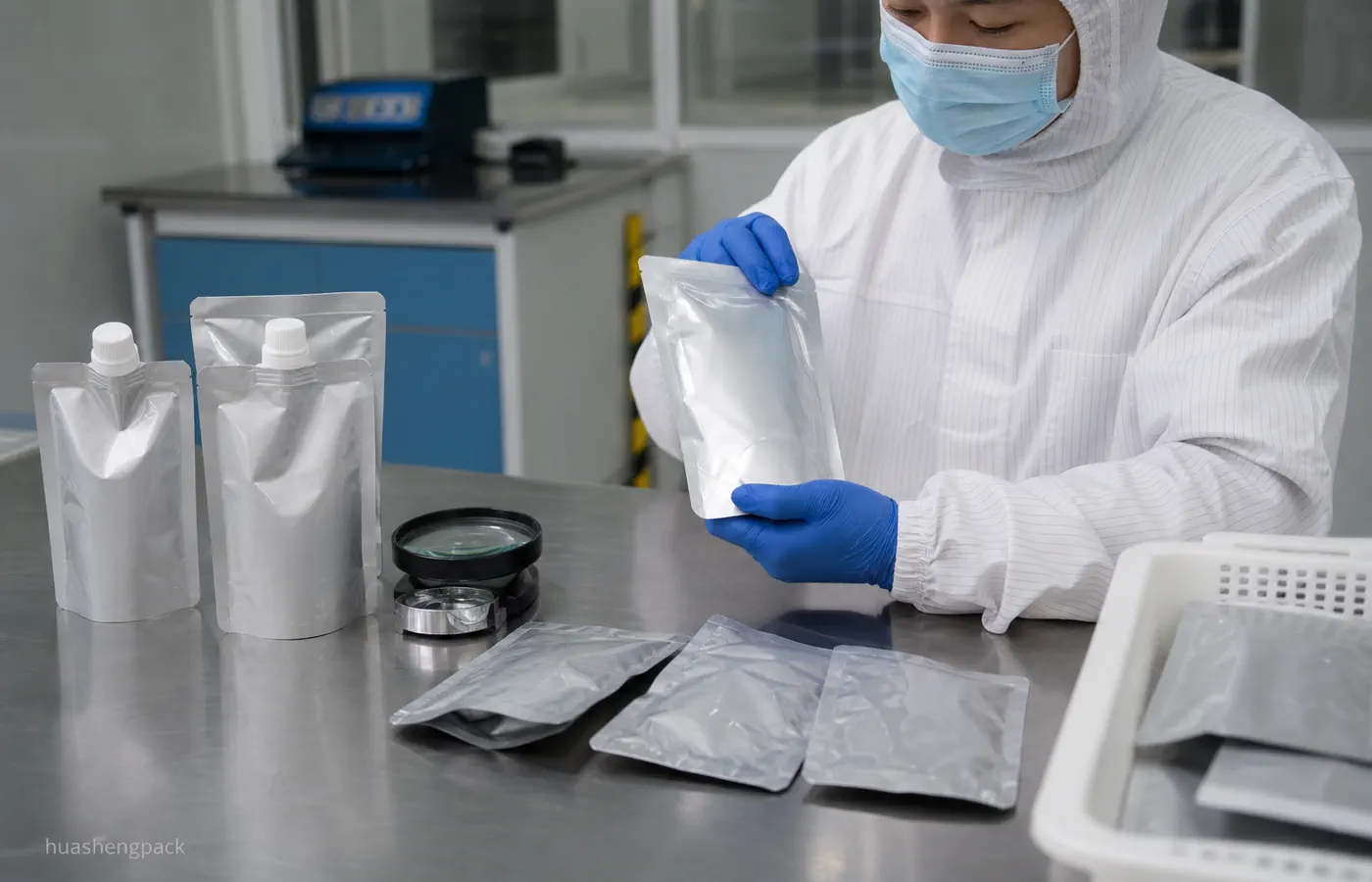
Post-process visual inspection should be performed with representative pouch samples and agreed evaluation criteria.Seal Strength, Burst Testing, Leakage Checks and Shelf Life Observation
Để báo giá chính xác cho test evaluate retort pouch samples sterilization seal strength, hãy chuẩn bị dữ liệu sản phẩm, kích thước, cấu trúc, số lượng, file thiết kế, máy và thị trường mục tiêu.
Sản phẩm liên quan
Hướng dẫn đóng gói liên quan
Câu hỏi thường gặp
How should buyers test retort pouch samples?
Test with the actual product at the target filling weight, sealed on production-representative equipment, and processed through the intended retort sterilization cycle. Check seal integrity, leakage, delamination, visual appearance and odor after retort. Shelf life observation under controlled conditions provides additional confidence. Sample testing with water alone cannot replicate real product behavior.
Is 121°C suitable for all retort pouch products?
No. Retort sterilization conditions depend on product type (meat, seafood, sauce, ready meal), filling weight, piece size, target shelf life and regulatory requirements. 121°C is a common reference point, but other temperature-time combinations are used depending on the product. The final sterilization process must be validated by the food producer or a qualified third party for the specific product and packaging combination.
What should be checked after retort sterilization?
Key checks include: leakage (the most critical), seal deformation, pouch delamination (layer separation), wrinkles or tunneling, print color change, unusual odor, pouch swelling, corner damage or pinholes, and easy-opening performance if the pouch has a tear notch. Any leakage found in sample testing should be investigated before proceeding to bulk production.
Can packaging suppliers guarantee final shelf life?
No packaging supplier can guarantee final shelf life alone. Retort processing can achieve commercially sterile products, but actual shelf life depends on product formulation, sterilization process validation, seal integrity, barrier performance of the complete package, and storage/distribution conditions. Shelf life must be validated by the food producer through product-specific stability studies.
What causes retort pouch leakage after sterilization?
Common causes include: product residue (oil, sauce, powder) in the seal area during filling, incompatible sealing parameters for the specific pouch structure, seal area stress from overfilling or product expansion during retort, pouch delamination at the seal interface, pinholes or damage from sharp product pieces (bone, hard spice), and inadequate seal area width for the pouch size and product weight.
Should real food be used for retort pouch sample testing?
Yes. Real food behaves differently from water or simulant in terms of heat penetration, expansion during retort, oil or sauce interaction with the seal area, and physical stress from product pieces. Testing with real product provides the most representative evaluation of how the pouch will perform in actual production and distribution.
Do retort pouch samples need third-party testing?
It depends on the product category, destination market regulations and buyer requirements. Some export markets or retail customers may require test reports from accredited laboratories. Discuss testing requirements with the supplier. If third-party testing is needed, confirm which party arranges and covers the cost, and what specific tests are required.