Flexible Packaging Sample Acceptance Criteria Before Production
Huasheng Packaging Technical Content Review · Published: · Updated:
 Test methods and acceptance criteria should be agreed for the product, structure and filling process.
Set sample acceptance criteria for flexible packaging by fill weight, sharp-edge risk, frozen conditions, premade pouch filling and VFFS or HFFS trials.
Direct answer
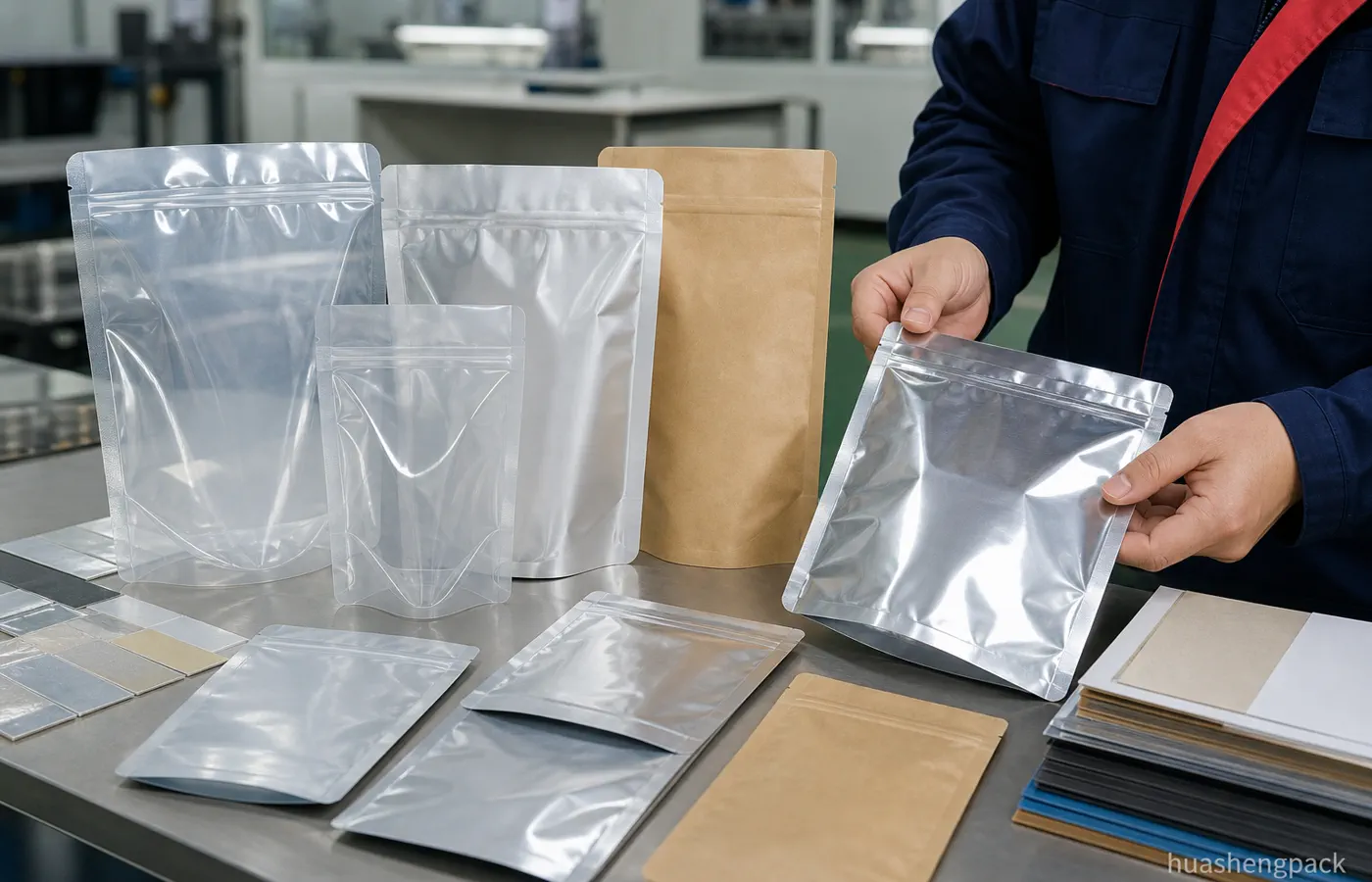
A useful packaging sample approval defines the product, fill weight, worst-case product orientation, conditioning, machine settings, test method, sample count and acceptance rule before testing begins. Frozen food especially needs filled-pack checks because weight, hard edges, ice and equipment conditions can expose failures that empty bags do not show.
Set Project-Specific Acceptance Criteria Before the Trial
Use three acceptance levels. First, critical failures such as leakage, open seals, punctures, delamination that affects use, or unsafe machine behavior should have a zero-acceptance rule in the agreed trial sample. Second, measurable items such as dimensions, seal strength, registration and roll specification should meet the signed drawing or specification and named test method. Third, process performance such as feeding, tracking and sealing should remain stable through an agreed continuous run, including restart or reel change where relevant.
Do not copy a universal seal-strength value, drop height, run length or acceptable reject percentage from another project. Those limits depend on pack size, product mass, geometry, test method, machine speed, handling route and the buyer’s risk tolerance. Record the agreed values in the sample protocol before approval.
Acceptance Matrix by Fill Weight and Sharp-Edge Risk
Lower fill weight with smooth frozen pieces — verify dimensions, seal continuity, leakage, opening and appearance after the intended freezing and storage condition. The lower weight does not remove abrasion, seal contamination or brittle-fold risk.
Medium or higher fill weight — add filled-pack shape, bottom or gusset opening, seal loading, lifting or handling points, compression and representative drop orientation. Weight alone does not prescribe a laminate; it increases the load used to validate film, seals and bag geometry together.
Dumplings, bones, shells or hard corners — place representative sharp pieces in the worst credible orientation against faces, folds, corners and seals. After conditioning, inspect for pinholes, whitening, cracking, channel leaks and seal damage. Repeat after handling tests when impact or vibration is part of actual use.
Mixed product sizes — use the largest, hardest and most angular credible pieces rather than an average sample. Document product condition and orientation so a repeat trial is comparable. Empty-bag puncture data may support screening but cannot replace a filled frozen-pack trial.
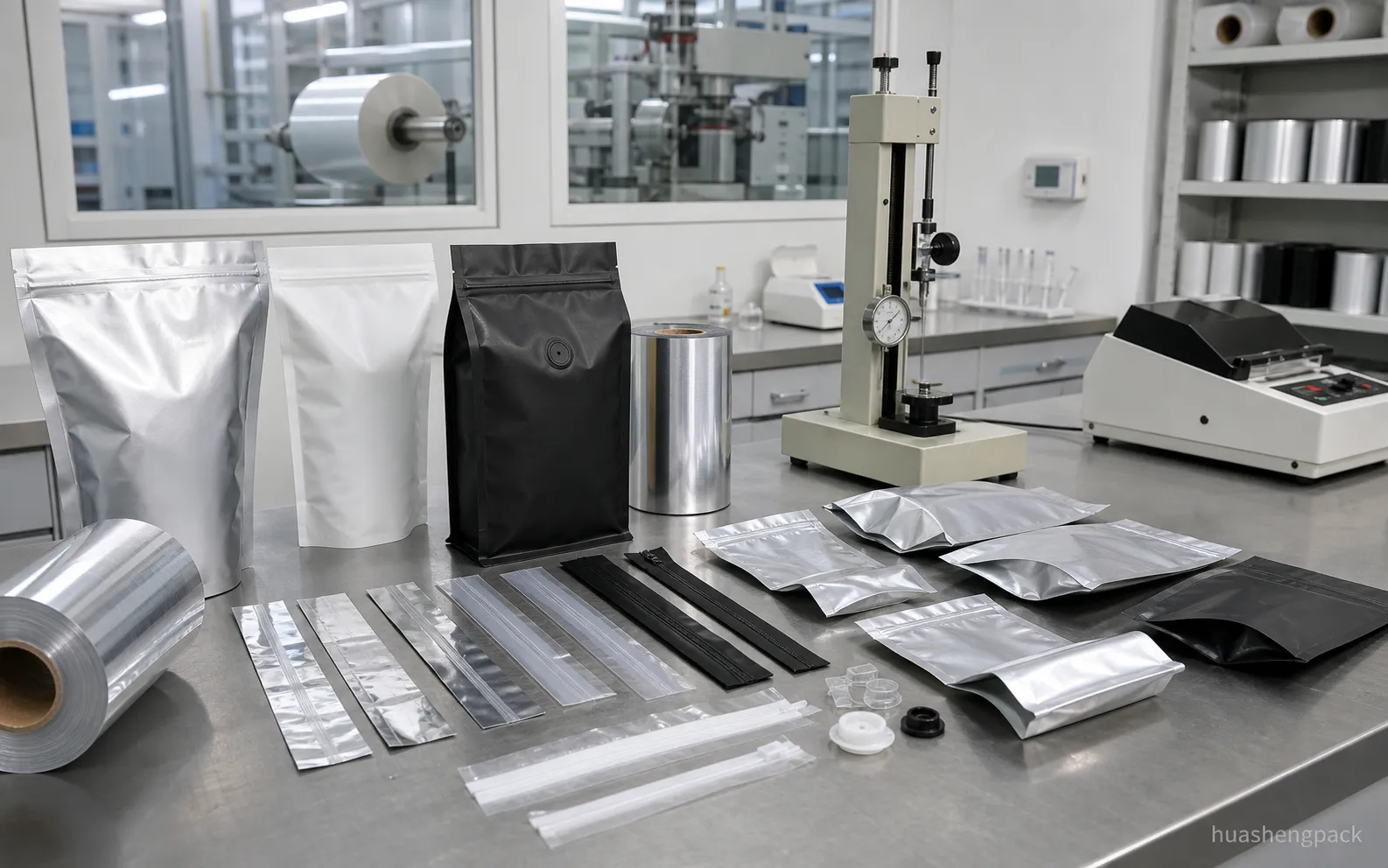 Seal channels, folds and contamination should be recorded without assuming one failure mechanism.
Premade Pouch, VFFS and HFFS Trial Criteria
Premade pouches — verify pouch opening and pickup, mouth flatness, fill access, product contamination in the final seal, zipper or feature position, top-seal window, filled shape and seal integrity. For manual or semi-automatic filling, also record operator handling and whether the approved process can be repeated.
VFFS roll film — verify web width, repeat, unwind, eye-mark sensing, forming collar fit, tracking, friction, pull-belt behavior, vertical seal, cross seals, cut position and filled-pack drop. Evaluate startup, stable target speed, planned stops and restart. Product trapped in horizontal seals must be assessed using the real dosing behavior.
HFFS or flow wrap — verify web tracking, product pitch, print-to-cut registration, fin or lap seal configuration, end-seal clearance, crimp and knife interaction, product position and pack tightness. Test at representative product spacing and speed rather than with empty film only.
A machine trial passes when critical failures are absent in the agreed sample, measurable specifications are within approved limits, and the line holds the agreed operating window without recurring adjustment. One short successful run does not establish long-term process capability.
Material choices and seal observations should be reviewed with the intended product and agreed test method.Frozen Conditioning and Inspection Sequence
Create retained controls at room condition and filled test packs using the intended product and weight. Seal on representative equipment and record temperature, pressure, dwell time, speed and relevant tension or registration settings. Apply the agreed freezing method, lowest expected storage condition and duration; include temperature cycling only when it reflects actual operation.
Inspect immediately after conditioning and again after the agreed handling sequence. Check seal channels, leakage, pinholes, brittle cracking at folds, delamination, zipper or feature function, distortion, print surface and product protection. For destructive tests, define specimen direction, width, conditioning and failure mode. For leak tests, define method sensitivity, pressure or vacuum, hold time and pass rule.
Shelf-life acceptance remains the product owner’s responsibility. Material OTR, WVTR, seal or drop results answer specific questions but do not alone validate food quality for the full shelf-life target.
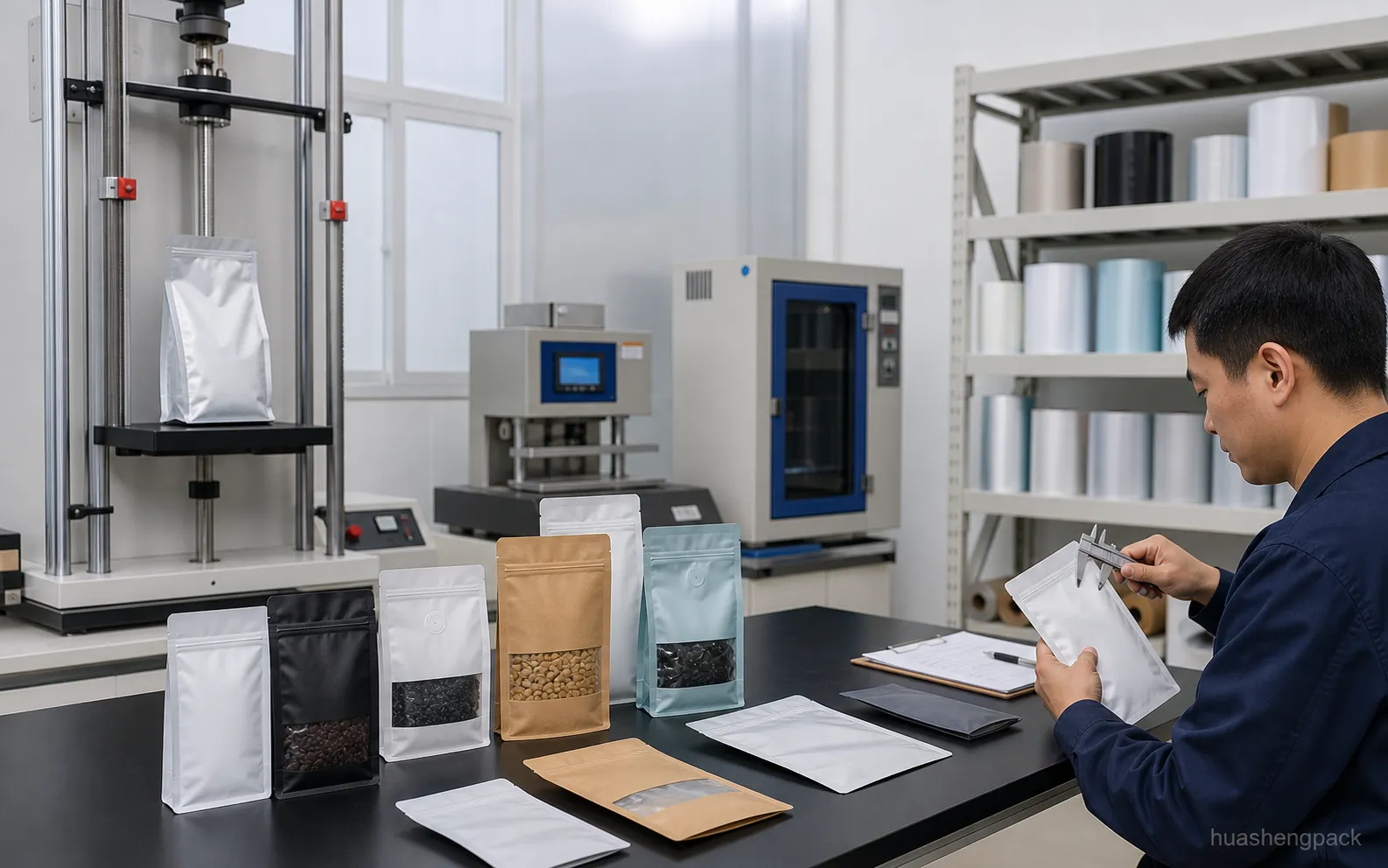 Representative filled samples support dimensional, seal and handling assessment.
Sample Approval Record to Sign Before Bulk Production
Record product and worst-case pieces; target and tolerance for fill weight; package dimensions and format; material structure and thickness; freezing and storage protocol; filling machine and settings; seal settings; line speed; reel width, repeat, unwind, eye mark, core and roll limits where applicable; test methods; sample count; zero-acceptance critical defects; numerical specification limits; continuous-run and restart criteria; retained samples; approver; artwork and specification revision; and rules for material, machine or process changes after approval.
Related Products
Related Packaging Guides
Frequently Asked Questions
Should heavier frozen food use thicker packaging film?
Not automatically. Higher fill weight increases seal, impact and geometry loads, but resin grade, layer combination, bag shape and product edges also matter. Validate the filled pack instead of selecting thickness from weight alone.
How should sharp frozen products be tested?
Use representative hard pieces in the worst credible orientation against pouch faces, folds, corners and seals, then inspect after freezing and the agreed handling sequence.
What is a critical packaging sample failure?
Typical critical failures include leakage, open seals, punctures, functional delamination or unsafe machine behavior. The parties should define the list and zero-acceptance sample rule before the trial.
How long should a packaging machine trial run?
There is no universal duration. Agree a run that covers startup, stable target speed, normal stops, restart and reel change where relevant, with enough packs to assess recurring defects.
Can an empty pouch test approve frozen food packaging?
No. Empty samples support dimensional and initial seal checks but do not reproduce product edges, weight, contamination, freezing or handling loads.
When must a packaging sample be revalidated?
Revalidation may be needed after changes to product, fill weight, material grade or thickness, pouch geometry, supplier process, machine, speed, seal settings, freezing condition or acceptance specification.