Laminated Shrink Film and Chub Film Tender Checklist: Structure, Shrinkage, Roll Data and Compliance Questions
Tim tinjauan konten teknis Huasheng Packaging · Terbit: · Diperbarui:
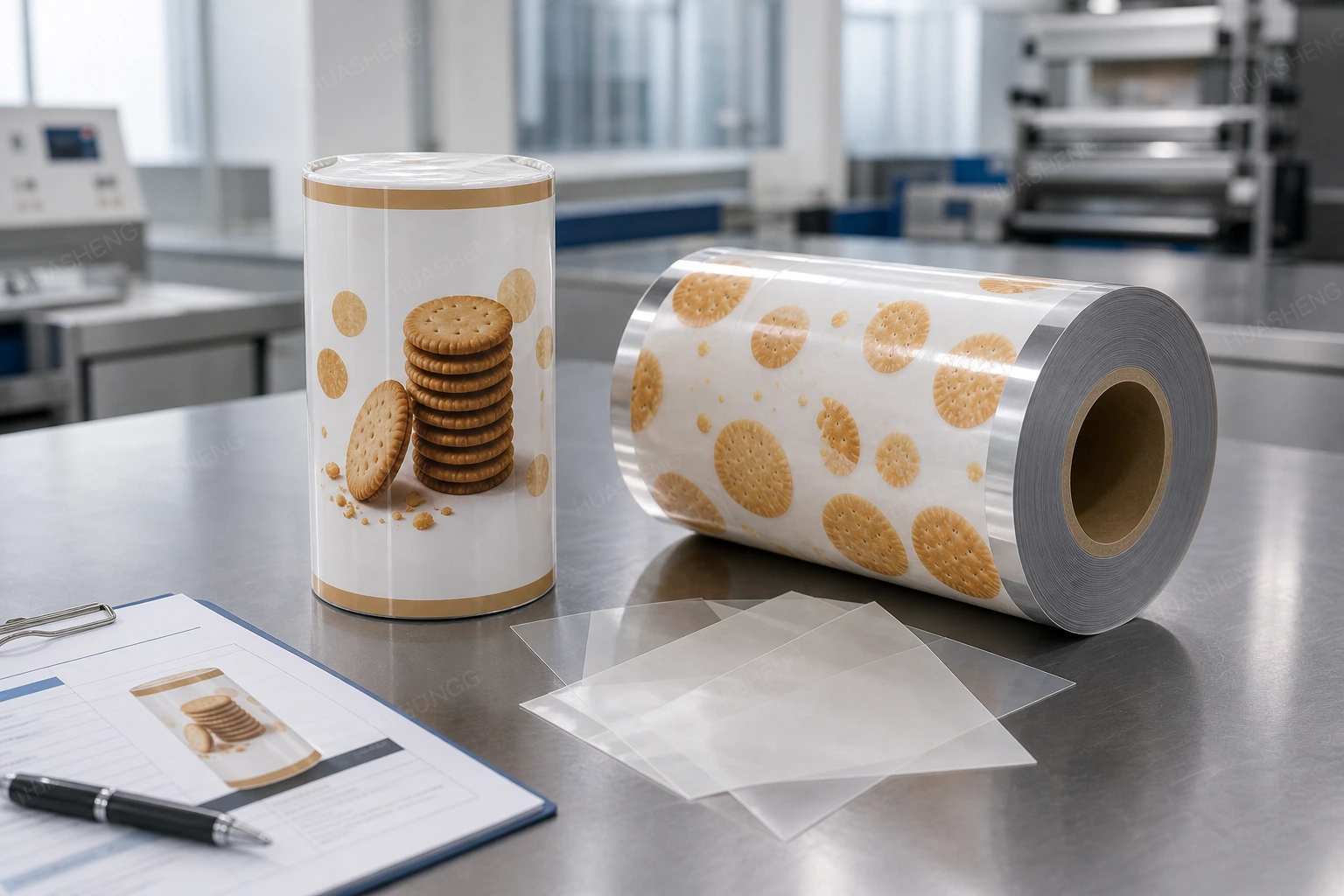
 Laminated shrink film and chub film roll samples for tender review.
Learn what buyers should confirm for laminated shrink film and chub film tenders, including LLDPE/Nylon/LDPE structures, shrinkage ratio, roll data, printing and food contact compliance questions.
Jawaban langsung
Bagian ini memberi panduan khusus tentang laminated shrink film chub film tender checklist dan menghubungkan keputusan pembelian dengan produk nyata, metode pengisian, dan pasar tujuan. Pertahankan istilah teknis dan nilai berikut tanpa perubahan dalam spesifikasi: MD, TD.
What is laminated shrink film or chub film?
Saat menilai laminated shrink film chub film tender checklist, tentukan lebih dahulu penggunaan nyata, batas teknis, dan mode kegagalan yang harus dikendalikan spesifikasi. Pertahankan istilah teknis dan nilai berikut tanpa perubahan dalam spesifikasi: ID.
Common structure direction: LLDPE / Nylon / LDPE based laminate
Untuk laminated shrink film chub film tender checklist, jangan memilih hanya berdasarkan harga atau tampilan; periksa juga kecocokan bahan, mesin, dan kondisi penggunaan. Pertahankan istilah teknis dan nilai berikut tanpa perubahan dalam spesifikasi: LLDPE, LDPE, PE.
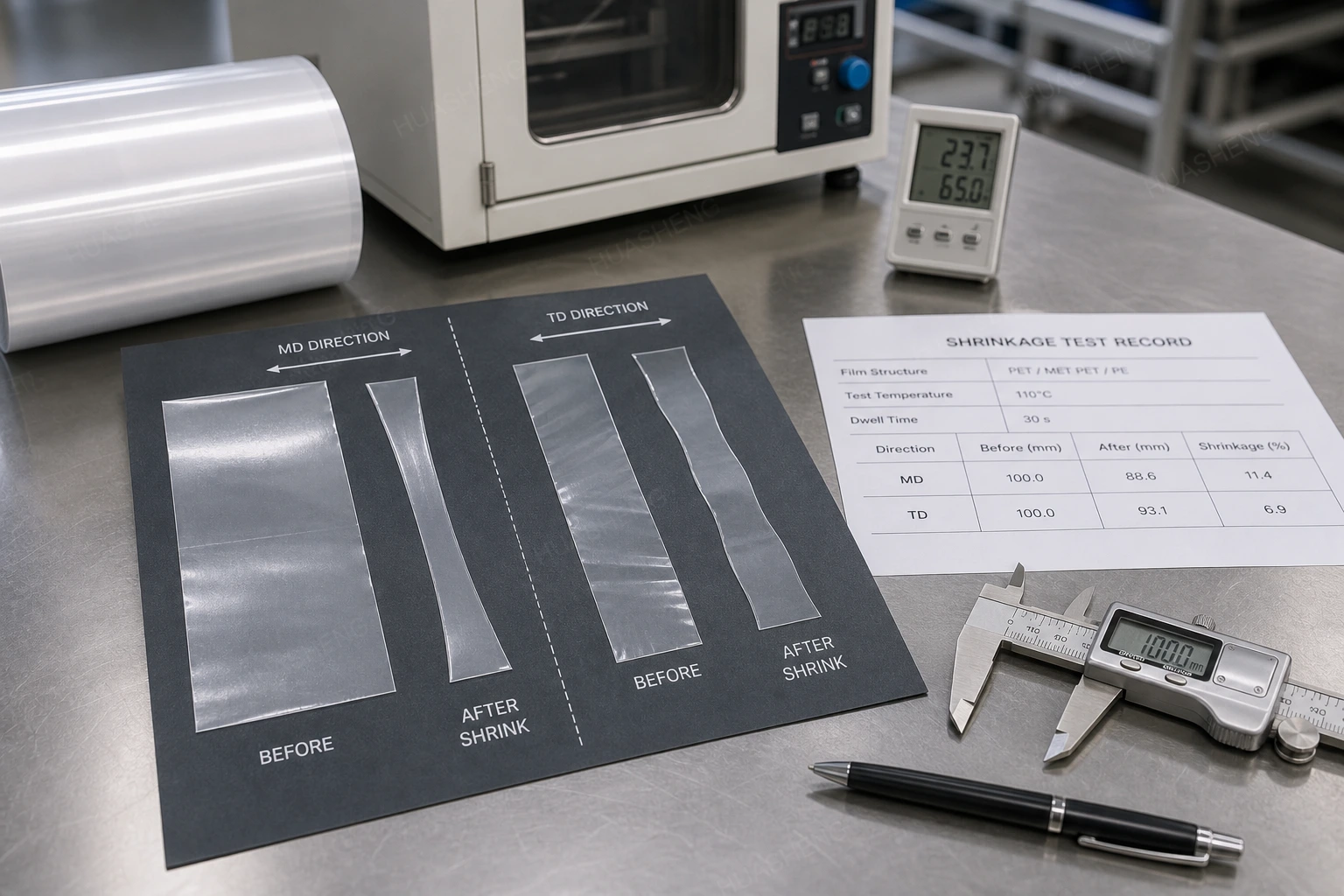
Why shrinkage ratio, MD / TD direction and printing risk matter
Untuk laminated shrink film chub film tender checklist, bandingkan pilihan berdasarkan fungsi dan kinerja yang dibutuhkan, lalu konfirmasikan dengan sampel atau uji produksi yang representatif. Pertahankan istilah teknis dan nilai berikut tanpa perubahan dalam spesifikasi: MD, TD, SKU.
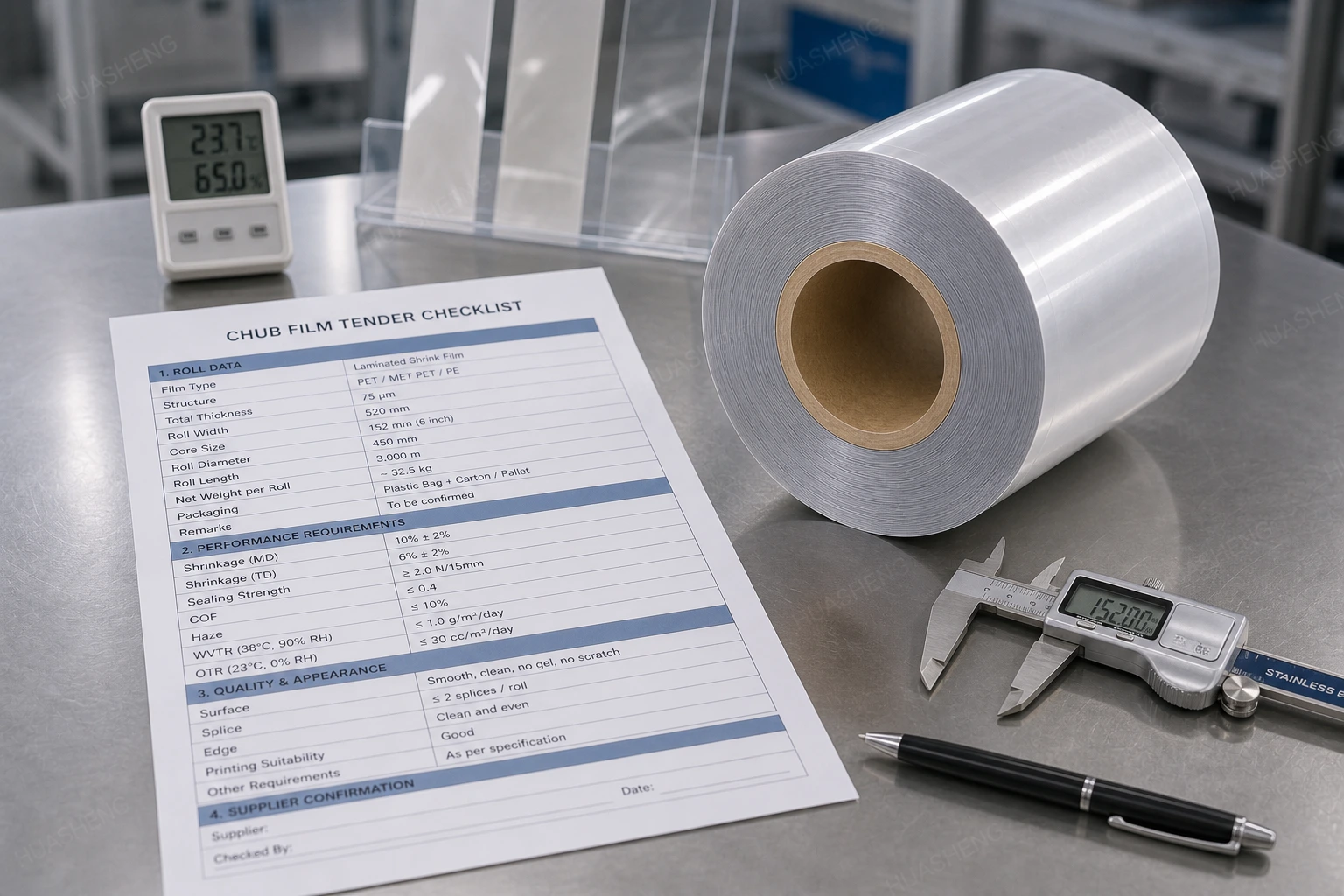
Roll data and technical properties often requested in tenders
Kendali mutu laminated shrink film chub film tender checklist memerlukan kriteria terukur untuk bahan, pencetakan, segel, dan kinerja kemasan yang telah diisi. Pertahankan istilah teknis dan nilai berikut tanpa perubahan dalam spesifikasi: MD / TD, ID, WVTR, OTR, COF, MD, TD.
Food contact documents, common mistakes and quotation checklist
Agar penawaran laminated shrink film chub film tender checklist akurat, siapkan data produk, ukuran, struktur, jumlah, artwork, mesin, dan pasar tujuan. Pertahankan istilah teknis dan nilai berikut tanpa perubahan dalam spesifikasi: MD / TD, PET/PE, PE, COA, FDA, CFR, EU, MD, TD, LLDPE, LDPE, ID, PET, 21, 10, 2011, /products/food-packaging-roll-film, /materials/pet-pe-packaging, /blog/food-grade-standards-for-flexible-packaging, /blog/how-to-prepare-packaging-details-before-requesting-a-quote.
Produk Terkait
Panduan Kemasan Terkait
Pertanyaan Umum
What is chub film packaging?
Chub film packaging usually refers to roll film used for cylindrical or tube-like food packaging formats. The exact film structure, shrinkage behavior and sealing performance should be confirmed according to the product and packing process.
Is LLDPE / Nylon / LDPE a common structure for chub film?
It can be one possible structure direction in some tender specifications, but it is not the sole option. Final structure depends on product type, shrink process, filling condition, sealing requirement and compliance documents.
Why is MD / TD shrinkage important?
MD and TD shrinkage affect package fit, printed artwork distortion, sealing area and production stability. Buyers should confirm the test temperature, method and acceptable tolerance before production.
Can printed shrink film keep artwork unchanged after shrinking?
Printed artwork may change after shrinkage. Dieline, barcode, text and legal information should be reviewed with shrink distortion in mind before final printing.
What roll data should buyers provide for chub film quotation?
Buyers should provide film width, repeat length, core ID, roll diameter, roll weight, winding direction, quantity, printing colors and packing line information.
What compliance documents may be needed for food chub film?
Depending on the market and product, buyers may require food contact declarations, migration testing, residual solvent reports, ink and adhesive statements, or batch COA. These should be confirmed before quotation.
Can a supplier guarantee final shrink performance without testing?
No. Shrink performance should be validated with the actual film structure, product, packing equipment, shrink process and storage conditions.