Custom Food Packaging Roll Film for Printed Flexible Packaging
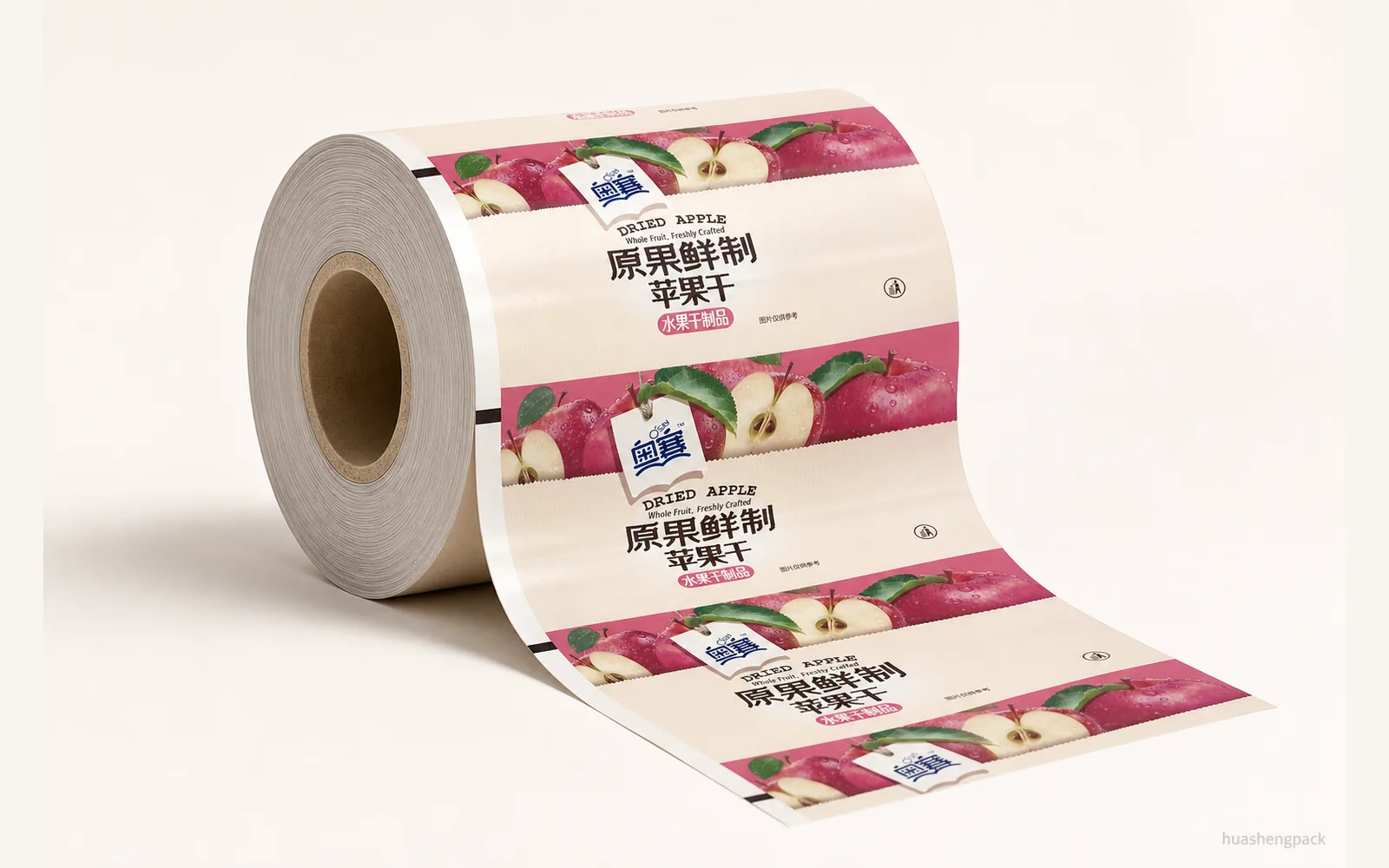
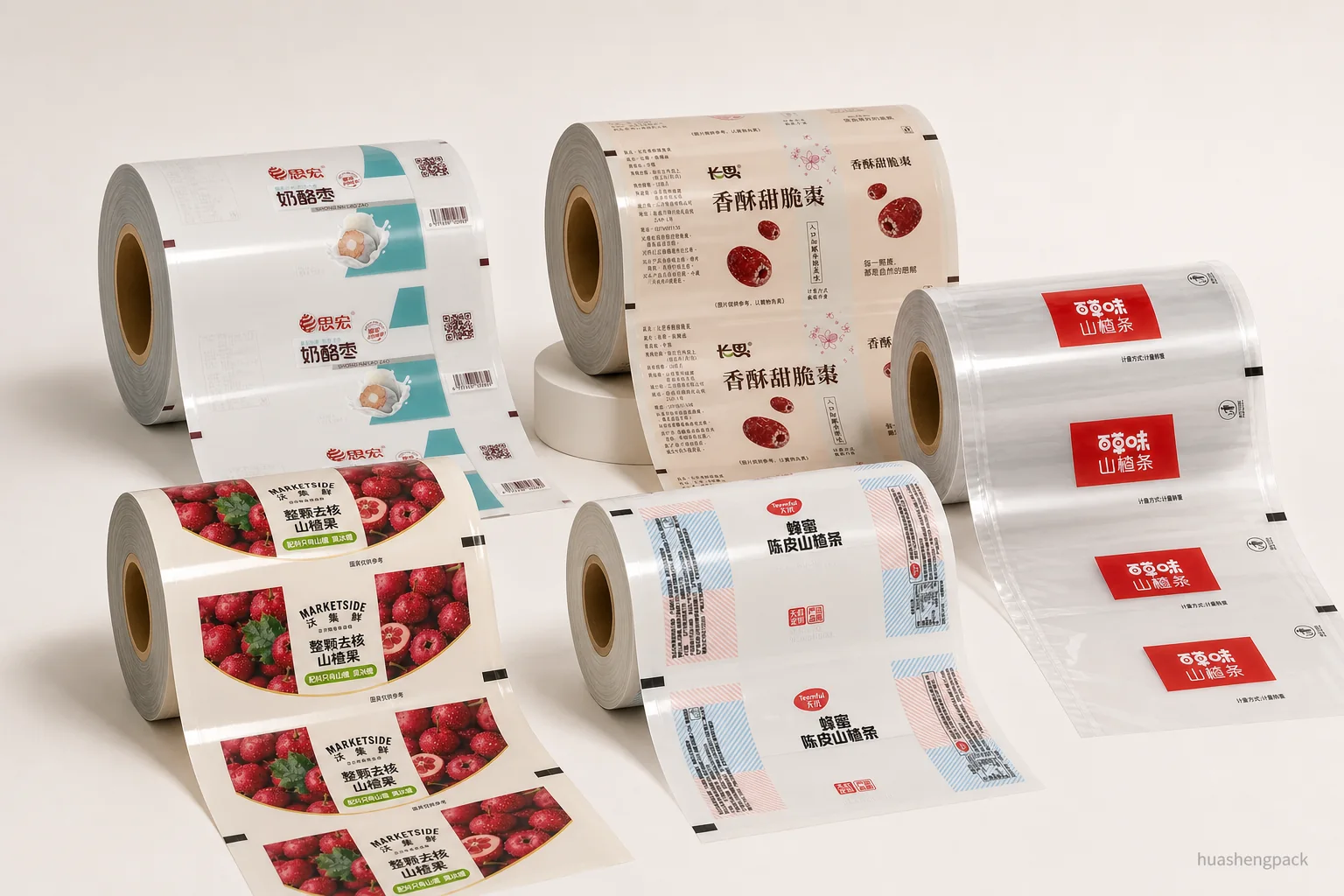
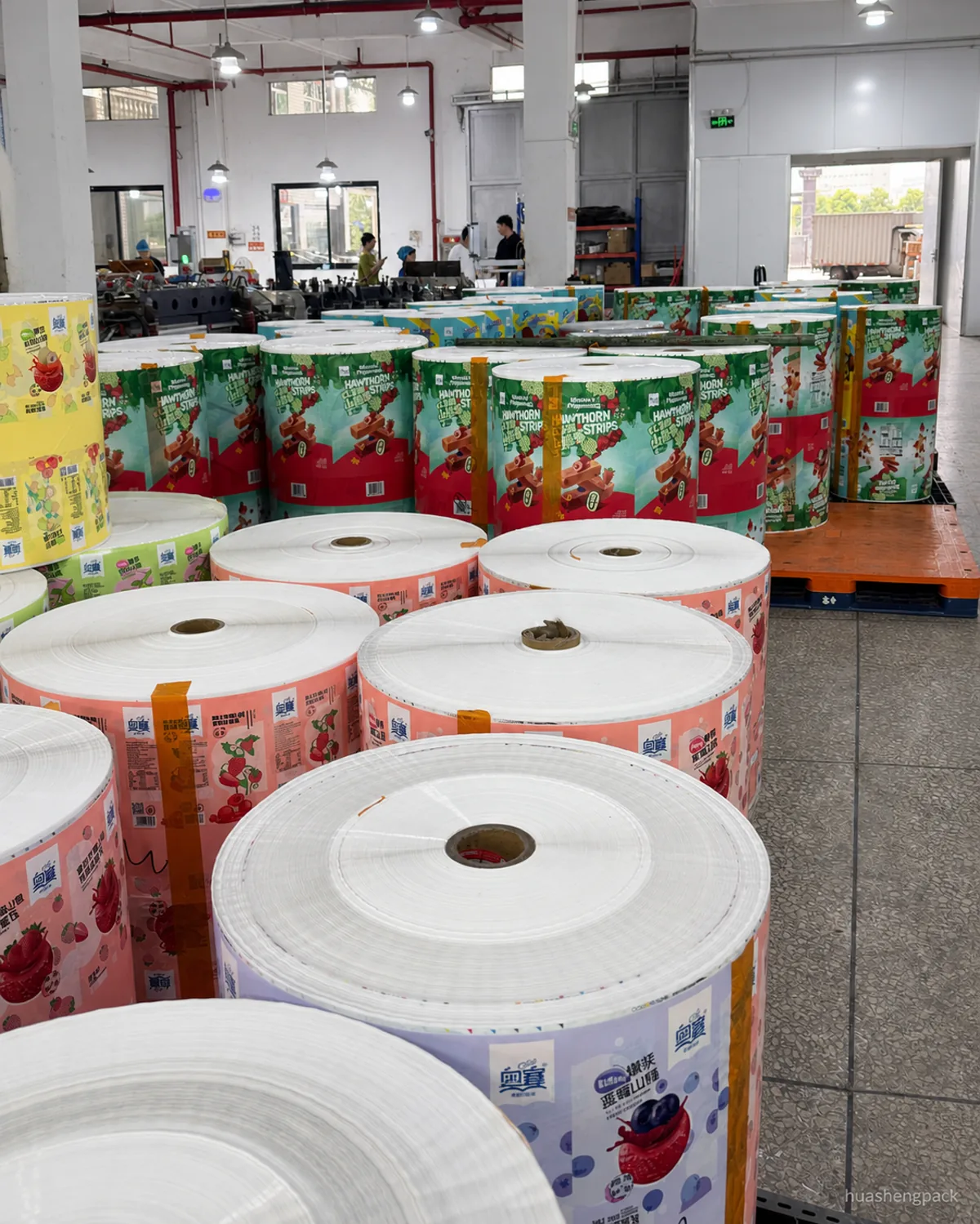
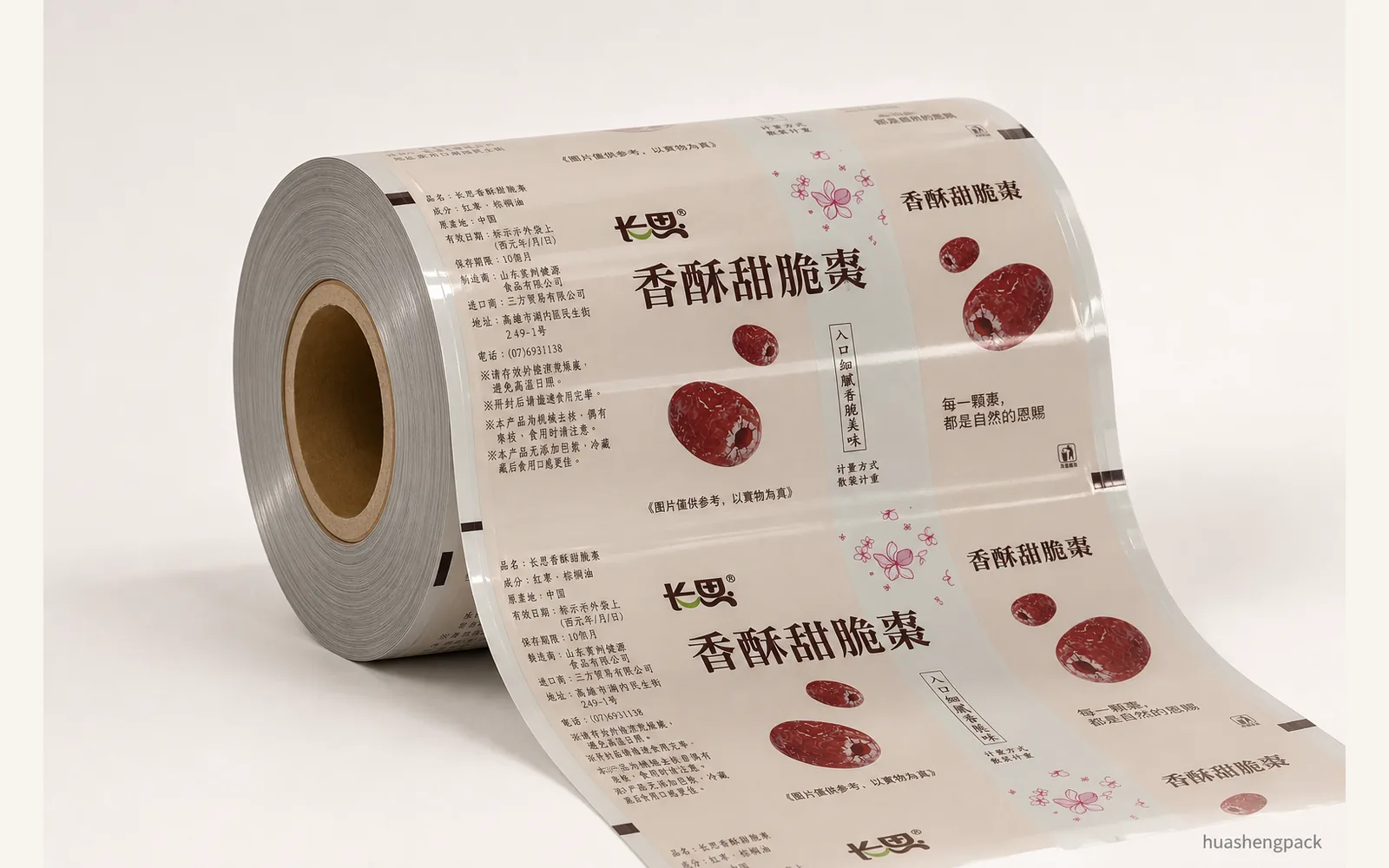
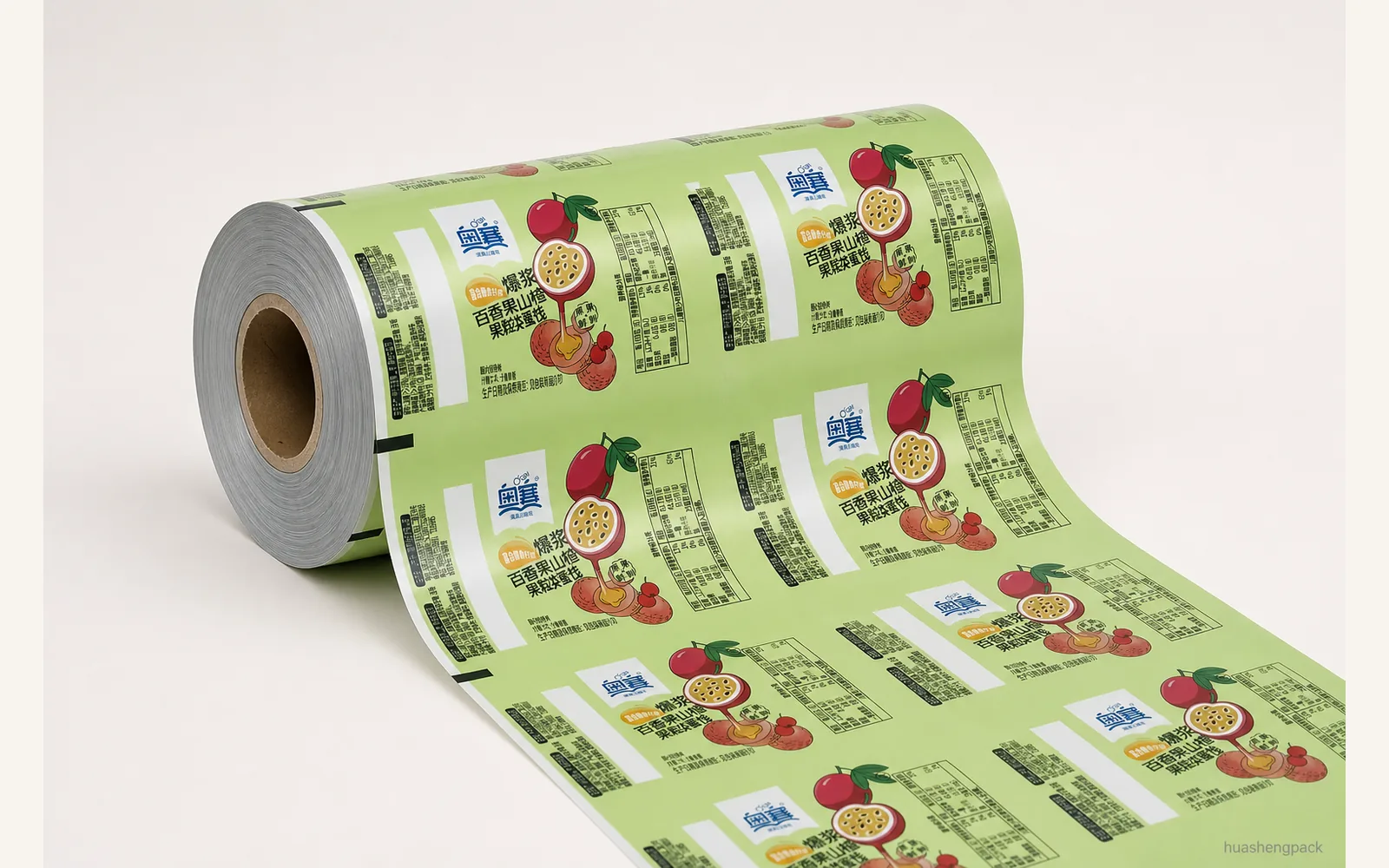
Huasheng Packaging manufactures custom printed food-packaging roll film in Chaozhou, China. Send your product, current film or pack photo, and quantity; machine details can follow for review.
Product Overview
Food packaging roll film should be specified as part of a particular packing line, product and finished-pack format. VFFS, HFFS and flow-wrap equipment can require different web paths, forming geometry, lap or fin seals, friction, stiffness, eye marks and sealing response. A laboratory film value or nominal laminate name does not establish line compatibility. The specification should move from a machine handoff sheet to a representative trial reel, signed acceptance criteria and controlled repeat orders.
Common Applications
- VFFS pillow, gusseted and selected sachet formats after web, former, seal and cut data are confirmed
- HFFS and flow-wrap food packs after product dimensions, fin or lap seal, sealing jaws and registration are matched
- Dry food, snacks, powder, confectionery and selected frozen-food lines after barrier, puncture and temperature conditions are validated
Material Options
- BOPP/CPP family — A possible route for selected dry-food or snack lines. Confirm stiffness, friction, sealing window and barrier.
- PET/PE family — A possible clear or printed direction with a PE sealant. Confirm forming, hot tack, contamination and shelf-life needs.
- PET/VMPET/PE family — An opaque metallized direction for moisture, aroma and light control. VMPET is not aluminum foil.
- PET/AL/PE or other qualified laminate — May be evaluated for higher barrier or demanding products. Confirm flexing, pinhole, forming, seals and machine response.
Key Features
- Printed rollstock can combine graphics, barrier and heat sealing when the laminate is matched to the intended line
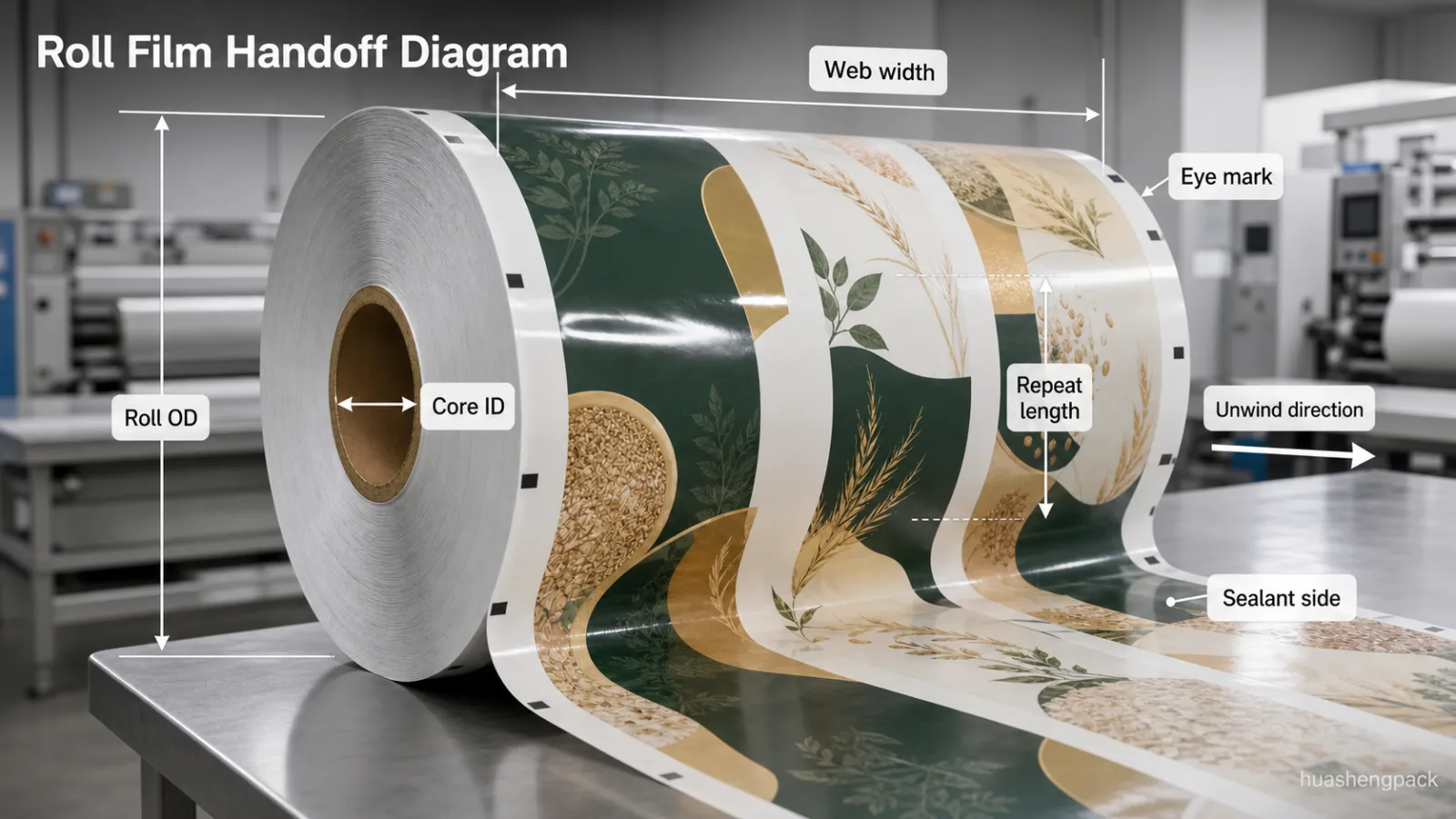
- Eye-mark position, contrast, repeat and unwind direction connect the approved artwork to registration and cutting
- COF, stiffness, curl, tension and gauge consistency influence feeding and forming but require line-specific acceptance limits
- A trial reel and documented change control reduce uncertainty when moving from approval to repeat production
Printing & Finishing Options
- Printing method — Rotogravure printing up to 9 colors
- Surface finish — Matte, glossy or registered matte direction subject to artwork review
- Functional options — Confirm printed repeat, eye mark, cut position and unwind direction against the packing machine and approved artwork. Pouch fittings are not roll-film options.
Technical Parameters
- Provide machine make and model, VFFS or HFFS format, forming shoulder or box, web path, lane count, line speed and normal product condition.
- Confirm fin or lap seal, inside and outside web faces, longitudinal and cross-seal jaw type, temperature, dwell, pressure and contamination state.
- Separate seal-initiation data from machine setpoints, and evaluate hot tack, final seal strength and leakage under representative running conditions.
- Lock web width, repeat, eye mark, unwind, core ID, maximum outer diameter, roll weight, splice limit, splice marker and roll identification.
- Agree which material, gauge, ink, adhesive, COF or process changes require notification, sample review or a new line trial before repeat supply.
MOQ & Lead Time
Printed roll film is reviewed from 500 kg per structure, subject to final web width, repeat, core, reel, artwork, machine inputs and factory approval. Production timing is confirmed against the current factory schedule after the specification and artwork are approved.
Quality Control
- Verify laminate identity, total gauge, web width, repeat, eye mark, unwind, core, roll build, splice marking and print orientation against the signed reel specification.
- Run a representative trial reel to check threading, forming, tracking, registration, cut, seals, hot tack, leakage and stable operating range.
- Record agreed sampling, test methods and project-specific tolerances for dimensions, bond, COF, seals, print and reel condition.
- Retain the approved specification and change history so repeat orders can be compared before release and after line feedback.
Common Problems
- Film seals in a laboratory test but opens or distorts on line because dwell, pressure, hot tack or contamination differs.
- The web width and repeat are correct, but unwind, eye-mark side, print orientation or sealant face is reversed.
- Roll outer diameter, weight, hardness, telescoping or splice placement causes handling, tension or downtime problems.
- A repeat order changes film grade, gauge, friction, ink or adhesive without reviewing the approved machine window.
What to Prepare Before Inquiry
- Product type, condition, dimensions, fill weight and finished pack format
- Machine make and model, VFFS or HFFS, forming set and lane count
- Normal and target line speed, web path and film contact faces
- Fin or lap seal, jaw type, temperature, dwell, pressure and contamination conditions
- Web width, repeat, eye mark, unwind direction and print orientation
- Core ID, maximum roll OD and weight, splice limit and splice marking
- Material, thickness, barrier, COF or stiffness requirements if known
- Trial-reel objective, acceptance criteria, artwork and quantity per design
Roll-film machine handoff checklist
Record web width, repeat, lanes, unwind, eye mark, core, diameter, weight, splice and machine limits.
Use these editable CSV files to align artwork, roll-film machine data and material requirements before sampling. They are preparation tools, not approval records or performance guarantees.
Editable English template
Download CSV · Open finished PDF · Downloadable Packaging Project Checklists
Roll-film buyer decisions
Connect the reel specification to the receiving machine
A nominal film width or laminate name is not a machine-ready specification. Review the product, web path, repeat, registration, reel build and sealing conditions together.
01
- Condition
- Exact machine, product feed, web width, repeat, unwind, eye mark, core and reel limits are supplied.
- Evidence
- Approved machine handoff sheet and representative first-reel trial record.
- Limitation
- Nominal film width or a laboratory property alone does not prove machinability.
- Next action
- Complete the roll-film handoff file and schedule a representative line trial.
02
- Condition
- Seal surfaces, production speed and product contamination conditions are defined.
- Evidence
- Project-specific seal-window and finished-package checks under agreed methods.
- Limitation
- A laboratory heat-seal curve is a starting point, not production approval.
- Next action
- Agree trial conditions and acceptance ownership before production release.
These units organize a roll-film project; they do not prescribe a universal laminate, machine setting, seal window, compliance result, shelf life, price, lead time or MOQ.
Plan product evidence before approval
The laboratory page records available instrument categories and one bounded sample report. It does not mean this product, structure or batch has passed testing.
Buyer Notes
- Provide product type, bag size or roll width — a photo or sample helps quick assessment
- If material structure or thickness is known, include specification
- Number of printing colors and artwork file affect cylinder cost and prepress time
- Packing machine type (VFFS/HFFS/manual) determines roll film vs premade pouch choice
- Target market compliance, China OEM filling requirements or nominated domestic warehouse handover details help confirm the final specification
Finished printed reels, slit webs and rewinding output
Real workshop footage showing finished printed reels, narrow slit web lanes and printed film moving through rewinding output.
Video scene transcript
Timed descriptions of the visible production steps. This video has no narration. Captions describe visible scenes only.
- 00:00–00:03 — Finished printed reels on the workshop line
- 00:03–00:06 — Multiple narrow printed web lanes after slitting
- 00:06–00:10 — Printed repeat moving through rewinding output
Evidence boundary: The footage documents visible finished reels, slit web lanes and rewinding output. Final reel width, winding direction, core size, tension and acceptance criteria remain project-specific.
Flexible Packaging Production Video Center →
Related Products
- Snack Packaging Roll Film
- Candy Packaging Film
- Biscuit Packaging Film
- Stand Up Zipper Pouch
- Spout Pouches
- Three Side Seal Pouch
- Easy Peel Packaging Film
Related roll film guides
Review material roles, machine handoff information and packaging options before project approval.
- High-barrier film review
Compare the complete laminate, test conditions and product requirements; a material name alone does not approve shelf life.
- BOPP film roles
Review printing, friction and sealing requirements for the actual food packaging project.
- Eye marks and unwind direction
Confirm printed and sealing sides, web direction, repeat and registration in the machine handoff.
- Snack packaging options
Compare product format, filling and storage conditions before selecting a packaging route.
- Sachets and stick packs
Review web dimensions, fill quantity and sealing conditions for small-format packaging.
Related Applications
Related Packaging Guides
- Roll Film vs Premade Pouches: A Buyer Guide for Packing Line and Format Selection
- Sachets for Liquid or Powder Packaging: Format and Machine Guide
Frequently Asked Questions
Can one roll film run on every VFFS or HFFS machine?
No. Web path, forming geometry, seal type, friction, stiffness, repeat, eye mark and operating window must match the specific line and product.
Is the laboratory seal initiation temperature the machine setting?
Not necessarily. Machine surface temperature, dwell, pressure, speed, heat transfer and contamination affect the practical operating window.
What should a trial reel verify?
Verify threading, forming, tracking, registration, cutting, hot tack, final seals, leakage, appearance and a stable operating range with representative product.
How should roll splices be specified?
Agree the permitted number, splice construction, position restrictions, visible marker, sensor response and whether affected packs must be removed.
When is a repeat-order change review needed?
Review changes to film grade, thickness, sealant, COF, ink, adhesive, barrier or converting process when they may affect the approved pack or line.
What data is needed for a roll film quotation?
Provide product, pack format, machine, web width, repeat, unwind, eye mark, core, roll limits, seal conditions, structure, artwork and quantity per design.
Recommended Material Structures
Material structure should be reviewed according to product type, shelf life, filling condition, barrier requirement and packing process.
- PET/PE Food Packaging — Basic laminated structure for general food roll film, dry food packaging and automatic packing applications.
- PET/VMPET/PE Metallized Packaging — Metallized structure for roll film projects that need better moisture protection and metallic barrier appearance.
- Compare Material Structures — Compare PET/PE, PET/VMPET/PE and PET/AL/PE before choosing roll film material.
Related Packaging Guides
Learn material structures, packaging options and application guides related to this product.
- High Barrier Film for Food Packaging — Learn how barrier structures help reduce moisture, oxygen and aroma loss.
- BOPP Film for Food Packaging — Learn when BOPP film is used for snack and automatic packing roll film.
- Eye Mark and Roll Film Direction — Check roll direction, eye mark position and cutting accuracy for packing machines.
- Snack Packaging Solutions — Explore roll film and pouch options for snack products.
- Sachet and Stick Pack Packaging Solutions — Review roll film requirements for sachet and single-serve packaging.