CPP vs RCPP Film: Sealing Layer Selection for Food and Retort Packaging
CPP is cast polypropylene film commonly used as an inner heat-sealing layer. RCPP usually refers to a retort-grade CPP direction, but the abbreviation does not prove that a film is suitable for a specific sterilization cycle. Buyers should confirm the grade, complete laminate, adhesive, pouch seals, product and actual time-temperature-pressure process before approval.
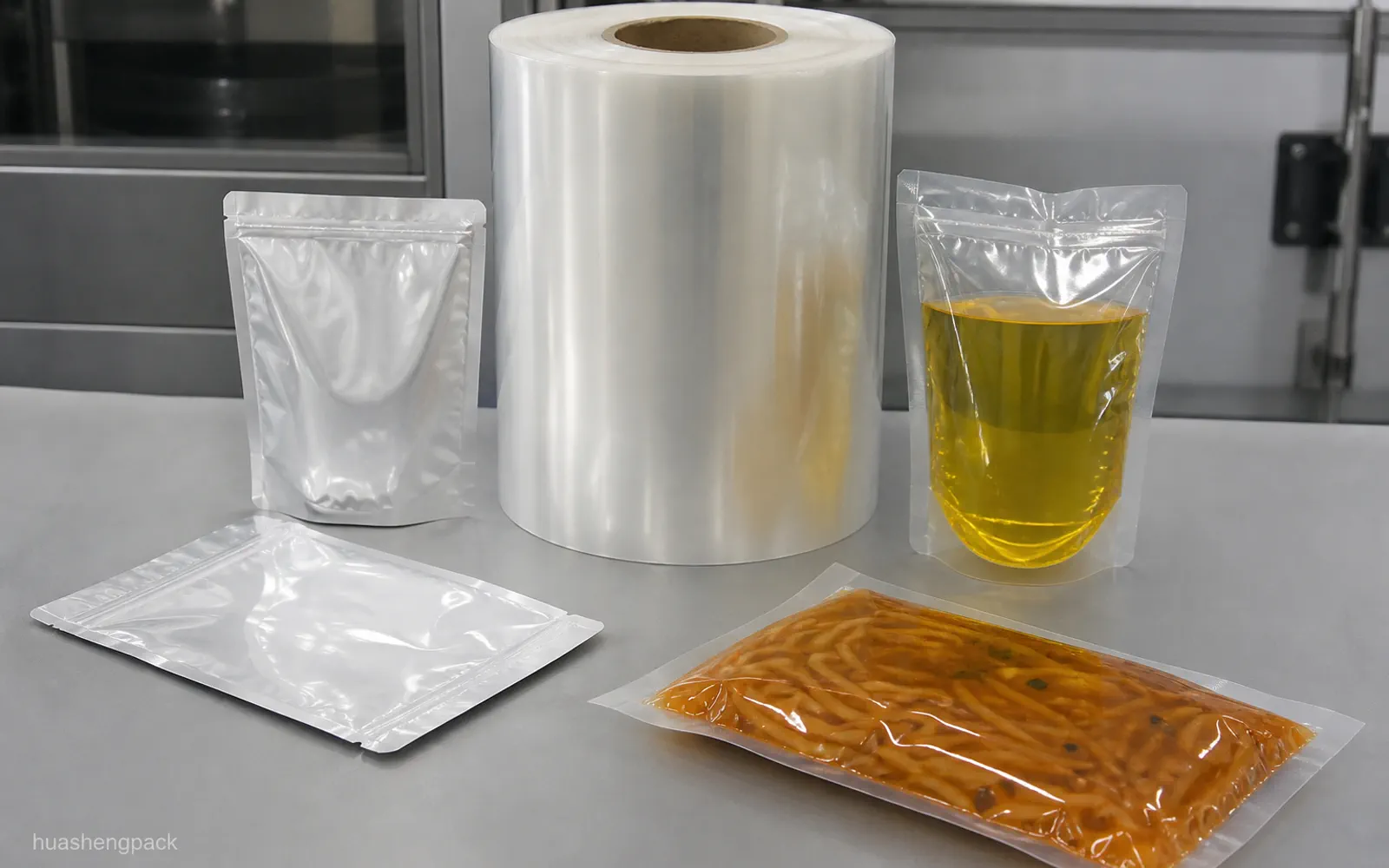
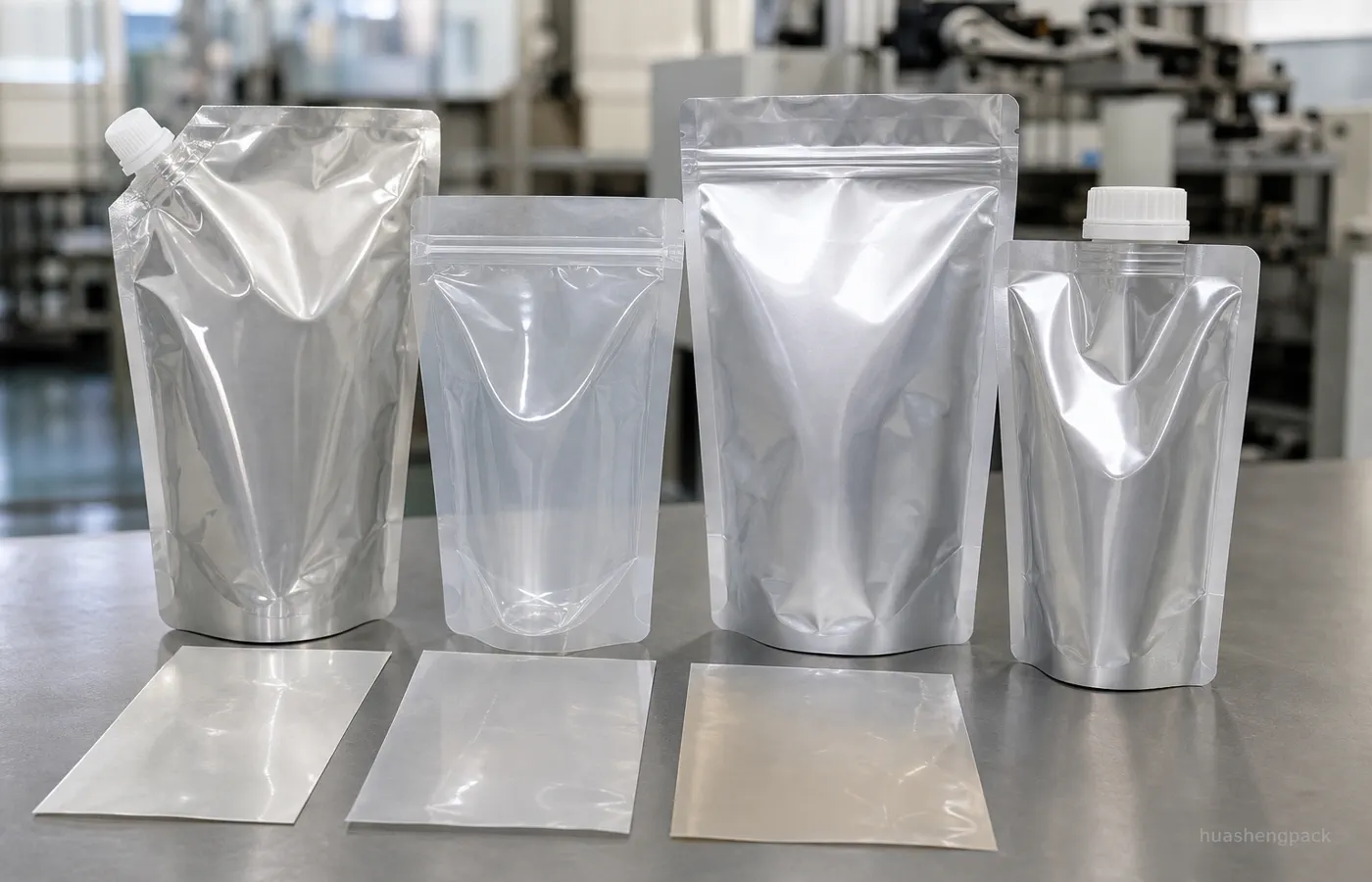
Standard CPP and RCPP Are Not Interchangeable Specifications
Standard CPP can suit selected dry-food, snack and general heat-seal applications. Retort-grade CPP or RCPP is designed for more demanding thermal processing, but grades differ in seal initiation, heat resistance, toughness, slip, thickness and post-retort performance. Ask for project-specific technical data instead of approving only the words CPP or RCPP.
Choose the Sealant from the Actual Process
| Project condition | Direction to evaluate | What must be confirmed |
|---|
| General snack or dry-food roll film | Standard CPP or another compatible sealant | Machine speed, seal window, COF, product and shelf life |
| Hot-fill or elevated filling temperature | Application-specific CPP grade | Fill temperature, cooling, seal distortion and storage |
| 121°C retort process | Qualified retort CPP/RCPP within a complete laminate | Time, pressure, product, pouch size and post-retort seals |
| Higher-temperature or severe retort cycle | Specially qualified laminate and sealant | Do not infer suitability from RCPP alone; validate the complete pack |
CPP/RCPP Is One Layer, Not the Complete Retort Structure
Possible laminate families include PET/AL/RCPP, PET/PA/RCPP and other qualified transparent or foil-containing structures. Each layer, ink and adhesive must tolerate the intended process. Aluminum foil, PA and transparent barrier directions solve different barrier, toughness and visibility needs; none should be treated as the only solution.
Sealing Window, Contamination and Pouch Geometry
Seal temperature, pressure, dwell time, jaw profile and cooling affect the CPP seal. Oil, sauce, powder or food particles in the seal area can weaken it. Pouch size, fill weight, headspace, bottom construction and top-seal width also influence stress during retort. Trials should reproduce the actual filling and sealing conditions.
Approval and China Packing-Site Handover
When a China OEM factory or filling plant uses the packaging, freeze one approved specification covering laminate, total thickness, sealant grade, pouch dimensions, seal width, process cycle and acceptance checks. Identify who approves samples and who controls changes. Packaging, product and process changes should trigger a documented review rather than relying on the previous approval.
Related Products
Quality Control Points
- CPP or RCPP grade identification
- Complete laminate and thickness
- Seal initiation and operating window
- Lamination bond before and after process
- Filled-pouch seal integrity
- Leakage and distortion after retort
- Change-control record
What to Prepare Before Inquiry
- Product and formulation
- Pouch or roll-film format
- Complete structure if known
- CPP or RCPP grade if specified
- Size and fill weight
- Filling temperature
- Retort temperature, time and pressure
- Shelf life and storage
- Quantity per artwork
- Packing-site machine and approval contact
Frequently Asked Questions
What is the difference between CPP and RCPP film?
CPP is a broad cast-polypropylene film family. RCPP commonly means a retort-grade CPP direction intended for higher thermal demand, but the exact grade and complete laminate still require qualification.
Does RCPP automatically withstand 121°C or 135°C retort?
No. A temperature claim cannot be approved from the abbreviation alone. Confirm the film grade, adhesive, laminate, pouch seals and the actual time-temperature-pressure cycle.
Can standard CPP be used for food packaging roll film?
It may suit selected food roll-film applications when sealability, COF, machine speed, barrier and product requirements are compatible.
Is PET/AL/RCPP the only retort pouch structure?
No. Foil-containing, PA-containing and selected transparent retort structures may be evaluated. Product, barrier, puncture, process and shelf-life needs determine the direction.
What should be tested after retort?
Review seal integrity, leakage, delamination, distortion, discoloration and other agreed mechanical or barrier checks using production-representative filled packs.
What information is needed for a CPP/RCPP quotation?
Provide the product, pouch or roll-film format, complete structure if known, thickness, fill weight, filling temperature, retort cycle, size, quantity, artwork and packing-site equipment details.
Need to Review a CPP or RCPP Sealing Layer?
Send the product, complete structure, process cycle and filling-site conditions. Huasheng Packaging can review possible CPP or retort CPP directions for representative testing.