Fruit Puree, Jelly & Beverage Spout Pouches: Pasteurization Temperature, Anti-Choke Caps & Seal QA
Huasheng Packaging Technical Content Review
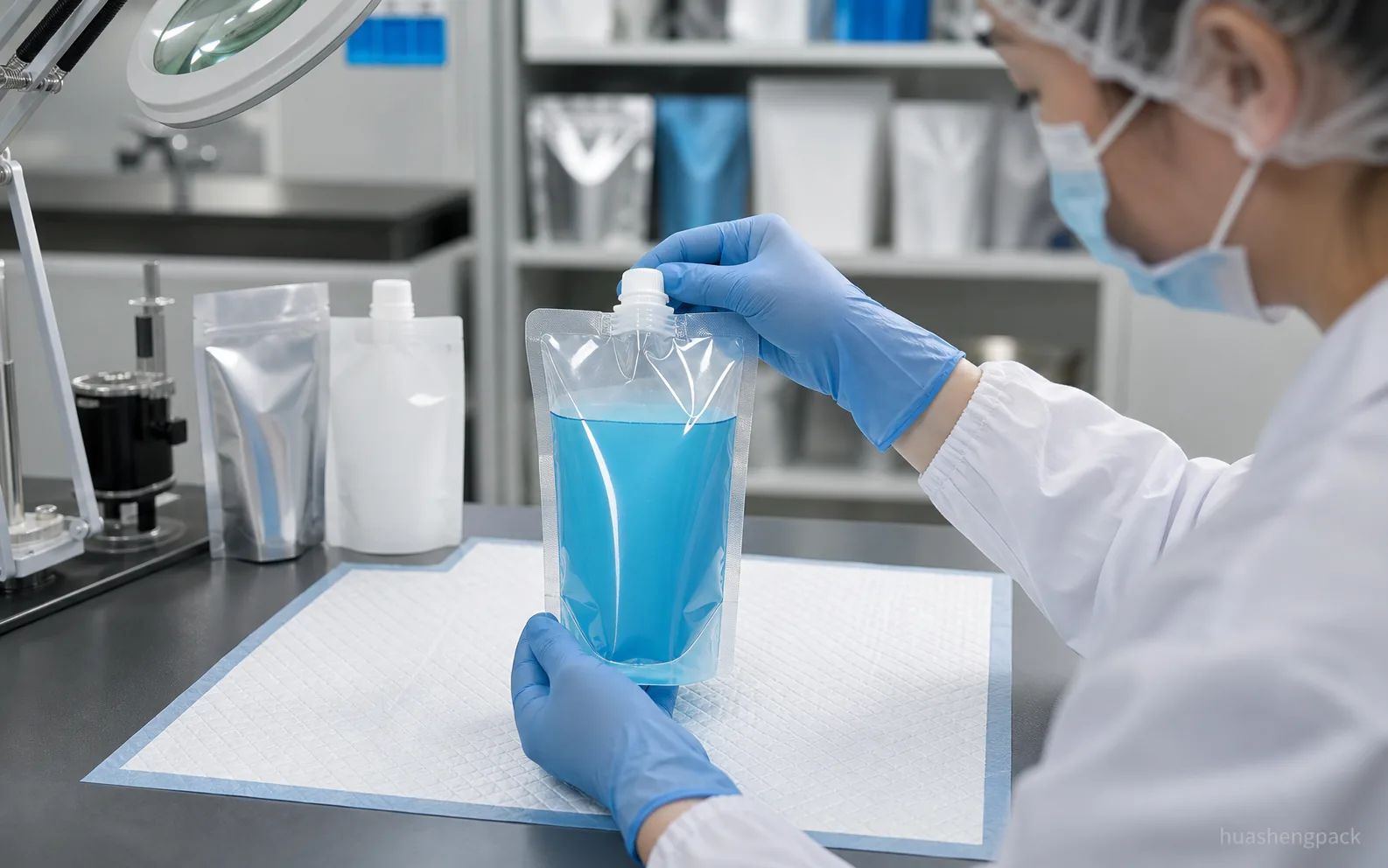
Specify anti-choke caps, pasteurization-grade laminates (85°C–95°C vs 121°C retort), and canoe-seal QA for baby puree, jelly, and juice spout pouches.
Direct answer
Squeezable spout pouches for fruit purees, konjac jellies, yogurt drinks, and kids’ snacks have won huge shelf share across Japan, Korea, ASEAN, Europe, and CIS supermarkets. Because consumers drink directly from the nozzle—often children—choosing the right anti-choke cap geometry, thermal-grade laminate, and ultrasonic/heat spout-weld QA is non-negotiable.
Contents
Evidence-reviewed technical guide
Evidence-reviewed technical guide
2026-11-27 · Huasheng Packaging Technical Editorial Review
Evidence scope
Applies to B2B custom flexible packaging specification review for puree, jelly & pasteurized spouts projects sourced from direct gravure converting plants.
Scope and limitations
General engineering bands and procurement guidelines do not replace filled-pack shelf-life testing, machine compatibility trials, or destination-market regulatory review.
Key takeaways
- Thermal, Chemical & Child-Safety Risks in Squeezable Spout Pouches
- Matching Thermal Laminates & Cap Fitments to Your Filling Process
- Required Engineering Inputs for Spout Pouch Sampling & Quoting
Thermal, Chemical & Child-Safety Risks in Squeezable Spout Pouches
Acidic fruit purees (pH 3.2–4.5), hot-fill beverages (85°C–90°C), and water-bath pasteurized jellies (90°C–98°C) stress both the spout-to-pouch canoe weld and inner laminate adhesive. Using standard ambient-fill PE for 95°C pasteurization causes pouch warping, clouded film, and weeping leaks right beside the spout boat—while tiny standard caps pose child choking hazards in regulated export markets.
Four Costly Mistakes When Sourcing Puree & Jelly Spout Pouches
First, confusing 85°C–95°C hot-fill/pasteurization with 121°C steam retort—over-specifying retort aluminum foil when clear hot-fill PET/PA/CPP suffices wastes budget, while under-specifying standard PE for 95°C pasteurization triggers seal failure. Second, failing to match the spout flange rail slot width to the automatic spout-pouch filler’s loading tracks. Third, skipping oversized ventilated anti-choke caps (such as 33 mm–38 mm flower/wing caps) for child-targeted purees and jellies. Fourth, ignoring acidic fruit-juice adhesive resistance.
Matching Thermal Laminates & Cap Fitments to Your Filling Process
For cold-fill or ≤85°C hot-fill juice/jelly: PET (12 μm) / PA (15 μm) / PE (90–110 μm) (clear) or PET / VMPET / PA / PE (high-barrier opaque). For 85°C–98°C water-bath pasteurized fruit purees and acidic jellies: PET (12 μm) / PA (15 μm) / High-Temp CPP (80–100 μm) or PET / AL (7 μm) / PA (15 μm) / RCPP (80–100 μm) for 12-month ambient vitamin-C protection. For 121°C retort baby-food purees: 4-layer PET / AL / PA / RCPP (or microwaveable AlOx-PET / PA / RCPP) paired with retort-grade PP spouts and tamper-evident anti-choke caps. Engineering squeezable spout pouches for fruit purees, konjac jellies, yogurt snacks, and pediatric nutrition demands coordinated specification across four interacting components: the multi-layer thermal barrier film (hot-fill PET/PA/PE up to 85°C versus pasteurization or 121°C retort PET/AL/PA/RCPP), resin-matched PE or PP spout boat chemistry, child-safe oversized ventilated anti-choke caps with clean tamper-evident break bands, and exact flange rail dimensions verified against the automatic filling machine’s loading tracks prior to mass production.
Spout-Weld Leak, Dye-Penetration, Torque & Tamper-Band Verification
Verify every spout-pouch trial lot through: (1) methylene-blue dye penetration across the spout boat corners (the highest-risk micro-channel zone), (2) static top-load squeeze test (e.g., 20–40 kg pressure) checking zero leakage at the boat shoulders, (3) tamper-evident ring break torque consistency so caps open smoothly without twisting the spout loose, and (4) food-contact raw material test documentation aligned with ISO 22000:2018 controls. In our 6,880 m² Chaozhou facility operating under ISO 22000:2018 (cert. 007FSMS2300214), pre-production and batch release records include calibrated gauge checks, GBPI heat-seal tensile strength logs, barrier verification where specified, barcode scan checks, and packed carton export inspections before FOB/CIF or China warehouse handover.
Required Engineering Inputs for Spout Pouch Sampling & Quoting
Provide fill volume (70 ml to 300 ml), product acidity/pH, exact filling and pasteurization/retort temperature and hold time, cap style (standard 8.6 mm screw vs. child-safe anti-choke wing cap), spout rail dimensions for automatic fillers, and quantity per SKU.
Related Products
Related Applications
Claim-to-source evidence matrix
| Reviewed claim | Support | Sources | Boundary |
|---|---|---|---|
| Final flexible packaging specifications require confirming product chemistry, barrier needs, dimensions, and filling conditions before bulk production. | contextual | [1], [3] | Engineering review boundary prior to cylinder engraving or commercial conversion. |
| Seal integrity and laminate suitability should be verified on representative samples using actual product and sealing equipment. | direct | [2] | Quantitative seal testing and line trials supersede nominal film descriptions. |
| Huasheng Packaging operates integrated 9-color gravure printing, lamination, and pouch converting in Chaozhou under ISO 22000:2018 (007FSMS2300214). | direct | [3], [1] | Factory capability and active management-system scope; product-specific export compliance confirmed per order. |
Authoritative References
- ISO 22000:2018 Food safety management systems · International Organization for Standardization (ISO) · standard
Food-contact packaging production management relies on documented food-safety management controls and traceability. - ASTM F88/F88M-23 Standard Test Method for Seal Strength of Flexible Barrier Materials · ASTM International · standard
Flexible pouch and roll-film heat-seal performance should be verified quantitatively rather than assumed from film appearance. - Huasheng Packaging Chaozhou In-House Converting & Quality Control Overview · Huasheng Packaging · internal-evidence
Describes Chaozhou in-house 9-color gravure printing, lamination, slitting, pouch converting, and ISO 22000:2018 scope.
Frequently Asked Questions
When do puree or jelly spout pouches require an anti-choke cap?
Any squeezable pouch marketed for infants, toddlers, or young children should specify an oversized ventilated anti-choke cap (typically >32 mm diameter with airflow holes) to comply with child-safety expectations.
Can standard PE spout pouches survive 95°C water-bath pasteurization?
Standard LDPE softens and risks seal distortion above ~85°C. For 90°C–98°C pasteurization, upgrade to high-temperature CPP/RCPP inner film and matching PP spout resin.
What is the most common leak point on a liquid spout pouch?
The two narrow triangular corners where the plastic spout canoe meets the front and back pouch films. Dedicated multi-stage spout-sealing jaws and dye-penetration QA eliminate corner micro-channels.
Must the spout rail slot match our filling machine before mass production?
Yes. Always confirm spout neck diameter, double-rail slot spacing, and rail thickness with physical pre-production samples on your filling tracks before engraving full runs.
Can Huasheng supply clear, VMPET, and aluminum-foil spout pouches in custom shapes?
Yes. We convert standard and contoured custom-shaped spout pouches in clear PET/PA/PE, VMPET, and 4-layer AL/RCPP structures under ISO 22000:2018 (007FSMS2300214) in Chaozhou.
About Huasheng
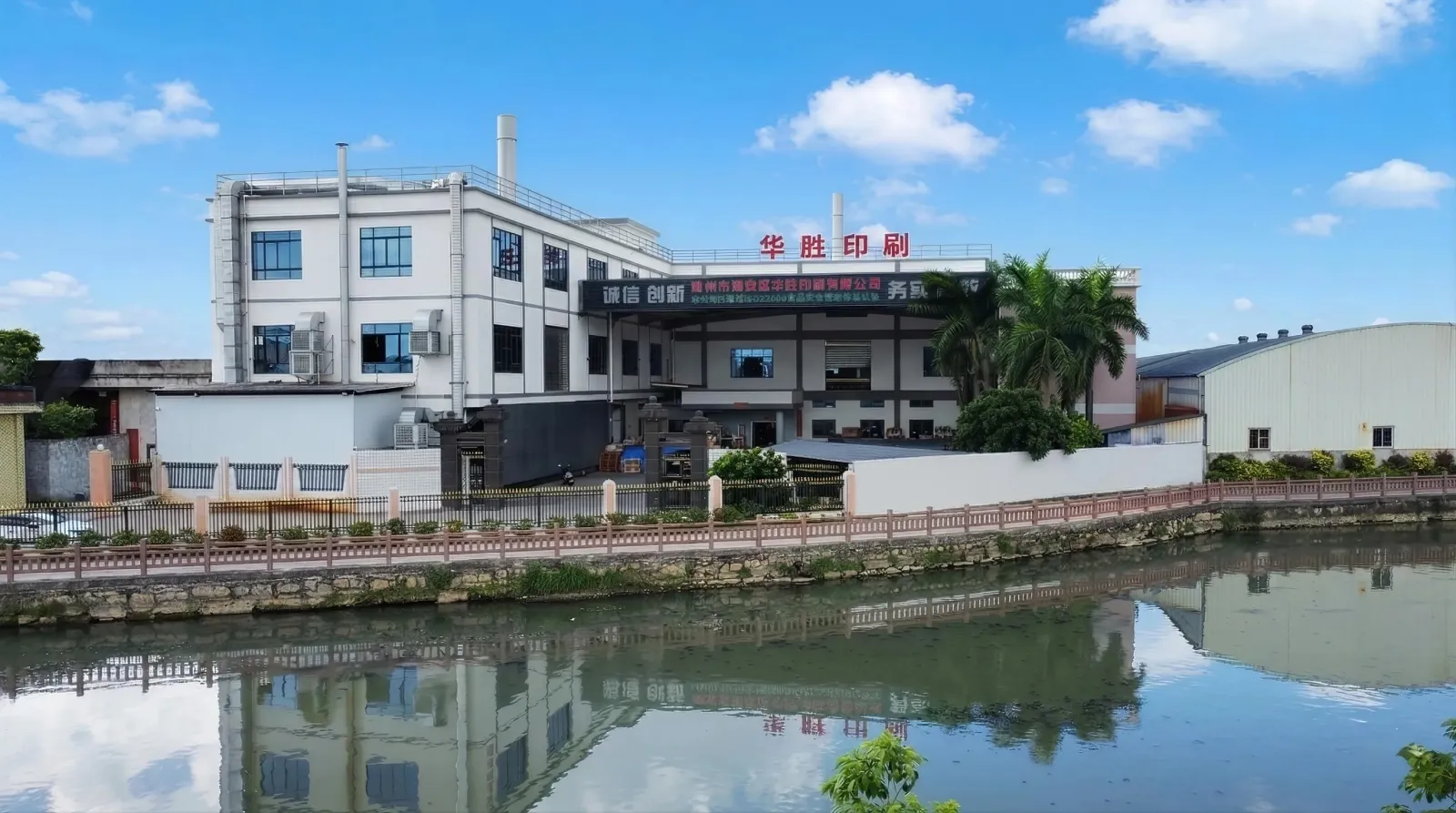
In-house 9-color gravure printing, solventless lamination, slitting, and pouch converting across stand up pouches, spout pouches, retort bags, coffee bags, and automatic rollstock film.
A legacy of quality in flexible packaging since 1997.
1997 · 6,880 m²
Chaozhou · Guangdong · China
Longshewei, Neipan Management District, Dongfeng Town, Chao'an District, Chaozhou City, Guangdong Province, China