Sauce Pouch Filling, Thermal Process and Closure Guide
Acidity, oil, particles, viscosity, fill process, closure and thermal cycle.
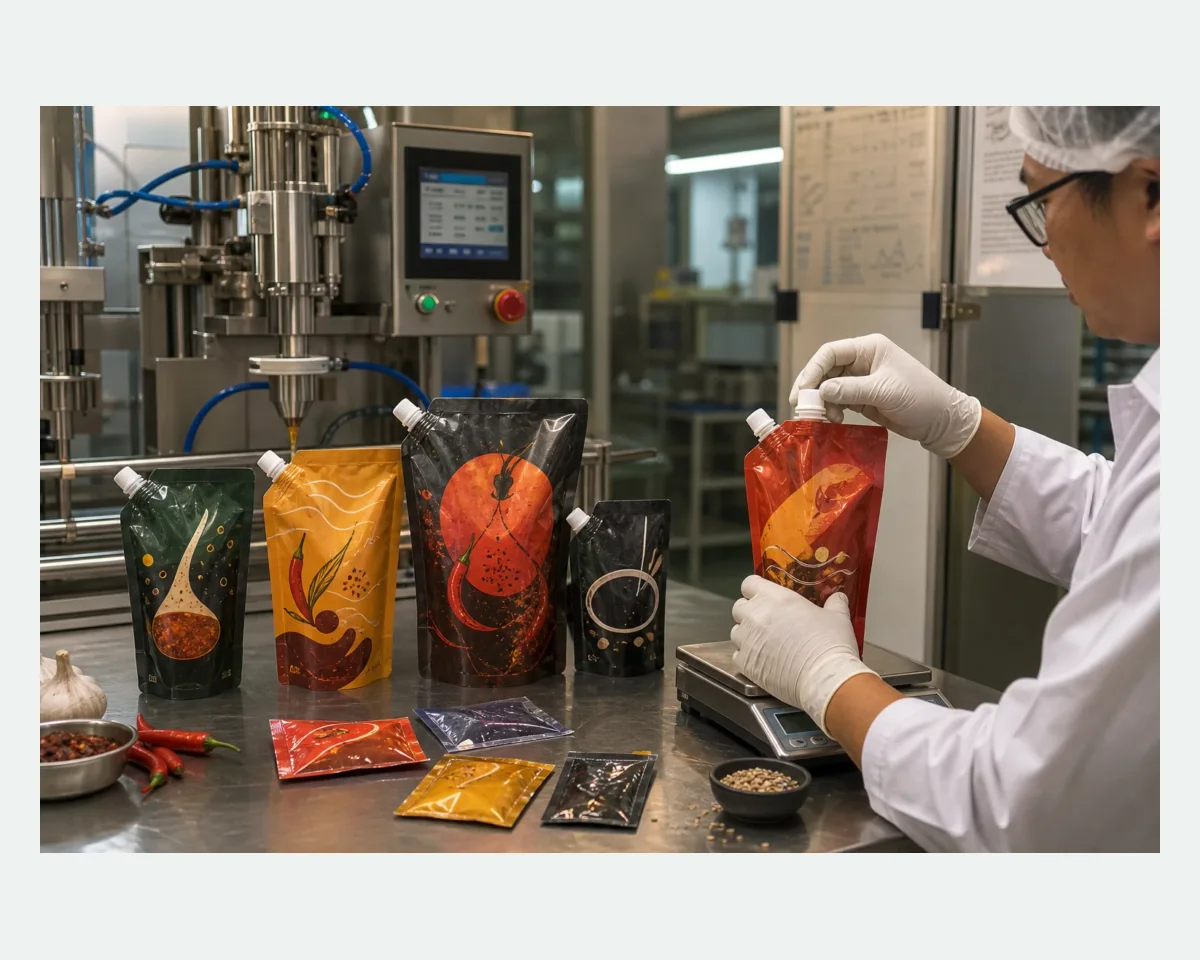
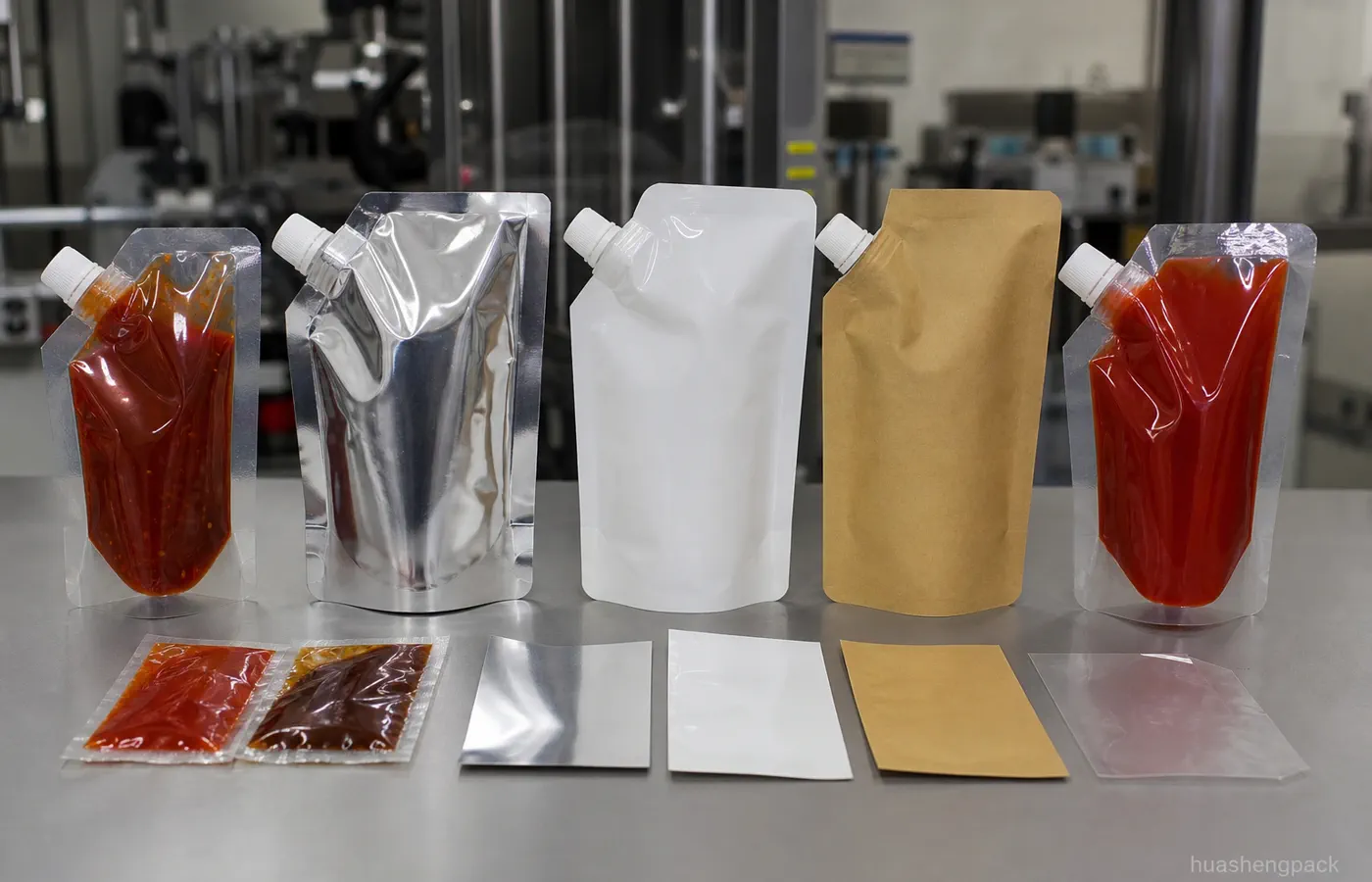
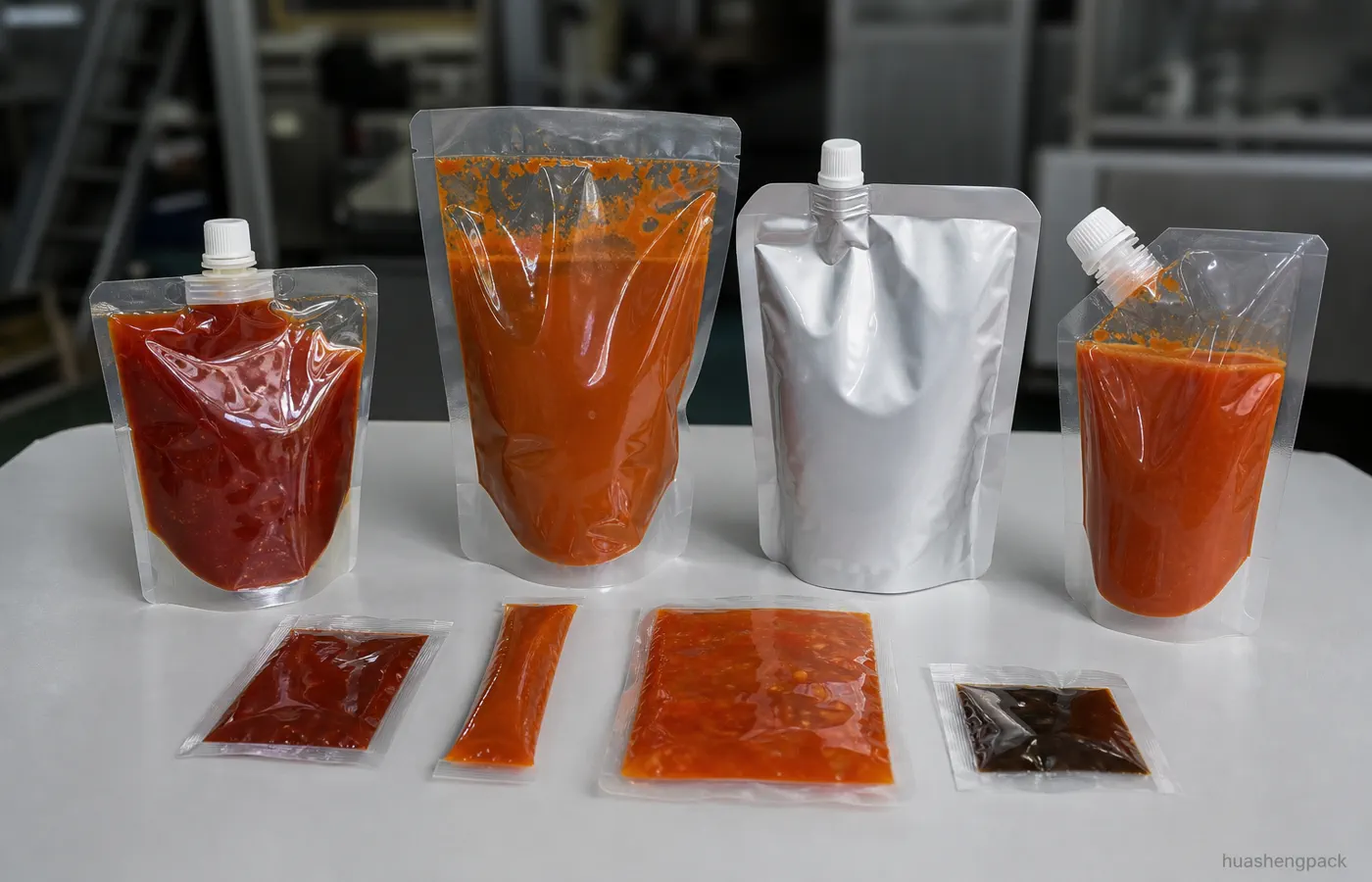
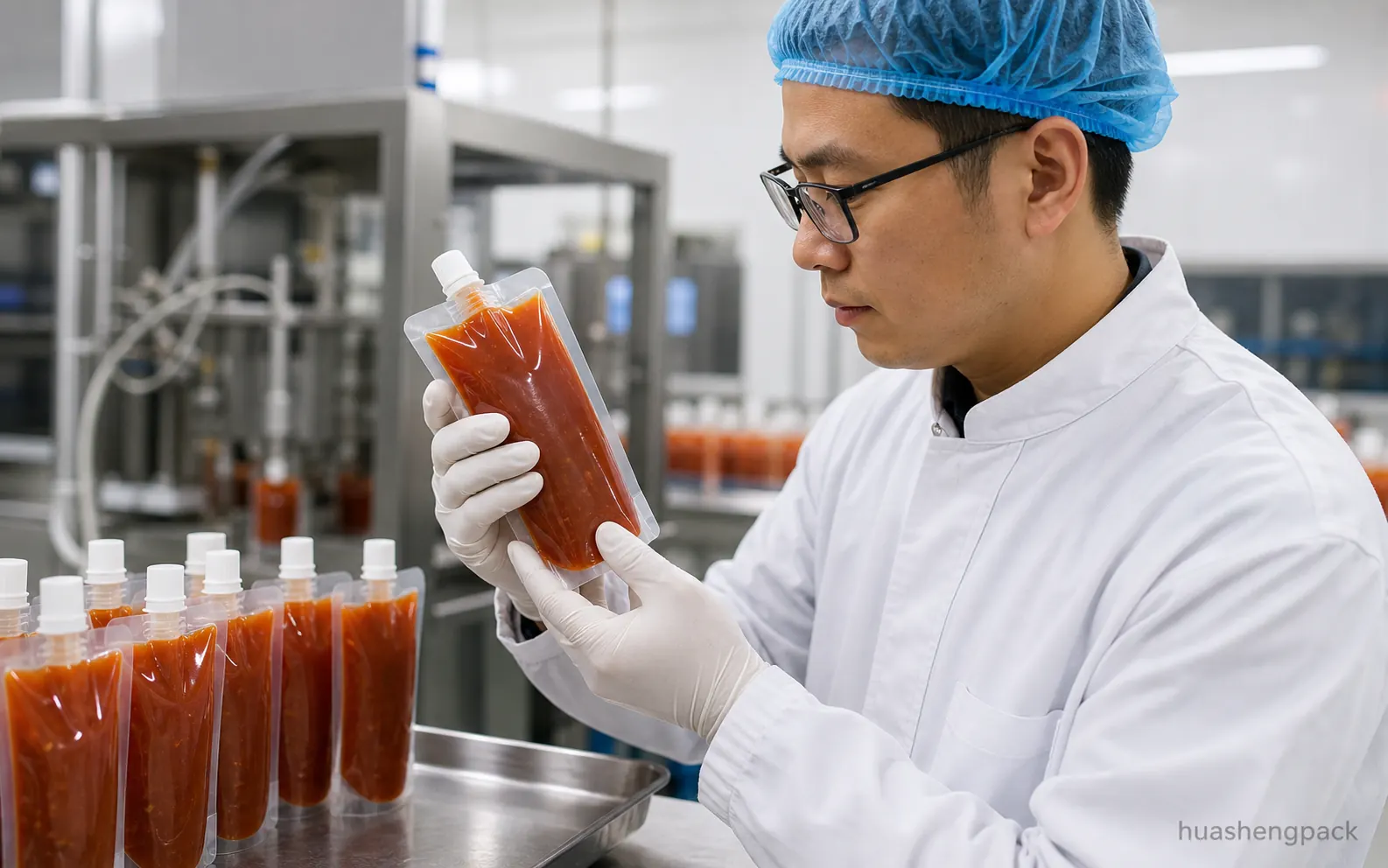
Printed Food Packaging Portfolio
Review grouped finished-package references by visible format and food application.
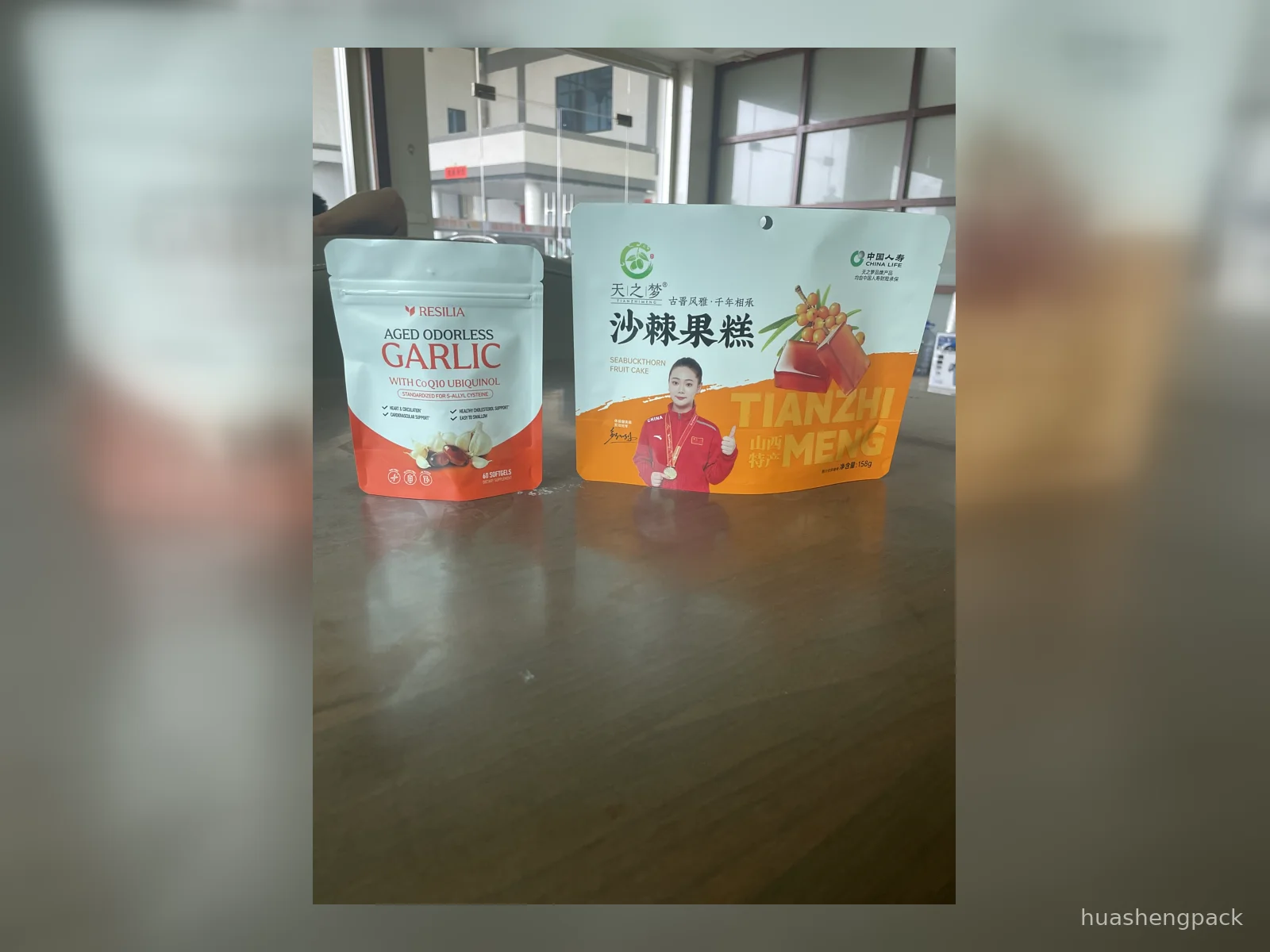
Edited source photography; visible artwork and construction are preserved. Project specifications require separate confirmation.
Sauce-pouch buyer decisions
Match the sauce, process and dispensing format
Sauces differ in acidity, oil, salt, particles, viscosity and processing. Review the actual product and filling route instead of copying a generic liquid-pouch structure.
01
- Condition
- Formula category, particles, viscosity, fill volume, filling temperature, post-fill process and storage are defined.
- Evidence
- Review the actual sauce with the proposed contact components and representative filled-pack conditions.
- Limitation
- A water-fill test, sauce-pouch photograph or maximum temperature does not prove compatibility, process suitability or shelf life.
- Next action
- Send the formula category, process sequence, fill volume, current pack and dispensing use for factory review.
02
- Condition
- Premade pouch, spout system or roll-film route and the receiving equipment are identified.
- Evidence
- Use controlled drawings, component records and a representative filling trial to review dosing, seals, closure, filled profile and handling.
- Limitation
- A nominal spout size, film width or generic machine category does not demonstrate line fit or finished-pack performance.
- Next action
- Complete the component or machine handoff and define sample and production-stage acceptance records.
These units organize a sauce-packaging project; they do not prescribe a universal structure, process window, compatibility, compliance, shelf life, price, lead time or MOQ.
Official sources
Turn these conditions into a factory-reviewable project brief
Separate known, unknown and validation-required items, then send the product, fill, format or machine inputs. This page does not replace an approved specification or finished-pack validation.
Choose the project path
Start from the product and process, not a generic pouch
Select the closest route, then confirm the listed inputs before requesting a structure or production recommendation.
Portion sachet or roll film
Confirm first: Confirm dose, particles, seal contamination, machine, repeat and cut position.
Premade spout pouch
Confirm first: Match opening and component drawings to viscosity, particles, closure and filling.
Thermally processed sauce pouch
Confirm first: Separate hot-fill, pasteurization and retort, then validate the complete process and filled pack.
Specification integrity
Protect this application project with a quality release path
Lock the product conditions and project evidence before comparing price, structure or supply options.
- Viscosity, particles, acidity and fill process
- Format, fitment and contaminated-seal conditions
- Representative thermal, leakage and storage evidence
Project release record
- Versioned specification and approved artwork
- Approved reference sample or documented sample stage
- Agreed inspection and test plan
- Recorded review of any proposed change
- Representative filled-pack or line evidence where required
- Issue, disposition and repeat-order feedback record
This path supports project review and change control. It does not by itself approve compliance, shelf life, machine performance or a finished package.
Sauces differ in acidity, oil, salt, particles, viscosity and processing. Define the product and process owner, fill and later heat treatment, portion or dispensing use, closure and storage before choosing a sachet, retort pouch, shaped pouch or spout pouch. The visible product images document format and print presentation only; they do not disclose the laminate, thickness, test result, customer relationship or suitability for another product.
Recommended Packaging Paths
Material Functions and Evidence Boundaries
- Separate ambient, hot-fill, pasteurized and retort conditions
- Match sealant and every contact component to intended use
- Size the opening or fitment for viscosity and particles
- Validate representative filled packs through the complete cycle
Common Project Mistakes
- Sauce name substitutes for formulation and process data
- Hot fill and retort are treated as equivalent
- A water test represents oil, acid or particles
- Fitment geometry is selected without a drawing
- Clean seal strips substitute for contaminated seals
Project Validation and Quality Control
- Confirm the signed specification and exact component identities
- Review representative filled dimensions and seal areas
- Use method- and condition-specific tests for the named risk
- Run target equipment or handling trials where relevant
- Record sample, artwork, lot and change-control approval
What to Prepare Before Inquiry
- Sauce type and controlled formulation details
- Acidity, oil, salt and particles where relevant
- Viscosity and serving format
- Fill temperature and later heat process
- Portion, opening or fitment requirement
- Target market and intended use
- Shelf-life or service target and failure criteria
- Storage and distribution conditions
- Pouch or roll-film format and drawing
- Artwork variants and quantity per design
Related Packaging Guides
- Spout Pouch Material Guide for Juice, Sauce and Liquid Food
- Flexible Packaging Filling and Sealing Problems: A Buyer Troubleshooting Guide
- Hot-Fill and Pasteurized Liquid Pouches: Decision Boundaries for Materials and Process
Frequently Asked Questions
What do the photographed samples prove?
They document visible pouch format, print and photographed construction features. They do not independently prove laminate composition, barrier, seal performance, compliance, a customer relationship or shelf life.
Can the website confirm a final material structure?
No. Product, fill, use, target market, storage, distribution, format or machine conditions must be defined before agreeing sample, test and finished-pack release evidence.
What are the MOQ and lead time for this application?
MOQ and lead time are reviewed against pouch or roll-film format, size, material, each artwork and quantity, the current production plan and validation requirements. This page does not publish one fixed value for every project.
How should a buyer start the project review?
Use the project-input builder to separate known, unknown and validation-required items, then send the product or current pack, fill, target format, machine data, quantity per artwork and artwork status.
Prepare a controlled application brief
Share the actual product, process, format, market, validation needs and unknown items for factory review.