Custom Spout Pouches for Liquid Food, Sauce and Refill Products
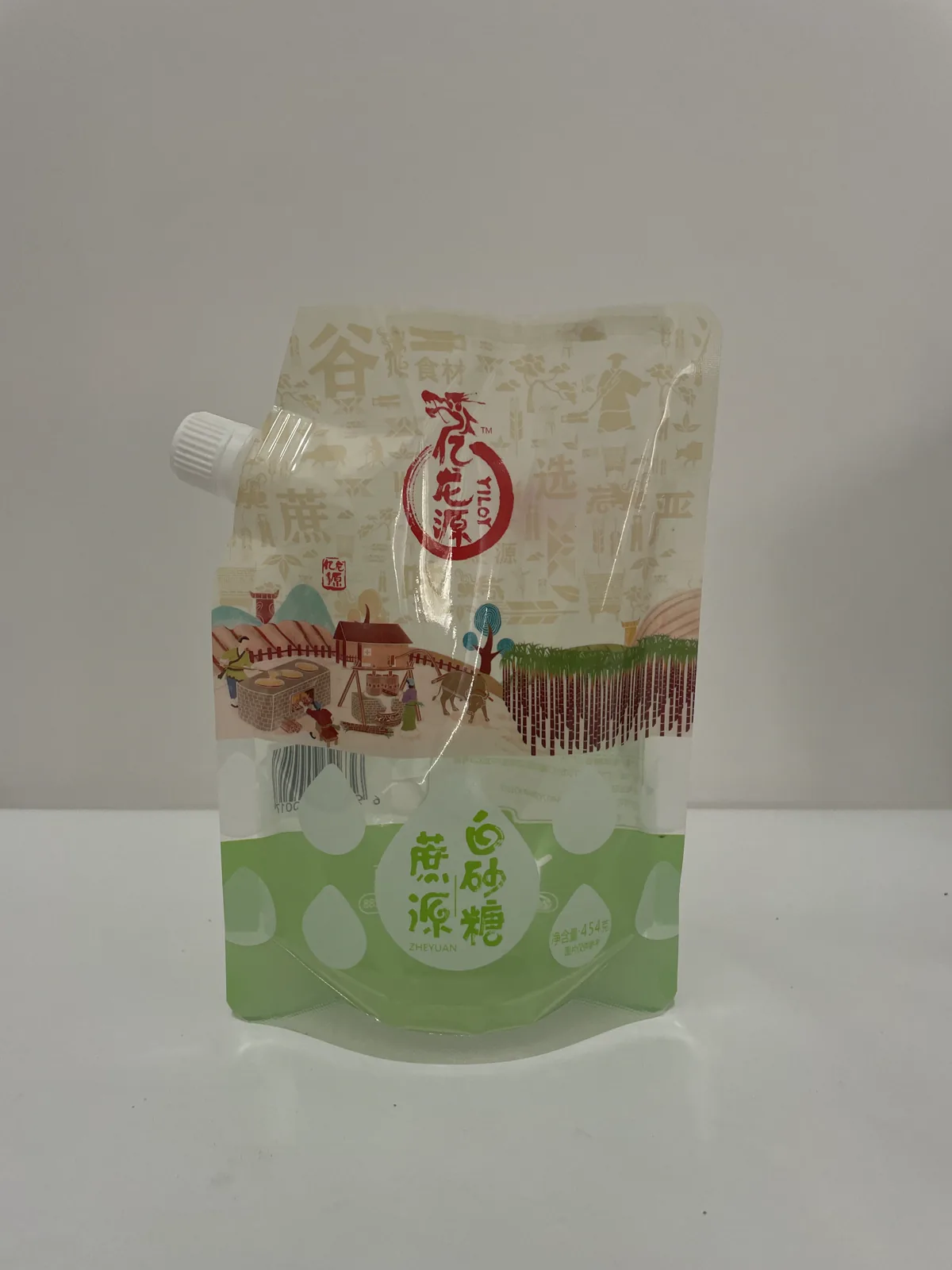
Custom spout pouch manufacturer for liquid food, sauce and refill products. Review contents, fitment, cap, filling process, finished-pack samples and release evidence.
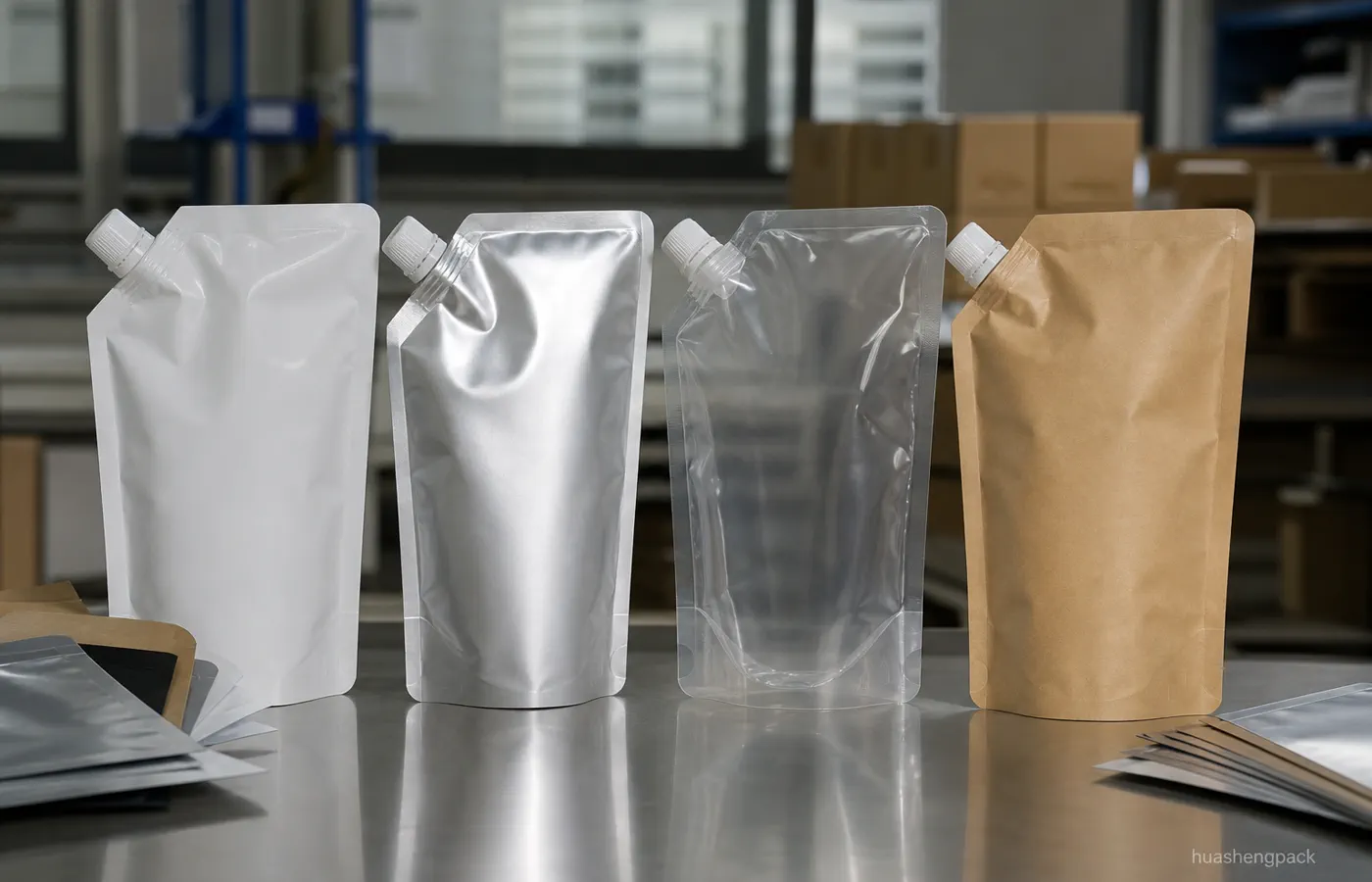
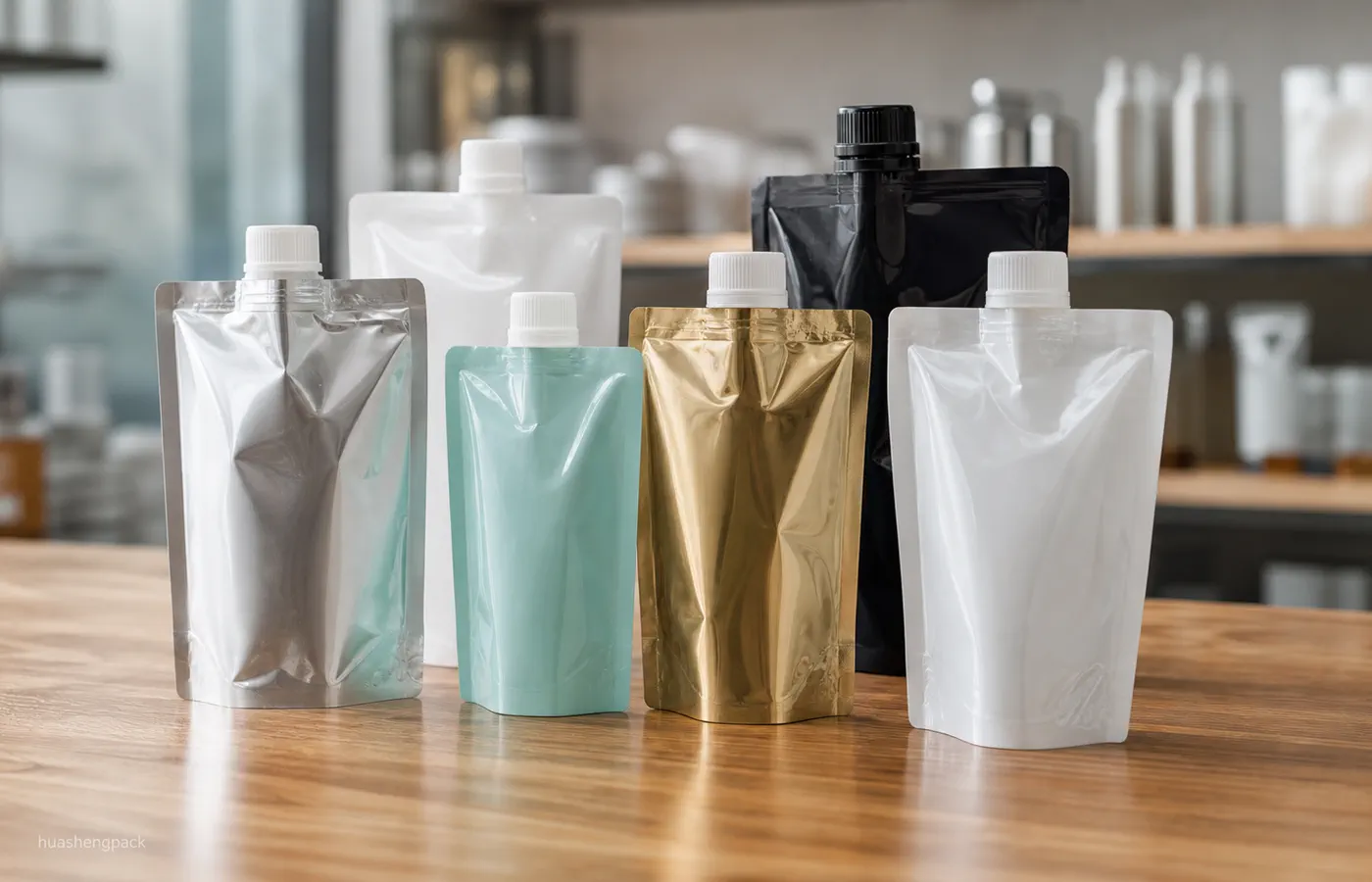

What This Product Is Used For
Format Decision — A spout pouch combines a flexible laminate with a welded fitment and cap. Selection starts with formula chemistry, viscosity, particles, fill temperature, headspace, dispensing behavior and filling equipment. PET/PE, PET/PA/PE, metallized and retort-qualified laminates are possible routes rather than universal specifications. The complete laminate, spout weld, cap system and final seals must be validated with representative product.
Material Structure Options
What this product is used for — Spout pouches are suitable for juice, sauce, liquid food, beverage, detergent refill and other liquid or semi-liquid products. Material structure should be confirmed based on filling weight, product viscosity, storage condition, barrier requirement and sealing strength. Buyers should provide pouch size, filling volume, spout position and diameter, cap type, material requirement, quantity, printing colors, artwork and whether hot filling or retort processing is required before quotation.
Application Recommendations
Material Structure Review — PET-, PE-, PA-, metallized- and foil-based laminates are possible starting families. The exact contact layers and complete construction must be reviewed against formula chemistry, viscosity, particles, fill and post-fill process, storage, fitment weld and finished-pack evidence.
Spout, Cap and Fitment Options
Application Review — Juice, sauce, puree, refill and gel projects cannot share a universal structure. Compare product compatibility, dispensing, headspace, filling temperature, spout weld, final seals and representative filled-pack handling for the exact project.
Quality Control Points
Spout, Cap and Fitment Options — Confirm the controlled spout and cap drawing, position, flow requirement, filling-line interface, closure use and pouch dimensions. Fitment availability and the weld process are project inputs; a nominal diameter alone does not approve compatibility.
MOQ and Cost Notes
Integrity and Quality Boundary — Seal-strip strength, a visible weld check, gross-leak detection, cap checks and filled-pack handling answer different questions. Agree the specimen, method, conditions and acceptance rule, then validate the production-representative pouch, fitment, product and process as one system.
What to Prepare Before Requesting a Quote
Custom premade pouches are reviewed from 30,000 pieces per size and artwork, subject to final factory approval. Production timing is confirmed against the current factory schedule after the specification and artwork are approved.
Quality and Certification
Product type (liquid/sauce/puree/detergent/gel); filling volume and pouch size; spout position (center/corner/top/side); spout diameter (8mm-16mm); cap type (screw cap/flip-top/push-pull/tamper-evident); material structure if known; thickness if known; printing colors and artwork file; order quantity; filling temperature and filling method; shelf life requirement; China OEM factory, filling plant, co-packer or nominated domestic warehouse handover requirement if applicable; sample photo or reference image if available.
Related Products
Evidence and Release Boundary — ISO 22000 is management-system evidence, not automatic food-contact or finished-pack approval. Release evidence must identify the exact pouch, fitment, product, specimen, method, conditions and acceptance rule required by the signed project specification.
Material Structure Options
Retort Pouches, Stand Up Zipper Pouches, Custom Shaped Pouches, Easy Peel Sealing Film, Three Side Seal Pouch, Coffee Bags with Valve.
Buyer Decision Matrix
- Format Decision — A spout pouch combines a flexible laminate with a welded fitment and cap. Selection starts with formula chemistry, viscosity, particles, fill temperature, headspace, dispensing behavior and filling equipment. PET/PE, PET/PA/PE, metallized and retort-qualified laminates are possible routes rather than universal specifications. The complete laminate, spout weld, cap system and final seals must be validated with representative product.
- What this product is used for — Spout pouches are suitable for juice, sauce, liquid food, beverage, detergent refill and other liquid or semi-liquid products. Material structure should be confirmed based on filling weight, product viscosity, storage condition, barrier requirement and sealing strength. Buyers should provide pouch size, filling volume, spout position and diameter, cap type, material requirement, quantity, printing colors, artwork and whether hot filling or retort processing is required before quotation.
- Material Structure Review — PET-, PE-, PA-, metallized- and foil-based laminates are possible starting families. The exact contact layers and complete construction must be reviewed against formula chemistry, viscosity, particles, fill and post-fill process, storage, fitment weld and finished-pack evidence.
- Application Review — Juice, sauce, puree, refill and gel projects cannot share a universal structure. Compare product compatibility, dispensing, headspace, filling temperature, spout weld, final seals and representative filled-pack handling for the exact project.
Spout-pouch buyer decisions
Review product, fitment and filling as one system
The pouch, contact layers, spout, cap and receiving process must be reviewed together for the actual product and use conditions.
01
- Condition
- Product category, viscosity, fill volume, filling temperature, post-fill process, storage and dispensing use are defined.
- Evidence
- Actual-product review with the proposed contact components and representative filled-pack observations under agreed process conditions.
- Limitation
- A water-fill check, maximum temperature or metallic-looking film does not prove compatibility, leakage performance or shelf life.
- Next action
- Provide the product category, process sequence, fill volume, current pack and intended use before selecting a structure direction.
02
- Condition
- Spout and cap drawings, position, filling method, receiving equipment and final-seal responsibility are identified.
- Evidence
- Controlled component dimensions and a representative filling trial covering fitment handling, seals, filled profile and pack-out.
- Limitation
- A nominal spout size or pouch photograph cannot prove cap fit, weld integrity, line suitability or transport performance.
- Next action
- Confirm the component drawing and line inputs, then agree sample and production-stage acceptance records.
These units organize a spout-pouch project; they do not prescribe a universal laminate, fitment, process window, compatibility, compliance, shelf life, price, lead time or MOQ.
Suitable Applications
Food, beverage, snacks, coffee, pet food, daily chemical, powder, liquid, sauce, frozen products, ready meals, industrial products and more. Suitability depends on material structure, sealing method and packaging machine type.
Material Options
Common structures: PET/PE, PET/VMPET/PE, PET/AL/PE, BOPP/CPP, NY/PE, kraft paper laminates. Selection criteria: barrier requirements (oxygen, moisture, light), sealing method (heat seal, cold seal), shelf life, packaging machine compatibility and cost.
Key Features
Rotogravure printing, eye marks, sealant layers, zippers, tear notches, hang holes, windows, degassing valves, spouts and caps may be evaluated. Capability and suitability are confirmed against the product, format, equipment, target market and approved project specification.
Quality Control
Quality-control items, methods, specimens, conditions, frequency and acceptance criteria must be agreed in the project specification. A public management-system document, factory image or general workflow does not replace a material-, package- or batch-specific test record and release decision.
Plan product evidence before approval
The laboratory page records available instrument categories and one bounded sample report. It does not mean this product, structure or batch has passed testing.
Buyer Notes
- Provide product type, bag size or roll width — a photo or sample helps quick assessment
- If material structure or thickness is known, include specification
- Number of printing colors and artwork file affect cylinder cost and prepress time
- Packing machine type (VFFS/HFFS/manual) determines roll film vs premade pouch choice
- Target market compliance, China OEM filling requirements or nominated domestic warehouse handover details help confirm the final specification
Related Products
Packaging Structure
- Printed laminated body — PET outer layer with gravure printing, laminated to barrier and sealing layers for liquid packaging
- Barrier middle layer — VMPET, aluminum foil or nylon depending on liquid type, oxygen sensitivity and shelf life
- Heat seal inner layer — PE or CPP, selected based on filling temperature and product formulation compatibility
- Spout and cap — heat-welded into the pouch body; spout diameter and cap type selected for product viscosity and consumer use
- Bottom gusset — expands when filled, providing stable standing for retail display
- Sealing edges — side seals and bottom seal tested for integrity under liquid pressure and transport conditions
Technical Parameters
- Product Type: Stand up pouch with spout and cap
- Material Structure: PET/PE, PET/VMPET/PE, PET/AL/PE, NY/PE, depending on liquid, barrier and filling condition
- Thickness Range: Depends on filling volume, product viscosity and barrier requirement
- Printing Method: Gravure printing for custom printed orders
- Surface Finish: Gloss, matte or custom finish per project
- MOQ: Depends on size, material structure, printing colors and order quantity
- Sample Option: Existing samples can be provided; custom printed samples depend on artwork and project requirements
- Lead Time: Depends on artwork confirmation, material structure and order quantity
- Application: Juice, sauce, beverage, puree, liquid food and refill packaging
- Packing Machine Compatibility: Premade pouch filling and sealing lines, subject to spout size and cap type
Common Problems We Help Buyers Avoid
- Leakage around spout or sealing area — confirm spout welding strength and sealing parameters
- Wrong spout size or cap type — select spout diameter and cap based on product viscosity and consumer use
- Material not suitable for liquid viscosity — inner layer must match product pH, oil content and filling temperature
- Pouch deformation after filling — check pouch size, filling volume and material stiffness
- Insufficient barrier for sauce or beverage products — confirm barrier layer based on shelf life and storage condition
Related Applications
Related Packaging Guides
- Sachets for Liquid or Powder Packaging: Format and Machine Guide
- Roll Film vs Premade Pouches: A Buyer Guide for Packing Line and Format Selection
Frequently Asked Questions
What products are suitable for spout pouches?
Spout pouches are suitable for juice, sauce, puree, liquid food, refill products, daily chemical liquids and other flowable products. The pouch structure should be selected according to filling weight, viscosity, storage condition and shelf life requirement.
How do I choose the material structure for spout pouches?
The material structure depends on product type, barrier requirement, filling temperature, storage condition and whether the pouch needs higher puncture resistance or light barrier. Common options may include PET/PE, PET/VMPET/PE, PET/AL/PE and nylon-based laminated structures.
Can the spout and cap size be customized?
Yes. Spout size, cap type and pouch shape can be reviewed according to product usage and filling requirements. Buyers should provide the expected filling volume, product viscosity and any existing sample photos for evaluation.
What should be checked before ordering spout pouches?
Before quotation, buyers should confirm pouch size, filling volume, material requirement, spout position, cap type, printing colors, quantity, artwork file and filling method. For liquid food, sauce, laundry detergent refill, dishwashing liquid or shampoo refill products, sealing strength, formula compatibility, leakage testing and China OEM filling handover details should be reviewed.
Are spout pouches suitable for hot filling or retort applications?
Some spout pouch structures can be designed for special filling or heating conditions, but the material, spout, cap and sealing performance must be evaluated case by case. Please share your filling temperature, sterilization condition and shelf life requirement before confirmation.
Recommended Material Structures
Material structure should be reviewed according to product type, shelf life, filling condition, barrier requirement and packing process.
- PET/PE Food Packaging — Common structure for general liquid and sauce spout pouch applications where cost-effective sealing and printing are needed.
- PET/VMPET/PE Metallized Packaging — Metallized structure for spout pouch projects requiring better light barrier and moisture protection.
- Compare Material Structures — Compare PET/PE, PET/VMPET/PE and PET/AL/PE before selecting spout pouch material.
Related Packaging Guides
Learn material structures, packaging options and application guides related to this product.
- Spout and Cap Options — Compare spout diameters, cap types and fitment sealing for liquid pouches.
- Bottom Seal Types for Stand Up Pouches — How bottom seal design affects pouch standing stability after filling.
- High Barrier Film for Food Packaging — Barrier structures for liquid and sauce pouch applications.
- Sachet and Stick Pack Packaging Solutions — Single-serve and liquid packaging formats and roll film options.