Drip Coffee Outer Packaging: From Filled Filter to Approved Sachet
Huasheng Packaging Technical Content Review
Huasheng Packaging Technical Content Review · Published:
Prepare a drip coffee outer-sachet or rollstock project: distinguish the brew filter, measure the filled insert, confirm sealing and record trial approvals.
Direct answer
A hanging-ear drip coffee pack combines different components: the coffee-filled brewing filter, its sealed outer envelope and, sometimes, a retail carton. The outer sachet is flexible packaging around a filled insert. It is a different buying task from ordering filter material or filling coffee powder directly into a stick pack. Define the component and the receiving packing process before comparing a printed premade sachet with rollstock.
Contents
Evidence-reviewed technical guide
Evidence-reviewed technical guide
2026-11-17 · Huasheng Packaging source-linked editorial review
Evidence scope
English outer flexible-pack component, dimensional handoff and trial-record planning.
Scope and limitations
Supplier documentation is contextual guidance, not an independent test. No completed Huasheng drip-coffee project, component qualification or shelf-life result is established here.
Key takeaways
- Identify the inner-filter, outer-pack and receiving-process owners.
- Compare the naturally filled and folded insert with usable outer space.
- Tie fit, sealing and opening observations to one approved reference and revision.
1Keep the component owners clear
Agree who supplies the inner filter, who fills it with coffee, who supplies the outer flexible pack, who inserts and seals the filled filter, and who approves the retail presentation. One company may perform several roles, but an outer-pack enquiry should not assume that a film converter also supplies brewing filters, roasts coffee or provides filling services.
Use a versioned filled-filter reference shared by the parties. Record the coffee dose, filter construction, folded hanging ears and packing orientation. A change to the filter, dose, folding or insertion process can change the outer-pack fit even when the artwork is unchanged.
2Measure the filled insert and the usable outer space separately
Measure the coffee-filled filter with its ears folded as they will be packed, resting naturally in the intended orientation. Record the maximum width, height and thickness, including projecting seams or folded supports. Do not flatten the insert to obtain a more convenient dimension.
Then identify the outer sachet's finished dimensions, seal areas, open loading edge and clear internal space on a drawing. Overall width and height include areas that may not be available to the insert. Agree the insertion clearance, handling space and final top-seal zone with the receiving packer; this guide does not prescribe a universal allowance or a grams-to-bag-size table.
Use a physical fit sample to check insertion, settling, final sealing and removal after opening. Record the same reference insert and drawing revision for each trial, so that an apparent improvement is not caused by changing the sample at the same time.
3Choose premade sachets or rollstock from the actual line
For a premade outer sachet, confirm which edge remains open, how the filled filter enters, how the pack is held, and how the final seal is made. Check that the insert, hanging ears and handling equipment remain clear of the sealing area.
For rollstock, obtain the machine's film drawing and agreed interfaces: web width, repeat, eye mark, unwind direction, print and seal-side orientation, core inner diameter, maximum reel dimensions and weight, and splice requirements. Do not derive these inputs from the finished sachet width alone.
Some equipment combines inner-filter formation, coffee dosing and outer wrapping. Other projects transfer filled filters between separate operations. Confirm the actual make, model and sequence with the equipment owner; a generic machine photograph or another project's web specification is insufficient.
4Connect laminate selection to coffee and sealing conditions
Define the product, packing interval, storage and distribution conditions, protection needs and intended shelf-life study. Compare candidate structures and the complete package, rather than treating a foil or metallized layer name as a finished-pack guarantee.
Review the sealing layer with the actual sealing equipment and filled insert. Confirm that the outer pack can be handled and sealed cleanly without trapping coffee, filter material or folded supports in the seal. A component description or empty-pouch sample does not establish coffee aroma retention, package integrity or shelf life.
Do not transfer a valve specification from a large coffee-bean pouch by default. Any component or feature must have a defined purpose in this particular pack and be reviewed with the product and packing process.
5Approve a recorded trial rather than an attractive empty bag
Agree the trial method, operating conditions and acceptance criteria before evaluating samples. Record the filled-filter reference, outer-pack drawing and laminate revisions, insertion orientation, equipment and settings, sample identification, inspection results and the person responsible for each approval.
Check fit and insertion, final-seal clearance, visible contamination or wrinkles, the agreed seal-integrity assessment, opening and filter withdrawal, print and code legibility, and retail-box fit where applicable. Use tests selected for the actual package; this checklist does not supply universal test limits or replace a product-specific shelf-life study.
Keep dimensional fit, printing approval and filled-pack performance as separate decisions. Passing one does not automatically approve the others. Reassess affected checks when the inner filter, coffee dose, outer dimensions, material, machine interface or opening detail changes.
6Keep artwork and assortment revisions traceable
Confirm the tear side, seal exclusions, coding area, design orientation and information that must remain readable after opening. Review the actual packed position and the way a consumer removes the filter, rather than approving the layout only as a flat PDF.
For several origins, roasts or language versions, list quantity per design, artwork revision and the shared or different technical specification. Separate the total programme quantity from each design’s order basis. Confirm the production plan after the format, material, dimensions and artwork have been reviewed.
7Use the handoff record before requesting factory review
Start with the filled-filter reference or clear photographs with a scale, an existing outer sample if available, the intended loading and sealing process, quantity per design, artwork status and destination market. Mark unknown fields as not yet confirmed and assign an owner to obtain them.
Use the existing project specification and validation register for materials, equipment, artwork, quantity, trial evidence, approval and change control. The seven-field addendum records the filled-filter reference, its naturally folded dimensions, insertion and seal-zone interface, and withdrawal after opening. Keep both records tied to the same project and revision.
Send the completed brief through Huasheng’s outer-pouch or printed roll-film enquiry route for a project-specific manufacturing review. Confirm the filled-filter reference and receiving process with your packing partner before the outer-pack specification is locked.
Seven filled-filter interfaces to carry into the project record
| Interface | What to record | Reference or unit |
|---|
| Filter | Filled inner-filter reference revision and packed condition | reference; dose and folded state |
| Fit | Natural filled-filter maximum width including supports | mm |
| Fit | Natural filled-filter maximum height including supports | mm |
| Fit | Maximum thickness with ears folded as packed | mm |
| Fit | Folded supports insertion orientation and open loading edge | drawing or photo reference |
| Seal | Filled-insert position relative to agreed final-seal zone | drawing and trial reference; no default clearance |
| Opening | Filter withdrawal after opening against the same approved insert | record reference and observed result |
Put this guide into your project brief
Use the existing editable worksheet to record what is known, what remains open and who will review it.
Project specification and validation register
Track each requirement as known, unknown, sample-stage or production-stage, with evidence, owner and approval status in one file.
Open PDF · Download editable CSV
Filled-filter outer-pack fit addendum
Record the seven filled-filter interfaces alongside the project specification and validation register.
Download editable CSV
Preparation files only: not an approved specification, current quotation or performance result.
Related Products
Related Packaging Guides
Claim-to-source evidence matrix
| Reviewed claim | Support | Sources | Boundary |
|---|
| The filled and folded filter profile and insertion direction belong in outer-sachet fit planning. | contextual | [1] | Component-planning guidance; no universal dimension or allowance. |
| Outer-pack sizing, artwork and representative sample review should be coordinated before production approval. | contextual | [1], [2] | Project-specific review; supplier capabilities and advertised commercial terms are not transferred. |
| The project register records equipment, materials, artwork revision and change-control inputs as separate planning fields. | direct | [3] | A blank register is a planning and traceability aid;it does not establish factory approval, process compatibility or finished-pack performance. |
JSON · CSV
Authoritative References
- Custom Drip Coffee Packaging for Outer Sachets & Rollstock · RinPac · manufacturer-data
Separate the inner filled filter from the outer sachet and packing process; record the folded insert, usable space and machine interfaces. - Introducing Custom Drip Coffee Outer Bags · Tonchant · manufacturer-data
Align outer-pack dimensions and artwork with the drip filter and review physical samples before approval. - Project specification and validation register:blank planning template · Huasheng Packaging · internal-evidence
Separate equipment, material, artwork-revision and change-control fields in the existing blank project register.
Frequently Asked Questions
Is a drip coffee outer sachet the same as the brewing filter?
No. The brewing filter holds the coffee during preparation; the outer flexible pack encloses the filled filter before use. Identify the supplier and approval scope for each component.
Can the outer bag size be selected from coffee weight alone?
No. Measure the naturally filled and folded filter, then validate usable space, loading, final sealing and removal with a physical sample and agreed drawing.
Should this project use premade sachets or rollstock?
Confirm the receiving line. Premade sachets require insertion and final sealing; rollstock requires the actual film drawing and machine-interface specification.
Does foil packaging guarantee coffee shelf life?
No. Product, process, complete package integrity, storage and distribution need a project-specific validation plan. A layer name is not a finished-pack result.
What can be sent when the specification is incomplete?
Send a filled-filter reference or clear scaled photographs, an existing outer sample if available, the intended packing process, artwork status and quantity per design. Label the unresolved inputs and agree who will confirm them.
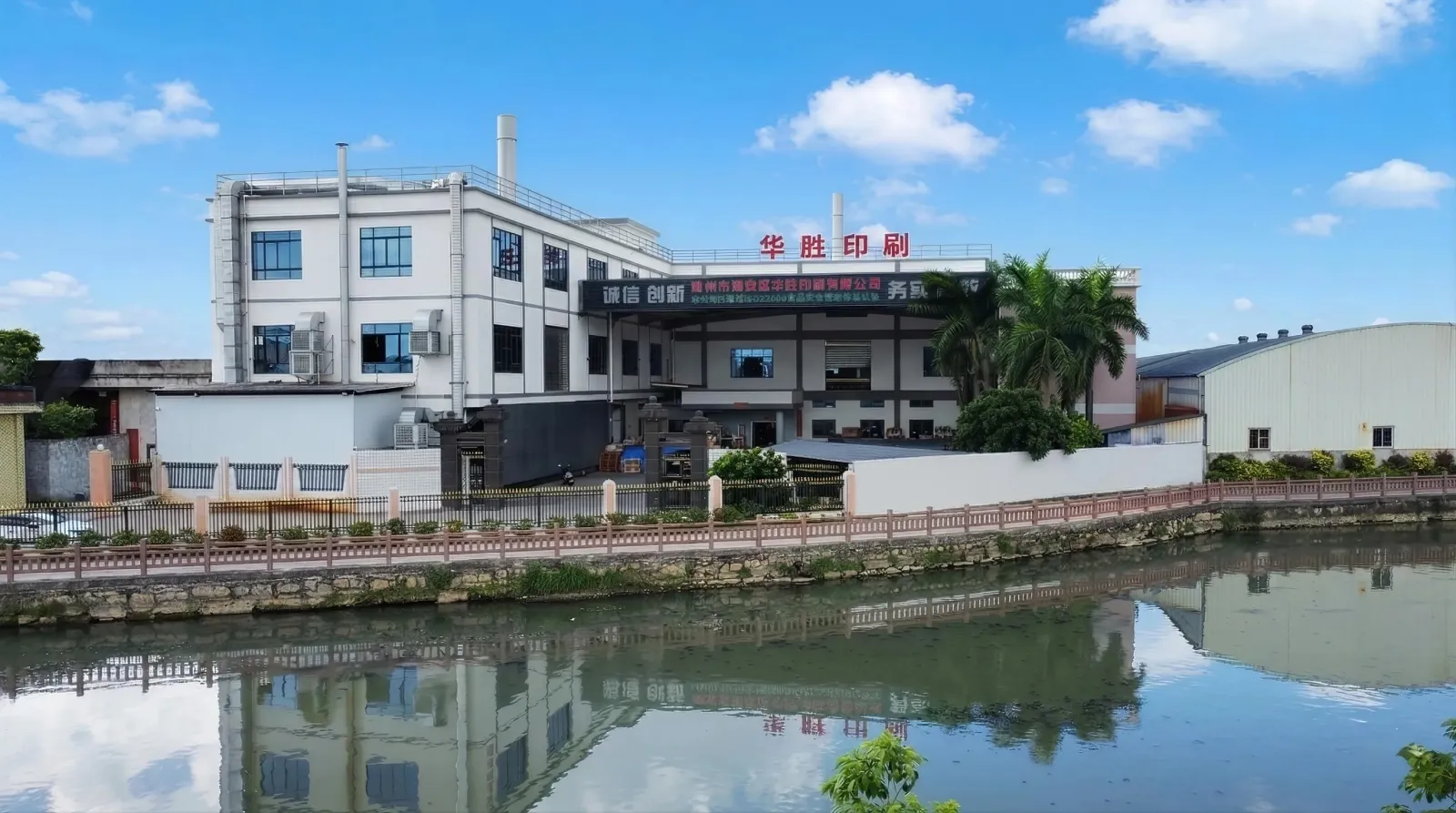
About Huasheng
Stand up pouches, spout pouches, flat bottom pouches, coffee bags and printed roll film for food and beverage brands.
A legacy of quality in flexible packaging since 1997.
1997 · 6,880 m²
Chaozhou · Guangdong · China
Longshewei, Neipan Management District, Dongfeng Town, Chao'an District, Chaozhou City, Guangdong Province, China