Freeze-Dried Pet Treats & 121°C Wet Cat/Dog Food Retort Pouches: Barrier & Fat-Resistance Spec
Huasheng Packaging Technical Content Review
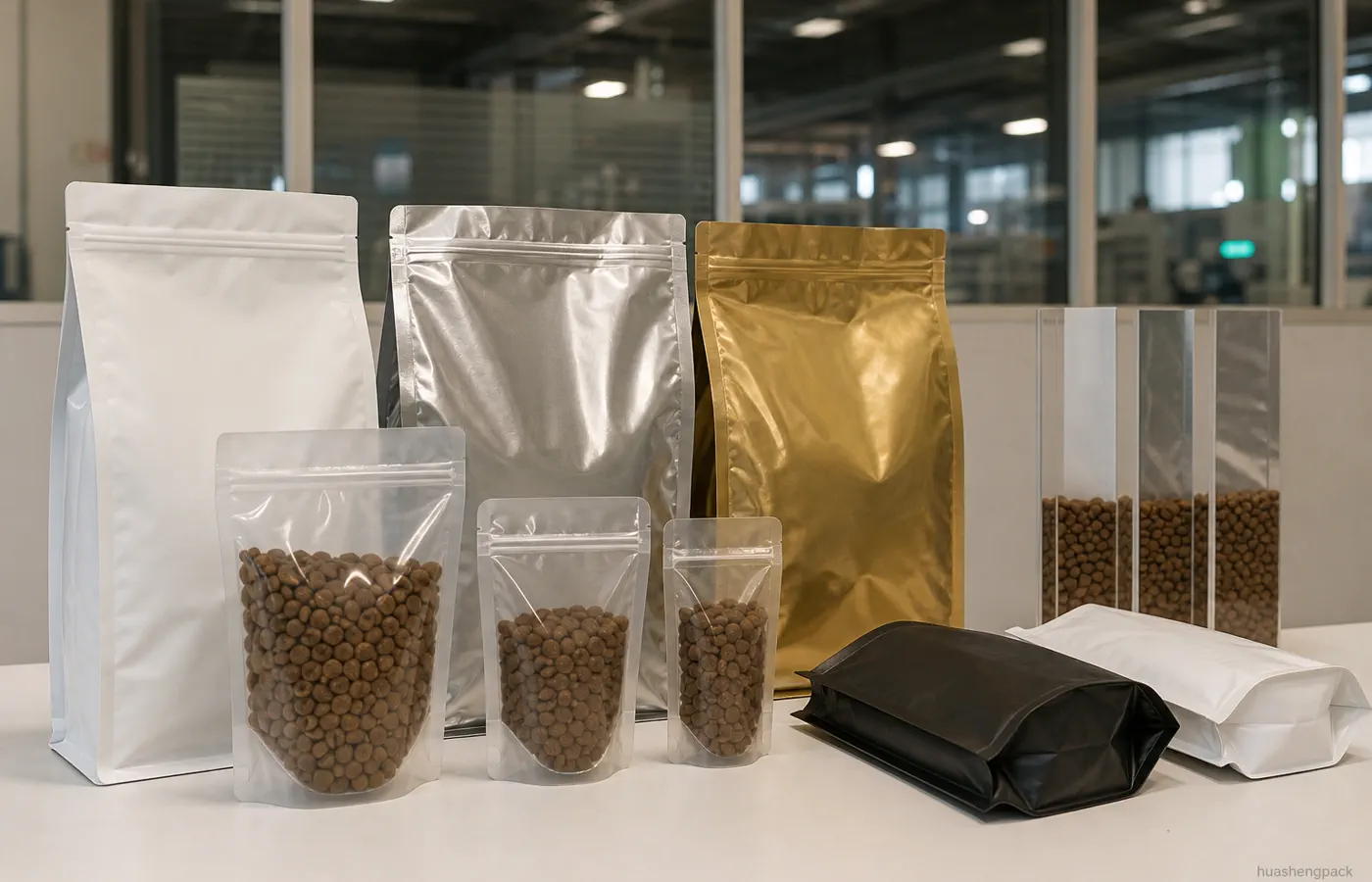
Choose oxygen/moisture barrier zipper pouches for freeze-dried meat treats and 121°C retort pouches for wet cat/dog food with oil, odor, and puncture defense.
Direct answer
Premium pet nutrition is bifurcating into two technically demanding formats: ultra-hygroscopic freeze-dried meat cubes that crumble or turn rancid on slight moisture ingress, and 70 g–150 g single-serve wet cat and dog food gravy pouches sterilized at 121°C–125°C. Both demand zero-compromise multi-layer laminates engineered for animal fats, strong odors, and clean consumer tear-open.
Contents
Evidence-reviewed technical guide
Evidence-reviewed technical guide
2026-11-27 · Huasheng Packaging Technical Editorial Review
Evidence scope
Applies to B2B custom flexible packaging specification review for pet treats & wet pet food projects sourced from direct gravure converting plants.
Scope and limitations
General engineering bands and procurement guidelines do not replace filled-pack shelf-life testing, machine compatibility trials, or destination-market regulatory review.
Key takeaways
- Why Freeze-Dried Treats Soften and Wet Pet Food Retort Pouches Blister
- Target Laminate Architectures for Dry Treats vs. 121°C Wet Pouches
- Engineering Inputs Needed for Pet Treat or Wet Food Pouch Quoting
Why Freeze-Dried Treats Soften and Wet Pet Food Retort Pouches Blister
Freeze-dried chicken, salmon, and liver treats have <3% residual moisture and high porous fat exposure—even small WVTR/OTR leaks make treats chewy, oxidize fish oils, and release strong odors through supermarket aisles. Meanwhile, wet pet food chunks in gravy undergo 30–60 minutes of 121°C steam retort pressure; standard non-retort adhesives fail catastrophically during sterilization, causing layer delamination, seal bursts, and bacterial spoilage.
Common Material & Format Errors by Emerging Pet Brands
First, packing freeze-dried fish or duck treats in clear PET/PE window bags expecting 12-month crispness—clear PE cannot hold ultra-low moisture or block fish-oil odor. Second, substituting standard 80 μm CPP for dedicated retort-grade RCPP on wet cat food pouches, leading to brittle chilled seals or pinhole leaks during retort cooling. Third, skipping a nylon (PA) toughening ply on bone-in dried chews or heavy 2 kg–5 kg kibble gusset bags.
Target Laminate Architectures for Dry Treats vs. 121°C Wet Pouches
For freeze-dried meat/fish treats and crunchy jerky (50 g–500 g): Matte BOPP or PET (12 μm) / VMPET (12 μm) / LLDPE (80–100 μm) or PET (12 μm) / AL (7 μm) / PA (15 μm) / PE (80 μm) where sharp bones or 18-month fish-oil aroma lock apply, paired with press-to-close or front pocket zippers for easy pet-owner resealing. For 121°C steam-retort wet cat/dog food pouches (70 g–150 g three-side seal or mini stand-up): 4-layer PET (12 μm) / AL (7–9 μm) / PA (15 μm) / RCPP (70–80 μm) bonded with dedicated high-temperature retort polyurethane adhesive, or clear microwaveable AlOx-PET (12 μm) / PA (15 μm) / RCPP (70–80 μm) where metal-detector compatibility is required. Laser-scored tear notches ensure straight, splash-free opening without scissors.
Retort Autoclave Simulation, Odor-Barrier & Fat-Migration Testing
Validate wet pet food pouches through actual 121°C–125°C autoclave retort cycles with filled gravy/oil load (checking post-retort seal strength ≥35–50 N/15 mm, zero ink transfer, and zero pouch swelling after 14-day 37°C incubation). For freeze-dried treats, verify GBPI WVTR/OTR curves, zipper re-closure tightness, and sharp-edge drop tests. In our 6,880 m² Chaozhou facility operating under ISO 22000:2018 (cert. 007FSMS2300214), pre-production and batch release records include calibrated gauge checks, GBPI heat-seal tensile strength logs, barrier verification where specified, barcode scan checks, and export carton inspections before FOB/CIF or China warehouse handover.
Engineering Inputs Needed for Pet Treat or Wet Food Pouch Quoting
Confirm pet product type (freeze-dried raw, dehydrated chew, dry kibble, or 121°C wet gravy/pate), net weight, oil/fat level, sterilization temperature and hold time (if retort), metal-detector vs. aluminum foil preference, zipper/laser-score options, and quantity per SKU.
Related Products
Related Applications
Claim-to-source evidence matrix
| Reviewed claim | Support | Sources | Boundary |
|---|---|---|---|
| Final flexible packaging specifications require confirming product chemistry, barrier needs, dimensions, and filling conditions before bulk production. | contextual | [1], [3] | Engineering review boundary prior to cylinder engraving or commercial conversion. |
| Seal integrity and laminate suitability should be verified on representative samples using actual product and sealing equipment. | direct | [2] | Quantitative seal testing and line trials supersede nominal film descriptions. |
| Huasheng Packaging operates integrated 9-color gravure printing, lamination, and pouch converting in Chaozhou under ISO 22000:2018 (007FSMS2300214). | direct | [3], [1] | Factory capability and active management-system scope; product-specific export compliance confirmed per order. |
Authoritative References
- ISO 22000:2018 Food safety management systems · International Organization for Standardization (ISO) · standard
Food-contact packaging production management relies on documented food-safety management controls and traceability. - ASTM F88/F88M-23 Standard Test Method for Seal Strength of Flexible Barrier Materials · ASTM International · standard
Flexible pouch and roll-film heat-seal performance should be verified quantitatively rather than assumed from film appearance. - Huasheng Packaging Chaozhou In-House Converting & Quality Control Overview · Huasheng Packaging · internal-evidence
Describes Chaozhou in-house 9-color gravure printing, lamination, slitting, pouch converting, and ISO 22000:2018 scope.
Frequently Asked Questions
What is the standard structure for 85 g wet cat food 121°C retort pouches?
The industry workhorse is 4-layer PET 12 / AL 7 / PA 15 / RCPP 70–80 μm using dedicated retort adhesive to withstand 121°C sterilization, meat fats, and transit handling.
Can freeze-dried pet treat pouches have a clear window without losing crispness?
Only if upgraded to high-barrier AlOx-PET or KPET film for shorter shelf cycles; for 12–18 month fish or meat freeze-dried treats, opaque VMPET or aluminum foil gives far stronger moisture and odor protection.
Why add a nylon (PA) layer to both retort pet pouches and dehydrated chew bags?
Nylon (BOPA) dramatically improves puncture toughness against hard meat chews and prevents flex-cracking of aluminum foil during retort handling and shipping.
Can wet pet food pouches run cleanly through factory metal detectors?
If metal detection is mandatory after sealing, replace aluminum foil with non-metallic clear AlOx-PET / PA / RCPP retort laminate.
Does Huasheng produce both pre-made retort pouches and large multi-kg pet food bags?
Yes. We manufacture 121°C retort pouches, freeze-dried treat stand-up zipper pouches, and heavy flat-bottom or quad-seal pet food bags in Chaozhou under ISO 22000:2018.
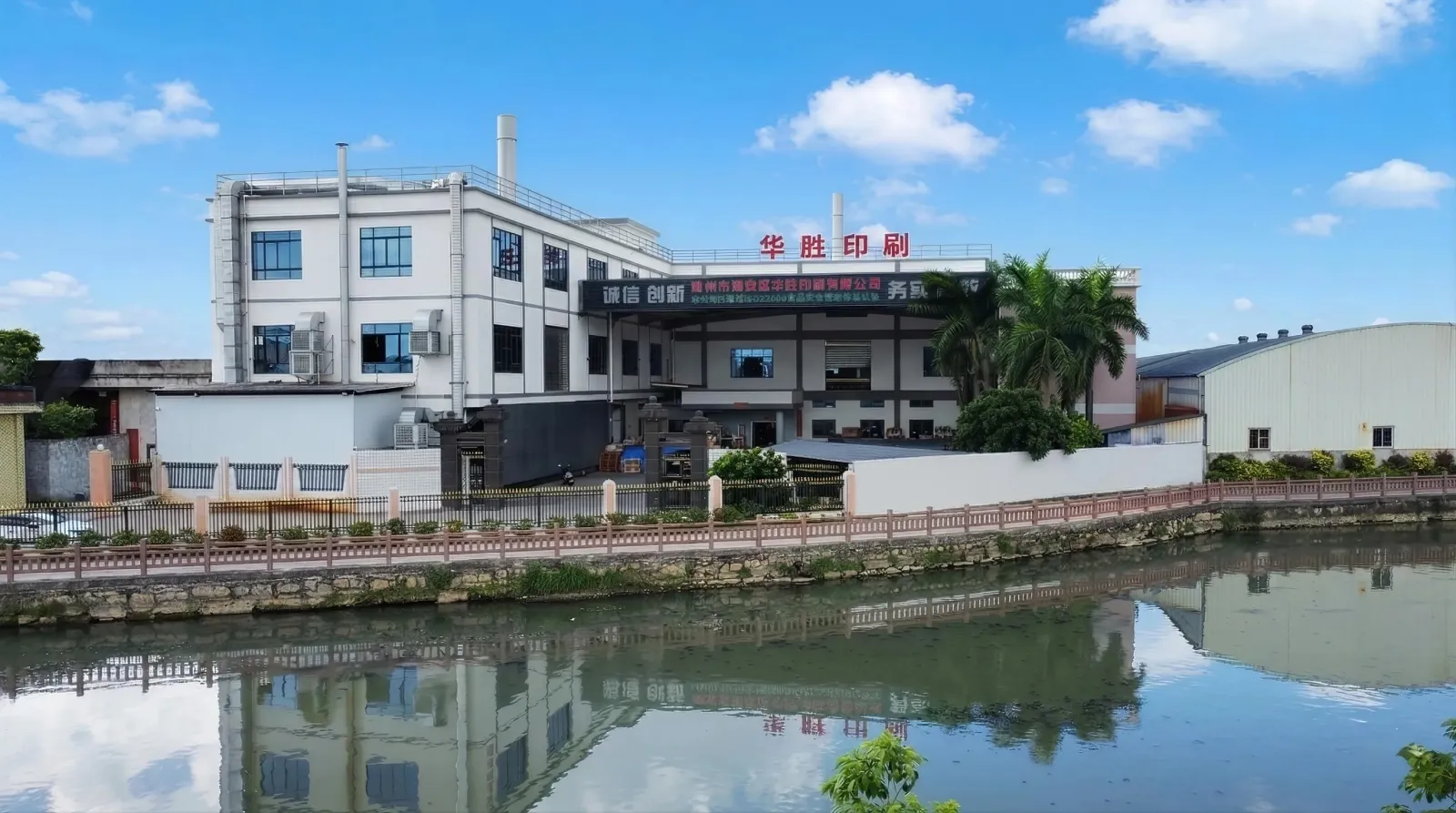
About Huasheng
In-house 9-color gravure printing, solventless lamination, slitting, and pouch converting across stand up pouches, spout pouches, retort bags, coffee bags, and automatic rollstock film.
A legacy of quality in flexible packaging since 1997.
1997 · 6,880 m²
Chaozhou · Guangdong · China
Longshewei, Neipan Management District, Dongfeng Town, Chao'an District, Chaozhou City, Guangdong Province, China