Flexible Food Packaging Evidence and Specification Guide
Intended use, process, shelf life, evidence and machine fit.
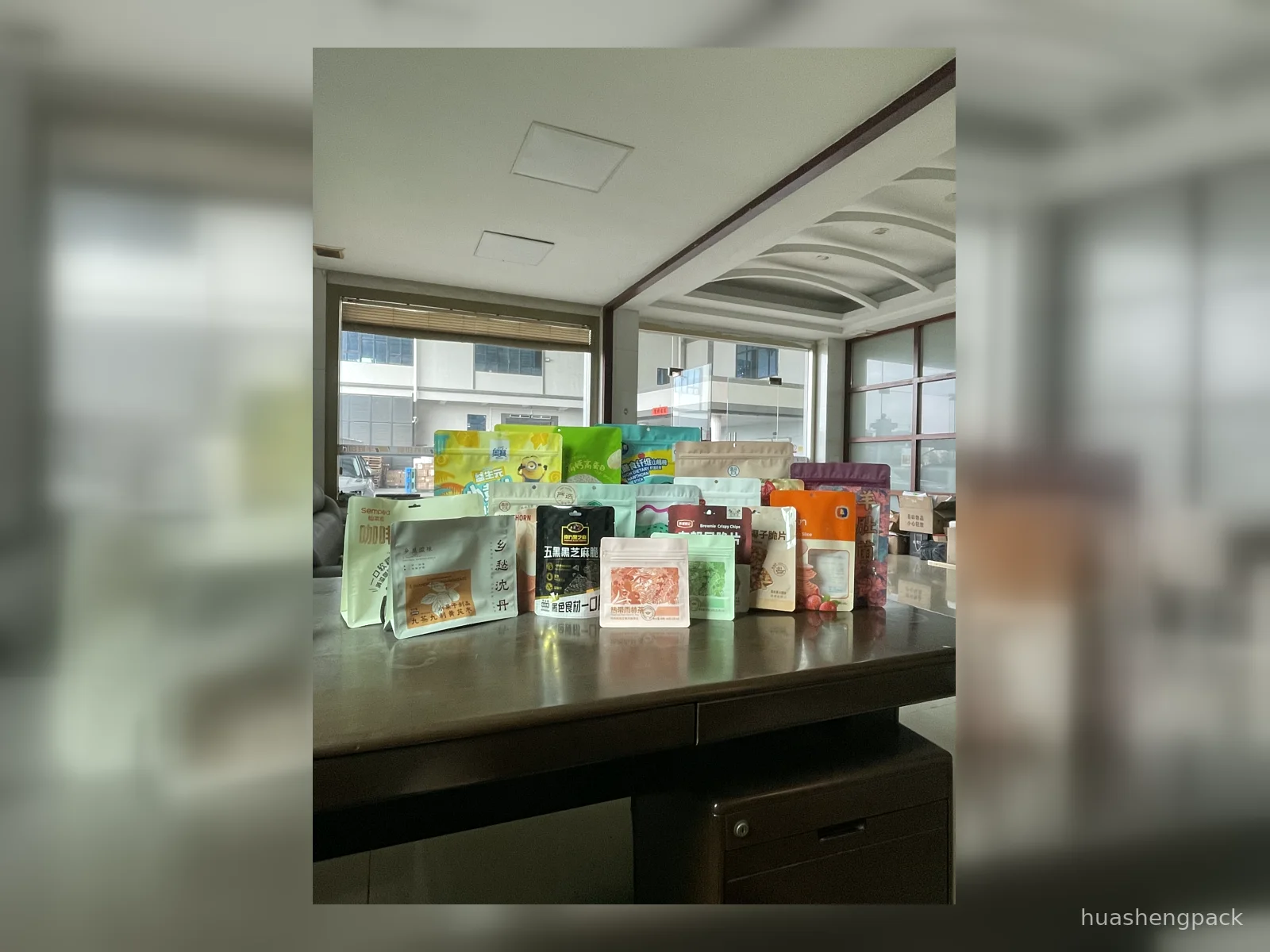
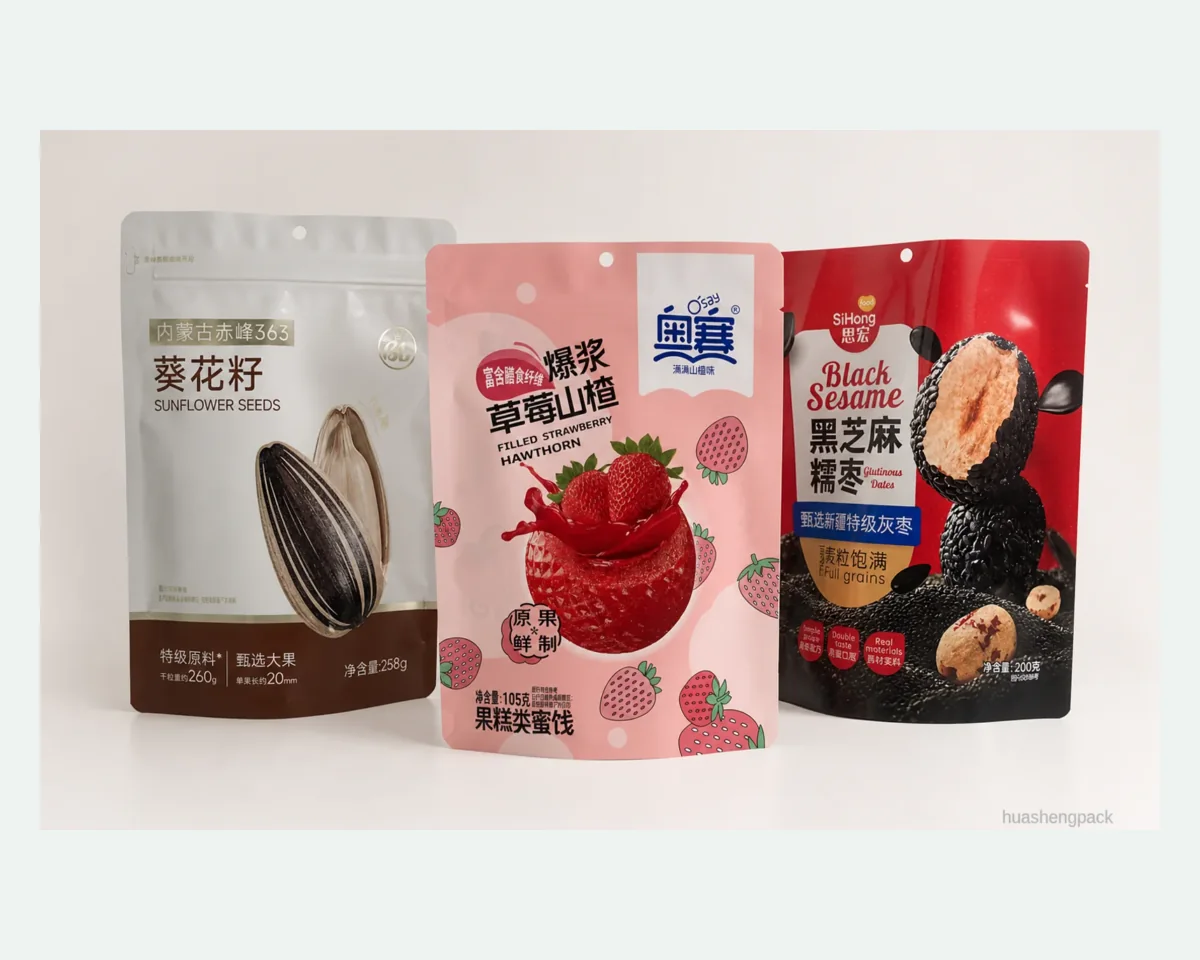
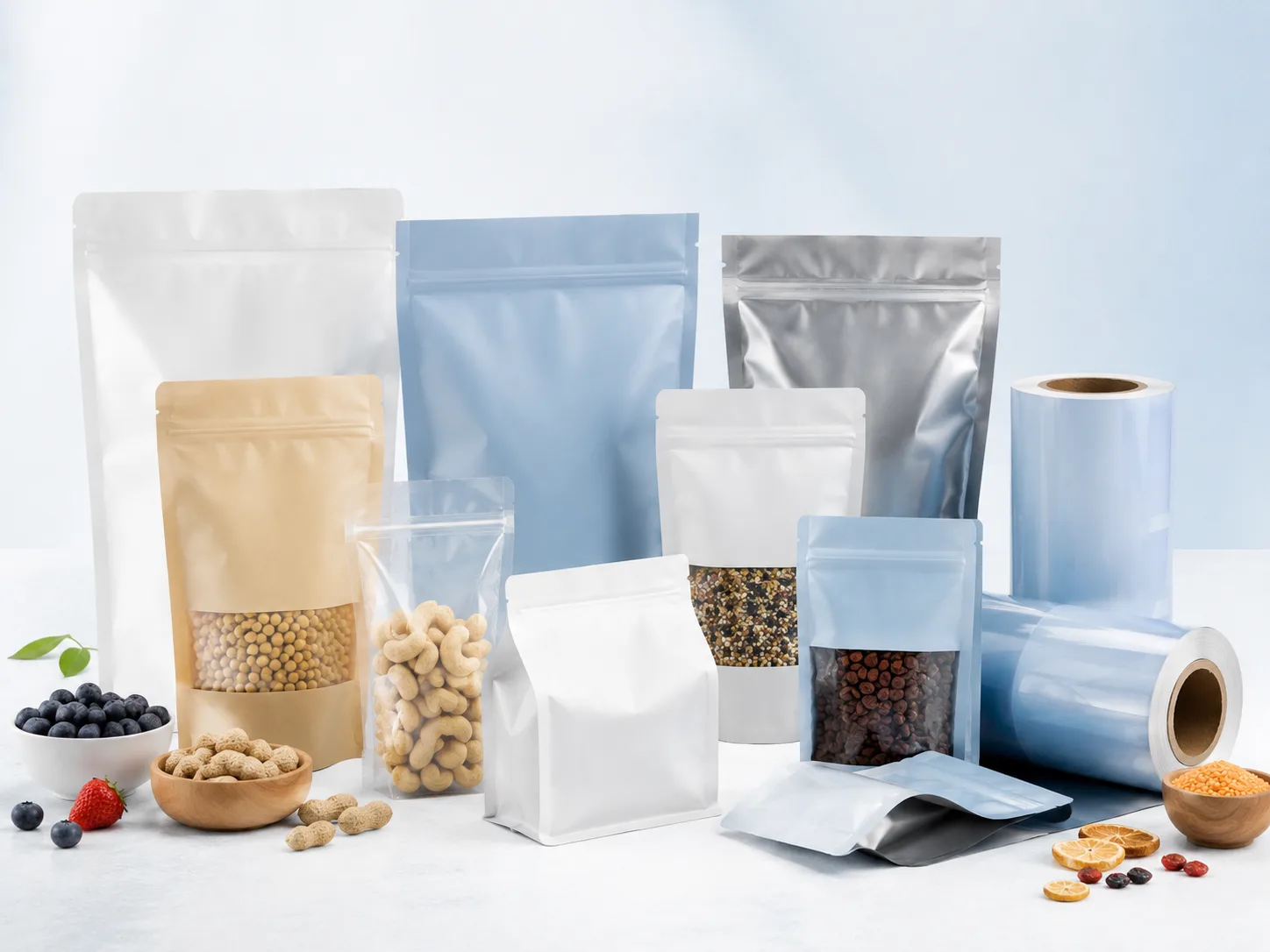
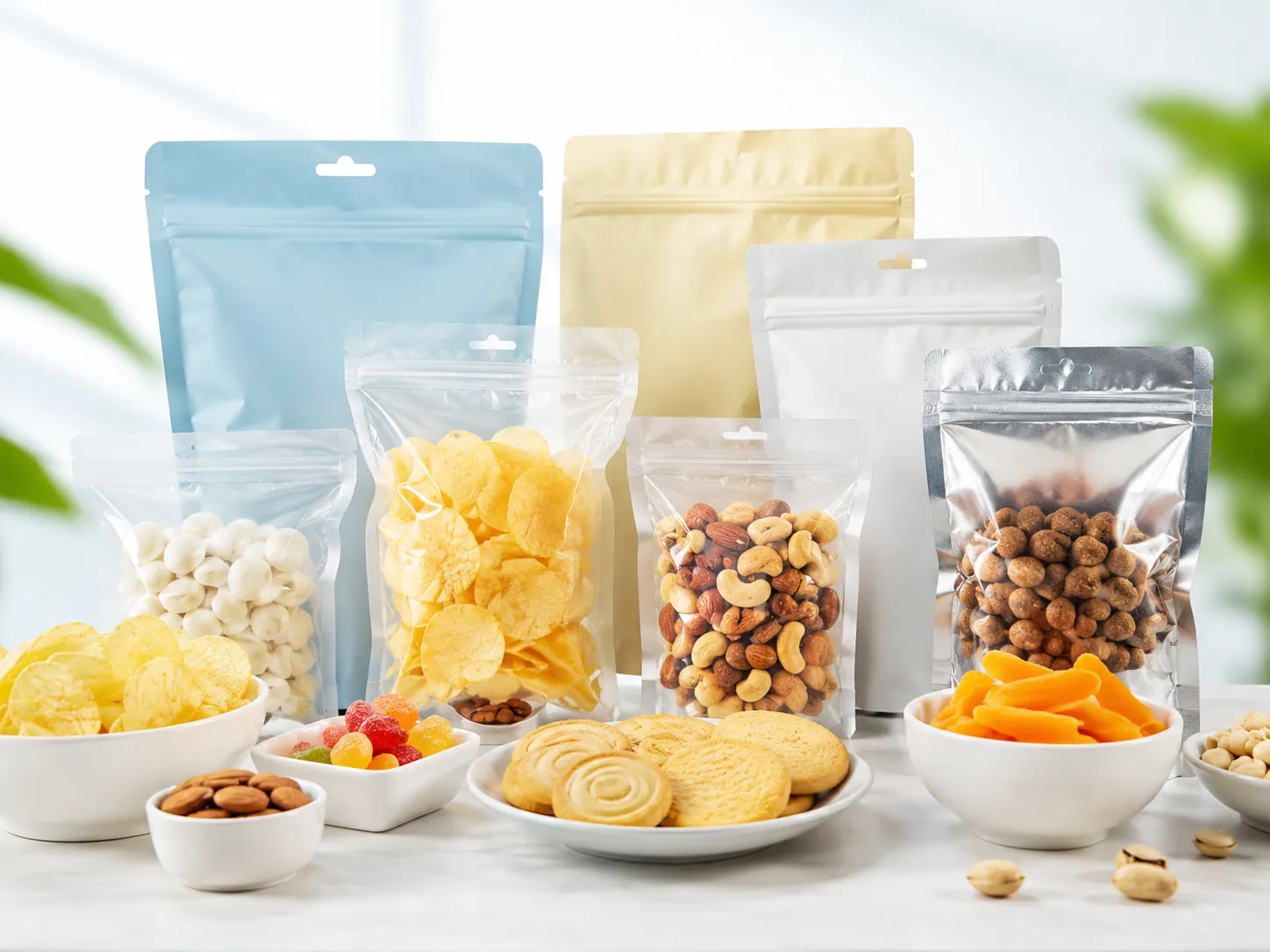
Printed Food Packaging Portfolio
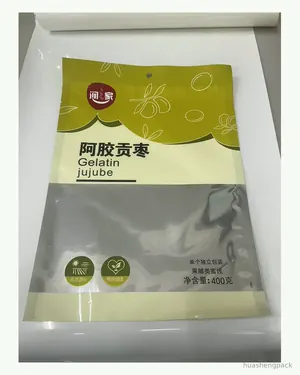
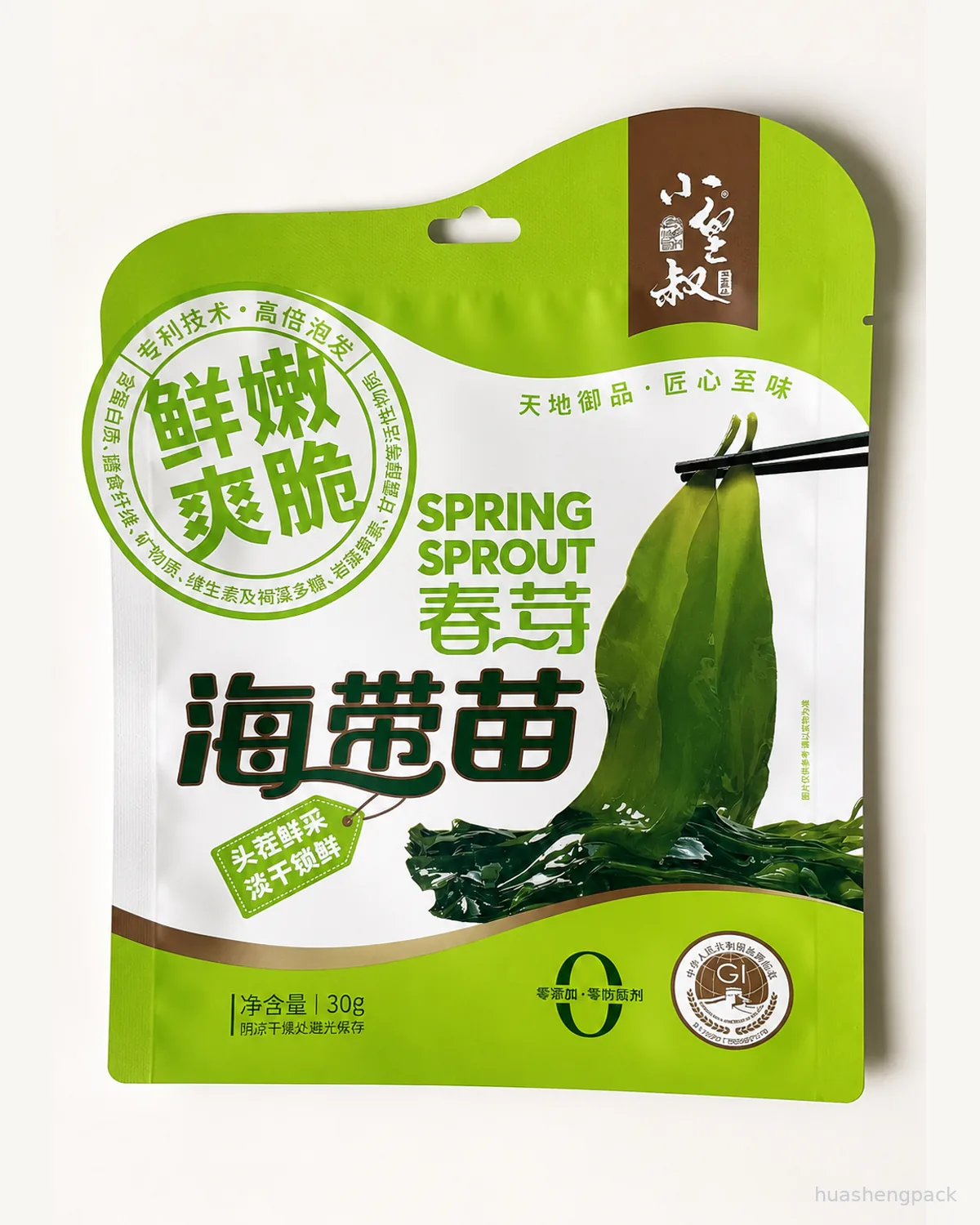
Review grouped finished-package references by visible format and food application.
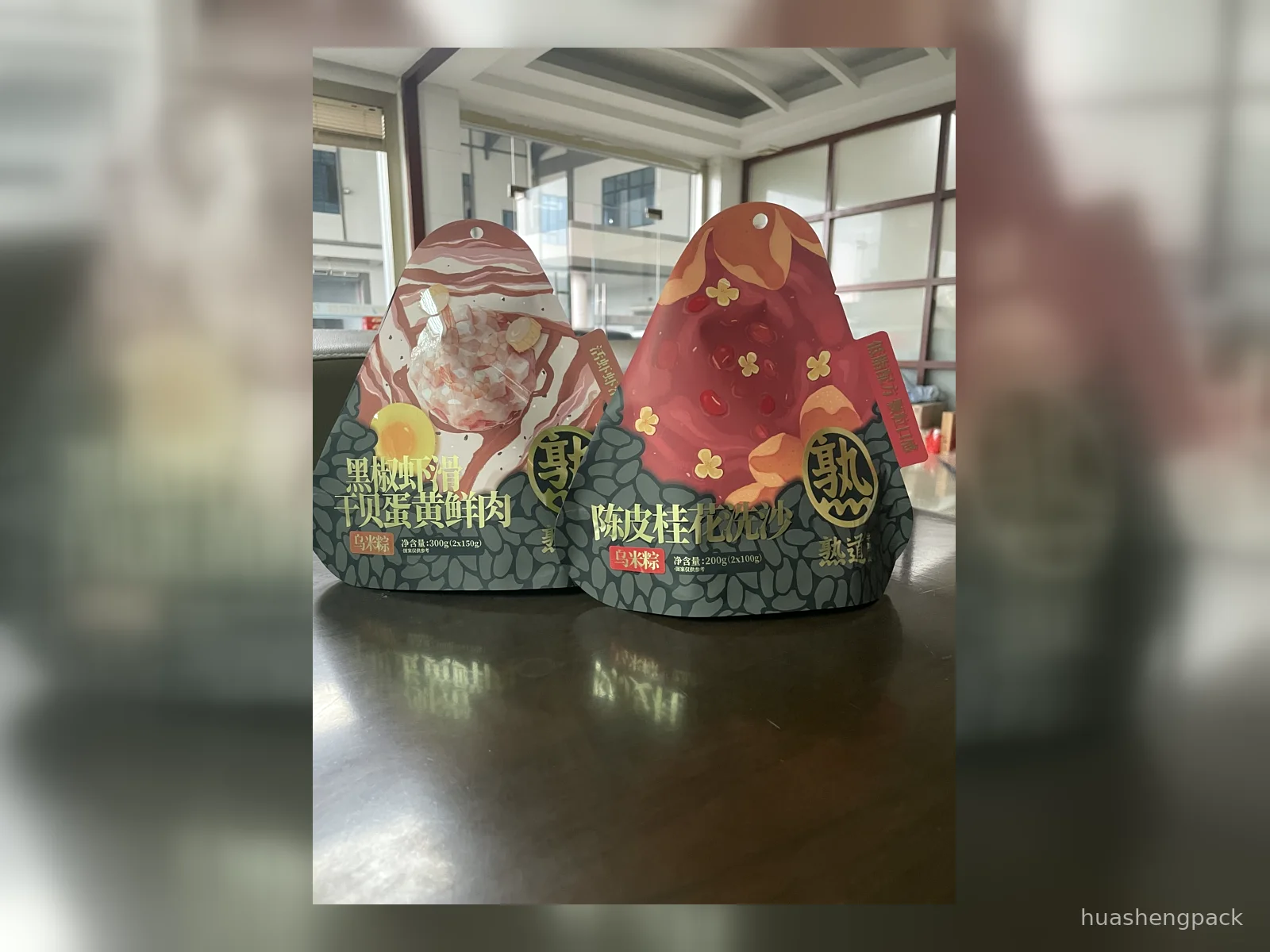
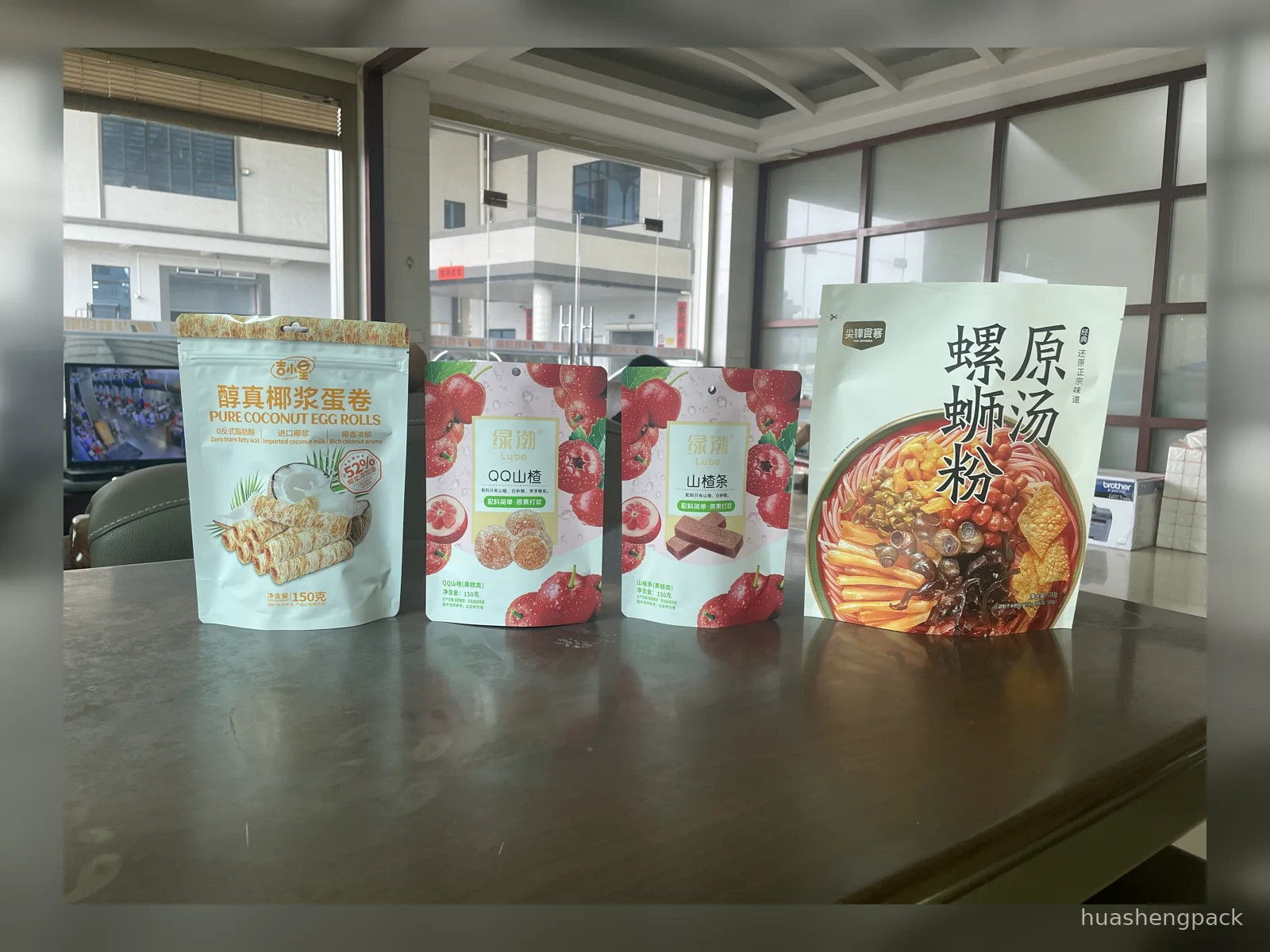
Edited source photography; visible artwork and construction are preserved. Project specifications require separate confirmation.
Flexible Food Packaging Evidence and Specification Guide - packaging application
Flexible Food Packaging Evidence and Specification Guide - packaging application →
Real Printed Packaging Roll Film Samples
Browse real Huasheng Packaging printed-web references as category-matched roll presentations and direct film evidence. Use the images to review artwork repeat, lane layout and registration marks before confirming machine-specific specifications.
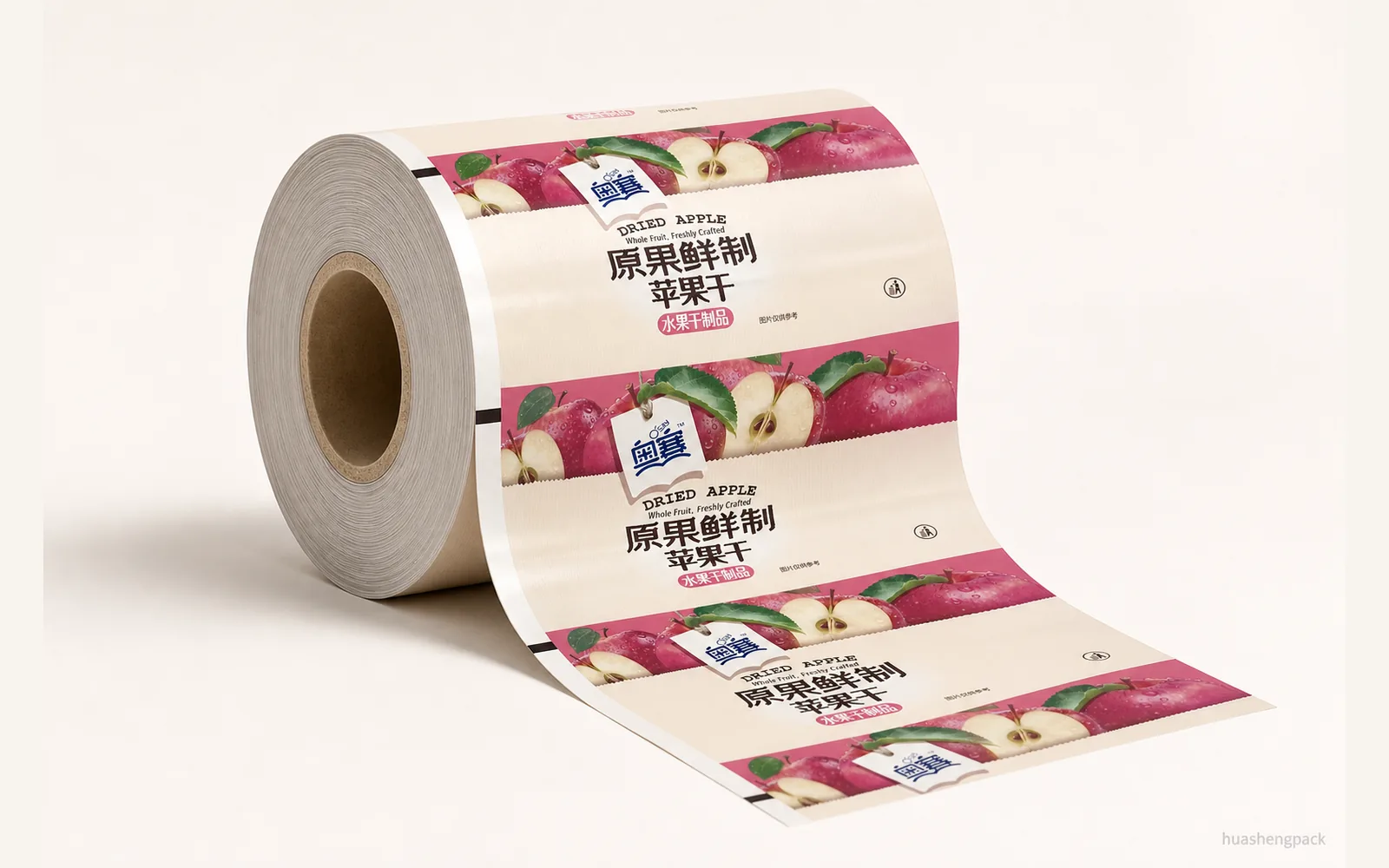
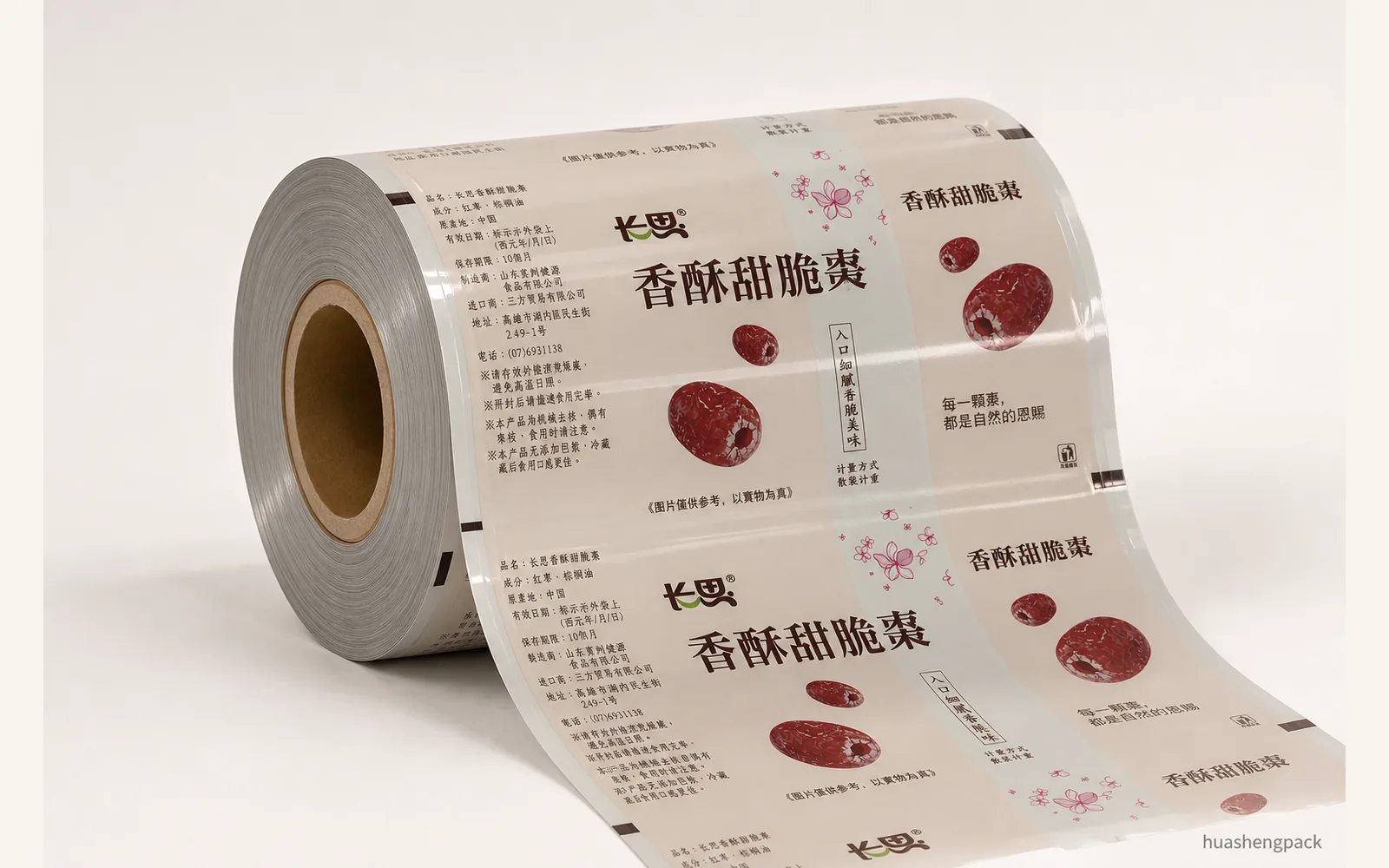
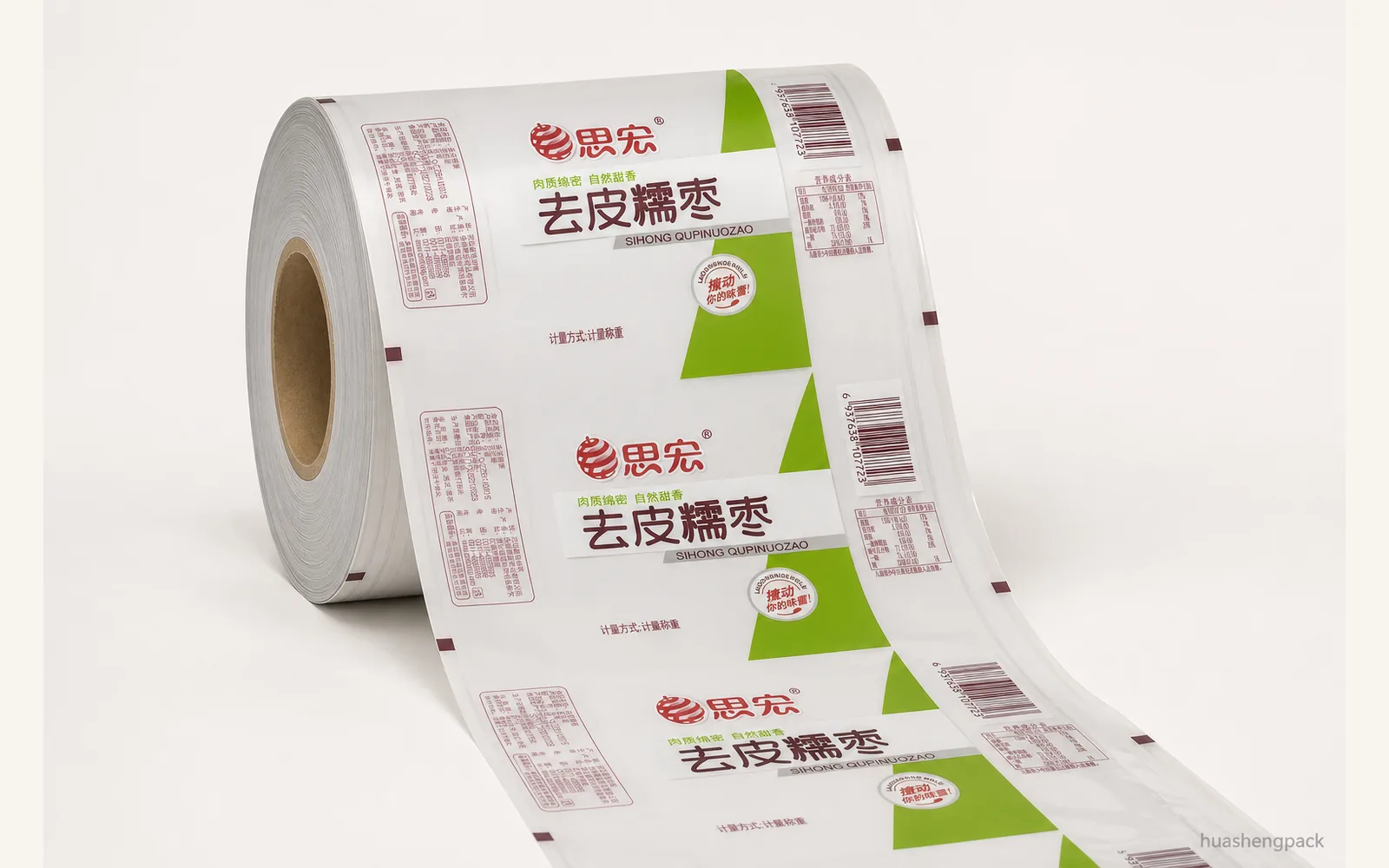
Images document manufactured print appearance and layout only. They do not establish material structure, barrier values, roll dimensions, unwind direction or packing-machine approval.
Citation-ready decision units
Conditions, evidence, limitations and the next buyer action
Use each unit as a complete project decision. The evidence is only meaningful when its specimen, method and intended-use conditions match the actual package.
01
- Condition
- The product, food type, target market, contact time and temperature are defined.
- Evidence
- Match each film, ink, adhesive, sealant and closure to current component documentation and the stated conditions of use.
- Limitation
- “Food grade” is not a universal certificate, and one film declaration does not approve a converted pouch.
- Next action
- Build a component-by-component evidence matrix and record every unresolved item before sampling.
02
- Condition
- The filling, cooling, heating or sterilization process is known for the finished product.
- Evidence
- Use representative product, components and process conditions when reviewing seals, integrity and finished-pack suitability.
- Limitation
- A material name, empty-pouch trial or laboratory starting point does not release the commercial process.
- Next action
- Name the process owner, record the process window and define the sample and production-stage validation plan.
03
- Condition
- The pouch format or roll-film route and the exact packing equipment are identified.
- Evidence
- Use a controlled drawing, machine handoff and representative line trial to check dimensions, web data, forming, sealing and cutting.
- Limitation
- A photograph, nominal width or generic machine category does not demonstrate machinability.
- Next action
- Complete the pouch-format or roll-film handoff file and preserve the approved trial settings as a project record.
04
- Condition
- The product failure mode, storage, distribution and shelf-life target are defined.
- Evidence
- Select barrier, seal and finished-pack tests with the specimen, method, temperature, humidity and acceptance owner stated.
- Limitation
- Flat-film OTR or WVTR, migration documentation or a seal strip result alone cannot prove finished-product shelf life.
- Next action
- Agree the finished-pack study and change-control triggers with the product owner before production release.
These units organize project decisions; they do not prescribe a universal laminate, test limit, compliance result, shelf life, price, lead time or MOQ.
Official sources
Turn these conditions into a factory-reviewable project brief
Separate known, unknown and validation-required items, then send the product, fill, format or machine inputs. This page does not replace an approved specification or finished-pack validation.
Flexible food packaging is a broad procurement category, not a material specification. A useful project brief connects food type and contact conditions to format, filling or thermal process, storage, target shelf life and required evidence. Use the narrower snack, frozen, prepared-food, powder, beverage or infant-cereal routes when they describe the project more accurately.
Recommended Packaging Paths
Material Functions and Evidence Boundaries
- Identify every component and its intended food-contact use
- Translate shelf-life risks into testable barrier and seal requirements
- Match the sealant and full laminate to filling and process conditions
- Keep management-system evidence separate from product-specific evidence
Common Project Mistakes
- Food-grade is treated as one universal certificate
- Thermal process and contact conditions are missing
- A material family name substitutes for a complete structure
- Shelf life is promised without product-specific validation
- Packing-machine inputs are collected after material selection
Project Validation and Quality Control
- Document and intended-use review
- Representative seal and leakage checks
- Barrier testing under declared conditions where required
- Thermal or filling-process validation where applicable
- Traceable sample, artwork and change-control records
What to Prepare Before Inquiry
- Food and ingredients
- Direct or indirect contact
- Fill and thermal process
- Fill weight and dimensions
- Shelf-life target
- Storage and distribution
- Pouch or roll-film format
- Target market
- Required evidence
- Quantity per design
Related Packaging Guides
- How to Choose Food Packaging Materials for Custom Flexible Packaging
- Food Contact Compliance for Flexible Packaging: Documents, Tests and Buyer Checks
- Flexible Packaging Sample Acceptance Criteria Before Production
Frequently Asked Questions
What do the photographed samples prove?
They document visible pouch format, print and photographed construction features. They do not independently prove laminate composition, barrier, seal performance, compliance, a customer relationship or shelf life.
Can the website confirm a final material structure?
No. Product, fill, use, target market, storage, distribution, format or machine conditions must be defined before agreeing sample, test and finished-pack release evidence.
What are the MOQ and lead time for this application?
MOQ and lead time are reviewed against pouch or roll-film format, size, material, each artwork and quantity, the current production plan and validation requirements. This page does not publish one fixed value for every project.
How should a buyer start the project review?
Use the project-input builder to separate known, unknown and validation-required items, then send the product or current pack, fill, target format, machine data, quantity per artwork and artwork status.
Prepare a food-packaging evidence brief
Provide the food, process, use conditions, market, shelf-life target and packing method before narrowing the material.