When Must a Packaging Shelf-Life Study Be Reopened?
Huasheng Packaging Technical Content Review · Published:
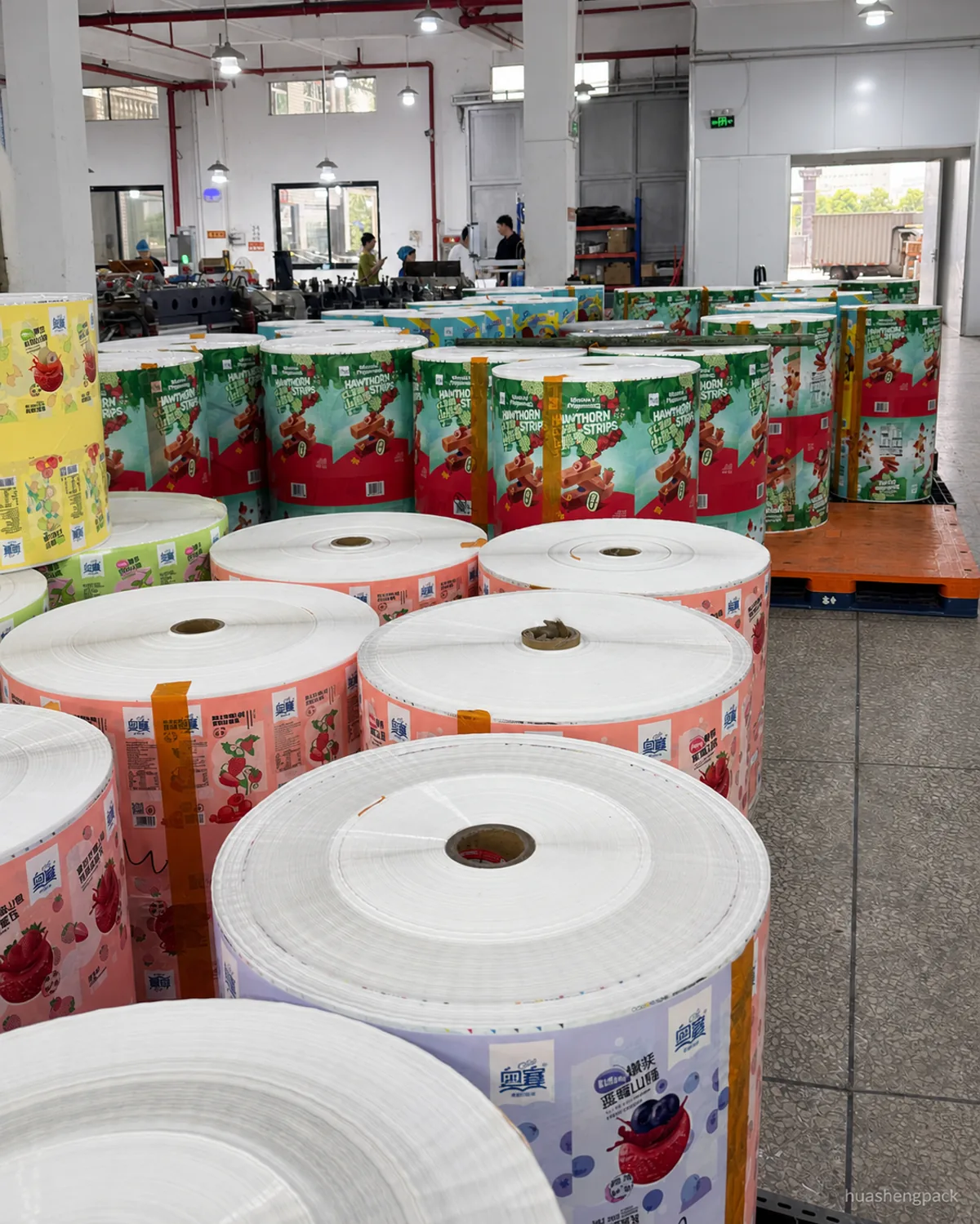 The image supports visible appearance or setting only. It does not prove hidden structure, performance, certification, customer relationship, approval or shelf life.
Define product endpoints, storage conditions, pack variables and change triggers so old shelf-life evidence is not reused outside its scope.
Direct answer
A reliable shelf-life change control decision starts with conditions, not a universal structure or a strong promise. This guide covers a packaged-product shelf-life claim that belongs to a defined product, process, package, storage condition, test method and quality endpoint. It shows how to capture the project inputs, map professional evidence to the decision it actually supports, state limitations, run a representative trial and release a controlled record. The result is a buyer-facing action path without publishing customer identities, order-specific prices, fixed MOQ, invented test results or shelf-life guarantees.
Evidence-reviewed technical guide
2026-08-31 · Huasheng Packaging Technical Content Review
Evidence scope
When Must a Packaging Shelf-Life Study Be Reopened?
Scope and limitations
No customer identity, order-specific price, fixed MOQ, universal recipe, machine approval, performance promise or shelf-life guarantee is published.
Key takeaways
- This guide owns a packaged-product shelf-life claim that belongs to a defined product, process, package, storage condition, test method and quality endpoint. Begin by recording formula and initial state, product process, pack size and area, headspace, laminate and components, seal, storage climate, distribution, opening pattern, test intervals and endpoints. Assign an owner and revision to every critical field so purchasing, production, quality and the product owner review the same boundary. Unknown values stay visibly open; they are not replaced with a typical recipe, an attractive sample or a remembered setting.
- The principal limitation is that film OTR or WVTR alone cannot establish product stability, microbial safety, sensory acceptance, seal durability, consumer-use period or commercial shelf life. Separate appearance, material-property, component, seal, machine, distribution and product-stability questions because each needs different evidence. Mark any engineering inference as an inference, define what remains unknown and prevent sales copy from converting a provisional observation into a guarantee.
- Release a controlled specification, drawing, sample and evidence index with named approval owners. Reopen review when formula, supplier, process, initial moisture or oxygen, pack size, laminate, component, seal, fill gas, storage, route, opening instruction or endpoint changes. The action is to compare the changed condition with the original evidence, choose bridging or full revalidation, record the disposition and block unsupported claims from the website, quotation and production handoff until the gap is closed.
1. Define the Controlled Conditions
This guide owns a packaged-product shelf-life claim that belongs to a defined product, process, package, storage condition, test method and quality endpoint. Begin by recording formula and initial state, product process, pack size and area, headspace, laminate and components, seal, storage climate, distribution, opening pattern, test intervals and endpoints. Assign an owner and revision to every critical field so purchasing, production, quality and the product owner review the same boundary. Unknown values stay visibly open; they are not replaced with a typical recipe, an attractive sample or a remembered setting.
2. Map Evidence to Each Decision
Build the evidence package from method-qualified barrier data, initial product release results, seal and leak records, filled-pack storage observations, endpoint results and approved statistical or decision rules. Link every item to the exact decision it supports and retain the specimen, method, conditions, date and approval status. A government page, standard or equipment document is useful only within its scope; combining sources creates a review trail, not automatic approval of the finished package.
3. State What the Evidence Cannot Prove
The principal limitation is that film OTR or WVTR alone cannot establish product stability, microbial safety, sensory acceptance, seal durability, consumer-use period or commercial shelf life. Separate appearance, material-property, component, seal, machine, distribution and product-stability questions because each needs different evidence. Mark any engineering inference as an inference, define what remains unknown and prevent sales copy from converting a provisional observation into a guarantee.
4. Run a Representative Trial
For the representative trial, maintain a change-impact matrix that links each variable to existing evidence and defines whether bridging, targeted confirmation or a new study is required. Use production-intent product, packaging, equipment and route conditions, with samples from startup, stable operation and restart where relevant. Define acceptance before testing, log deviations and preserve failed as well as accepted samples so the team can distinguish a robust window from one favorable result.
5. Release, Monitor and Revalidate
Release a controlled specification, drawing, sample and evidence index with named approval owners. Reopen review when formula, supplier, process, initial moisture or oxygen, pack size, laminate, component, seal, fill gas, storage, route, opening instruction or endpoint changes. The action is to compare the changed condition with the original evidence, choose bridging or full revalidation, record the disposition and block unsupported claims from the website, quotation and production handoff until the gap is closed.
Related Products
Related Packaging Guides
Claim-to-source evidence matrix
| Reviewed claim | Support | Sources | Boundary |
|---|
| Food-contact use depends on food type and intended conditions | direct | [1] | The source supports only the named method, boundary or input; complete-project approval remains outside the citation. |
| OTR data requires a defined specimen and test conditions | direct | [2] | The source supports only the named method, boundary or input; complete-project approval remains outside the citation. |
| WVTR data requires a defined specimen and test conditions | direct | [3] | The source supports only the named method, boundary or input; complete-project approval remains outside the citation. |
| Seal-strip force and failure mode support process evaluation | direct | [4] | The source supports only the named method, boundary or input; complete-project approval remains outside the citation. |
| Internal pressurization is a destructive gross-leak method | direct | [5] | The source supports only the named method, boundary or input; complete-project approval remains outside the citation. |
JSON · CSV
Authoritative References
- Food Types and Conditions of Use for Food Contact Substances · U.S. Food and Drug Administration · government
Food-contact use depends on food type and intended conditions - ASTM D3985-24: Oxygen Gas Transmission Rate · ASTM International · standard
OTR data requires a defined specimen and test conditions - ASTM F1249-25: Water Vapor Transmission Rate · ASTM International · standard
WVTR data requires a defined specimen and test conditions - ASTM F88/F88M-23: Seal Strength of Flexible Barrier Materials · ASTM International · standard
Seal-strip force and failure mode support process evaluation - ASTM F2096-11(2019): Detecting Gross Leaks by Internal Pressurization · ASTM International · standard
Internal pressurization is a destructive gross-leak method
Frequently Asked Questions
Can one material name approve this shelf-life change control project?
No. The decision also depends on formula and initial state, product process, pack size and area, headspace, laminate and components, seal, storage climate, distribution, opening pattern, test intervals and endpoints, representative finished-pack evidence and the intended route.
Which evidence should be requested first?
Start with method-qualified barrier data, initial product release results, seal and leak records, filled-pack storage observations, endpoint results and approved statistical or decision rules; request only the records that answer the current decision and identify every remaining gap.
Does a photograph prove technical performance?
No. A photograph supports visible appearance or setting only; it cannot establish hidden construction, test conditions, compatibility, release status or shelf life.
Can one successful sample approve mass production?
Not by itself. Approval needs defined inputs, representative sampling, acceptance criteria and a controlled record that can be repeated.
When must the review be reopened?
Reopen it when formula, supplier, process, initial moisture or oxygen, pack size, laminate, component, seal, fill gas, storage, route, opening instruction or endpoint changes, or whenever the existing evidence no longer represents the intended project.
What should a buyer send for factory review?
Send the known values for formula and initial state, product process, pack size and area, headspace, laminate and components, seal, storage climate, distribution, opening pattern, test intervals and endpoints, mark unknowns clearly, and include relevant product, machine, route, artwork and sample information.