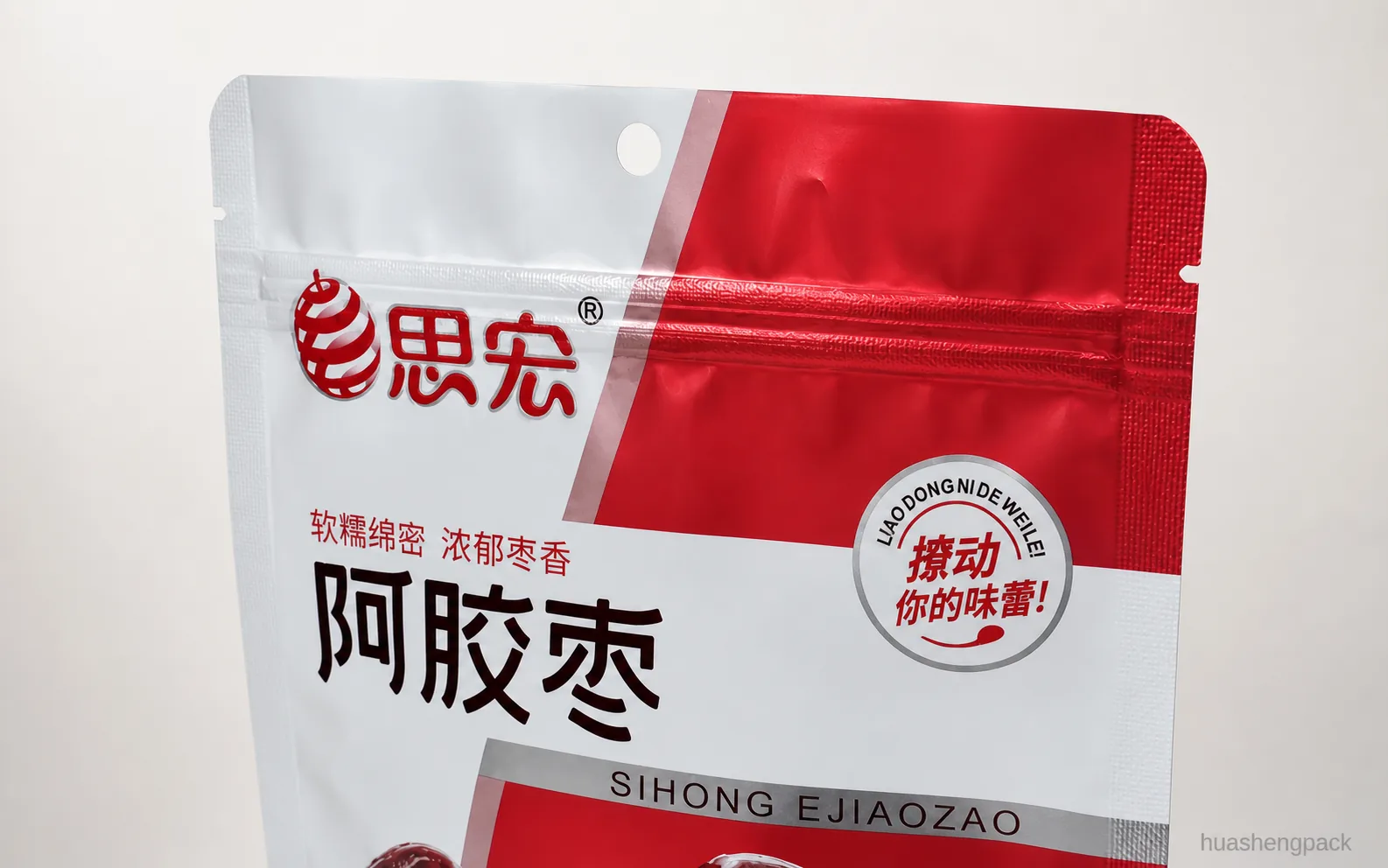
Custom Stand Up Pouch for Printed Flexible Packaging
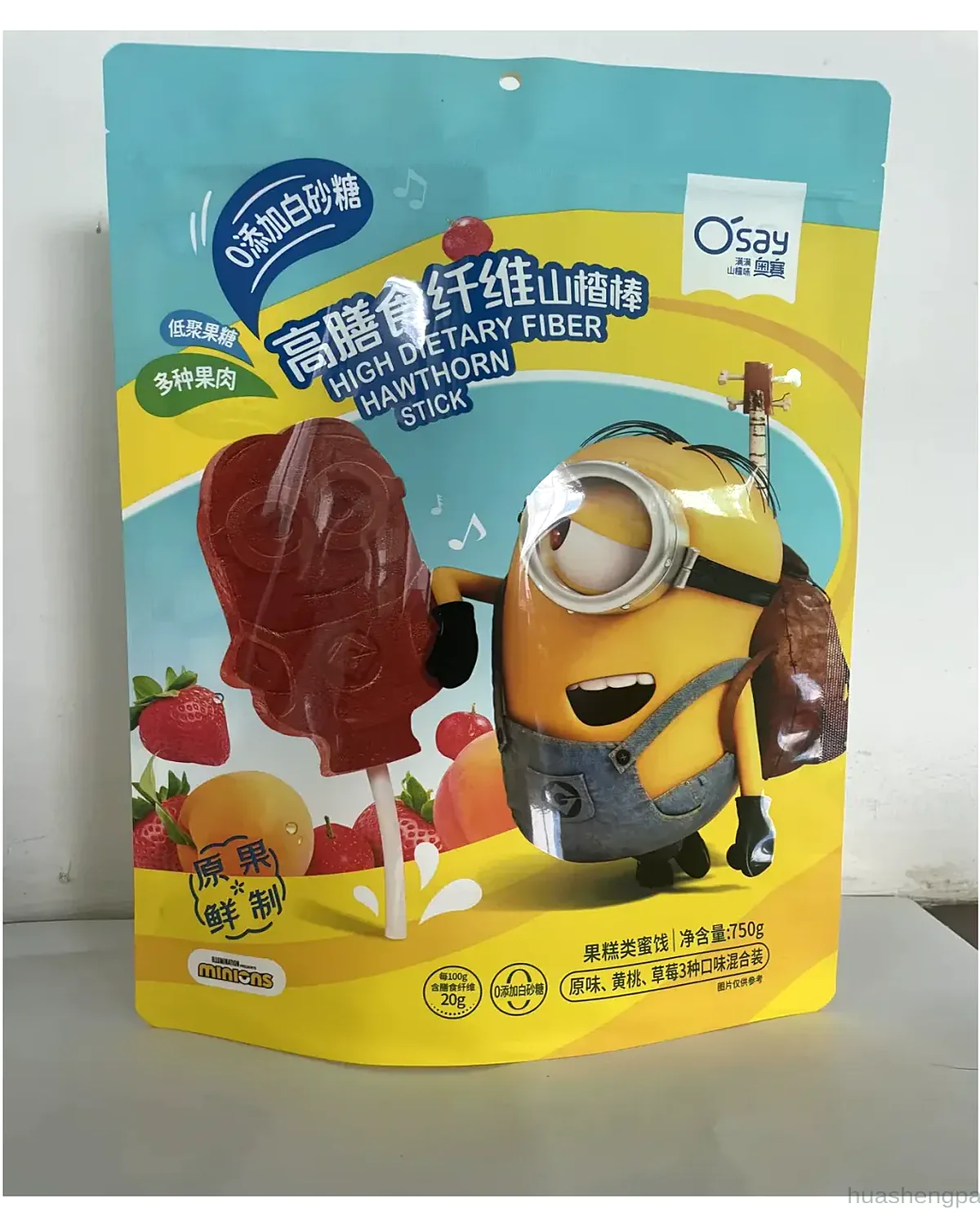
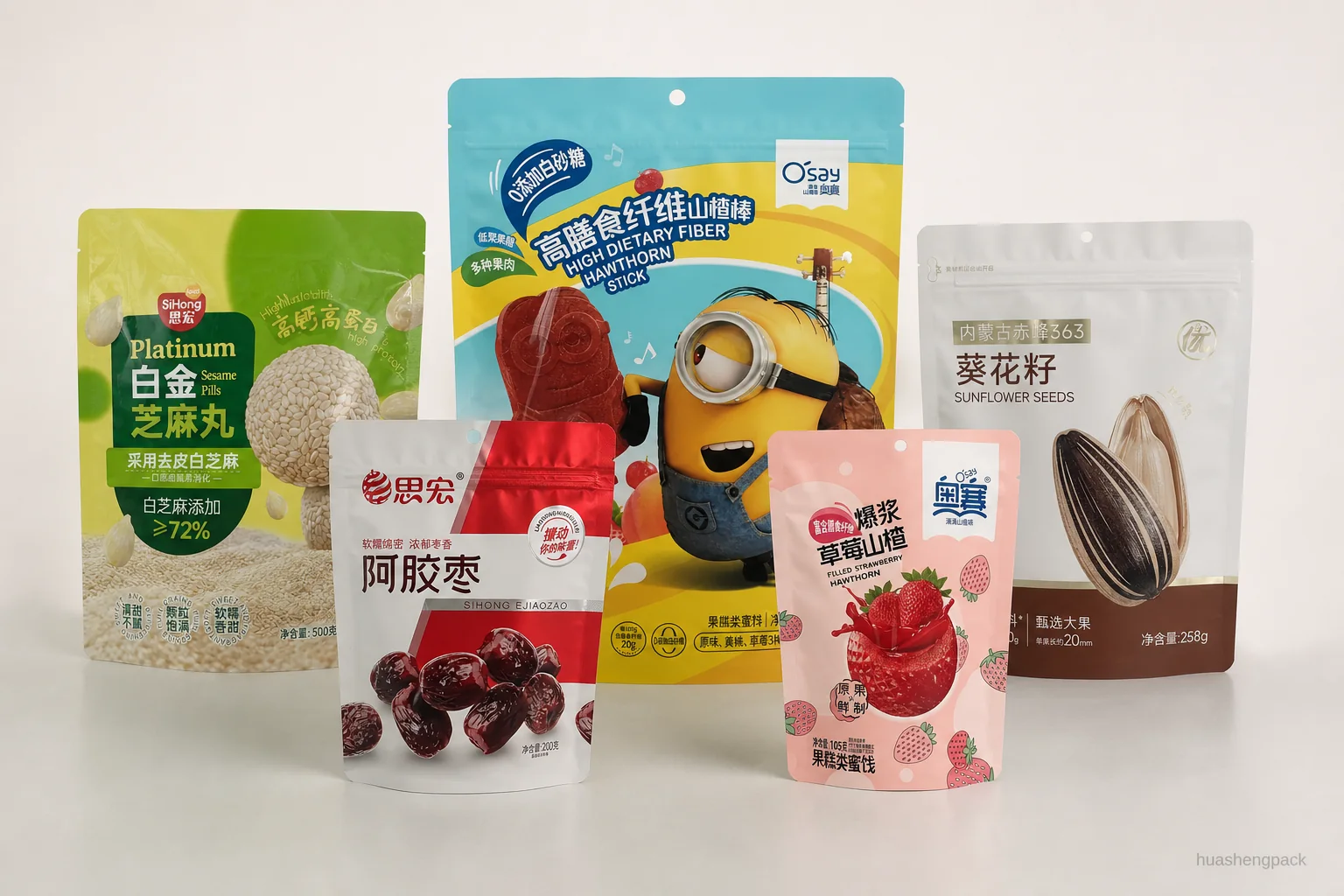
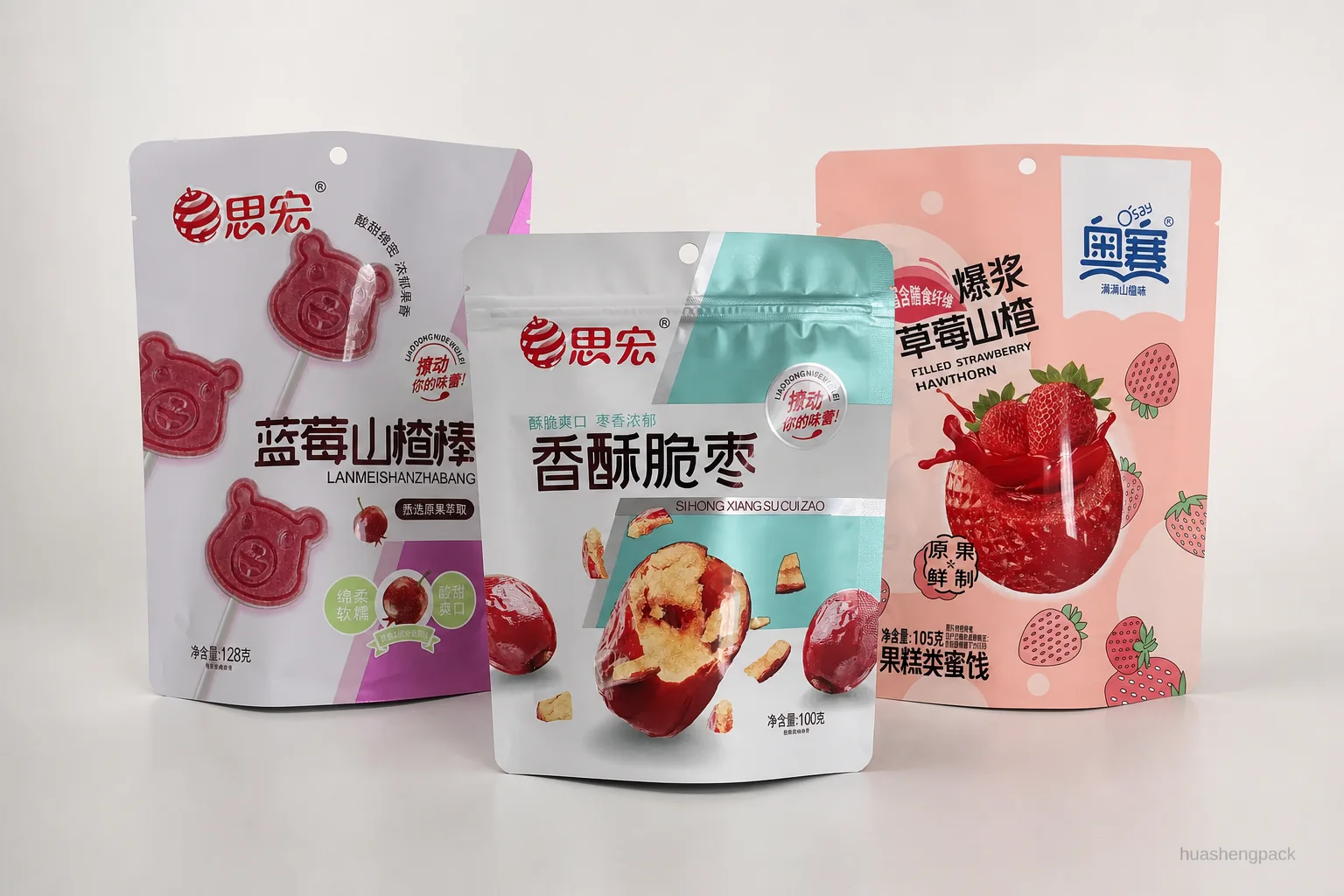
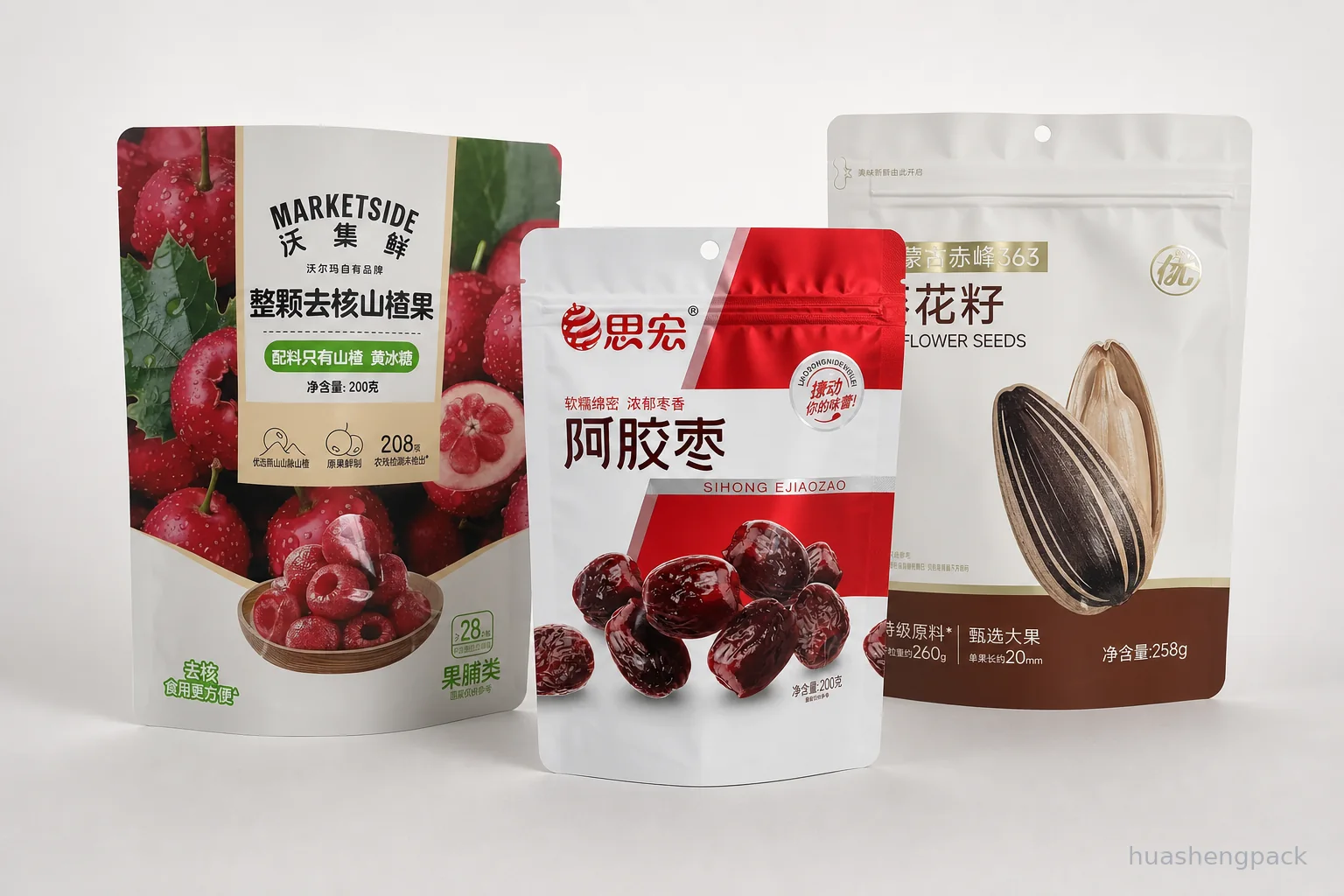
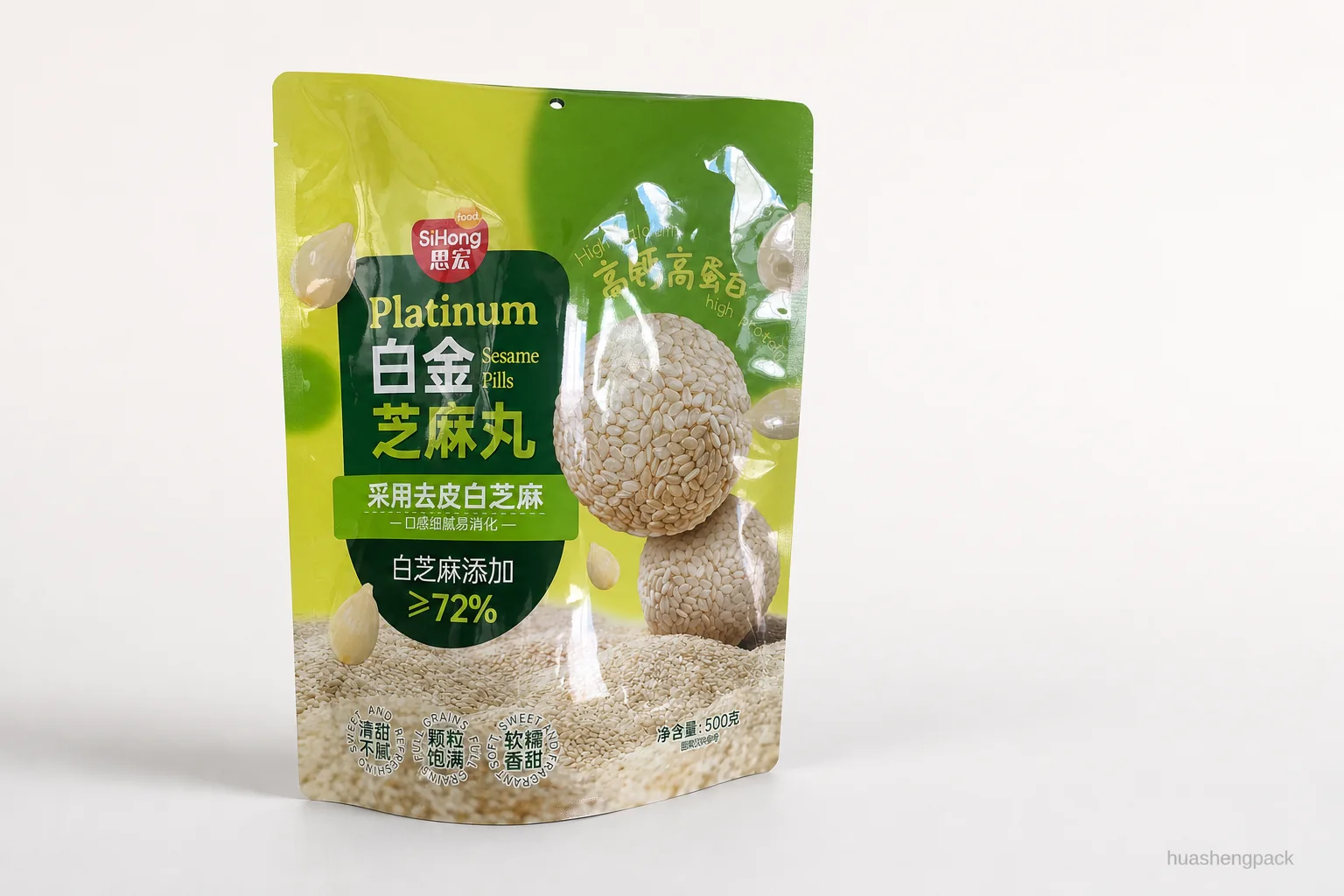
Custom printed stand up zipper pouches from Huasheng Packaging in Chaozhou, China. Send your product, fill weight, current pack and quantity per artwork for review.
Product Overview
A stand up zipper pouch uses a bottom gusset to create a retail pack that can stand after filling. Selection should start with product density, target fill, particle or powder behavior, headspace, filling opening, zipper use and final top sealing. Doyen-style, K-seal and other bottom constructions distribute load differently, so the approved pouch should be evaluated with the intended product rather than selected from an empty sample alone.
Common Applications
- Snacks, nuts, dried fruit and confectionery requiring reclosure and front-facing shelf display
- Powders, seasonings and granules after zipper contamination and clean final-seal conditions are evaluated
- Dry pet treats and selected heavier products after bottom, puncture, drop and compression performance are validated
Material Options
- PET/PE — A possible clear or moderate-barrier route for suitable dry products. Confirm stiffness, sealing window and shelf-life needs.
- BOPP/CPP — A possible route for selected dry snacks where print appearance and sealing fit the product and packing conditions.
- PET/VMPET/PE — An opaque metallized direction for moisture, aroma and light control. VMPET is not aluminum foil.
- PET/AL/PE or reinforced laminate — May be evaluated when higher barrier, puncture or load performance is justified. Confirm flexing, seals and filled-pack behavior.
Key Features
- Bottom gusset construction can provide a stable shelf footprint when dimensions and fill distribution match the product
- Press-to-close zipper may support repeated consumer use but does not replace the original top heat seal
- Tear notch, hang hole and transparent window can be evaluated when their clearances are locked on the dieline
- Filled shape, opening access and stability depend on product density, headspace, bottom expansion and laminate stiffness
Printing & Finishing Options
- Printing method — Rotogravure printing up to 9 colors
- Surface finish — Matte, glossy or registered matte direction subject to artwork review
- Functional options — Zipper, window, valve, spout, tear notch or machine marks when relevant
Technical Parameters
- Choose Doyen-style, K-seal or another qualified bottom construction from pouch dimensions, target load, bottom expansion and desired filled shape.
- Confirm zipper profile, opening force, reclosure requirement and clearance from the tear notch, top edge and final heat seal.
- For powders or small particles, evaluate product entry into the zipper and top-seal area during filling and handling.
- Provide the premade-pouch filling method, opening or vacuum pickup method, gripper area, filling nozzle and final-seal settings.
- Show bottom folds, zipper, tear notch, hang hole, window, seals and artwork safe areas on one signed dieline.
MOQ & Lead Time
Custom premade pouches are reviewed from 30,000 pieces per size and artwork, subject to final factory approval. Production timing is confirmed against the current factory schedule after the specification and artwork are approved.
Quality Control
- Verify width, height, bottom construction, gusset depth, zipper position, top-seal allowance and feature locations against the signed dieline.
- Fill representative samples to check capacity, bottom opening, standing, zipper access, final closure, drop and compression behavior.
- Check zipper alignment and repeated closure, laminate bond, seal integrity, puncture response and contamination tolerance as applicable.
- Inspect print registration, fold alignment, window clarity and filled-pack presentation under agreed lighting and handling conditions.
Common Problems
- A pouch that stands when empty leans or rocks after filling because density, headspace and bottom expansion were not matched.
- Powder, seasoning or fragments contaminate the zipper or top-seal area and reduce closure or seal reliability.
- The zipper is too close to the top edge, leaving insufficient room for filling, final sealing, tear notch or consumer grip.
- Artwork, window or hang hole crosses a fold, seal or functional clearance and becomes distorted or weak after conversion.
What to Prepare Before Inquiry
- Product type, density, particle size and oil, powder or sharp-edge characteristics
- Target fill weight, required headspace and desired filled dimensions
- Pouch width, height, bottom gusset and preferred bottom construction if known
- Zipper profile, tear notch, hang hole, window and final top-seal allowance
- Shelf life, storage, visibility and barrier requirements
- Manual or automatic filling equipment, opening method, nozzle and seal settings
- Drop, compression, puncture and reclosure validation requirements
- Quantity per artwork, colors, finish and editable artwork
Pouch format and filled-sample decision matrix
Compare stand-up, flat-bottom, three-side-seal, side-gusset and roll-film formats, then record filled-sample checks.
Use these editable CSV files to align artwork, roll-film machine data and material requirements before sampling. They are preparation tools, not approval records or performance guarantees.
Editable English template
Download CSV · Open finished PDF · Downloadable Packaging Project Checklists
Packaging project checks
Conditions, evidence, limitations and the next buyer action
Select dimensions and closure checks from the filled product and intended use, not from net weight or a pouch photograph alone.
01
- Condition
- Product form, fill weight, bulk density, use cycle and closure expectation are defined.
- Evidence
- Filled sample, zipper-cycle review and agreed dimensional drawing.
- Limitation
- Net weight or a front photograph cannot determine usable pouch dimensions.
- Next action
- Submit a representative product or density data before approving size.
02
- Condition
- Seal contamination and storage conditions reflect the actual project.
- Evidence
- Finished-pack seal and integrity checks on representative samples.
- Limitation
- A visible zipper does not prove reclose performance or shelf-life suitability.
- Next action
- Define closure, top-seal and storage acceptance checks.
These units organize project decisions; they do not prescribe a universal material, dimension, closure performance, compliance, shelf life, price, lead time or MOQ.
Plan product evidence before approval
The laboratory page records available instrument categories and one bounded sample report. It does not mean this product, structure or batch has passed testing.
Buyer Notes
- Provide product type, bag size or roll width — a photo or sample helps quick assessment
- If material structure or thickness is known, include specification
- Number of printing colors and artwork file affect cylinder cost and prepress time
- Packing machine type (VFFS/HFFS/manual) determines roll film vs premade pouch choice
- Target market compliance, China OEM filling requirements or nominated domestic warehouse handover details help confirm the final specification
Related Products
Packaging Structure
- Front and back panels — printed PET or BOPP outer layers with gravure printing for brand graphics
- Barrier middle layer — VMPET or aluminum foil depending on product barrier needs; bonded by lamination
- Heat seal inner layer — PE for sealing strength and food contact safety
- Bottom gusset — folds flat before filling, expands when filled for upright standing on retail shelves
- Resealable zipper — press-to-close or slider type integrated into the pouch opening for consumer reclosure
- Tear notch — pre-cut notch above the zipper for easy opening; position reviewed during artwork design
- Surface finish — gloss, matte or soft-touch coating for tactile and visual shelf differentiation
Technical Parameters
- Product Type: Stand up pouch with resealable zipper
- Material Structure: PET/PE, PET/VMPET/PE, PET/AL/PE, Kraft/VMPET/PE
- Thickness Range: Depends on product weight, shelf life and barrier requirement
- Printing Method: Gravure printing for custom printed orders
- Surface Finish: Gloss, matte or custom finish per project
- MOQ: Depends on size, material structure, printing colors and order quantity
- Sample Option: Existing samples can be provided; custom printed samples depend on artwork and project requirements
- Lead Time: Depends on artwork confirmation, material structure and order quantity
- Application: Snacks, nuts, candy, powder, dried food and small food brands
- Packing Machine Compatibility: Manual filling, semi-automatic filling or premade pouch filling lines
Related Applications
Related Packaging Guides
- Flat Bottom Pouches vs Stand Up Pouches: A Buyer Comparison
- Why Same Price Packaging Bags Can Have Different Quality
Frequently Asked Questions
Which bottom seal is best for a stand up pouch?
There is no universal best construction. Pouch dimensions, product density, load, bottom expansion, filled shape and converting capability determine the suitable route.
Does a zipper replace the top heat seal?
No. The zipper supports reclosure after opening, while the original top heat seal normally provides initial package integrity and tamper evidence.
Can powder products use stand up zipper pouches?
Potentially. Test whether powder enters the zipper or final-seal area and confirm filling access, cleaning and seal integrity with representative product.
How is pouch capacity confirmed?
Use product density, dimensions, bottom expansion and headspace, then verify capacity and standing with representative filling samples.
Can a zipper pouch include a window and hang hole?
Yes when the window, hole, zipper, notch, folds, seals and artwork clearances are coordinated on the approved dieline.
What should be provided for quotation?
Provide product, density, fill weight, dimensions, bottom and zipper preferences, barrier, features, filling method, artwork and quantity per design.
Recommended Material Structures
Material structure should be reviewed according to product type, shelf life, filling condition, barrier requirement and packing process.
- PET/PE Food Packaging — Basic laminated option for general dry food, snack and resealable pouch applications.
- PET/VMPET/PE Metallized Packaging — Metallized option for stand up pouches requiring better moisture protection and metallic appearance.
- PET/AL/PE Aluminum Foil Packaging — Aluminum foil option for higher barrier stand up pouch projects after structure review.
- Compare Material Structures — Compare material options before selecting a stand up pouch structure.
Related Packaging Guides
Learn material structures, packaging options and application guides related to this product.
- Zipper Options for Pouches — Zipper types and placement for resealable stand up pouches.
- Clear Window Packaging — Product visibility through clear window with barrier considerations.
- Snack Packaging Solutions — Stand up pouch formats and materials for snack products.
- VMPET Film for High Barrier Packaging — Metallized barrier for stand up pouches with longer shelf life needs.
Construction Details from Real Manufactured Samples
Use these close views to review placement and converting details. They show manufactured examples, not a fixed material or performance specification.