Powder and Granule Packaging Pouches and Roll Film
Plan powder packaging by particle size, dust, bulk density, moisture, sealing contamination, pouch format and packing machine.
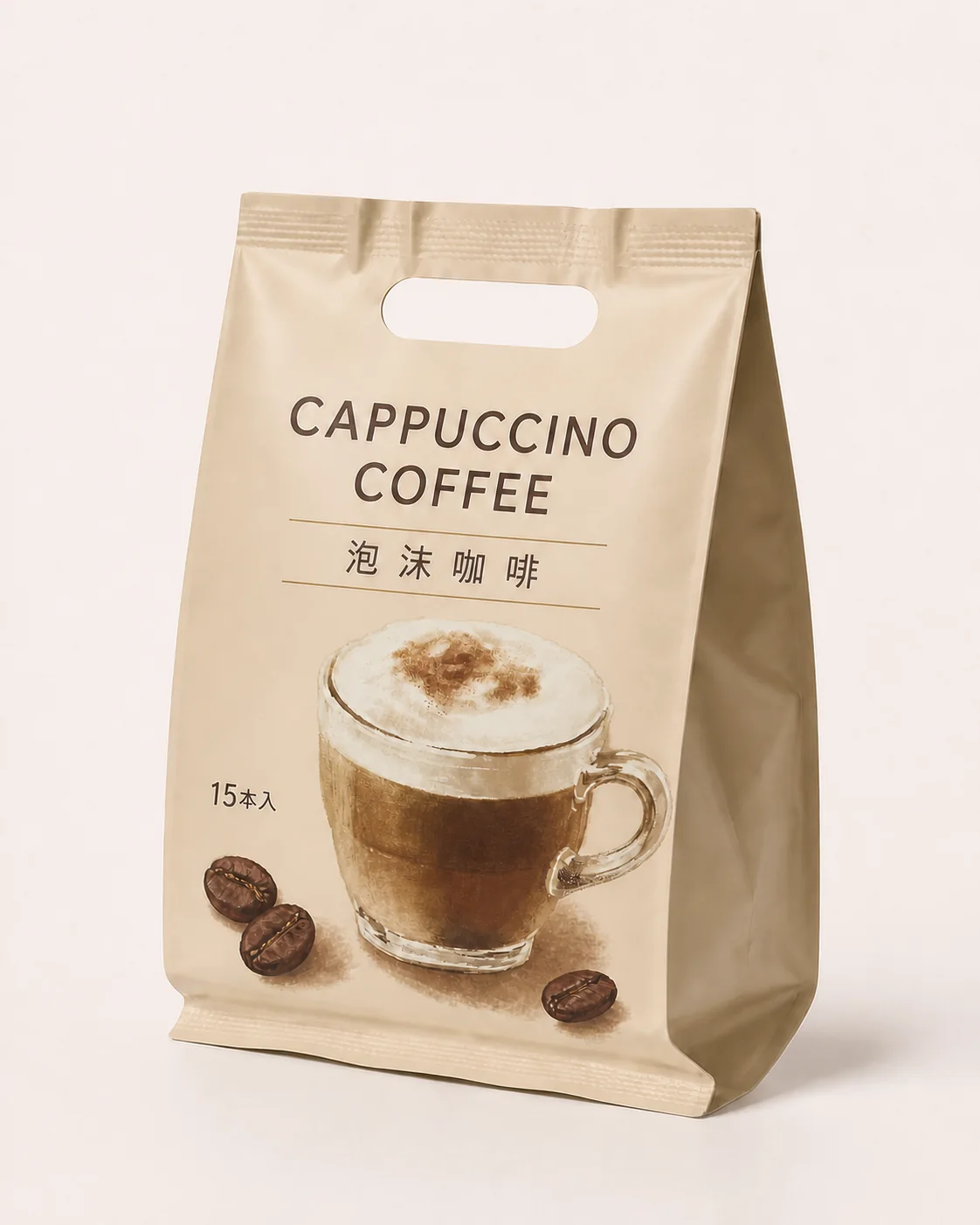 Powder and Granule Packaging Pouches and Roll FilmPowder and Granule Packaging Pouches and Roll Film - construction detail
 Powder and Granule Packaging Pouches and Roll Film - packaging application
Powder and Granule Packaging Pouches and Roll Film - packaging application
 Ginger brown sugar clear-window pouch, 238 g
 White sugar three side seal pouch, 800 g
 360 g coconut coffee powder flat bottom pouchPrinted beverage powder quad seal pouch
Powder and Granule Packaging Pouches and Roll Film - packaging application →
Powder and granule packaging decisions
Match product flow, seal contamination and supply format
Powders and granules are not one material-selection category. Start with particle behavior, product exposure and the actual dosing and sealing route.
01
- Condition
- Particle size, dusting, flow, surface oil, moisture sensitivity, aroma, fill weight and storage are described.
- Evidence
- Use actual-product filling and representative packs to observe dosing, seal contamination, filled profile, handling and the named quality endpoints.
- Limitation
- A powder category name or metallic-looking pouch does not identify the structure, barrier or shelf-life result.
- Next action
- Send the product sample or specification, fill weight, current pack and the failure mode the package must control.
02
- Condition
- Sachet, premade pouch or roll-film route and the receiving machine inputs are defined.
- Evidence
- Use controlled dimensions, machine handoff and a representative trial to review dosing, tracking, sealing and cutting.
- Limitation
- A pouch photo, nominal width or generic machine family does not demonstrate line fit.
- Next action
- Complete the pouch-format or roll-film worksheet and record unknown items before requesting a production specification.
03
- Condition
- The exact SKU, net content, artwork version and whether the project covers the outer retail pouch, an individual inner wrap or both are identified.
- Evidence
- Use an exact front-and-back label set plus the controlled internal record to tie each pack level to its format, dimensions, fill count and artwork.
- Limitation
- A retail listing, front photograph or another pack size cannot supply back-label, structure, shelf-life or pack-count facts for a different SKU.
- Next action
- Send exact front and back photographs and state whether the quotation covers the outer pouch, the inner wrap or both packaging levels.
These units do not prescribe a universal powder structure, thickness, barrier target, shelf life, price, lead time or MOQ.
Turn these conditions into a factory-reviewable project brief
Separate known, unknown and validation-required items, then send the product, fill, format or machine inputs. This page does not replace an approved specification or finished-pack validation.
Choose the project path
Start from the product and process, not a generic pouch
Select the closest route, then confirm the listed inputs before requesting a structure or production recommendation.
Nutrition or instant-beverage powder
Confirm first: Confirm particle behavior, dust, aroma, moisture sensitivity, dose and use cycle.
Review this format
Spice, seasoning or food powder
Confirm first: Review surface oil, aroma, seal contamination, fill density and portion format.
Review this format
Household powder or granules
Confirm first: Identify the formula category, contact compatibility, dispensing use and receiving equipment.
Review this format
Specification integrity
Protect this application project with a quality release path
Lock the product conditions and project evidence before comparing price, structure or supply options.
- Particle size, dust, oil/aroma and bulk density
- Dose, format, closure and machine conditions
- Contaminated-seal and filled-pack evidence
Project release record
- Versioned specification and approved artwork
- Approved reference sample or documented sample stage
- Agreed inspection and test plan
- Recorded review of any proposed change
- Representative filled-pack or line evidence where required
- Issue, disposition and repeat-order feedback record
This path supports project review and change control. It does not by itself approve compliance, shelf life, machine performance or a finished package.
Recommended Packaging Types
- Packaging Direction — Powder and granule products may use automatic-packing roll film, three-side-seal sachets, stand-up pouches or quad-seal pouches.
- Process Risks — Fine powder can contaminate the seal window; bulk density, moisture, aroma, dust and machine data must be reviewed before size and material are fixed.
- Machine Handover — Confirm roll width, core, winding direction, repeat length, eye mark, sealant and actual line-trial conditions for roll film.
- Inquiry Checklist — Product, particle size, dust, fill weight, density, pouch or roll film, machine data, shelf life, artwork variants and quantity.
Material Suggestions
Material direction must be matched to the actual product or formulation, target market, filling or packing equipment, storage and distribution conditions, with the complete component set, specimen, method, conditions and acceptance owner recorded. Photographed appearance, a similar project or a generic material name does not replace a project specification, compatibility testing and finished-pack release.
Quality Control Points
Quality items, specimens, methods, conditions, sample size, frequency and acceptance criteria must be agreed in the project specification. A factory image, general workflow or single test does not prove an untested structure, filled package, batch, shelf life or production performance.
Inquiry Preparation Checklist
- Product type
- Size / Dimensions
- Material structure / Thickness
- Printing colors
- Quantity
- Packing machine type
- Shelf life and storage requirements
- Target market and compliance requirements
Related Products
Related Packaging Guides
Frequently Asked Questions
What do the photographed samples prove?
They document visible pouch format, print and photographed construction features. They do not independently prove laminate composition, barrier, seal performance, compliance, a customer relationship or shelf life.
Can the website confirm a final material structure?
No. Product, fill, use, target market, storage, distribution, format or machine conditions must be defined before agreeing sample, test and finished-pack release evidence.
What are the MOQ and lead time for this application?
MOQ and lead time are reviewed against pouch or roll-film format, size, material, each artwork and quantity, the current production plan and validation requirements. This page does not publish one fixed value for every project.
How should a buyer start the project review?
Use the project-input builder to separate known, unknown and validation-required items, then send the product or current pack, fill, target format, machine data, quantity per artwork and artwork status.