Chocolate Bars, Biscuits & Confectionery Flow-Wrap: Cold-Seal vs. Heat-Seal Metallized Roll Film
Huasheng Packaging Technical Content Review
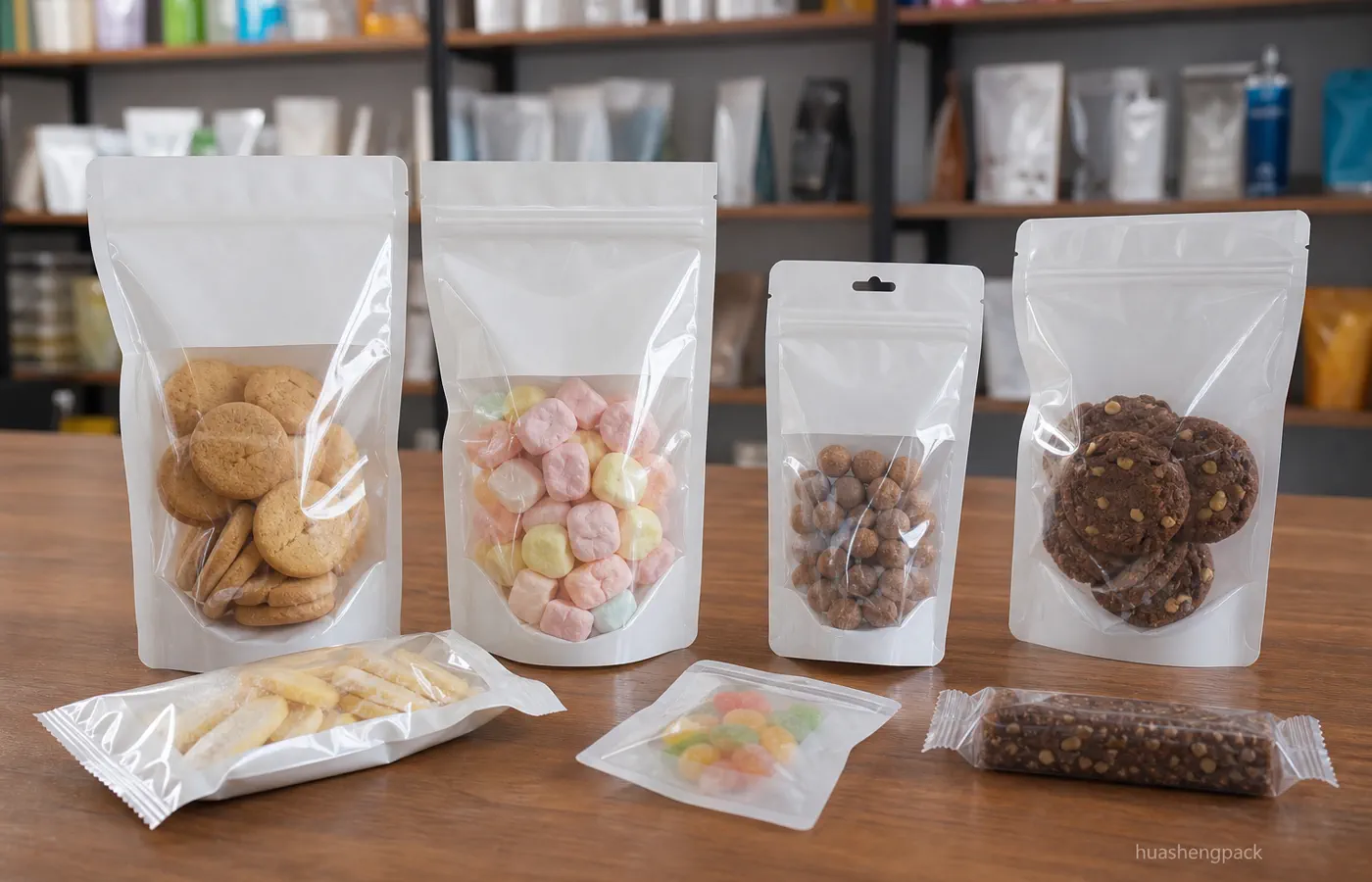
Choose between cold-seal and low-temp heat-seal metallized BOPP/VMCPP flow-wrap roll film to wrap chocolate bars, biscuits, and candies without heat melting.
Direct answer
Wrapping temperature-sensitive chocolate bars, enrobed wafers, and coated biscuits at 150 to 400 bars per minute creates a classic thermal dilemma: hot crimping jaws can melt cocoa butter and bloom chocolate edges, while weak seals invite moisture sogginess and insect ingress. Matching cold-seal or ultra-low-temperature heat-seal metallized BOPP rollstock to your horizontal flow-wrapper solves both speed and shelf freshness.
Contents
Evidence-reviewed technical guide
Evidence-reviewed technical guide
2026-11-27 · Huasheng Packaging Technical Editorial Review
Evidence scope
Applies to B2B custom flexible packaging specification review for confectionery & cold-seal film projects sourced from direct gravure converting plants.
Scope and limitations
General engineering bands and procurement guidelines do not replace filled-pack shelf-life testing, machine compatibility trials, or destination-market regulatory review.
Key takeaways
- Why Chocolate Melts or Goes Stale on High-Speed Horizontal Flow-Wrappers
- Cold-Seal vs. Low-Temp Heat-Seal Structures for Confectionery Lines
- Line & Product Details to Quote Confectionery Flow-Wrap Roll Film
Why Chocolate Melts or Goes Stale on High-Speed Horizontal Flow-Wrappers
Cocoa butter begins softening around 30°C–34°C. When high-speed horizontal flow-wrappers (HFFS) run ordinary high-SIT polypropylene films requiring 135°C–150°C crimping jaws, radiant heat migrates onto chocolate edges during line slowdowns or stops, causing fat bloom and smearing. Meanwhile, clear un-metallized BOPP lets UV light oxidize milk-chocolate fats and fails to block humidity on crisp wafer layers.
Common Confectionery Roll-Film Specification Mistakes
First, ordering cold-seal latex film without verifying latex-free synthetic cold-seal options for allergen-sensitive export markets or without respecting cold-seal 6-month shelf-life storage limits (<25°C). Second, running un-registered continuous cold-seal coating when pattern-registered cold-seal margins are needed to keep adhesive off the chocolate bar itself. Third, ignoring dead-fold or tear-strip ease on glossy metallized BOPP/VMCPP wrappers.
Cold-Seal vs. Low-Temp Heat-Seal Structures for Confectionery Lines
For ultra-high-speed (200–400+ ppm) heat-sensitive solid chocolate bars and coated wafers: **Pattern-Registered Cold-Seal Roll Film** such as BOPP (20 μm) / Pearlized BOPP or VMBOPP (20–25 μm) with pattern-applied cohesive cold-seal adhesive along fin and end-seal margins (plus release lacquer on the printed outer side to prevent blocking on the reel). Sealing occurs purely via mechanical jaw pressure at ambient temperature—zero heat damage! For moderate-speed (60–180 ppm) biscuits, hard candies, and compound chocolate bars needing longer rollstock storage life and lower film cost: **Low-Temp Heat-Seal Metallized Film** such as BOPP (20 μm) / VMCPP (25–30 μm) or Matte BOPP / VMPET / Low-SIT PE offers bright metallic shelf appeal, strong WVTR moisture defense, and clean sealing at reduced jaw temperatures.
Cold-Seal Bond Strength, Release Blocking & Photocell Repeat QA
Test every confectionery roll-film batch for: (1) cold-seal peel strength (consistent 2.5–5.0 N/15 mm cohesive seal without tearing printed film), (2) reel unwind blocking test at 35°C to verify outer release lacquer prevents sticky reels, (3) pattern registration accuracy between printed eye mark and cold-seal adhesive lanes, and (4) WVTR barrier checks for crisp wafer retention. In our 6,880 m² Chaozhou facility operating under ISO 22000:2018 (cert. 007FSMS2300214), pre-production and batch release records include calibrated gauge checks, GBPI heat-seal tensile strength logs, barrier verification where specified, barcode scan checks, and export carton inspections before FOB/CIF or China warehouse handover.
Line & Product Details to Quote Confectionery Flow-Wrap Roll Film
Specify product type (solid chocolate, wafer, biscuit, hard candy), line speed (packs/min), horizontal flow-wrapper sealing mode (cold-seal pressure jaws vs. heated crimpers), web width and repeat length, opaque metallized vs. pearlized white vs. clear window look, and order quantity in kg per SKU.
Related Products
Related Applications
Claim-to-source evidence matrix
| Reviewed claim | Support | Sources | Boundary |
|---|---|---|---|
| Final flexible packaging specifications require confirming product chemistry, barrier needs, dimensions, and filling conditions before bulk production. | contextual | [1], [3] | Engineering review boundary prior to cylinder engraving or commercial conversion. |
| Seal integrity and laminate suitability should be verified on representative samples using actual product and sealing equipment. | direct | [2] | Quantitative seal testing and line trials supersede nominal film descriptions. |
| Huasheng Packaging operates integrated 9-color gravure printing, lamination, and pouch converting in Chaozhou under ISO 22000:2018 (007FSMS2300214). | direct | [3], [1] | Factory capability and active management-system scope; product-specific export compliance confirmed per order. |
Authoritative References
- ISO 22000:2018 Food safety management systems · International Organization for Standardization (ISO) · standard
Food-contact packaging production management relies on documented food-safety management controls and traceability. - ASTM F88/F88M-23 Standard Test Method for Seal Strength of Flexible Barrier Materials · ASTM International · standard
Flexible pouch and roll-film heat-seal performance should be verified quantitatively rather than assumed from film appearance. - Huasheng Packaging Chaozhou In-House Converting & Quality Control Overview · Huasheng Packaging · internal-evidence
Describes Chaozhou in-house 9-color gravure printing, lamination, slitting, pouch converting, and ISO 22000:2018 scope.
Frequently Asked Questions
When is cold-seal roll film worth the extra cost over heat-seal film?
Cold-seal film pays off on high-speed (200+ ppm) chocolate and coated-wafer lines where heated sealing jaws risk melting product or forcing slower line speeds.
Does cold-seal coating touch the chocolate bar inside the wrapper?
No. Pattern-registered cold-seal coating is applied strictly along the fin-seal edges and transverse end-seal margins—leaving the product contact zone completely adhesive-free.
What is the most economical moisture-barrier roll film for biscuits and wafers?
BOPP (20 μm) / VMCPP (25–30 μm) or BOPP / VMPET / PE delivers crisp 9-color gravure printing, light/moisture blocking, and reliable heat-sealing at competitive per-kg pricing.
How should cold-seal roll film be stored before use?
Store cold-seal reels in a cool, dry warehouse (ideally 15°C–25°C, <60% RH) and use within 6 months to maintain consistent seal bond and smooth unwind.
Can Huasheng supply multi-flavor candy and biscuit roll film with shared base plates?
Yes. Keeping uniform web width and repeat across candy flavors allows sharing white-backing and matte-varnish cylinders to cut tooling costs.

About Huasheng
In-house 9-color gravure printing, solventless lamination, slitting, and pouch converting across stand up pouches, spout pouches, retort bags, coffee bags, and automatic rollstock film.
A legacy of quality in flexible packaging since 1997.
1997 · 6,880 m²
Chaozhou · Guangdong · China
Longshewei, Neipan Management District, Dongfeng Town, Chao'an District, Chaozhou City, Guangdong Province, China