When Should a Multi-Use Powder Pouch Include a Zipper?
Huasheng Packaging Technical Content Review · Published:
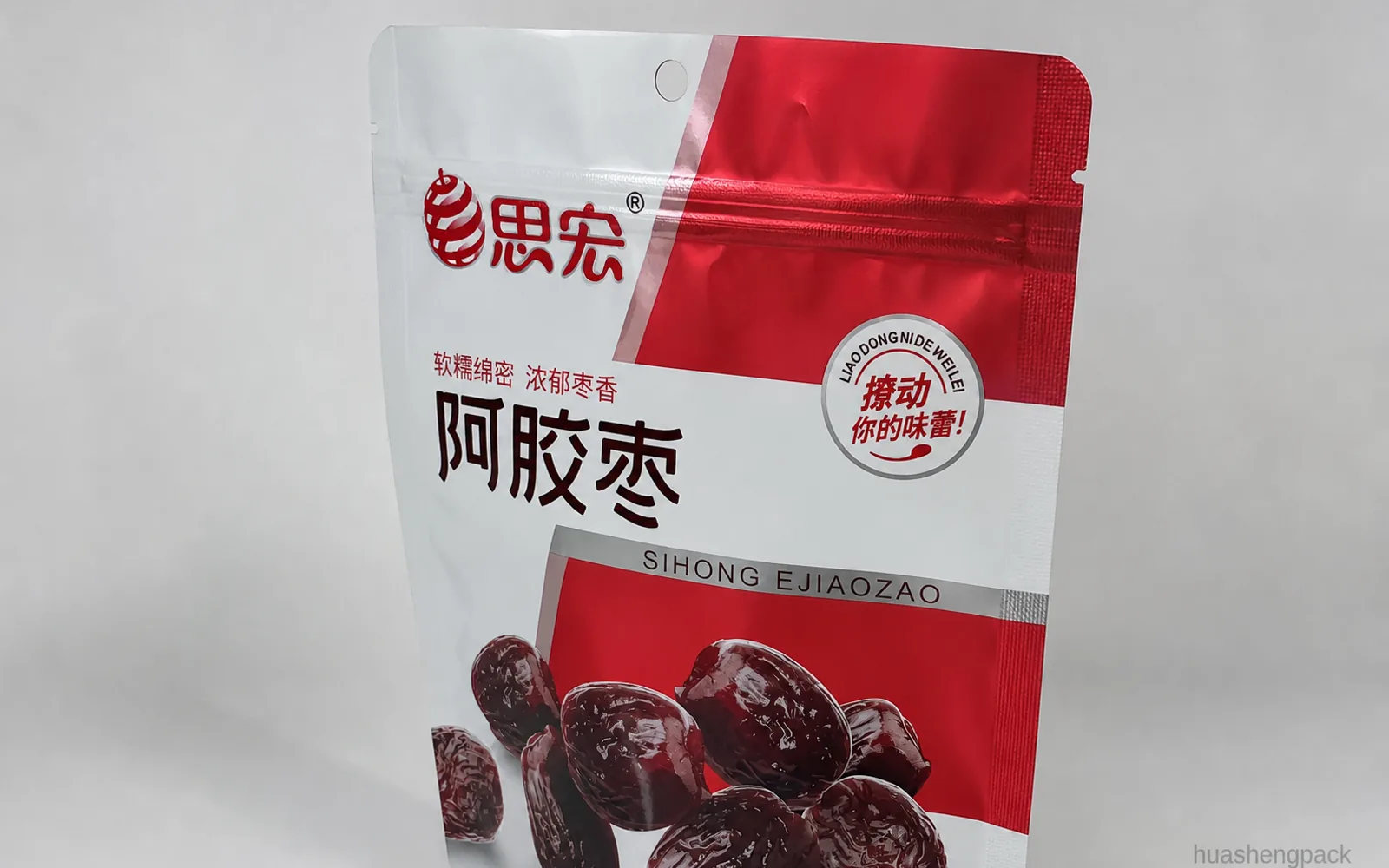 The image supports visible appearance or setting only. It does not prove material structure, performance, certification, a customer relationship or project suitability.
Decide zipper use from serving pattern, powder contamination, opening geometry, final top seal, consumer handling and filled-pack tests.
Direct answer
A zipper is a consumer reclosure feature, not the same thing as the final hermetic top seal. Its value depends on how often the pack is opened, how the powder behaves at the closure, the opening size, accessibility and whether the remaining product needs protection after opening.
Evidence-reviewed technical guide
2026-08-31 · Huasheng Packaging Technical Content Review
Evidence scope
When Should a Multi-Use Powder Pouch Include a Zipper?
Scope and limitations
No customer identity, transcript, order-specific price, fixed MOQ, universal material recipe, performance promise, machine approval or shelf-life guarantee is published.
Key takeaways
- Record servings per pack, expected time after first opening, whether users pour or scoop, and where the pack is stored. A single-use pack may gain little from a zipper, while a multi-use pack may need reclosure, a sufficiently wide opening and clear instructions.
- For an unopened retail pack, the top heat seal above the zipper commonly provides the first-opening barrier and tamper evidence. Define its height, tear-notch relationship and consumer opening route. Do not infer unopened protection from repeated zipper closure alone.
- Record zipper family, profile, location, cut width, insertion direction, end treatment, top-seal clearance and approved supplier reference. If the zipper changes, run the relevant converted-pouch and filled-product checks again rather than treating all zippers as interchangeable.
1. Start with the Use Cycle
Record servings per pack, expected time after first opening, whether users pour or scoop, and where the pack is stored. A single-use pack may gain little from a zipper, while a multi-use pack may need reclosure, a sufficiently wide opening and clear instructions.
The image supports visible appearance or setting only. It does not prove material structure, performance, certification, a customer relationship or project suitability.2. Evaluate Powder at the Closure
Fine, oily, granular or electrostatic products behave differently at zipper profiles. Product caught between tracks can reduce tactile closure or leave an apparently closed path. Review whether ordinary closure geometry is sufficient or whether a particle-oriented option merits a trial.
3. Keep the Final Top Seal Independent
For an unopened retail pack, the top heat seal above the zipper commonly provides the first-opening barrier and tamper evidence. Define its height, tear-notch relationship and consumer opening route. Do not infer unopened protection from repeated zipper closure alone.
Map the user journey from opening the top seal to the last serving. Note hand or scoop access, powder on the tracks, closing force, audible or tactile feedback, remaining headspace and whether the pouch must stand while partly empty. Test the closure with the real particle distribution; a clean empty zipper demonstration does not represent a dusty repeated-use pack.
4. Test Handling and Reclosure
Use representative users and product. Check opening force, mouth width, scoop access, powder on tracks, audible or tactile feedback, accidental spill and closing after several cycles. Seal-strength or leak methods for the package do not replace this use test.
Prepare a repeated-use protocol that reflects the expected number of servings. Open the final top seal, take product with the intended hand, scoop or pouring motion, close the zipper and store the pouch in its expected orientation. At defined cycles, inspect trapped particles, engagement across the full width, distortion near the zipper ends and product access. Include users unfamiliar with the package where practical. A zipper that works for the technician on an empty bag may still be difficult or unreliable for the actual consumer.
5. Specify the Component
Record zipper family, profile, location, cut width, insertion direction, end treatment, top-seal clearance and approved supplier reference. If the zipper changes, run the relevant converted-pouch and filled-product checks again rather than treating all zippers as interchangeable.
The zipper decision should specify closure profile, position, opening width, top-seal clearance and how the filled pack will be evaluated after repeated cycles. If the project does not require reclosure, do not add a zipper only as a premium cue. If it does, retain used-cycle samples and define what constitutes incomplete engagement, contamination or consumer failure.
Professional evidence used in this guide includes: Fresh-Lock Particle-Resistant Closures; ASTM F88/F88M-23: Seal Strength of Flexible Barrier Materials; ASTM F2096-11(2019): Detecting Gross Leaks in Packaging by Internal Pressurization. Its mapped scope is: Closure designs exist specifically to address particles at reclosure interfaces; Seal strength is interpreted with specimen, technique and failure mode; Internal pressurization is a destructive method for gross-leak detection. These sources answer specific method, use-condition or equipment-input questions; they do not automatically approve the complete package, a particular machine, commercial shelf life or the current order. To apply this guide to a Powder Pouch Zippers decision, maintain a four-column condition–evidence–limitation–action record: state the current condition, identify the sample or record supporting it, name the risk that remains outside that evidence and assign the next action with its acceptance condition. Reopen the affected conclusion whenever the product, specification, process or controlling evidence changes.
Related Products
Related Packaging Guides
Claim-to-source evidence matrix
| Reviewed claim | Support | Sources | Boundary |
|---|
| Closure designs exist specifically to address particles at reclosure interfaces | direct | [1] | The cited source supports only the named method, boundary or equipment input and does not approve the complete packaging project. |
| Seal strength is interpreted with specimen, technique and failure mode | direct | [2] | The cited source supports only the named method, boundary or equipment input and does not approve the complete packaging project. |
| Internal pressurization is a destructive method for gross-leak detection | direct | [3] | The cited source supports only the named method, boundary or equipment input and does not approve the complete packaging project. |
JSON · CSV
Authoritative References
- Fresh-Lock Particle-Resistant Closures · Fresh-Lock · manufacturer-data
Closure designs exist specifically to address particles at reclosure interfaces - ASTM F88/F88M-23: Seal Strength of Flexible Barrier Materials · ASTM International · standard
Seal strength is interpreted with specimen, technique and failure mode - ASTM F2096-11(2019): Detecting Gross Leaks in Packaging by Internal Pressurization · ASTM International · standard
Internal pressurization is a destructive method for gross-leak detection
Frequently Asked Questions
Does every large pouch need a zipper?
No; use cycle and product behavior decide.
Is a zipper the final seal?
No, define the top heat seal separately.
Can powder stop a zipper closing?
Yes, representative contamination trials are useful.
Should zipper location be dimensioned?
Yes, include it in the controlled drawing.
Can a photo prove zipper performance?
No, it only shows visible geometry.
What changes require retesting?
Profile, supplier, position, product or filling changes.