Coffee Bags with Valve and Zipper: Selection and Testing Guide
Huasheng Packaging Technical Content Review · Published: · Updated:
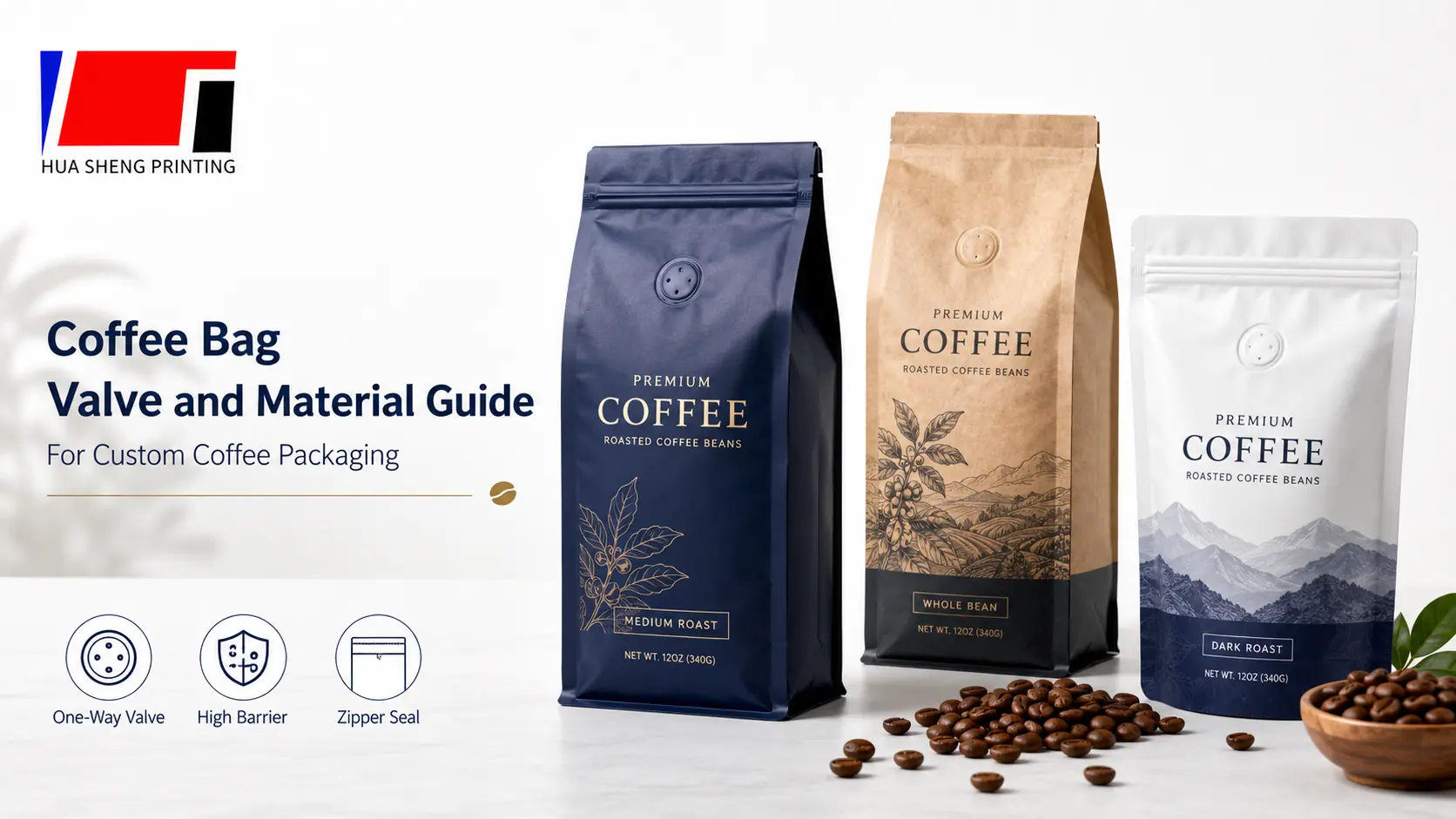 Technical guide visual for Coffee Bags with Valve and Zipper: Selection and Testing Guide.
Choose coffee bags with valve and zipper by roast date, degassing, pack size, valve position, zipper clearance, barrier and filled-pack tests.
Direct answer
Coffee bags with valve and zipper combine two separate functions: a one-way degassing valve may release gas from recently roasted coffee, while a zipper supports reclosure after opening. Buyers should decide from roast-to-pack timing, coffee form, pack size, consumption period, barrier target and the actual filling process.
Start with Roast-to-Pack Timing and Coffee Form
Record roast level, whole bean or ground coffee, time from roasting to packing, filling temperature, pack weight and expected storage. Degassing behavior changes over time and varies by coffee. A valve should be evaluated from representative product data rather than added automatically to every coffee pouch. Ground coffee, pre-degassed coffee and small single-use packs may lead to different decisions.
Valve, Zipper and Barrier Solve Different Problems
A one-way valve is intended to manage internal gas under specified conditions; it does not replace oxygen and moisture barrier, clean seals or headspace control. A zipper supports consumer reclosure but does not replace the original top heat seal. Coffee dust in the zipper or top-seal area, a valve too close to a seal, and insufficient grip clearance can cause leakage or poor usability.
Confirm Valve Position, Zipper Clearance and Bag Format
Flat bottom, side gusset and stand up pouch formats may all support coffee projects, subject to size and equipment review. Approve valve side, height and orientation after fill level is known. Confirm zipper-to-top distance, tear-notch position, top-seal width, filling opening and artwork safe areas. The valve should remain clear of seals, folds and critical print, while the zipper needs enough consumer grip and production sealing clearance.
Validate the Filled Coffee Bag
Use representative coffee and packing timing to check valve attachment, direction and leakage; top, side and bottom seals; zipper alignment and repeated closure; dust contamination; filled-bag shape; and storage behavior. Barrier specifications, residual oxygen targets and shelf-life methods should be agreed by the coffee brand and packing partner. Empty-bag inspection alone cannot validate gas management.
Coffee Bag Specification Checklist
Provide coffee form, roast level and roast date; packing interval; fill weight; bag format and dimensions; expected fill level and headspace; valve type and proposed position; zipper and tear-notch positions; top-seal allowance; material and barrier target; filling equipment; target shelf life and storage; artwork, quantity per design and sample-test plan.
Treat the valve, zipper and pouch as three linked but separately approved components. The valve record should identify the supplier part, installation method, position, film-side interface and the coffee condition used for the trial. The zipper record should identify profile, opening width, top-seal allowance and how particles are kept out of the closure. The pouch record should identify laminate, dimensions, seal geometry and filled headspace. A valve statement does not approve zipper usability, and a seal-strip result does not prove valve function or whole-pack integrity.
Use representative roasted coffee for the final review because roast level, time after roasting, grind or bean form, fill weight and storage influence the package condition. Agree how leakage testing handles the intentional valve path, then inspect the remaining seals and component areas with an appropriate method. Record opening, reclosing, filled shape, transport handling and the shelf-life protocol separately. If the valve, zipper, laminate, bag size, coffee or filling process changes, repeat the affected checks instead of carrying the old approval forward.
Related Products
Related Packaging Guides
Frequently Asked Questions
Do all coffee bags need a one-way degassing valve?
No. The decision depends on coffee form, roast state, roast-to-pack interval, gas-release behavior, pack size and storage plan.
Can coffee bags have both a valve and zipper?
Yes. The valve and zipper perform different functions, but their positions, seals and filled-pack behavior must be reviewed together.
Where should a coffee bag valve be positioned?
Keep it away from seals, folds, zipper and critical artwork, and position it against the actual fill level and valve application process.
How much space is needed above the zipper?
There is no universal dimension. Allow enough space for filling, final heat sealing, tear notch and consumer grip based on the bag and equipment.
Does the zipper preserve coffee freshness by itself?
No. Reclosure is only one factor; laminate barrier, original seals, oxygen exposure, headspace and consumer handling also matter.
What should a filled-bag trial check?
Check valve and zipper function, dust in seal areas, leakage, filled shape, opening, reclosure and the agreed storage or shelf-life protocol.