Spout Pouch Material Guide for Juice, Sauce and Liquid Food
Huasheng Packaging Technical Content Review · Published: · Updated:
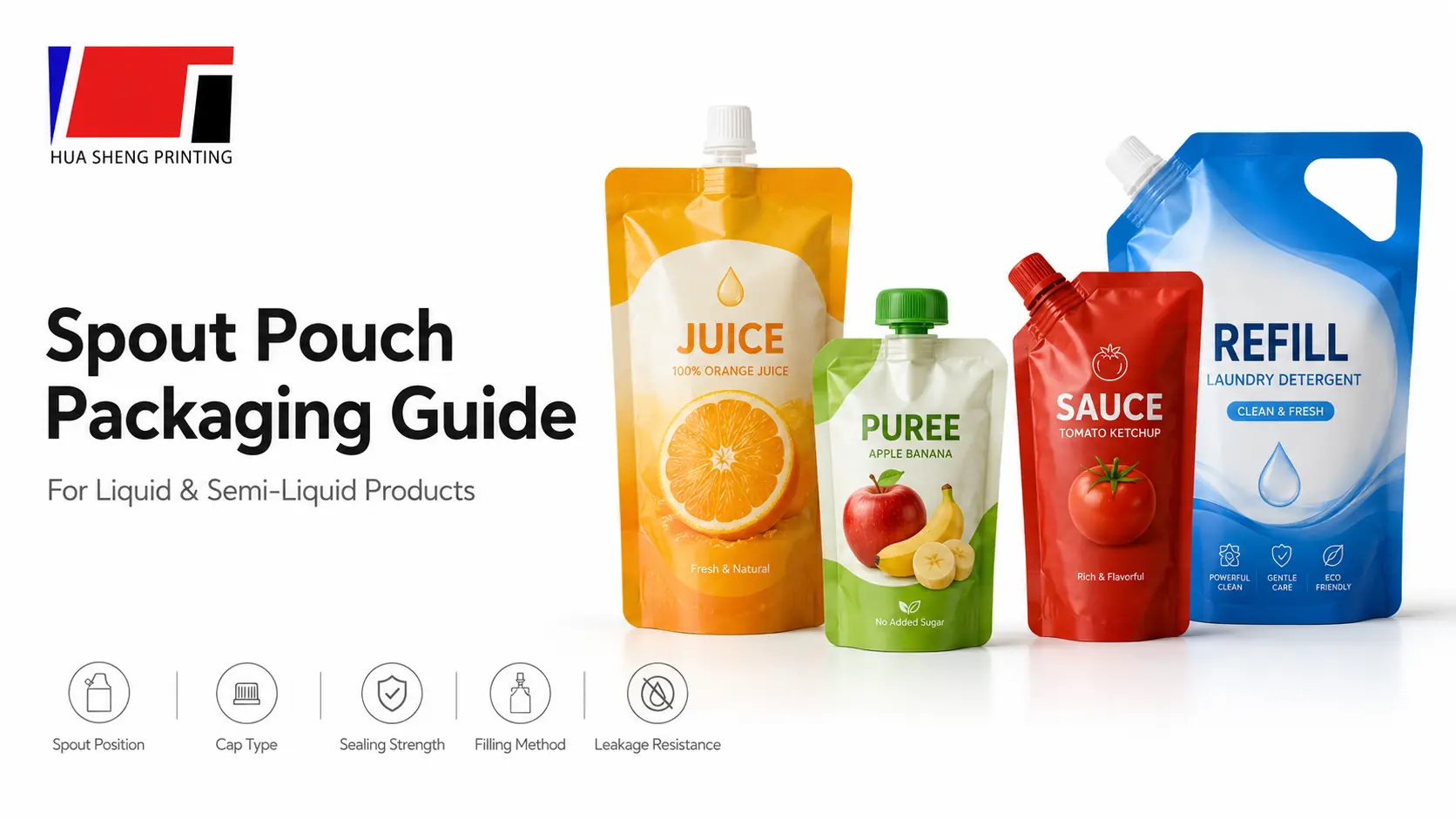 Technical guide visual for Spout Pouch Material Guide for Juice, Sauce and Liquid Food.
Spout pouch material structure guide for juice, sauce, puree and liquid food. Explains PET/PE, PET/NY/PE, PET/AL/NY/PE material options, spout selection and sealing methods.
Direct answer
Spout pouch material structure affects sealing strength, leakage resistance, filling compatibility and shelf life. This guide explains common material structures for juice, sauce, puree and liquid food packaging. Huasheng Packaging helps customers choose suitable materials based on product type and filling conditions.
Why Material Selection Is Critical for Spout Pouches
Spout pouches handle liquid and semi-liquid products — juice, sauce, puree, baby food, liquid detergent, shampoo refill and dairy alternatives. Unlike dry food pouches, liquid packaging stresses the sealing area, spout fitment and pouch body in ways that dry products do not. The material structure must account for product viscosity, filling temperature, shelf life, storage condition and transport handling. A material that works well for ambient juice may fail for hot-filled sauce. A structure suitable for thin liquid may not hold up for thick puree. Before choosing a spout pouch material, buyers should understand that the material structure affects sealing integrity, leakage resistance, drop performance, cap torque retention and long-term shelf stability. Huasheng Packaging helps customers match the right material structure to their liquid product application.
Common Material Selection Mistakes
1. Using standard film structure for hot filling products. Heat can weaken the sealing layer if the structure is not designed for elevated filling temperatures.
2. Not confirming spout size and cap type before production. Spout diameter, thread type and cap design affect pouring experience and leak prevention.
3. Ignoring filling temperature impact on the sealing layer. Hot fill, warm fill and ambient fill require different sealing layer considerations.
4. Not testing spout welding strength with the actual liquid product. Water testing alone may not represent real product behavior.
5. Choosing material only based on cost without checking shelf life, transport distance and storage conditions. A leaking spout pouch costs more in returns than any material savings.
Common Material Structures for Spout Pouch Packaging
The structure table below helps buyers understand which material combinations suit different liquid products. Final structure should be confirmed based on product type, viscosity, filling temperature, shelf life and sterilization requirement.
Material Structure Guide:
PET/PE — Suitable products: ambient juice, drinking water, simple liquid refill. Main benefit: cost-effective, good clarity and print quality. Notes: limited barrier; not for hot fill or long shelf life.
PET/VMPET/PE — Suitable products: juice with longer shelf life, liquid detergent refill. Main benefit: improved light and moisture barrier with metalized layer. Notes: VMPET adds barrier without full aluminum foil cost.
PET/AL/PE — Suitable products: high-barrier juice, sauce, puree, baby food. Main benefit: strongest aroma, oxygen and moisture protection. Notes: higher cost; recommended for premium or long shelf life products.
PA/PE — Suitable products: frozen liquid, oil-based sauce. Main benefit: high puncture resistance and cold tolerance. Notes: confirm low-temperature sealing and oil resistance.
PET/NY/PE — Suitable products: thick sauce, heavy liquid detergent, large volume pouch. Main benefit: improved puncture resistance and structural strength. Notes: suitable for larger filling volumes and heavier pouches.
Key Design Points and Quality Control
When designing and ordering spout pouches, these factors should be reviewed:
Spout size — common diameters include 8mm, 10mm, 16mm; choose based on product viscosity and pouring speed.
Cap type — screw cap, flip-top cap, tamper-evident cap; select based on user experience and safety needs.
Spout position — top center, corner, or side; depends on filling line and consumer usage.
Sealing width — ensure sufficient sealing area around the spout and pouch edges.
Pouch bottom structure — stand-up gusset or flat bottom affects shelf display and filling stability.
Filling volume — affects pouch size, material thickness and structural requirements.
Product viscosity — thicker products need stronger sealing and wider spout opening.
Leakage risk testing — spout welding, side seal and drop test should be part of QC before shipment.
At Huasheng Packaging, quality control includes: spout welding strength test, heat sealing performance check, leakage test (water fill and pressure method), drop test if required, pouch standing stability check, cap torque inspection and material structure confirmation before shipment.
What to Prepare Before Spout Pouch Inquiry
Before sending a spout pouch inquiry, prepare these details for accurate quotation:
1. Liquid product type — juice, sauce, puree, detergent, etc.
2. Filling volume — ml or g per pouch
3. Preferred pouch size — width × height + bottom gusset if applicable
4. Spout diameter and cap type — 8mm, 10mm, 16mm; screw cap, flip-top, tamper-evident
5. Spout position — top center, corner, or side
6. Filling temperature — ambient, warm fill or hot fill
7. Sterilization requirement if any — retort, hot pasteurization or aseptic
8. Material structure preference if known — or we can suggest based on your product
9. Quantity — typical MOQ 30,000 pcs for custom printed spout pouches
10. Printing colors — up to 9-color gravure printing
11. Artwork file — AI, PDF or PSD format
12. Target market — for market compliance and handover reference
Related Products
Related Packaging Guides
Frequently Asked Questions
What material structure is suitable for spout pouches?
The structure depends on your liquid product. PET/PE works for ambient juice and simple liquids. PET/VMPET/PE suits products needing better barrier. PET/AL/PE is for high-barrier requirements. PA/PE suits frozen or oil-based liquids. We can help recommend based on your product type, shelf life and filling conditions.
Can spout pouches be used for juice packaging?
Yes. Spout pouches are widely used for juice packaging. PET/PE is common for ambient juice with standard shelf life. For extended shelf life or premium juice, PET/VMPET/PE or PET/AL/PE structures provide better barrier protection.
Are spout pouches suitable for thick sauce?
Yes. For thick sauces, we recommend structures with stronger sealing and puncture resistance such as PET/NY/PE. Spout diameter should also be considered — thicker products typically need wider spouts for easy pouring.
How can I reduce leakage risk in spout pouches?
Leakage prevention starts with proper material selection, spout welding strength and sealing temperature matching. We perform spout welding tests, side seal checks and water-fill pressure tests before shipment. Confirming your filling temperature and product viscosity helps us select the right sealing layer.
What spout size should I choose?
Spout size depends on product viscosity and pouring speed. 8-10mm spouts suit thin liquids like juice and water. 10-16mm spouts suit thicker products like sauce and puree. Cap type — screw cap, flip-top or tamper-evident — can be selected based on your brand and consumer needs.
What information should I send for a spout pouch quotation?
Please provide: liquid product type, filling volume, preferred pouch size, spout diameter and cap type, spout position, filling temperature, sterilization requirement if any, material preference, quantity, printing colors, artwork file and target market.