Custom Printed Coffee Bags with Degassing Valves

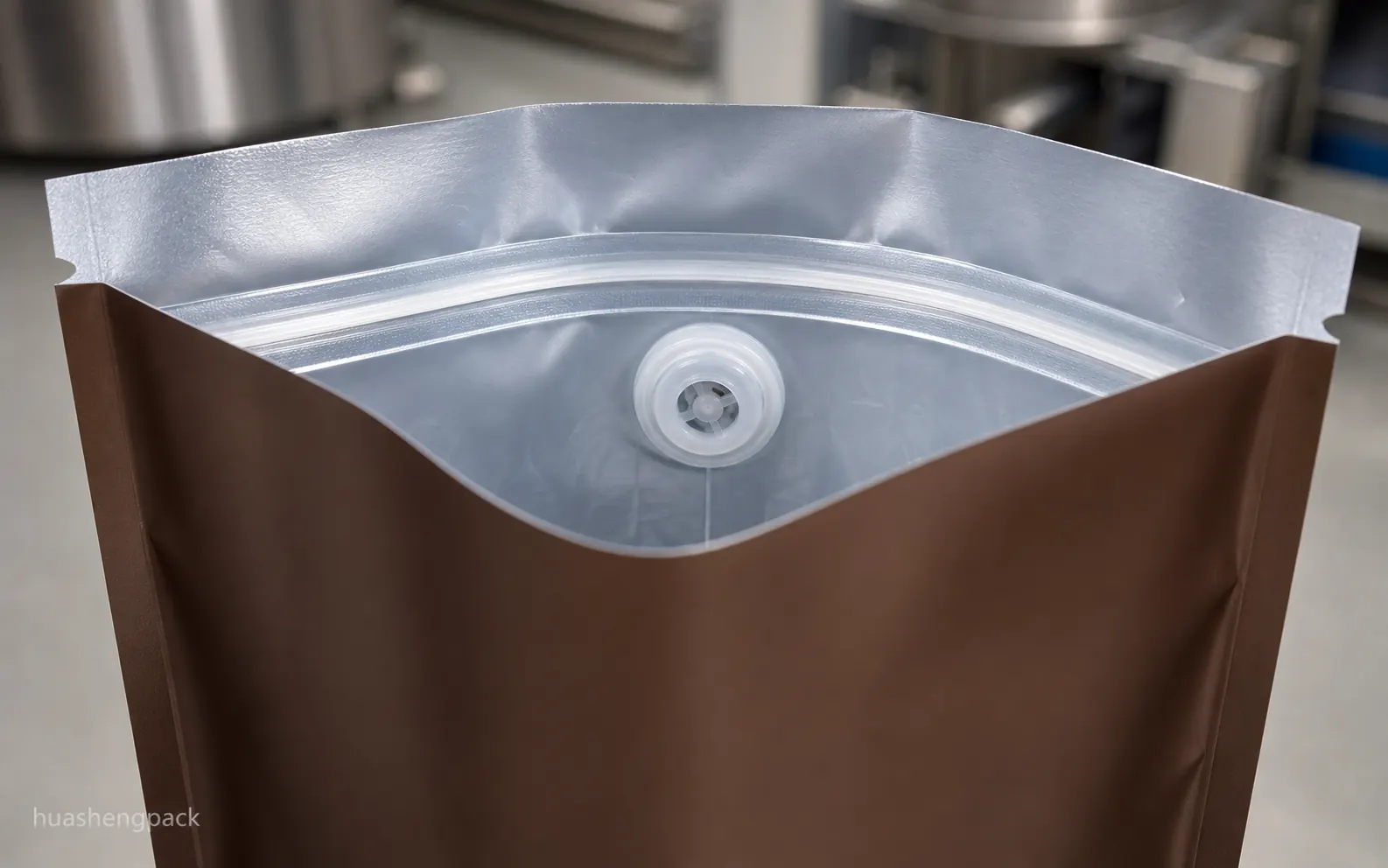
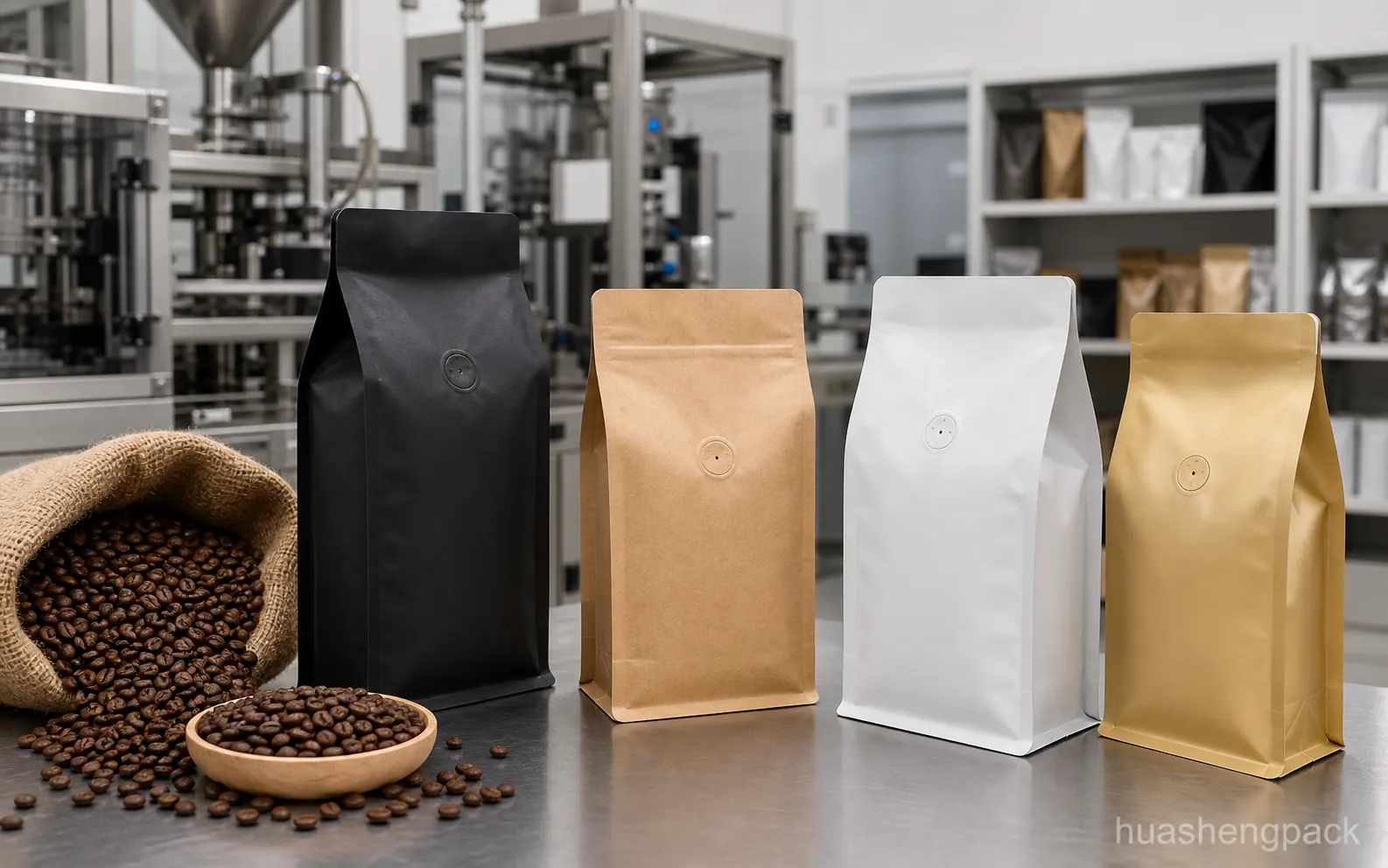
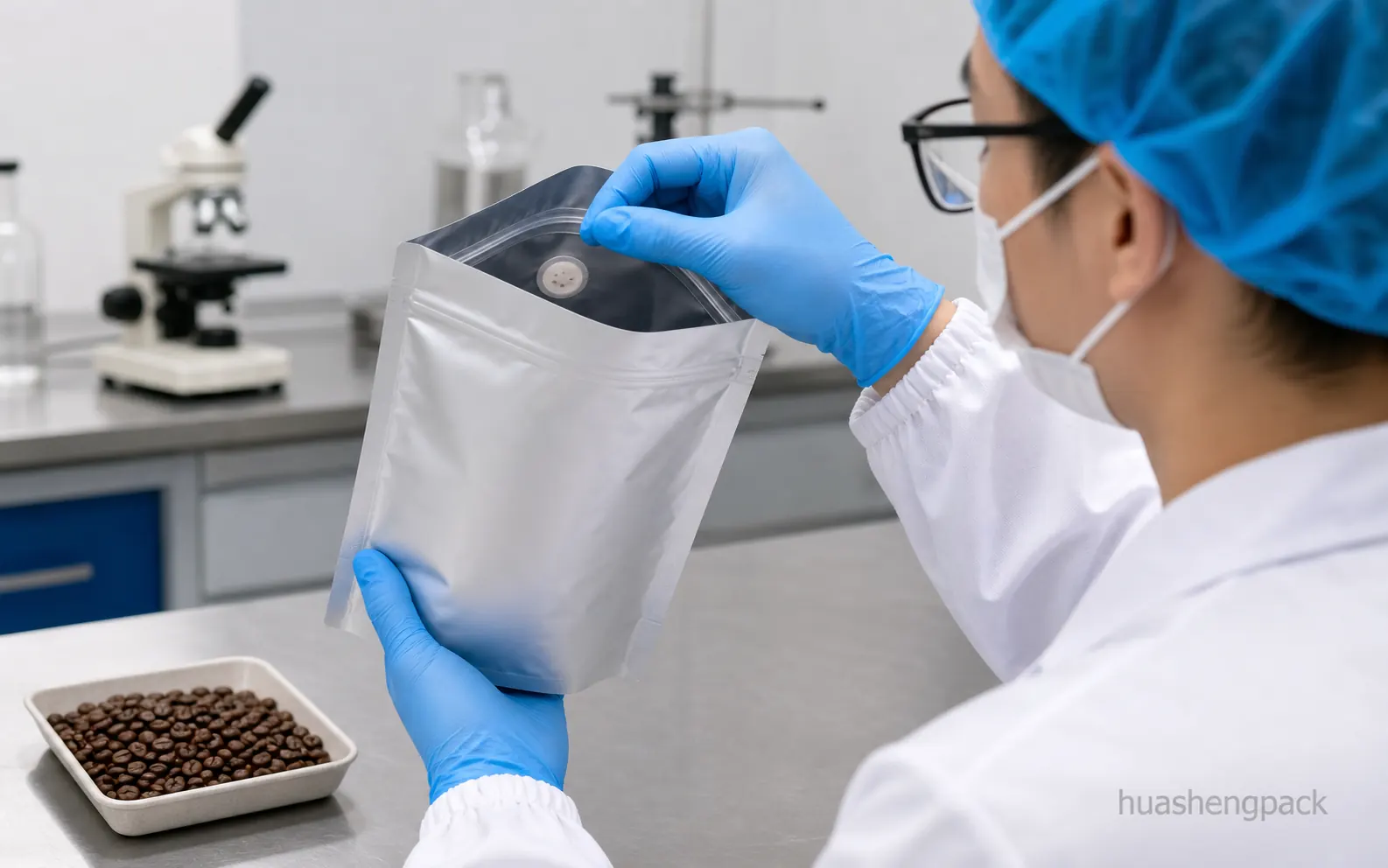
Custom printed coffee bags from Huasheng Packaging in Chaozhou, China. Send the coffee form, fill weight, current pack and quantity to review the pouch, valve and closure.
Product Overview
Custom coffee bags start with the coffee and packing process: whole beans or ground coffee, roast-to-pack timing, fill weight, target storage conditions and the way the final bag is sealed. A one-way degassing valve is designed to let gas from the packed product escape while limiting incoming air. It is one component of the package, not a substitute for a suitable laminate, intact seals or a validated storage study. Send your current filled-bag photograph or drawing and quantity per artwork for an initial review; unknown specifications can be identified together.
Common Applications
- Roasted whole-bean coffee projects where gas release, retail display and final sealing need to be reviewed together
- Ground-coffee projects assessed separately for powder contact with the valve, filling cleanliness and the actual packing process
- New coffee artwork or second-supplier projects using an existing approved bag as a specification reference, not automatic production approval
Material Options
- PET/VMPET/PE — Metallized-film laminate direction to evaluate against the coffee, light exposure, seals and required storage evidence; not the same as aluminium foil
- PET/AL/PE — Foil-containing laminate direction where the project justifies it; the complete finished bag, valve and seals still require review
- Kraft/PET/PE — Paper-exterior laminate direction for appearance and construction review; a kraft look alone does not establish oxygen or moisture protection
Key Features
- Stand-up, flat-bottom or gusseted directions selected from the actual filled dimensions and handling requirements
- Valve type and position reviewed against coffee condition, fill level, seal clearance and the attachment method
- Optional zipper for repeated closure after opening; the original top heat seal remains a separate decision
- Custom gravure artwork and surface finish reviewed without changing the approved valve, seal and coding areas
Printing & Finishing Options
- Artwork — Confirm the approved dieline, coffee identity, artwork versions, colours and quantity per design before print preparation
- Valve and closure layout — Keep the valve position, zipper, top seal, tear opening and batch-code area identified on the same drawing
- Surface appearance — Review matte, gloss or other agreed finishes using the actual laminate and print reference; appearance does not prove barrier performance
Technical Parameters
- Record whole-bean or ground form, roast condition, roast-to-pack timing, fill weight and how much headspace remains after filling
- Confirm internal/external bag dimensions and the valve location against the actual fill level, zipper and final sealing jaws
- Identify the valve specification and attachment method; agree relevant function and attachment checks before approving the assembled bag
- Review the complete laminate, sealing layer, final-seal conditions and product contamination risk rather than approving from the valve name
- Use representative filled bags for storage, leakage, opening and handling checks under agreed conditions; do not infer a shelf life from a film acronym
MOQ & Lead Time
Custom premade pouches are reviewed from 30,000 pieces per size and artwork, subject to final factory approval. Production timing is confirmed against the current factory schedule after the specification and artwork are approved.
Quality Control
- Match material identity, dimensions, artwork revision and valve position to the approved project specification
- Review valve attachment and relevant function together with the final bag seals, not as an isolated loose component
- Check actual filled-bag leakage, opening, reclosure and handling by the agreed methods and acceptance criteria
- Retain the approved bag reference and record changes to coffee form, laminate, valve, dimensions or filling conditions for re-review
Common Problems
- Choosing dimensions from an empty display bag without confirming coffee density, bottom expansion and sealing allowance
- Assuming the degassing valve replaces laminate barrier, vacuum packing or nitrogen-process validation
- Putting the valve, zipper, graphics or batch code into an area that conflicts with filling or final sealing
- Assuming a whole-bean sample automatically validates a ground-coffee filling condition
What to Prepare Before Inquiry
- Whole beans or ground coffee, roast-to-pack timing and intended fill weight
- Current filled-bag photo or drawing, preferred format and dimensions if known
- Existing valve specification and position, zipper and final top-seal requirements
- Packing method, available machine details and any current swelling, sealing or handling issue
- Target storage conditions, sales market, artwork status and quantity per design
Pouch format and filled-sample decision matrix
Compare stand-up, flat-bottom, three-side-seal, side-gusset and roll-film formats, then record filled-sample checks.
Use these editable CSV files to align artwork, roll-film machine data and material requirements before sampling. They are preparation tools, not approval records or performance guarantees.
Editable English template
Download CSV · Open finished PDF · Downloadable Packaging Project Checklists
Related Guides
Buyer Notes
- Provide product type, bag size or roll width — a photo or sample helps quick assessment
- If material structure or thickness is known, include specification
- Number of printing colors and artwork file affect cylinder cost and prepress time
- Packing machine type (VFFS/HFFS/manual) determines roll film vs premade pouch choice
- Target market compliance, China OEM filling requirements or nominated domestic warehouse handover details help confirm the final specification
Related Products
Related Applications
Related Packaging Guides
- Flat Bottom Pouches vs Stand Up Pouches: A Buyer Comparison
- Roll Film vs Premade Pouches: A Buyer Guide for Packing Line and Format Selection
Frequently Asked Questions
What does a coffee degassing valve do?
It is designed to release gas from the packed product while limiting incoming air. Select and validate the actual valve with the coffee, bag and packing process; the valve does not replace laminate barrier or final seals.
Does every coffee product need the same valve bag?
No. Whole beans, ground coffee, roast-to-pack timing, filling conditions and storage requirements can differ. Review the actual product instead of assuming one valve or bag specification fits every project.
Is a zipper the same as the original top seal?
No. The zipper supports reclosure after first opening. The final heat seal and its clearance above the zipper need their own layout and production review.
Can the bag material name confirm coffee shelf life?
No. The complete laminate, valve, seams, filling process, coffee and storage conditions all matter. Agree a representative finished-pack validation plan instead of assigning shelf life from PET, VMPET or foil alone.
How do we start a custom printed coffee-bag project?
Send the coffee form, fill weight, current package photo or dimensions, artwork status and quantity per design. Add valve and machine information if available; unknown inputs can be listed for review.
Can you review an existing bag for a second-supplier project?
An existing bag, drawing and known specification can support comparison. Material identity, valve, artwork, filled shape and packing-line requirements still need confirmation before production approval.
Recommended Material Structures
Material structure should be reviewed according to product type, shelf life, filling condition, barrier requirement and packing process.
- PET/VMPET/PE Metallized Packaging — Metallized structure commonly reviewed for coffee packaging where metallic appearance and moderate barrier are needed.
- PET/AL/PE Aluminum Foil Packaging — Aluminum foil laminated structure for coffee projects that need stronger aroma, oxygen and light barrier protection.
- Compare Material Structures — Compare coffee packaging material options before confirming pouch structure.
Related Packaging Guides
Learn material structures, packaging options and application guides related to this product.
- Coffee Packaging Solutions — Aroma protection, valve function and high barrier structures for coffee.
- VMPET Film for High Barrier Packaging — Metallized PET film properties and barrier performance for coffee bags.
- Aluminum Foil Laminated Packaging — Aluminum foil barrier for coffee aroma and oxygen protection.
- Zipper Options for Pouches — Resealable zipper types and placement for coffee bag formats.
- Matte, Gloss and Soft Touch Finish — Surface finish options for premium coffee bag presentation.