Easy Peel Lidding Film for Jelly Cups: Seal, Peel and Cup Compatibility
Huasheng Packaging Technical Content Review · Published: · Updated:
 Lidding film selection should match the cup substrate, product, sealing equipment and opening target.
Select jelly cup lidding film by cup substrate, product, sealing equipment, peel target, leak risk and whole-pack validation.
Direct answer
Easy peel is a controlled package-opening result, not a property that can be approved from the lidding film name alone. The lid, cup flange, product, sealing equipment and conditioning history form one system. Buyers should define both integrity and opening targets, then validate them on the intended cup and production line.
Evidence-reviewed technical guide
2026-08-12 · Huasheng Packaging Technical Content Review
Evidence scope
Cup and lidding-film compatibility, peel specification, laboratory-to-production sealing and approval change control.
Scope and limitations
The guide does not prescribe a universal sealant, peel force or process setting. Cup grade, product, machine and consumer target remain project-specific.
Key takeaways
- Easy peel is a result of the complete cup-lid-process system.
- Seal-strip and whole-lid methods answer different questions.
- Integrity and opening behavior require production-representative validation.
Identify the Cup, Product and Opening Requirement
Confirm the cup substrate and grade, flange geometry and cleanliness, product composition, fill and storage temperatures, contact duration, sealing machine and consumer opening expectation. Jelly, dairy, sauce and chemical cups may require different regulatory, seal and sensory reviews. “Easy peel” without a target test method, pull geometry and acceptance range is not a complete specification.
Do Not Use Seal Strength as the Only Integrity Result
ASTM F88 measures force on a seal strip, while ASTM F2824 addresses mechanical separation of an entire flexible lid from a cup or bowl. These methods answer different questions. Neither automatically proves absence of channels or leaks. Visual inspection and an appropriate package-integrity method may be required according to the actual defect risk.
Match Sealant Chemistry to the Exact Cup Flange
Potential lidding structures and seal layers depend on whether the cup is PP, PE, PET or another approved substrate and on the intended use. Confirm print side, barrier need, anti-fog or optical requirement, peel mechanism and whether the lid tears, strings or leaves residue. A film that peels correctly from one cup grade should not be assumed to behave the same on another.
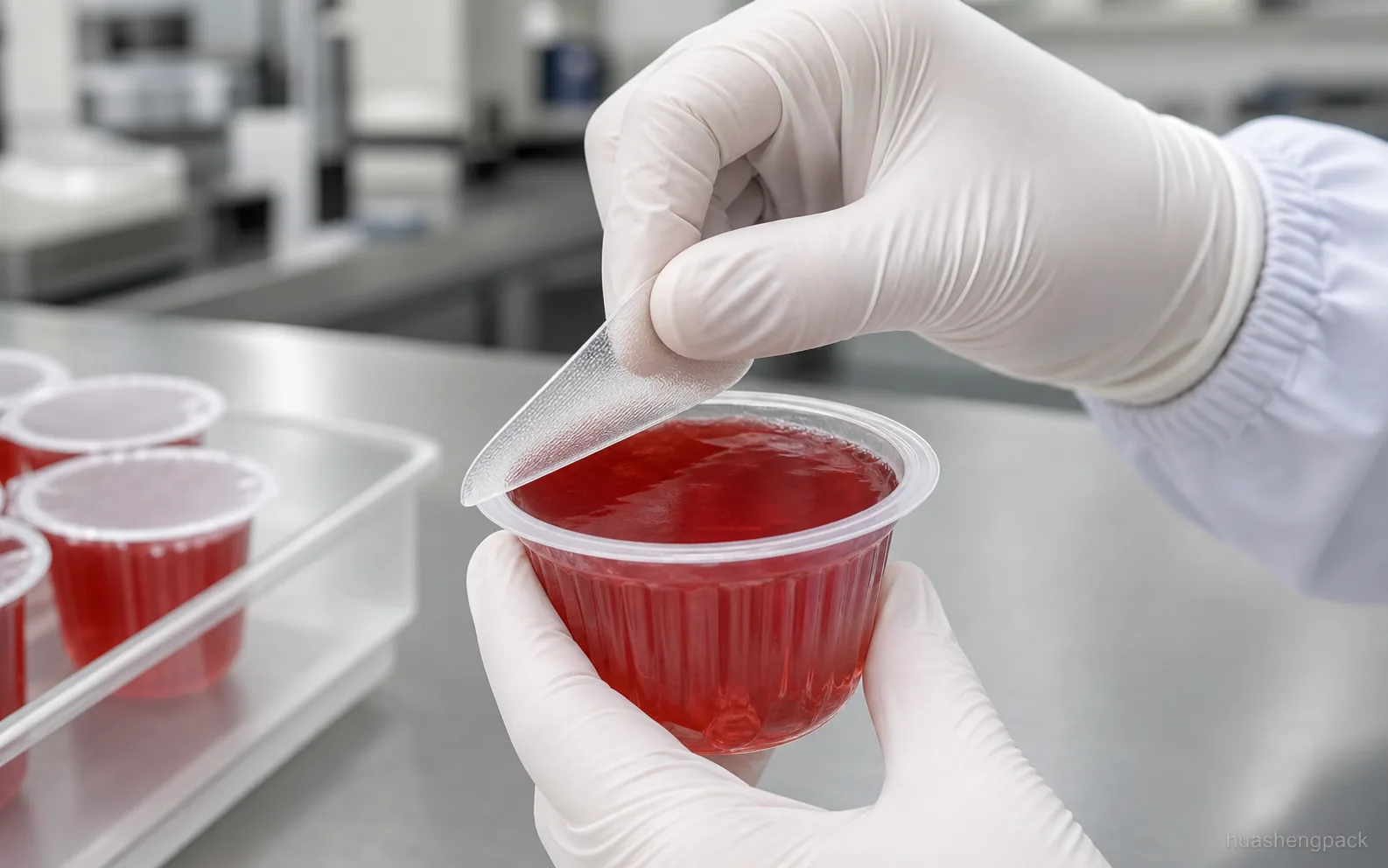 Peel behavior should be assessed with the intended cup, seal settings and conditioned samples.
Build a Production Sealing Window
Laboratory seals can screen material behavior, but ASTM F2029 notes that laboratory and manufacturing equipment can produce different results. Test across a controlled range of temperature, pressure and dwell on production-representative equipment. Condition samples consistently, then measure opening behavior, inspect the full flange and check leakage or seal continuity using agreed methods.
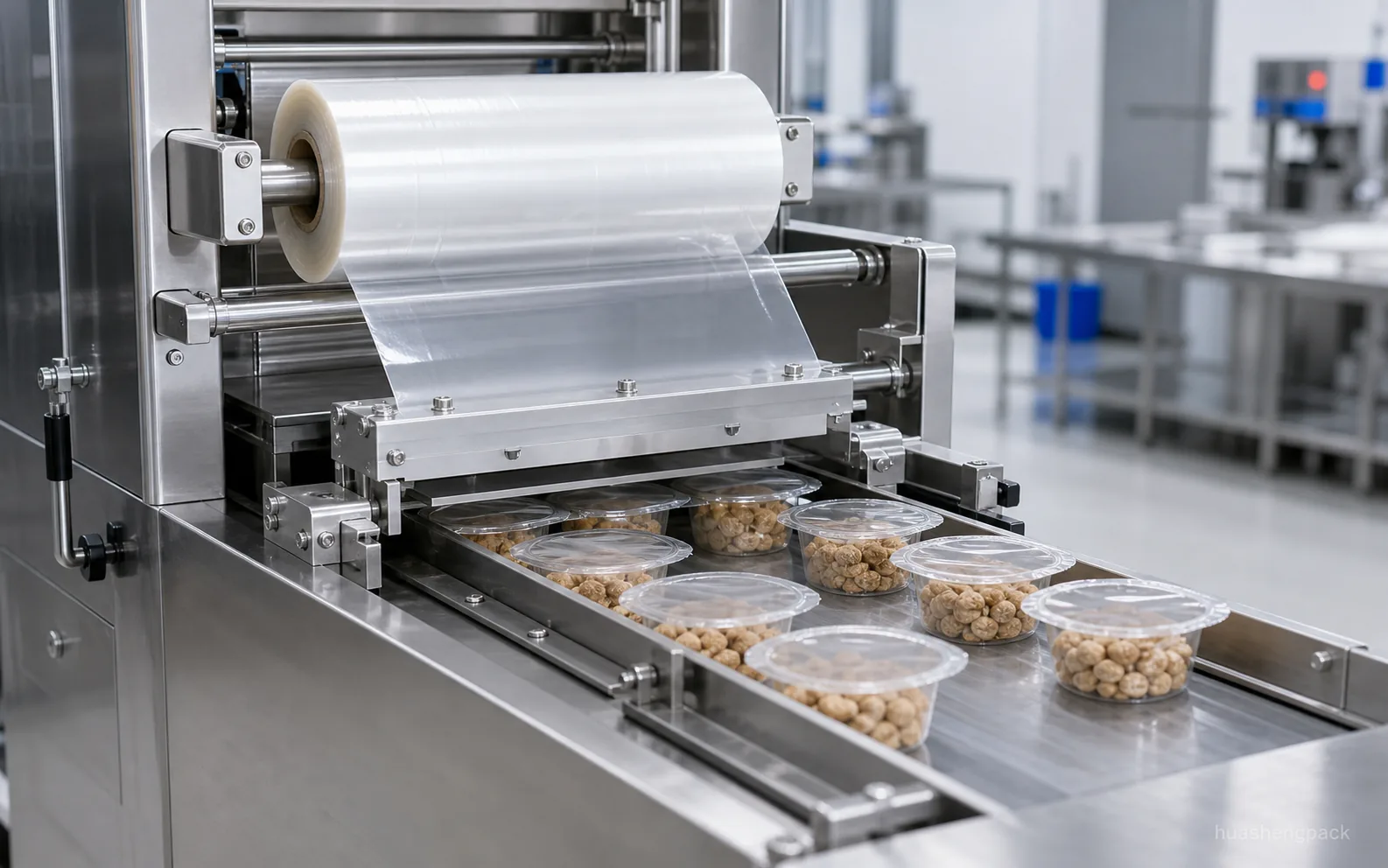 A machine trial can confirm tracking, sealing and finished-cup behavior before bulk production.
Lidding Film Approval Record
Provide cup material and supplier grade, flange drawing, cavity layout, product and fill temperature, storage, machine and sealing head, line speed, lidding width and repeat, print and eye-mark data, desired peel behavior, regulatory documents and sample plan. Record the exact cup and film revisions used for approval and identify changes that trigger reassessment.
Related Products
Related Packaging Guides
Claim-to-source evidence matrix
| Reviewed claim | Support | Sources | Boundary |
|---|
| Seal-strip strength and whole-lid peel testing are distinct measurements. | direct | [1], [2] | Neither result alone proves absence of leaks. |
| Laboratory heat seals provide screening data but do not validate production equipment. | direct | [3] | The exact cup, sealing head and line conditions remain necessary. |
| Food-contact suitability depends on components and conditions of use. | direct | [4], [5] | Destination-market requirements need separate confirmation. |
| Seal strength supports process validation and control but is not a complete leak assessment. | direct | [1] | Use an integrity method selected for the actual defect risk. |
JSON · CSV
Authoritative References
- ASTM F88/F88M-21: Seal Strength of Flexible Barrier Materials · ASTM International · standard
Seal strength is a quantitative measure used for process validation, control and capability - ASTM F2824-10(2025): Mechanical Seal Strength Testing for Round Cups and Bowl Containers with Flexible Peelable Lids · ASTM International · standard
Whole-lid peel testing and seal-strip testing answer different package-opening questions - ASTM F2029-16(2021): Laboratory Heat Seals for Determination of Heat Sealability of Flexible Barrier Materials · ASTM International · standard
Laboratory heat-seal curves provide starting relationships and do not replace production-equipment validation - Determining the Regulatory Status of Components of a Food Contact Material · U.S. Food and Drug Administration · government
Food-contact status depends on each component, its authorization, specifications and conditions of use - Food Types and Conditions of Use for Food Contact Substances · U.S. Food and Drug Administration · government
Food-contact review depends on the food type and the intended temperature and storage conditions
Frequently Asked Questions
Can one easy-peel film seal to every cup material?
No. Sealant chemistry and process settings must match the exact cup substrate, grade and flange.
Is a high peel force always better?
No. Integrity and consumer opening must be balanced against an agreed range and failure mode.
What is the difference between F88 and F2824?
F88 measures a strip containing a seal; F2824 evaluates separation of an entire flexible lid from a cup or bowl.
Does seal strength prove the cup does not leak?
No. Leakage and seal force are different characteristics and may require separate methods.
Can laboratory settings be copied to the production sealer?
They are starting information. Production equipment, head geometry, speed and product conditions still require validation.
What changes require another approval trial?
Review cup or film grade, sealant, thickness, coating, ink, supplier, machine, flange, product and process changes.