FOB vs. CIF vs. DDP Door-to-Door Shipping for Custom Flexible Packaging from China
Huasheng Packaging Technical Content Review
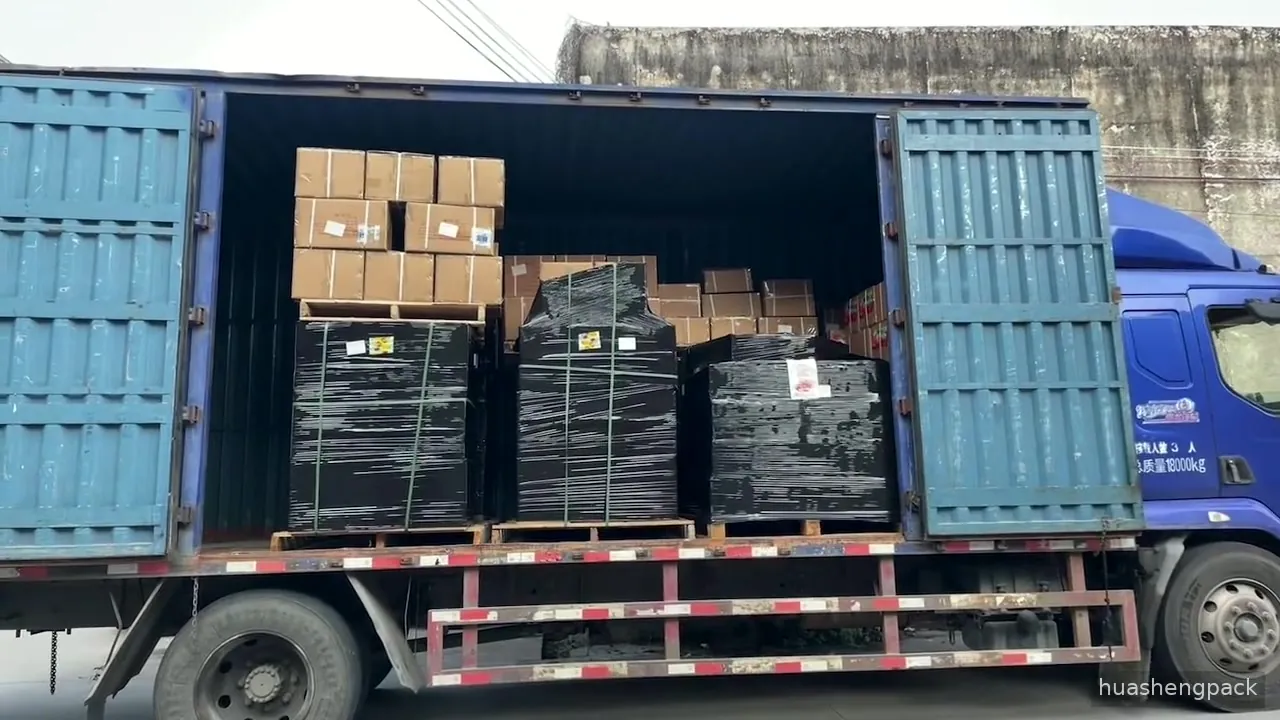
Practical B2B buyer guide comparing EXW, FOB, CIF, and DDP door-to-door shipping for custom printed pouches and roll film from China—customs duties, port fees, and air vs. sea trade-offs.
Direct answer
When overseas food, coffee, or snack brands order custom printed pouches or automatic roll film directly from a Chinese manufacturer, freight and customs confusion often delays the first purchase order longer than the packaging design itself. Should you ask the factory for FOB South China ports, CIF to your destination port, or DDP door-to-door delivery? Drawing on decades of export shipments from our 6,880 m² Chaozhou plant (Chaozhou Chao'an Huasheng Printing Co., Ltd., est. 1997), this guide compares each Incoterm clearly so you avoid hidden destination port charges and pick the lowest-friction shipping path for your order size.
Contents
Evidence-reviewed technical guide
Evidence-reviewed technical guide
2026-11-26 · Huasheng Packaging Technical Editorial Review
Evidence scope
Applies to B2B custom flexible packaging specification review for export logistics & incoterms projects sourced from direct gravure converting plants.
Scope and limitations
General engineering bands and procurement guidelines do not replace filled-pack shelf-life testing, machine compatibility trials, or destination-market regulatory review.
Key takeaways
- Why Incoterm Confusion Creates Surprise Costs at Destination Ports
- Matching EXW, FOB, CIF and DDP to Your Order Size and Experience
- Shipping Details to Include With Your Packaging RFQ for Accurate Landed Math
Why Incoterm Confusion Creates Surprise Costs at Destination Ports
Two factory quotations with the exact same per-pouch unit price can produce vastly different landed warehouse costs depending on who controls ocean freight, export clearance, destination terminal handling charges (THC), customs brokerage, and import duties. Many first-time importers pick CIF assuming it covers delivery to their warehouse door, only to be hit with unexpected destination port deconsolidation fees on less-than-container-load (LCL) sea shipments. Conversely, experienced brands with a contracted freight forwarder often lose money on factory-arranged DDP when their own forwarder could move pallets faster and cheaper on FOB.
Four Shipping Mistakes First-Time Packaging Importers Make
First, ordering LCL ocean freight under CIF without requesting a written estimate of destination port THC and broker clearance fees beforehand—on small 1–3 CBM pouch shipments, destination LCL port charges can occasionally rival the base ocean freight itself. Second, choosing air express for heavy laminated rollstock film without comparing carton weight vs. dimensional weight; printed roll film is dense and heavy, making air freight viable primarily for urgent pilot reels or launch top-ups while sea freight dominates commercial volume. Third, forgetting to confirm whether your company holds an active importer-of-record (IOR) tax ID or customs broker in your destination country before selecting FOB or CIF. Fourth, overlooking domestic China freight-forwarder consolidation: buyers across Southeast Asia, the Middle East, Central Asia, and Africa frequently save substantially by buying EXW/domestic delivery straight into their appointed Guangzhou, Shenzhen, or Yiwu consolidation warehouse.
Matching EXW, FOB, CIF and DDP to Your Order Size and Experience
Use four practical rules to select the cleanest Incoterm on your quote request: (1) EXW (Ex Works Chaozhou) or Local Consolidation Delivery — best if you already work with a trusted China freight forwarder or consolidation warehouse in Guangzhou, Shenzhen, or Yiwu, or if you pack inside a designated Chinese OEM food factory; (2) FOB (Free On Board Shenzhen / Guangzhou) — the gold standard for established overseas importers with their own forwarder or customs broker, giving full control over freight rates, transit schedules, and destination port charges; (3) CIF (Cost, Insurance & Freight to Named Destination Port) — practical when you have a local customs broker at your destination port (such as Los Angeles, Rotterdam, Felixstowe, Sydney, Jebel Ali, Port Klang, or Laem Chabang) and want the factory to arrange main-leg ocean transit; and (4) DDP / Door-to-Door Forwarder Solutions (Air or Sea) — helpful for smaller first commercial runs or scaling brands without an in-house customs broker, provided the forwarder confirms exact HS code duty treatment, importer compliance rules, and final warehouse delivery address upfront.
How Export Packing Protects Pouches and Rollstock Across Ocean Lanes
Ocean humidity and stacked container handling punish poorly packed cartons. At Huasheng Packaging (ISO 22000:2018, cert. 007FSMS2300214), finished premade pouches are neatly bundled inside moisture-protective inner poly liners within sturdy export corrugated cartons labeled with SKU, quantity, and batch lot identification. Printed rollstock reels are wrapped with edge protection, mounted cleanly on cores (common 76 mm / 152 mm IDs), and packed horizontally or vertically on export-compliant pallets according to weight and destination receiving guidelines.
Shipping Details to Include With Your Packaging RFQ for Accurate Landed Math
Include five logistics facts in your inquiry so we estimate carton count, gross weight, and cubic volume (CBM) alongside your unit price: (1) destination country, city, and postal code (or target sea port), (2) whether you have a freight forwarder/customs broker (FOB/CIF) or need door-to-door logistics options evaluated, (3) whether you ship to a China consolidation warehouse or OEM co-packer, (4) target delivery window (determining air vs. sea freight planning), and (5) any warehouse pallet height, max carton weight, or receiving label requirements.
Related Products
Related Packaging Guides
- How Many Pouches per Kilogram of Printed Roll Film? Yield Calculation & Unit Cost Guide
- Stock Sample vs. Digital Prototype vs. Unprinted Trial Pouch: Which Sample Should You Order?
- How Long Do Gravure Printing Cylinders Last? Storage, Reorder Savings & Artwork Change Rules
Claim-to-source evidence matrix
| Reviewed claim | Support | Sources | Boundary |
|---|---|---|---|
| Final flexible packaging specifications require confirming product chemistry, barrier needs, dimensions, and filling conditions before bulk production. | contextual | [1], [3] | Engineering review boundary prior to cylinder engraving or commercial conversion. |
| Seal integrity and laminate suitability should be verified on representative samples using actual product and sealing equipment. | direct | [2] | Quantitative seal testing and line trials supersede nominal film descriptions. |
| Huasheng Packaging operates integrated 9-color gravure printing, lamination, and pouch converting in Chaozhou under ISO 22000:2018 (007FSMS2300214). | direct | [3], [1] | Factory capability and active management-system scope; product-specific export compliance confirmed per order. |
Authoritative References
- ISO 22000:2018 Food safety management systems · International Organization for Standardization (ISO) · standard
Food-contact packaging production management relies on documented food-safety management controls and traceability. - ASTM F88/F88M-23 Standard Test Method for Seal Strength of Flexible Barrier Materials · ASTM International · standard
Flexible pouch and roll-film heat-seal performance should be verified quantitatively rather than assumed from film appearance. - Huasheng Packaging Chaozhou In-House Converting & Quality Control Overview · Huasheng Packaging · internal-evidence
Describes Chaozhou in-house 9-color gravure printing, lamination, slitting, pouch converting, and ISO 22000:2018 scope.
Frequently Asked Questions
What is the difference between FOB and CIF when importing flexible packaging from China?
Under FOB, Huasheng Packaging handles export clearance and loads goods onto the vessel at a South China port (such as Shenzhen or Guangzhou), and your forwarder controls ocean freight and destination fees. Under CIF, we arrange main-leg ocean freight and insurance to your destination port, while your local broker handles customs clearance, duties, and inland trucking.
Can I ship custom pouches to my own freight forwarder warehouse in Guangzhou or Shenzhen?
Yes. Many Southeast Asian, Middle Eastern, African, and global importers order on EXW or local delivery terms and have us dispatch finished export cartons directly to their nominated consolidation warehouse in Guangdong or Yiwu.
When does air freight make sense vs. sea freight for custom printed pouches?
Express air or air cargo works well for physical sample kits, urgent launch top-ups, or small lightweight pouch batches when shelf deadlines are tight. For standard commercial pouch runs and heavy rollstock film reels, ocean freight (LCL or FCL) dramatically lowers landed cost per pack.
How do you estimate carton weight and CBM before production starts?
Once your pouch dimensions, laminate thickness, and order quantity are confirmed, we calculate estimated finished pouch weight, pieces per export carton, total carton count, gross weight (kg), and cubic volume (CBM) so your forwarder can quote exact freight.
What export documents accompany an international flexible packaging shipment?
Standard export sets include Commercial Invoice, Packing List, Bill of Lading (or Air Waybill), and applicable batch/certificate records (such as ISO 22000:2018 copy or agreed material specification sheets) aligned to your destination customs broker's checklist.
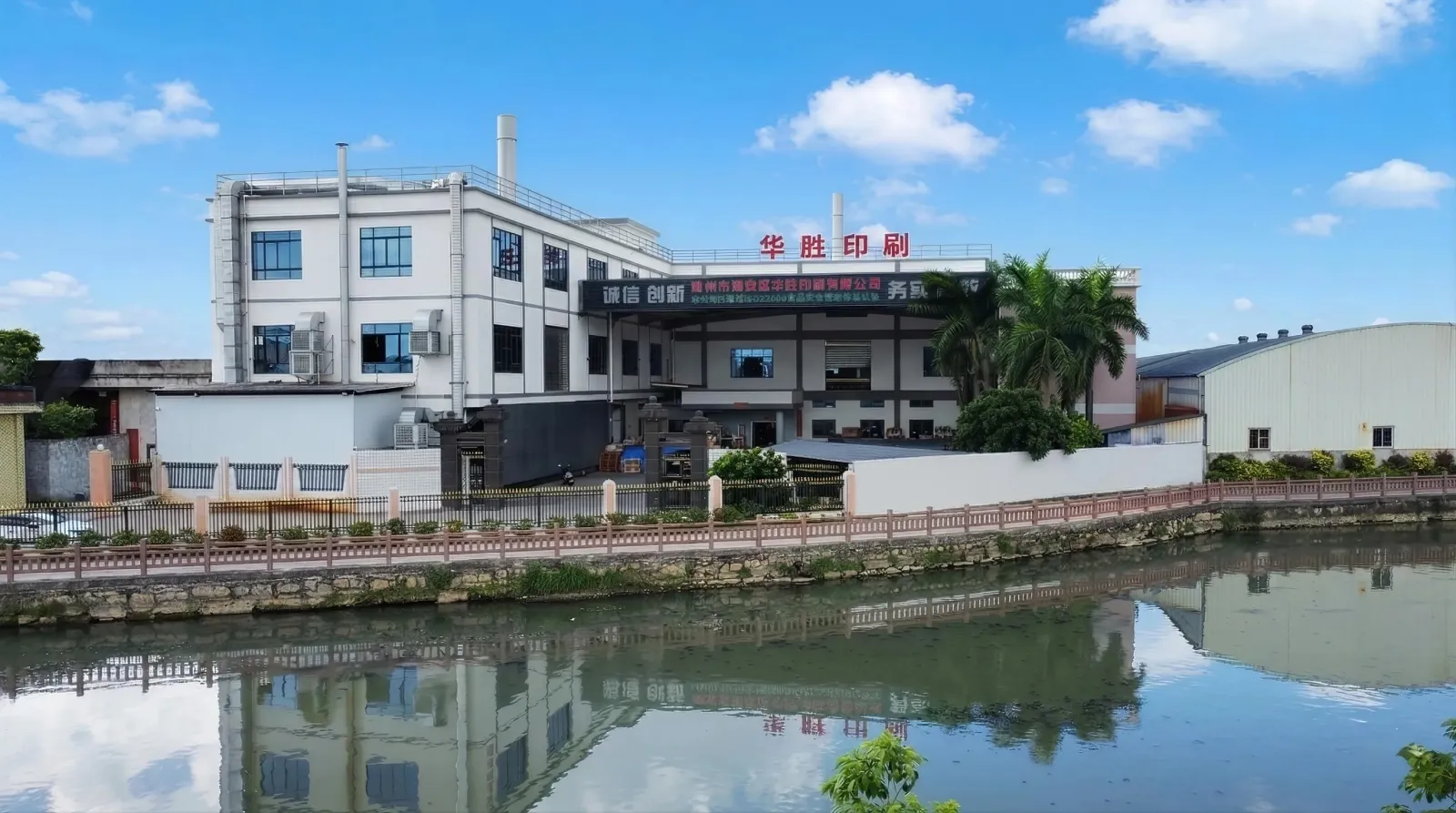
About Huasheng
In-house 9-color gravure printing, solventless lamination, slitting, and pouch converting across stand up pouches, spout pouches, retort bags, coffee bags, and automatic rollstock film.
A legacy of quality in flexible packaging since 1997.
1997 · 6,880 m²
Chaozhou · Guangdong · China
Longshewei, Neipan Management District, Dongfeng Town, Chao'an District, Chaozhou City, Guangdong Province, China