What to Send a Packaging Factory When a Pouch Has a Problem
Huasheng Packaging Technical Content Review · Published:
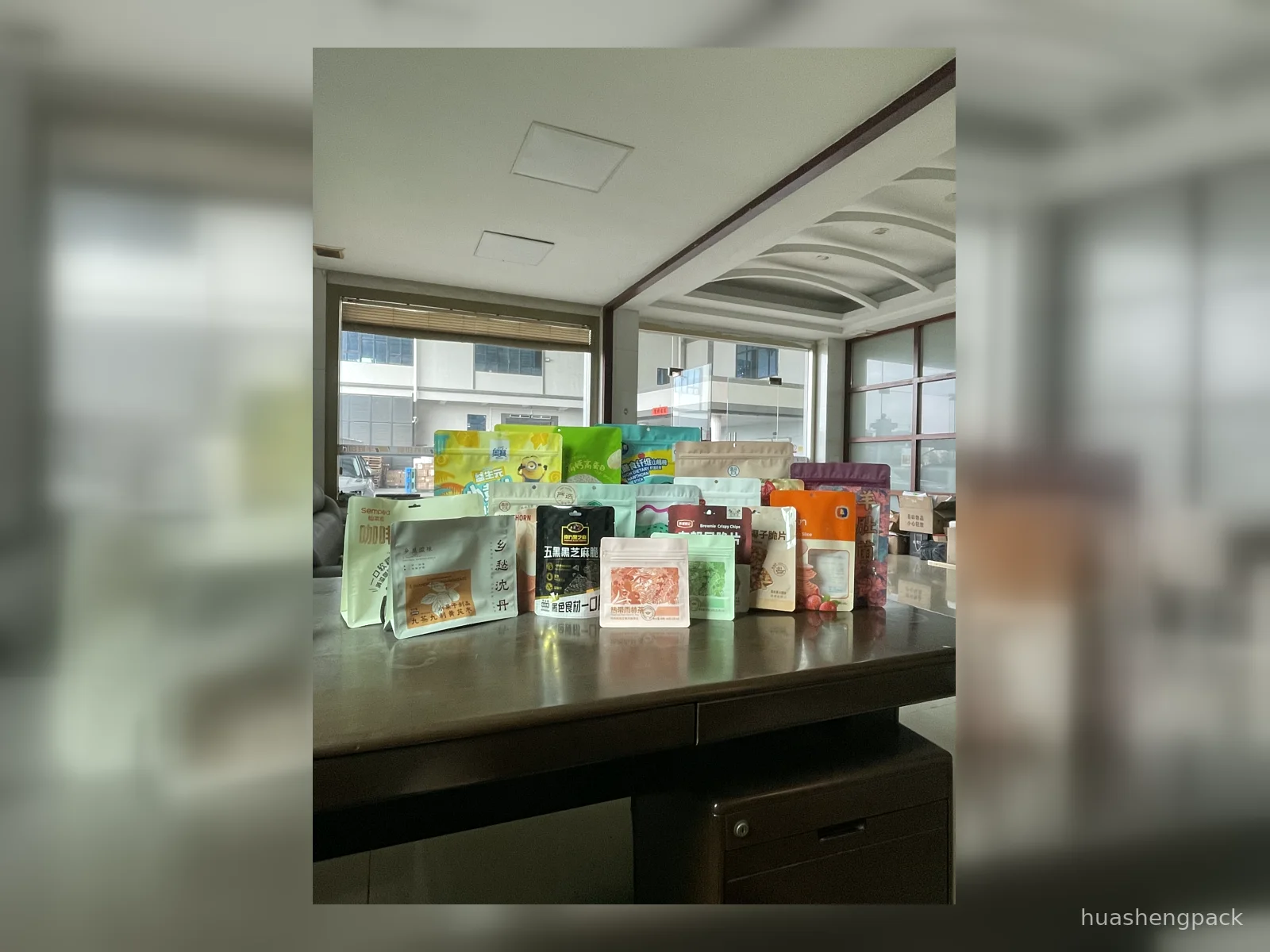 The image supports visible appearance or setting only. It does not prove material structure, performance, certification, a customer relationship or project suitability.
Prepare useful photos, video, retained packs, product details, lot context and filling records without replacing physical investigation.
Direct answer
A photo, video or voice note can accelerate packaging troubleshooting, but each medium answers different questions and none replaces an identified physical sample. A useful evidence pack shows the whole package, the exact defect, the production context and an unaffected comparison without exposing unrelated personal or commercial data.
Evidence-reviewed technical guide
2026-08-31 · Huasheng Packaging Technical Content Review
Evidence scope
What to Send a Packaging Factory When a Pouch Has a Problem
Scope and limitations
No customer identity, transcript, order-specific price, fixed MOQ, universal material recipe, performance promise, machine approval or shelf-life guarantee is published.
Key takeaways
- State what changed, where it appears, when it was found, how often it occurs and what outcome was expected. Keep observations such as “seal opens at the corner” separate from conclusions such as “the laminate is wrong.” Include product type and whether the pack was empty, freshly filled or stored.
- Video is useful for opening, filling, powder flow, zipper closure, sealing, leakage or failure under handling. Begin with the sample identifier and an overall view, then record one action continuously. Do not edit several lots into one clip or use a dramatic demonstration that does not match normal use.
- Ask whether the evidence is intended to confirm dimensions, identify a visible defect, screen possible causes, reproduce a failure or approve a corrective action. This keeps remote advice within scope. Final root cause and performance conclusions should rely on suitable tests and controlled comparisons, not confident wording in a chat.
1. Start with a Written Problem Statement
State what changed, where it appears, when it was found, how often it occurs and what outcome was expected. Keep observations such as “seal opens at the corner” separate from conclusions such as “the laminate is wrong.” Include product type and whether the pack was empty, freshly filled or stored.
The image supports visible appearance or setting only. It does not prove material structure, performance, certification, a customer relationship or project suitability.2. Photograph Context and Detail
Take front, back, top, bottom, side and closure views, then defect close-ups with a scale. Include a same-lot acceptable pack when available. Use neutral lighting and avoid filters. Cover names, addresses, codes or artwork that are not required for the technical review.
3. Use Video for Sequence and Behavior
Video is useful for opening, filling, powder flow, zipper closure, sealing, leakage or failure under handling. Begin with the sample identifier and an overall view, then record one action continuously. Do not edit several lots into one clip or use a dramatic demonstration that does not match normal use.
Use a repeatable capture sequence: full front and back, both side profiles, top and bottom seals, the defect beside a scale, the lot or sample code, and a short continuous video showing handling without cuts. Remove unrelated personal or commercial information before sharing. Keep the original files because messaging apps may compress detail needed for later review.
4. Preserve Physical Samples and Records
Retain affected and unaffected packs, unused pouches or film, labels and cartons where relevant. Record lot, date, machine, settings, operator shift, product, fill weight and storage or transport condition. Package returned samples to prevent the defect from changing during transit.
When sending a physical sample, isolate it from further damage and include an unaffected comparison from the same lot where possible. Mark the defect without writing over the critical area. Provide production date or lot reference, when the issue was first seen, storage and filling conditions, number inspected and number affected. For leaks, retain product and orientation information. For appearance, use neutral lighting. For machine issues, capture the web or pouch path before removing the material. Each detail narrows the next test without pretending to diagnose remotely.
5. Agree the Investigation Question
Ask whether the evidence is intended to confirm dimensions, identify a visible defect, screen possible causes, reproduce a failure or approve a corrective action. This keeps remote advice within scope. Final root cause and performance conclusions should rely on suitable tests and controlled comparisons, not confident wording in a chat.
Remote evidence should lead to a triage outcome: enough information for a bounded next check, physical sample required, production records required or immediate containment recommended. It should not produce a confident root cause from one image. Give every received item an identifier and connect it to the same problem record so later laboratory or factory findings do not become detached from the original observation.
Professional evidence used in this guide includes: ASTM F2203-13(2022): Linear Measurement Using Precision Steel Rule; ASTM F88/F88M-23: Seal Strength of Flexible Barrier Materials; ASTM F2096-11(2019): Detecting Gross Leaks in Packaging by Internal Pressurization. Its mapped scope is: Linear dimensions require a defined specimen state and method; Seal strength is interpreted with specimen, technique and failure mode; Internal pressurization is a destructive method for gross-leak detection. These sources answer specific method, use-condition or equipment-input questions; they do not automatically approve the complete package, a particular machine, commercial shelf life or the current order. To apply this guide to a Packaging Problem Review decision, maintain a four-column condition–evidence–limitation–action record: state the current condition, identify the sample or record supporting it, name the risk that remains outside that evidence and assign the next action with its acceptance condition. Reopen the affected conclusion whenever the product, specification, process or controlling evidence changes.
Related Products
Related Packaging Guides
Claim-to-source evidence matrix
| Reviewed claim | Support | Sources | Boundary |
|---|
| Linear dimensions require a defined specimen state and method | direct | [1] | The cited source supports only the named method, boundary or equipment input and does not approve the complete packaging project. |
| Seal strength is interpreted with specimen, technique and failure mode | direct | [2] | The cited source supports only the named method, boundary or equipment input and does not approve the complete packaging project. |
| Internal pressurization is a destructive method for gross-leak detection | direct | [3] | The cited source supports only the named method, boundary or equipment input and does not approve the complete packaging project. |
JSON · CSV
Authoritative References
- ASTM F2203-13(2022): Linear Measurement Using Precision Steel Rule · ASTM International · standard
Linear dimensions require a defined specimen state and method - ASTM F88/F88M-23: Seal Strength of Flexible Barrier Materials · ASTM International · standard
Seal strength is interpreted with specimen, technique and failure mode - ASTM F2096-11(2019): Detecting Gross Leaks in Packaging by Internal Pressurization · ASTM International · standard
Internal pressurization is a destructive method for gross-leak detection
Frequently Asked Questions
Is one close-up photo enough?
No, include overall context and a control.
Can a voice note replace written facts?
No, summarize critical facts in writing.
Should labels be visible?
Only identifiers needed for the review.
Why keep an unaffected sample?
It creates a same-lot comparison.
Can remote review prove root cause?
Usually not without samples and tests.
What is the first message to send?
A short observation, lot context and requested outcome.