What to Verify Remotely Before Visiting a Flexible Packaging Factory in China
Huasheng Packaging Technical Content Review · Published:
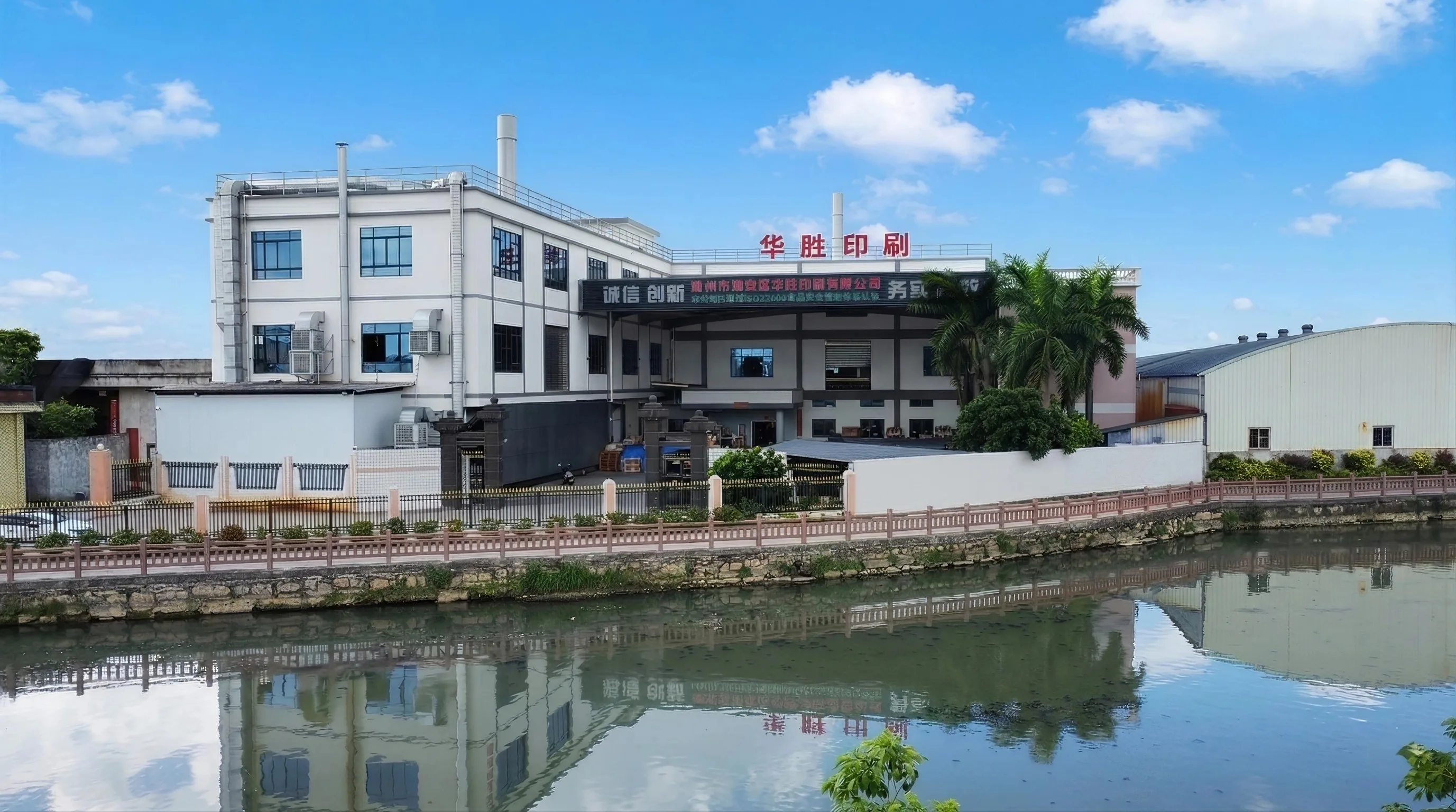 The image supports visible appearance or setting only. It does not prove material structure, performance, certification, a customer relationship or project suitability.
Use company identity, relevant samples, specification review, video evidence, controlled documents and a trial plan before deciding to travel.
Direct answer
A factory visit is most useful after the buyer has verified identity, relevant manufacturing scope, sample relevance, technical review quality and a realistic trial route remotely. Travel should resolve remaining evidence gaps and observe the agreed process, not substitute for a project specification.
Evidence-reviewed technical guide
2026-08-31 · Huasheng Packaging Technical Content Review
Evidence scope
What to Verify Remotely Before Visiting a Flexible Packaging Factory in China
Scope and limitations
No customer identity, transcript, order-specific price, fixed MOQ, universal material recipe, performance promise, machine approval or shelf-life guarantee is published.
Key takeaways
- Match legal company name, registered location, official domain, business email, production address and the person arranging the review. Keep screenshots or current records. A social profile, marketplace listing or messaging account alone should not carry the whole identity decision.
- Share product, format, size or density, artwork, quantity by SKU, filling process, target market and validation needs. Evaluate whether the supplier asks useful questions, records assumptions and avoids unsupported promises. Resolve obvious incompatibilities remotely.
- After the visit, issue open questions, accepted evidence, required samples, trial specification, responsibility, timing and approval gates. Do not let a positive visit impression replace the drawing, material reference, artwork revision, machine trial or filled-pack validation needed by the project.
1. Verify the Legal and Contact Identity
Match legal company name, registered location, official domain, business email, production address and the person arranging the review. Keep screenshots or current records. A social profile, marketplace listing or messaging account alone should not carry the whole identity decision.
The image supports visible appearance or setting only. It does not prove material structure, performance, certification, a customer relationship or project suitability.2. Ask for Relevant, Bounded Evidence
Request samples and process evidence that match the intended pouch or roll-film family. Confirm what each photo, video, report or certificate actually proves. A management-system certificate does not approve every material, package design or finished product.
3. Run a Technical Review Before Booking
Share product, format, size or density, artwork, quantity by SKU, filling process, target market and validation needs. Evaluate whether the supplier asks useful questions, records assumptions and avoids unsupported promises. Resolve obvious incompatibilities remotely.
Prepare a remote evidence index before booking travel. Link each legal record, factory photo, process video, certificate, report and sample to its source date, visible scope and unanswered question. Ask for a live walk-through of the relevant route where practical, but do not request unrelated customer artwork or confidential production records. Evidence quality matters more than the number of files received.
4. Define the Visit Evidence Plan
Prepare an agenda covering incoming material identity, printing, lamination, curing where relevant, converting, inspection, sample traceability, storage and trial arrangements. Ask to follow one representative work path rather than collecting only staged showroom images.
Score the remote review on traceability rather than presentation polish. Can the supplier connect a relevant sample to a format, controlled specification and process stage? Can it explain the boundary of a certificate or report? Does it identify missing inputs instead of inventing answers? Can it show current factory areas without exposing unrelated customer information? Record unanswered items and contradictory facts. A factory with modest video production but coherent records may be a stronger trial candidate than one with impressive footage and no controlled project handoff.
5. Close with a Trial and Record
After the visit, issue open questions, accepted evidence, required samples, trial specification, responsibility, timing and approval gates. Do not let a positive visit impression replace the drawing, material reference, artwork revision, machine trial or filled-pack validation needed by the project.
Turn the remaining gaps into a visit agenda with owner, observation method and acceptance outcome. Reserve time for the exact product family, specification review, sample traceability and trial planning instead of a general tour only. Close the visit with a written action list and controlled trial brief; photographs and a positive impression should never replace the records required to approve production.
Professional evidence used in this guide includes: ISO 22000:2018 Food Safety Management Systems; ASTM F2203-13(2022): Linear Measurement Using Precision Steel Rule; ASTM F88/F88M-23: Seal Strength of Flexible Barrier Materials. Its mapped scope is: ISO 22000 defines a management-system framework and is not product approval; Linear dimensions require a defined specimen state and method; Seal strength is interpreted with specimen, technique and failure mode. These sources answer specific method, use-condition or equipment-input questions; they do not automatically approve the complete package, a particular machine, commercial shelf life or the current order. To apply this guide to a Supplier Review decision, maintain a four-column condition–evidence–limitation–action record: state the current condition, identify the sample or record supporting it, name the risk that remains outside that evidence and assign the next action with its acceptance condition. Reopen the affected conclusion whenever the product, specification, process or controlling evidence changes.
Related Products
Related Packaging Guides
Claim-to-source evidence matrix
| Reviewed claim | Support | Sources | Boundary |
|---|
| ISO 22000 defines a management-system framework and is not product approval | direct | [1] | The cited source supports only the named method, boundary or equipment input and does not approve the complete packaging project. |
| Linear dimensions require a defined specimen state and method | direct | [2] | The cited source supports only the named method, boundary or equipment input and does not approve the complete packaging project. |
| Seal strength is interpreted with specimen, technique and failure mode | direct | [3] | The cited source supports only the named method, boundary or equipment input and does not approve the complete packaging project. |
JSON · CSV
Authoritative References
- ISO 22000:2018 Food Safety Management Systems · International Organization for Standardization · standard
ISO 22000 defines a management-system framework and is not product approval - ASTM F2203-13(2022): Linear Measurement Using Precision Steel Rule · ASTM International · standard
Linear dimensions require a defined specimen state and method - ASTM F88/F88M-23: Seal Strength of Flexible Barrier Materials · ASTM International · standard
Seal strength is interpreted with specimen, technique and failure mode
Frequently Asked Questions
Should a buyer visit before sending specs?
Usually remote technical review should come first.
Does a certificate prove product quality?
It proves only its stated scope and status.
Can factory videos replace a visit?
They can screen evidence but not show everything.
What should be seen on site?
The relevant process path and traceable records.
Is a famous sample a customer case?
Not without authorization and relationship evidence.
What happens after the visit?
Close gaps and run a controlled trial.