Chili Oil, Sambal & Acidic Sauce Pouches: Preventing Adhesive Delamination and Seam Leaks
Huasheng Packaging Technical Content Review
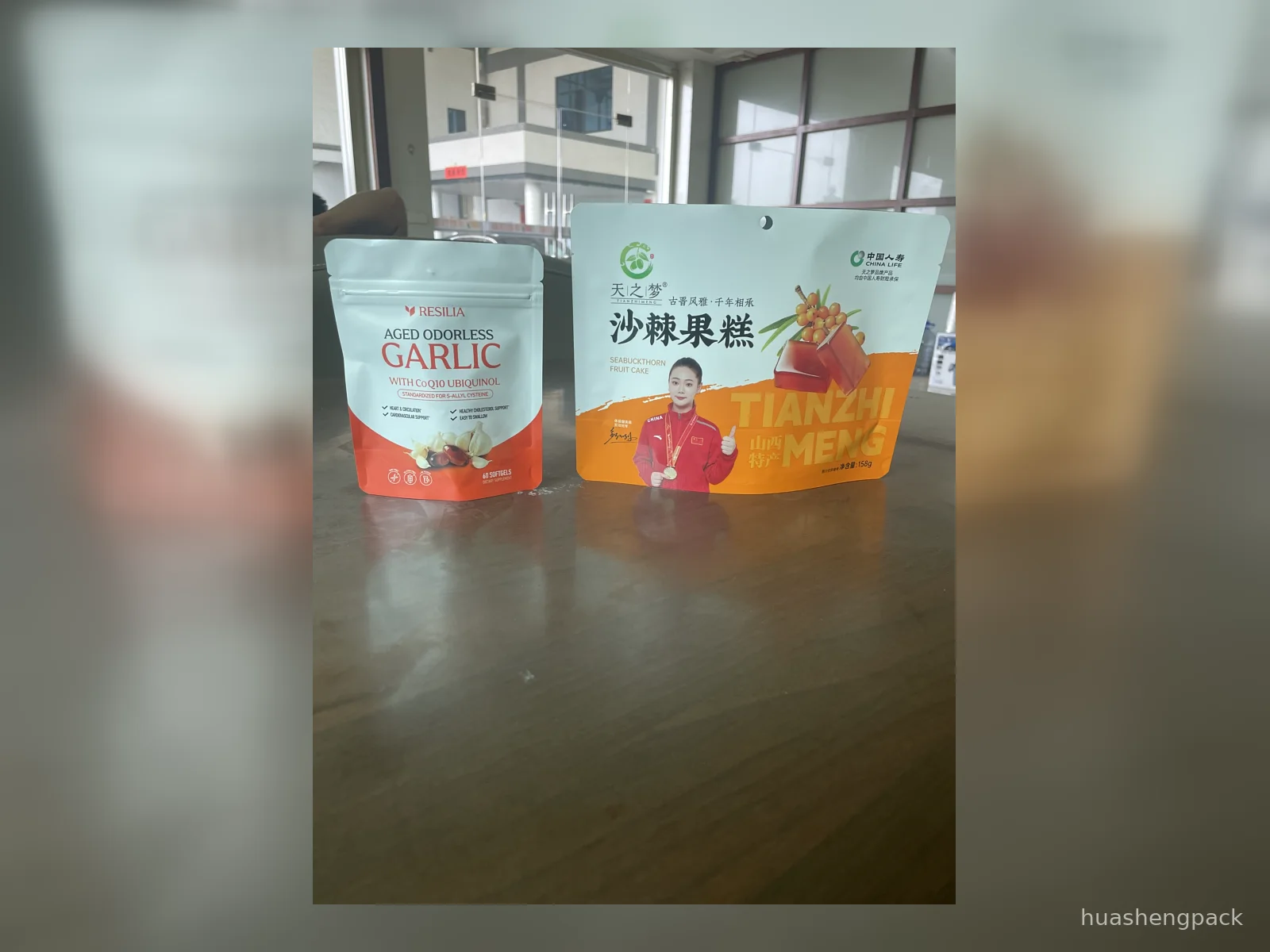
Why spicy chili oils, sambal pastes, vinegar marinades, and tomato sauces delaminate standard pouches—and how oil/acid-resistant adhesives, nylon, and CPP/RCPP sealants stop leaks.
Direct answer
Spicy chili oils, Asian sambal and curry pastes, vinegar-rich marinades, ketchup, and tomato sauces are among the toughest food formulas in flexible packaging. Low-molecular-weight chili oil (capsaicin), acetic acid, citric acid, and aromatic essential spice oils migrate relentlessly through ordinary LDPE sealants, attack standard lamination adhesives, stain outer white layers orange-red, and split side seams on retail shelves. Engineering sauce pouches right from the start saves brands from messy recalls.
Contents
Evidence-reviewed technical guide
Evidence-reviewed technical guide
2026-11-26 · Huasheng Packaging Technical Editorial Review
Evidence scope
Applies to B2B custom flexible packaging specification review for sauce & chemical compatibility projects sourced from direct gravure converting plants.
Scope and limitations
General engineering bands and procurement guidelines do not replace filled-pack shelf-life testing, machine compatibility trials, or destination-market regulatory review.
Key takeaways
- How Chili Oils and Organic Acids Attack Ordinary Laminated Film From the Inside Out
- Proven Laminate Engineering for Oily, Spicy & Acidic Sauces
- Sauce Formula Brief to Share Before Quoting Condiment Pouches or Roll Film
How Chili Oils and Organic Acids Attack Ordinary Laminated Film From the Inside Out
Unlike dry snacks, hot oils, vinegar, lemon juice, and spicy paste aromatics act as slow chemical solvents. Over weeks on warm warehouse shelves, acidic and spicy oil fractions permeate microscopic amorphous regions in standard low-density PE, reach the adhesive bond line between PE and aluminum foil/VMPET, and break down weak adhesives—producing visible bubbles, tunneling delamination, aluminum-layer pinholing (from high acid/salt contact), and weakened heat seals.
Four Sauce Packaging Errors That Cause Post-Launch Delamination
First, ordering standard dry-snack solventless adhesives for hot-filled or spicy-oily pastes instead of specifying dedicated chemical-resistant dry-lamination or retort-grade adhesive systems. Second, placing acidic tomato/vinegar sauce in direct proximity to thin aluminum foil with too thin an inner PE sealant—organic acids and salt can slowly corrode aluminum foil if the inner sealant layer is overly thin or punctured by spice seeds. Third, filling hot sauces (75°C–95°C) or oily condiments into standard LDPE instead of heat- and oil-tolerant CPP, RCPP, or specialized metallocene LLDPE sealants that weld cleanly even if trace oil smears touch the sealing jaws. Fourth, skipping a 2–4 week warm-chamber formula compatibility aging test on unprinted trial bags before engraving print cylinders.
Proven Laminate Engineering for Oily, Spicy & Acidic Sauces
Build chemical resilience into every layer: (1) Ambient / Cold-Fill Oily & Spicy Sauces (chili oil, dressings, marinades, sambal sachets) — `PET / PA / oil-resistant CPP or specialized LLDPE` (clear) or `PET / AL / PA / CPP or thick specialized PE` (opaque barrier), incorporating nylon (PA) for drop toughness and thicker inner sealant gauge to buffer foil against acid/salt contact; (2) Hot-Fill, Pasteurized & Retort Curry/Sambal Pastes — dedicated high-temperature chemical-resistant retort adhesive + `PET / AL / PA / RCPP` (or clear microwaveable `AlOx-PET / PA / RCPP`) validated through your actual cook temperature; (3) Spout Sizing for Chunky Pastes — pick 13 mm–16 mm+ spouts (or wide tear-top 3-side-seal/stand-up sachets) matched cleanly to chili flakes and viscosity; and (4) Oil-Contamination Sealant Tuning — choose sealants engineered to weld through trace oil smears at high filling speeds.
Formula-First Compatibility Discipline at Huasheng Packaging
At Huasheng Packaging (ISO 22000:2018, Chaozhou), we ask about exact oil content, spice profile, pH acidity, and fill temperature before quoting any sauce pouch or condiment roll film. Separating chemical- and retort-grade adhesives from dry-snack production—and providing unprinted trial pouches for your warm-chamber aging check—eliminates blind delamination risks.
Sauce Formula Brief to Share Before Quoting Condiment Pouches or Roll Film
Include six clear details in your RFQ: (1) exact sauce/paste type (chili oil, sambal, curry, vinegar marinade, ketchup, soy/oyster sauce) and approximate oil/acid/salt profile, (2) filling temperature and any post-fill pasteurization or autoclave retort step, (3) format (3-side seal sachet, stand up pouch, spout pouch, or liquid VFFS roll film) and net fill volume (ml / g), (4) presence of solid chunks/chili seeds (affecting spout bore diameter or puncture gauge), (5) clear vs. opaque foil/VMPET barrier preference, and (6) SKU count and quantity per SKU.
Related Products
Related Applications
Related Packaging Guides
- Spout Pouch Cap & Fitment Selection Guide: Screw Caps, Flip-Tops and Anti-Choke Safety Caps
- Working Backward from Retail Launch: Realistic Custom Packaging Production & Transit Planning
- Easy-Peel Cup & Tray Lidding Film Sourcing Guide for Jelly, Yogurt & Ready-Meal Lines
Claim-to-source evidence matrix
| Reviewed claim | Support | Sources | Boundary |
|---|---|---|---|
| Final flexible packaging specifications require confirming product chemistry, barrier needs, dimensions, and filling conditions before bulk production. | contextual | [1], [3] | Engineering review boundary prior to cylinder engraving or commercial conversion. |
| Seal integrity and laminate suitability should be verified on representative samples using actual product and sealing equipment. | direct | [2] | Quantitative seal testing and line trials supersede nominal film descriptions. |
| Huasheng Packaging operates integrated 9-color gravure printing, lamination, and pouch converting in Chaozhou under ISO 22000:2018 (007FSMS2300214). | direct | [3], [1] | Factory capability and active management-system scope; product-specific export compliance confirmed per order. |
Authoritative References
- ISO 22000:2018 Food safety management systems · International Organization for Standardization (ISO) · standard
Food-contact packaging production management relies on documented food-safety management controls and traceability. - ASTM F88/F88M-23 Standard Test Method for Seal Strength of Flexible Barrier Materials · ASTM International · standard
Flexible pouch and roll-film heat-seal performance should be verified quantitatively rather than assumed from film appearance. - Huasheng Packaging Chaozhou In-House Converting & Quality Control Overview · Huasheng Packaging · internal-evidence
Describes Chaozhou in-house 9-color gravure printing, lamination, slitting, pouch converting, and ISO 22000:2018 scope.
Frequently Asked Questions
Why does spicy red chili oil sometimes turn the outside of a pouch orange or make layers separate?
Hot chili oil components migrate slowly through thin standard LDPE and soften ordinary adhesives. Upgrading to oil-resistant CPP/RCPP or thicker specialized sealants paired with chemical-resistant dry-lamination adhesives prevents migration and delamination.
Can vinegar or acidic tomato sauce corrode aluminum foil inside a pouch?
Over long warm storage, strong acids and high salt can attack aluminum foil if the inner sealant is too thin or cracked. Using an adequate inner RCPP/PE sealant thickness, nylon reinforcement, and acid-resistant adhesive protects the foil cleanly.
Should chunky sambal or chili paste use a spout pouch or a tear-open flat/stand-up pouch?
Smooth sauces pour cleanly through 13 mm–16 mm spouts, while very chunky pastes containing whole seeds or shallots often dispense more cleanly through wider 16–22 mm spouts or laser-scored easy-tear stand-up/flat pouches.
How should we test sauce pouch compatibility before ordering bulk printed bags?
Fill unprinted commercial-laminate trial pouches with your real sauce at actual filling temperature, seal them, and age them in a warm chamber (40°C–50°C for 2–4 weeks) checking for delamination, swelling, discoloration, and seal-strength retention.
Do you also supply liquid sachet roll film for single-serve chili oil and seasoning packets?
Yes. We manufacture oil-resistant PET/AL/CPP, PET/PA/PE, and PET/VMPET/PE liquid sachet rollstock engineered for high-speed vertical condiment fillers.

About Huasheng
In-house 9-color gravure printing, solventless lamination, slitting, and pouch converting across stand up pouches, spout pouches, retort bags, coffee bags, and automatic rollstock film.
A legacy of quality in flexible packaging since 1997.
1997 · 6,880 m²
Chaozhou · Guangdong · China
Longshewei, Neipan Management District, Dongfeng Town, Chao'an District, Chaozhou City, Guangdong Province, China