Why Same Price Packaging Bags Can Have Different Quality
Huasheng Packaging Technical Content Review · Published:
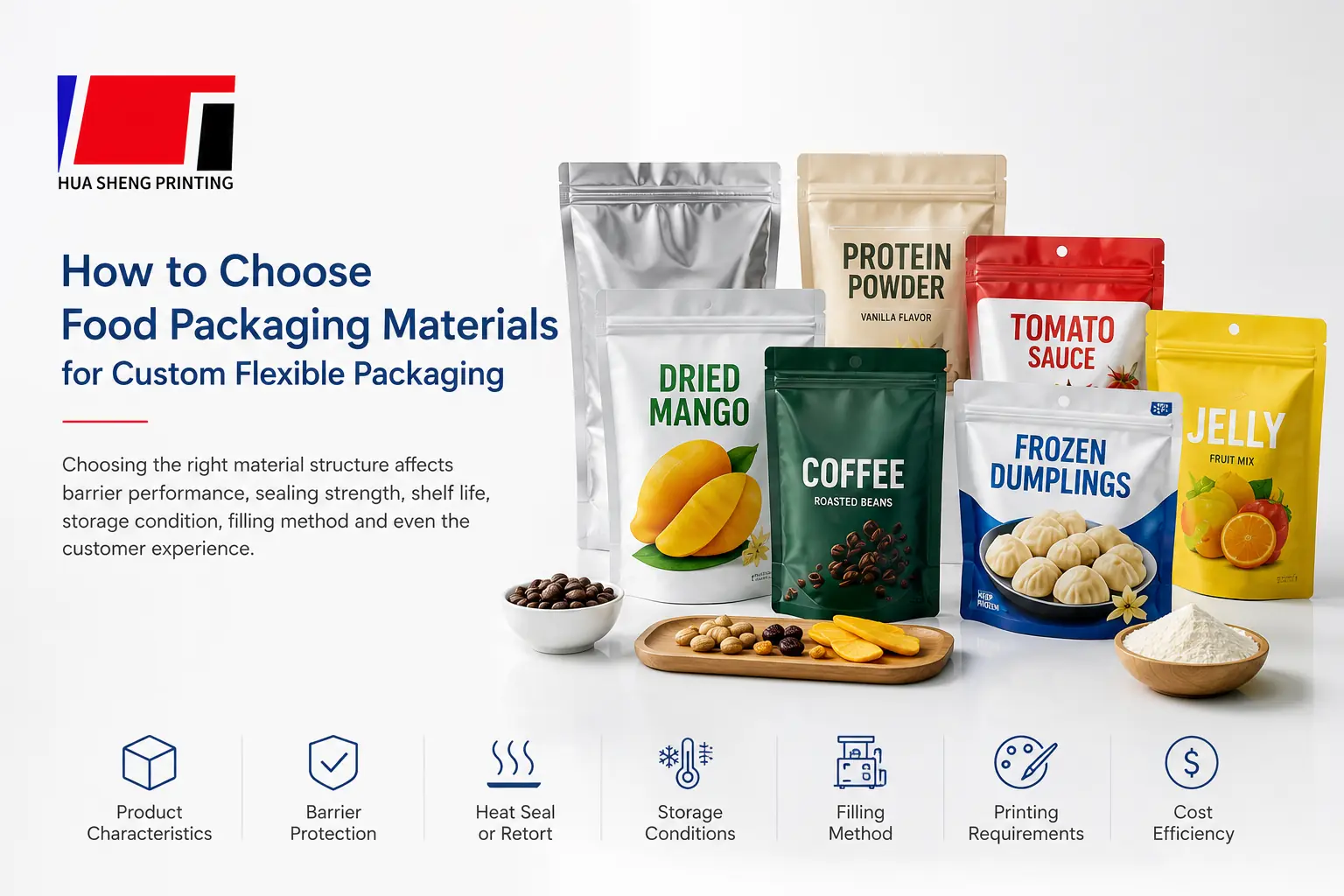 Technical guide visual for Why Same Price Packaging Bags Can Have Different Quality.
Learn why custom packaging bags with the same price may have different quality, including material structure, thickness, printing, lamination, sealing, hidden costs and supplier comparison.
Direct answer
Many packaging buyers start their supplier search by comparing unit prices. It is a natural starting point, but in custom flexible packaging, the same quoted price does not always mean the same final product. Two suppliers may quote a similar number, but the actual bags you receive can differ in material structure, thickness, printing accuracy, sealing strength, size tolerance and overall reliability. This article explains why packaging quality can vary even at similar prices, what hidden factors affect the final result, and how buyers can compare suppliers more effectively.
Evidence-reviewed technical guide
2026-08-21 · Huasheng Packaging Technical Content Review
Evidence scope
Like-for-like commercial scope, component evidence and method-specific seal evidence.
Scope and limitations
The sources do not rank suppliers, define quality grades or establish a fair market price.
Key takeaways
- Normalize technical and delivery scope before comparing price.
- Evidence must map to the actual component and package version.
- Unknowns remain explicit until validated.
Same Material Name Does Not Always Mean Same Structure
When a supplier says "PET/PE structure," that is only the starting point. The same structure name can hide important differences: film thickness in microns, the grade and source of raw materials, whether the PE layer is standard or modified for specific sealing requirements, the actual barrier performance of the structure, and whether the structure has been tested with the buyer specific product. A PET/PE pouch for dry snacks and a PET/PE pouch for liquid sauce may look similar on a quotation sheet, but the material specifications, testing requirements and production controls are different. Buyers should ask suppliers to explain what each layer does, what thickness is proposed, and why the recommended structure fits their product. A supplier who cannot clearly explain the material structure may not fully understand the product requirements.
Thickness and Weight Affect Cost and Performance
Film thickness directly affects material cost, pouch stiffness, sealing performance and puncture resistance. Two pouches of the same size but different thicknesses can have different unit costs and different performance. Thinner film saves material cost but may reduce pouch stiffness, weaken sealing strength or increase the risk of puncture during transport. Thicker film may improve stiffness and puncture resistance, but if it exceeds what the packing machine or product requires, it may add unnecessary cost or cause sealing difficulty. The right thickness depends on the product type, filling weight, pouch format, storage conditions and transport handling. There is no single "best" thickness for all applications. A professional supplier should discuss thickness options based on the buyer actual usage, not simply offer the cheapest or thickest option.
Printing Quality Is More Than the Number of Colors
When comparing gravure-printed packaging, buyers often focus on the number of printing colors. But printing quality involves many factors beyond color count. Key printing quality factors include: print registration — how accurately each color layer aligns with others. Poor registration causes blurry text and misaligned graphics. Color consistency — whether the same color stays consistent across the entire production run. Ink adhesion — whether the ink bonds properly to the film surface without peeling or rubbing off. Text sharpness — whether small text, barcodes and nutrition labels are clear and readable. Surface finish — whether the matte, gloss or soft-touch finish matches the approved sample. Artwork checking — whether the supplier reviews the artwork file for print feasibility before cylinder engraving. A supplier who checks artwork carefully and explains potential printing issues before production helps avoid costly reprints and delays.
Lamination and Curing Affect Long-term Stability
Lamination evidence must be scoped to the exact construction and project. Review layer identity, adhesive or coating system, process record, appearance and any relevant converted-sample tests without asserting that a generic curing time, temperature or equipment list guarantees bond, odour, food safety or long-term stability. If the product, market or construction makes migration or residual chemistry relevant, require an appropriate report whose specimen, conditions and limitations match the project.
Sealing and Pouch Making Tolerance Matter for Machine Users
For buyers who use automatic packing machines or need consistent pouch performance, sealing quality and dimensional tolerance are critical. Key factors in sealing and pouch making: Heat sealing strength — the seal must remain intact during filling, transport and shelf display. Weak seals cause leakage, contamination and product waste. Pouch dimension tolerance — pouches that vary in width or height can cause feeding problems on automatic packing lines. Zipper position and function — zipper alignment and sealing quality affect consumer experience. Spout position and welding — spout placement accuracy and welding strength affect leakage risk for liquid pouches. Bottom gusset folding — for stand-up and flat bottom pouches, gusset accuracy affects shelf stability. Roll film slitting accuracy — for roll film used on VFFS/HFFS machines, slitting width and edge quality affect machine performance. A supplier with in-house pouch making and slitting capability can control these factors more directly than one that outsources these steps.
A price comparison is valid only after the technical and commercial scopes match. Normalize pouch drawing, usable dimensions, exact component identities, nominal thickness by layer, printing and finish, closure or fitment, tolerances, inspection plan, sample stage, delivery rule and exclusions. A similar unit price can hide a different specimen, test condition, cylinder or setup scope, logistics responsibility or change-control obligation. ICC Incoterms allocate delivery tasks, costs and risks, but they do not replace the full specification or contract.
Ask for evidence that maps to the actual risk. Barrier reports must name the tested structure and conditions; seal results must state the method and failure mode; food-contact documents must match each component and intended use. These records still do not prove every filled package, machine or shelf-life outcome. The action is a versioned bid-comparison sheet that marks supplied evidence, missing evidence, assumptions and items requiring a sample or line trial before approval.
Related Products
Related Packaging Guides
Claim-to-source evidence matrix
| Reviewed claim | Support | Sources | Boundary |
|---|
| Incoterms allocate delivery tasks, costs and risks. | direct | [1] | They do not replace a technical specification or full contract. |
| Food-contact evidence is component- and use-specific. | direct | [2] | A generic declaration does not approve every construction. |
| Seal strength is a method-specific process output. | direct | [3] | It is not a complete package-quality score. |
JSON · CSV
Authoritative References
- Incoterms 2020 Rules · International Chamber of Commerce · technical-organization
Incoterms allocate delivery tasks, costs and risks between buyer and seller - Determining the Regulatory Status of Components of a Food Contact Material · U.S. Food and Drug Administration · government
Food-contact review depends on each component identity, authorization and limitation - ASTM F88/F88M-23: Seal Strength of Flexible Barrier Materials · ASTM International · standard
Seal-strip strength is a method-specific output with failure-mode context
Frequently Asked Questions
Why can the same packaging bag price lead to different quality?
Material thickness, structure details, printing control, lamination quality, curing time, sealing strength, dimensional tolerance and packing methods may all differ between suppliers, even when the unit price looks similar. Buyers should check what is included in the quotation beyond the unit price.
Is cheaper packaging always lower quality?
Not always. But a lower price may reflect thinner materials, fewer quality checks, faster curing times or outsourced production steps. Buyers should understand what drives the cost rather than only comparing the final number. Ask the supplier to explain the material structure, production process and quality control behind the price.
How should I compare flexible packaging suppliers?
Compare not only unit price but also material explanation clarity, artwork checking process, in-house production capability, quality control detail, sample support, communication responsiveness and willingness to discuss risks before production. A supplier who asks detailed questions about your product before quoting is generally more reliable than one who gives a price immediately without understanding your needs.
Why does material structure matter so much?
The material structure determines barrier performance, sealing compatibility, puncture resistance, shelf life, machine compatibility and final cost. Two structures may look similar on paper but perform differently depending on thickness, layer quality and production process control.
What hidden costs should buyers watch for in custom packaging?
Common hidden costs include cylinder engraving fees, sample charges, material change costs, reprinting due to artwork issues, shipping damage from inadequate packing, production delays from unclear specifications, and quality failure costs from insufficient testing. Discuss these factors with the supplier before confirming the order.
What information should I send before requesting a packaging quotation?
Send your product type, filling weight, preferred bag size or roll width, material structure if known, thickness requirement if known, packing machine type, estimated quantity, printing colors, artwork file if available, sample photo if available, target market, and shelf life or storage condition requirements.