Custom Packaging MOQ, Sample Policy and Lead Time Guide
Huasheng Packaging Technical Content Review · Published: · Updated:
 MOQ, sample route and production timing depend on the agreed specification and printing process.
Understand custom packaging MOQ, sample policy, sample lead time and production lead time by material, artwork, printing setup, accessories and order planning.
Direct answer
Custom packaging MOQ and sample lead time depend on the complete specification, not pouch size alone. Format, laminate, printing setup, artwork status, accessories, quantity by design and the purpose of the sample all affect the practical order range and schedule.
Evidence-reviewed technical guide
2026-09-01 · Huasheng Packaging Technical Content Review
Evidence scope
Project input readiness, distinct sample purposes, dependency-based scheduling and quotation handoff.
Scope and limitations
The sources do not set Huasheng commercial MOQ, price, sample charge or lead time. Those remain current project and approved-policy decisions.
Key takeaways
- MOQ review requires a complete project input set.
- Different samples approve different questions.
- A schedule remains conditional until upstream approvals and delivery scope are fixed.
What Determines Packaging MOQ and Sample Lead Time?
A stock pouch sample, material sample, printed layout proof and production-representative sample answer different questions and require different preparation. MOQ can also change with film structure, pouch or roll-film format, print cylinders, zipper or valve, dimensions, finish and quantity per artwork.
Ask for a project-specific MOQ range and sample route after the core specification is aligned. Lead time should be separated into sample preparation, technical and artwork approval, material readiness, printing, lamination where applicable, conversion and inspection rather than presented as one universal number.
Separate three decisions that are often collapsed into one question. Production planning asks what material, web or pouch geometry, artwork and conversion setup are required. Commercial review asks which quantity per size and artwork is practical under the current approved policy. Sample planning asks which unknown must be resolved before production. The same small pouch can therefore have different preparation work when the laminate, print design, closure, equipment or evidence requirement changes. A public piece or kilogram number is not a reliable substitute for that project record.
Do Not Treat Every Packaging Sample as Equivalent
Stock samples can help check size and handling, material samples can compare feel or laminate direction, printed mockups can review layout, and production-representative samples can support line or performance checks. Define the question that each sample must answer before selecting the route.
Do not treat a stock sample, blank converted pouch, printed mock-up, laboratory seal specimen and production-representative pack as equivalent. Each answers a different question. A visually attractive mock-up may not use the final material or conversion route. A laboratory heat-seal relationship is useful screening information but does not approve the buyer’s line, product contamination or finished package. Likewise, a material declaration must identify the actual component and intended use; it does not turn an early sample into a complete compliance or shelf-life decision.
Reduce Uncertainty Before Scheduling
Align format, dimensions, structure, thickness, artwork, colors, features and acceptance points before requesting a firm range. Compatible variants may share some material planning, but separate artwork, cylinders or setup can still affect quantity and timing by design.
Use a sample ladder. Begin with governed photographs or existing samples only for format and visible-feature discussion. Move to an empty structural sample for dimensions, opening and closure. Use a printed proof for artwork, colour targets, coding and registration expectations. When risk justifies it, prepare a production-representative construction and run filling, sealing, handling or method-specific checks. State in writing what each stage can approve, what it cannot approve, who supplies product or artwork and whether a later specification change invalidates the result.
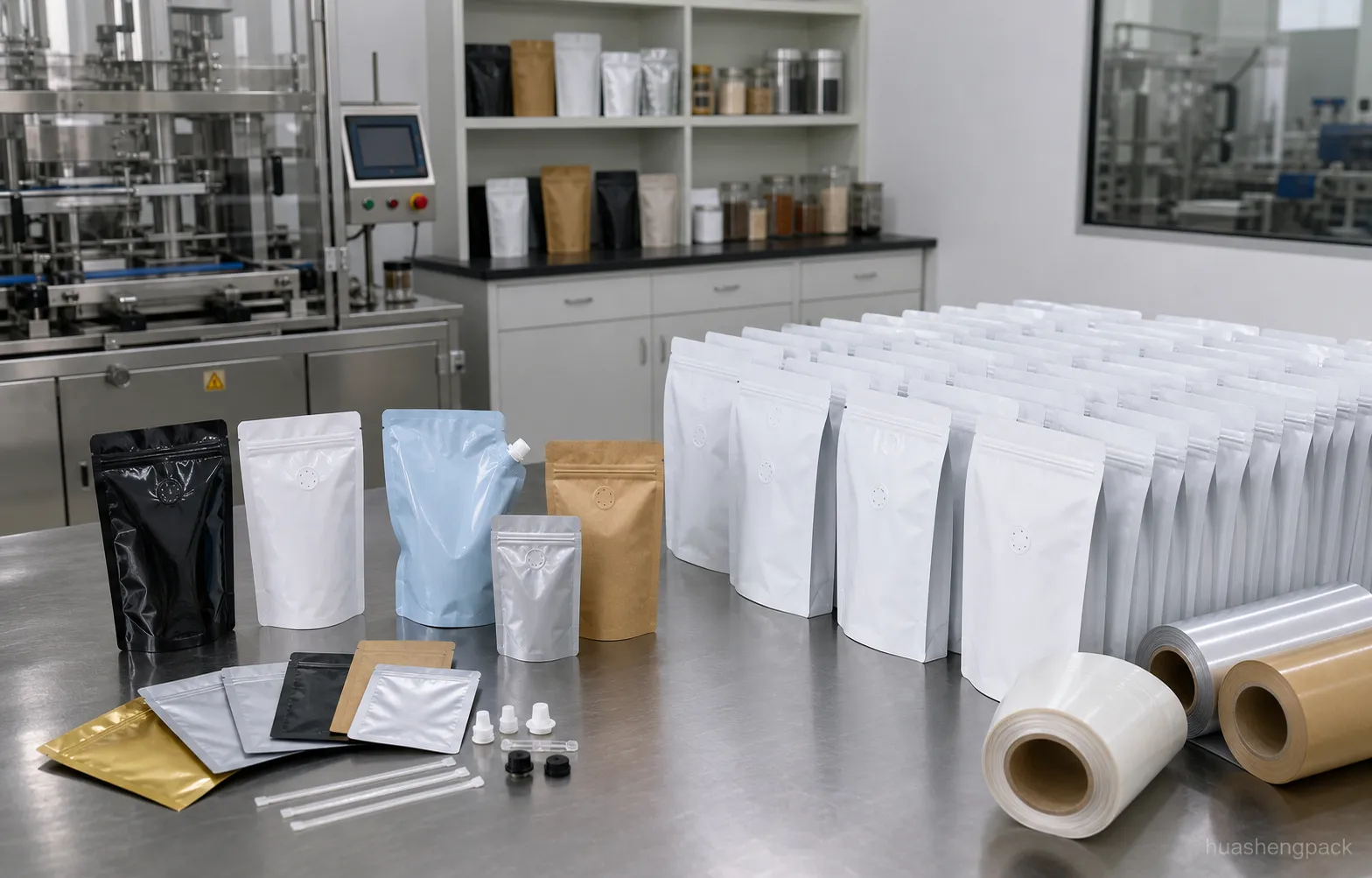 Sample purpose and production quantity should be defined separately.
Plan Lead Time by Milestones
Track specification confirmation, artwork and prepress approval, material readiness, printing, lamination and curing where applicable, conversion, inspection and packing. Dates remain estimates until technical approvals and production capacity are confirmed.
Build the timing estimate from dependencies rather than one promised number. Record specification closure, artwork and prepress approval, material and component readiness, sample preparation, buyer review, printing, lamination and conditioning where applicable, conversion, inspection, packing and the agreed delivery basis. Incoterms allocate named delivery tasks, costs and risks, but they do not replace the quotation or define production duration. Dates should carry an owner, assumption and status, and should be refreshed when an upstream approval or material decision changes.
Information for a Useful MOQ and Timing Estimate
Provide product, format, finished dimensions or reel data, material and thickness if known, printing and finish, accessories, quantity by SKU, artwork status, sample objective, testing needs and preferred readiness window.
Provide the product, market, pouch or roll-film format, finished dimensions or complete reel handoff, exact structure and thickness if already approved, closure or fitment, artwork count, colour and finish, quantity per size and design, equipment, sample objective, validation needs, delivery destination and target readiness window. Mark every unknown explicitly. Ask the factory to return the current project-specific quantity range, sample route, excluded items and dependency-based schedule. Keep any approved commercial threshold in the controlled quotation record rather than converting it into a permanent public promise.
Before production release, record the approved sample, specification revision, evidence reviewed, unresolved exceptions, decision owner and the exact change conditions that require a new review.
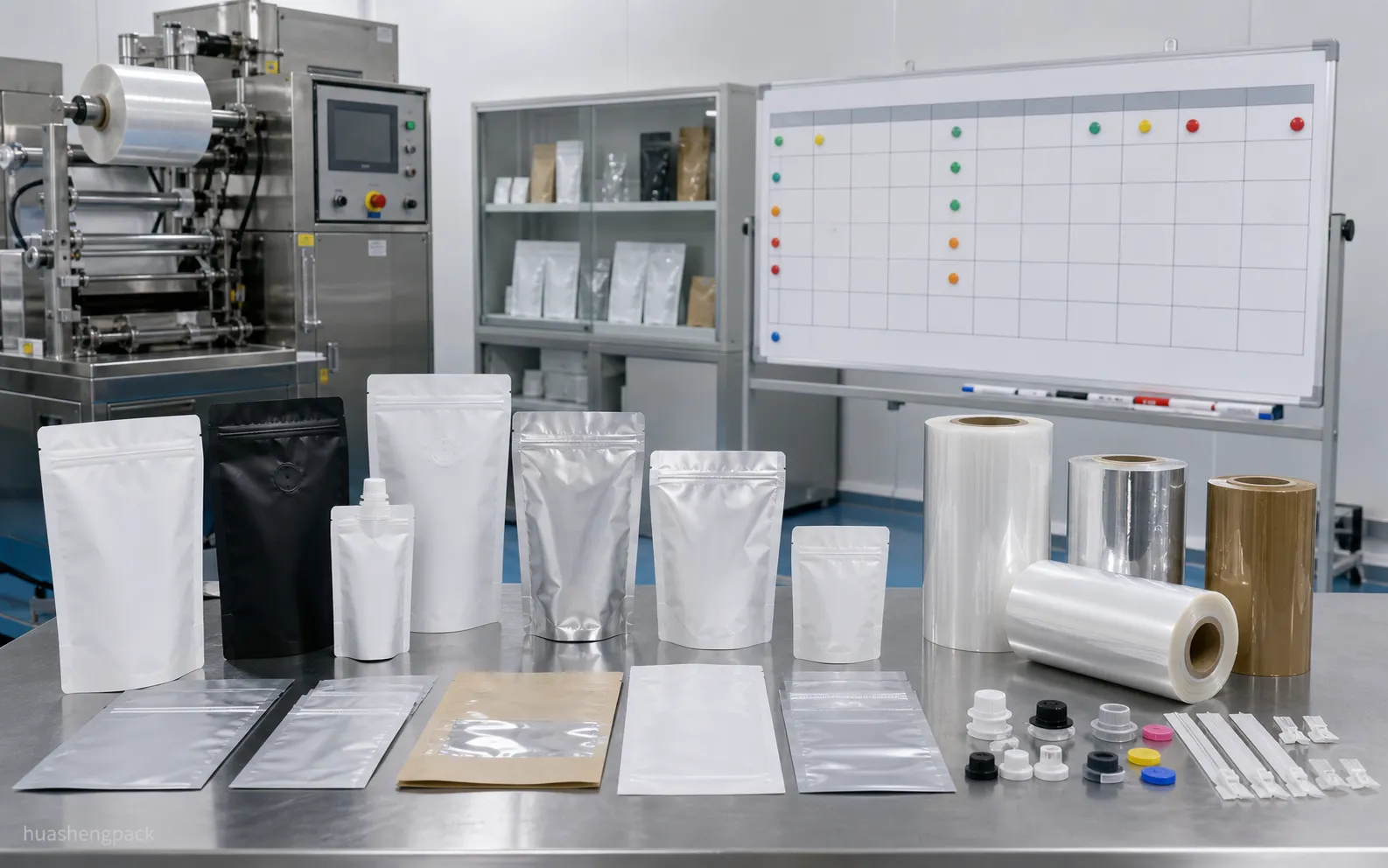 Production planning starts after specification, artwork and sample responsibilities are clear.
Related Products
Related Packaging Guides
Claim-to-source evidence matrix
| Reviewed claim | Support | Sources | Boundary |
|---|
| Product, package, film, reel, sealing and required-output data are linked application inputs. | direct | [1] | The questionnaire does not calculate a supplier MOQ or guarantee line compatibility. |
| Food-contact review depends on component identity, authorization, specifications and intended-use limits. | direct | [2] | This does not establish a sample route, production quantity or finished-package performance. |
| Laboratory heat-seal work provides material relationships under controlled conditions. | direct | [3] | It is a starting point and does not replace production-equipment validation. |
| Incoterms allocate delivery tasks, costs and risks between seller and buyer. | direct | [4] | They do not define production lead time or replace the complete contract. |
JSON · CSV
Authoritative References
- VFFS Application Questionnaire · ROVEMA North America · manufacturer-data
Application review connects product, bag, film, reel, sealing and required-output inputs - Determining the Regulatory Status of Components of a Food Contact Material · U.S. Food and Drug Administration · government
Component identity, authorization, specifications and intended-use limits belong in review - ASTM F2029-16(2021): Laboratory Heat Seals for Flexible Barrier Materials · ASTM International · standard
Laboratory heat-seal relationships are starting data rather than production approval - Incoterms 2020 Rules · International Chamber of Commerce · technical-organization
Incoterms allocate delivery tasks, costs and risks
Frequently Asked Questions
What is the MOQ for custom printed packaging?
There is no universal number. Format, dimensions, laminate, printing setup, accessories, quantity per artwork and production planning determine the practical range.
What does a packaging sample policy normally define?
It should identify the sample type, purpose, supplied specification, artwork level, cost responsibility, timing estimate and what the sample can or cannot approve.
How long does a packaging sample take?
Timing depends on whether the request is for an existing sample, material reference, structural sample, printed proof or production-representative sample. Confirm the route after specifications and artwork readiness are known.
Can different artworks share one MOQ?
They may share compatible material planning, but separate artwork, cylinders, colors or setup can still affect quantity and cost by design.
When does production lead time start?
The commercial definition should be agreed, but scheduling normally depends on approved specifications, artwork, required arrangements and material readiness.
Does Huasheng Packaging provide free design or a seven-day digital proof?
No. Huasheng Packaging does not provide free design services and does not promise a universal seven-day digital proof. Artwork support, sample method, cost and timing are confirmed for the specific project; production uses gravure printing rather than digital printing.