Custom Bread Packaging Bags and Wicketed Bakery Bags
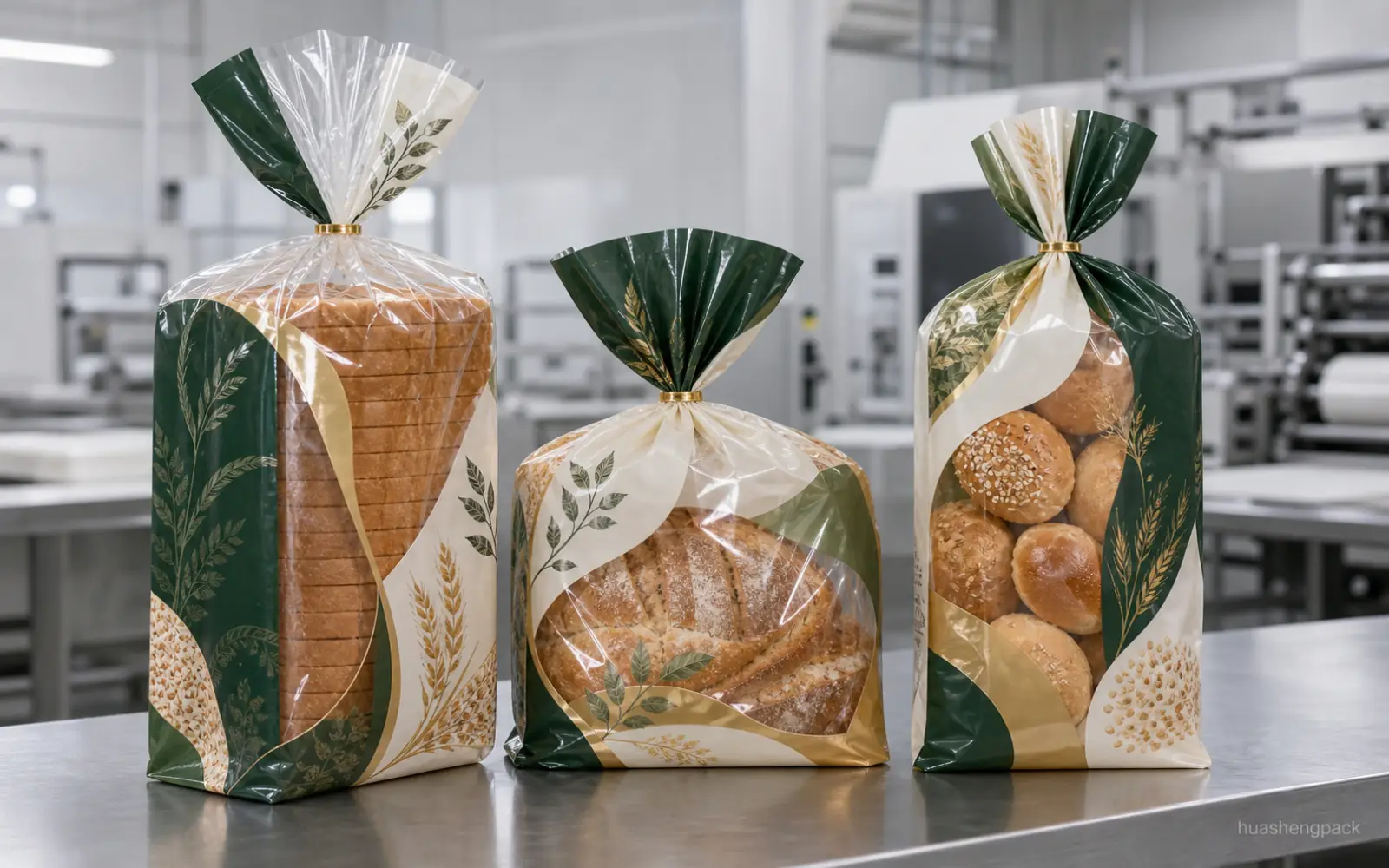
Choose custom bread packaging bags by micro-perforation, wicket dimensions, packing temperature, closure method and bakery bagging equipment.
 Bread Packaging Bags - construction detail
 Bread Packaging Bags - packaging application
 Bread Packaging Bags - sample review
Reference Price
Custom flexible packaging is quoted based on product type, size, material structure, thickness, printing colors and order quantity. Reference price: from US$0.025/pc. Actual quotation may vary by specification. For an accurate quotation, please contact Huasheng Packaging with your size, material, quantity and artwork.
Material Structure Options
Packaging Decision — Start with the bread condition at packing and the intended texture during sale. Soft sliced bread, buns and crusty loaves may require different moisture-release strategies. Compare no perforation, micro-perforation and larger ventilation holes using actual bread, packing temperature, climate and storage trials. For wicketed bags, confirm lip, wicket-hole geometry, block count, bottom style, loading direction, machine pickup and closure method before approving the signed specification.
Application Recommendations
BOPP/CPP (lightweight bakery packaging with good clarity and machinability for automatic bagging). PET/PE (stronger sealing and improved handling for heavier or filled bakery products). Kraft/PET/PE (natural kraft appearance with barrier support for artisan and premium bakery brands). Kraft/VMPET/PE (natural look with improved moisture barrier for extended shelf life). Window film can be discussed according to bag type and printing layout; the final structure should still meet sealing and food packaging requirements.
Window, Perforation and Wicket Options
Sliced bread and toast: BOPP/CPP or PET/PE bags with optional window. Bakery retail bags: Kraft/PET/PE with natural appearance for artisan bakery shops. Pastry and cookie packaging: PET/PE with good sealing and print quality. Bakery gift packs: Kraft/VMPET/PE with window and tin tie closure. Automatic bread bagging lines: BOPP/CPP roll film or premade bags with eye mark. Window bags with tin tie or perforation options can be discussed according to bag type.
Quality Control Points
Moisture and Ventilation Decision — Bread packaging bags do not use one universal ventilation rule. Soft sliced bread and buns commonly prioritize moisture retention. Crusty bread or products packed before they are fully cooled may need controlled ventilation or a validated perforation pattern to reduce trapped condensation and unwanted crust softening. Confirm the bread type, product temperature at packing, target crumb or crust texture, shelf life, storage conditions and line speed before selecting the film and perforation. Validate the final design with packed-product shelf-life testing.
MOQ and Cost Notes
Window Clarity and Anti-Fog Options — A clear window helps shoppers inspect the product, but its final clarity depends on film grade, ink-free window layout, surface finish and converting process. Anti-fog film may be considered when temperature changes or chilled storage could create condensation. It is not required for every bakery product; confirm suitability with a material sample and packing trial.
What to Prepare Before Requesting a Quote
Available pouch, print, fitment and material directions require confirmation against the product, equipment, target market and approved specification; general capability information is not automatic approval for every project.
Quality and Certification
Custom premade pouches are reviewed from 30,000 pieces per size and artwork, subject to final factory approval. Production timing is confirmed against the current factory schedule after the specification and artwork are approved.
Related Products
Bakery product type (sliced bread/buns/crusty bread/pastry), product temperature at packing, desired crumb or crust texture, bag dimensions or roll width, packaging style (premade bag/roll film), ventilation or perforation requirement, window and anti-fog requirement, closure type, material preference, printing colors and artwork, order quantity, shelf life target, storage condition and packing machine information.
Material Structure Options
Food Packaging Roll Film, Kraft Paper Packaging Bags, Stand Up Zipper Pouches, Three Side Seal Pouch.
Material Structure Options
Q: Should bread packaging bags be perforated? A: Not always. The decision depends on bread type, cooling condition, desired texture, condensation risk, storage and packing line; the final pattern should be verified through shelf-life testing. Q: When is anti-fog film useful? A: It may improve visibility where temperature changes can create condensation, but suitability should be confirmed with samples and a packing trial. Q: Can bakery packaging include a clear window? A: Yes. Window design can be discussed according to bag type, material structure and printing layout, while still meeting sealing and food packaging requirements. Q: What film is commonly used for automatic bread bagging lines? A: BOPP/CPP or PET/PE roll film may be considered. Roll width, core size, eye mark, sealing conditions and machine model should be confirmed before production.
Buyer Decision Matrix
- Packaging Decision — Start with the bread condition at packing and the intended texture during sale. Soft sliced bread, buns and crusty loaves may require different moisture-release strategies. Compare no perforation, micro-perforation and larger ventilation holes using actual bread, packing temperature, climate and storage trials. For wicketed bags, confirm lip, wicket-hole geometry, block count, bottom style, loading direction, machine pickup and closure method before approving the signed specification.
- BOPP/CPP (lightweight bakery packaging with good clarity and machinability for automatic bagging). PET/PE (stronger sealing and improved handling for heavier or filled bakery products). Kraft/PET/PE (natural kraft appearance with barrier support for artisan and premium bakery brands). Kraft/VMPET/PE (natural look with improved moisture barrier for extended shelf life). Window film can be discussed according to bag type and printing layout; the final structure should still meet sealing and food packaging requirements.
- Sliced bread and toast: BOPP/CPP or PET/PE bags with optional window. Bakery retail bags: Kraft/PET/PE with natural appearance for artisan bakery shops. Pastry and cookie packaging: PET/PE with good sealing and print quality. Bakery gift packs: Kraft/VMPET/PE with window and tin tie closure. Automatic bread bagging lines: BOPP/CPP roll film or premade bags with eye mark. Window bags with tin tie or perforation options can be discussed according to bag type.
- Moisture and Ventilation Decision — Bread packaging bags do not use one universal ventilation rule. Soft sliced bread and buns commonly prioritize moisture retention. Crusty bread or products packed before they are fully cooled may need controlled ventilation or a validated perforation pattern to reduce trapped condensation and unwanted crust softening. Confirm the bread type, product temperature at packing, target crumb or crust texture, shelf life, storage conditions and line speed before selecting the film and perforation. Validate the final design with packed-product shelf-life testing.
Suitable Applications
Food, beverage, snacks, coffee, pet food, daily chemical, powder, liquid, sauce, frozen products, ready meals, industrial products and more. Suitability depends on material structure, sealing method and packaging machine type.
Material Options
Common structures: PET/PE, PET/VMPET/PE, PET/AL/PE, BOPP/CPP, NY/PE, kraft paper laminates. Selection criteria: barrier requirements (oxygen, moisture, light), sealing method (heat seal, cold seal), shelf life, packaging machine compatibility and cost.
Key Features
Rotogravure printing, eye marks, sealant layers, zippers, tear notches, hang holes, windows, degassing valves, spouts and caps may be evaluated. Capability and suitability are confirmed against the product, format, equipment, target market and approved project specification.
Quality Control
Quality-control items, methods, specimens, conditions, frequency and acceptance criteria must be agreed in the project specification. A public management-system document, factory image or general workflow does not replace a material-, package- or batch-specific test record and release decision.
Buyer Notes
- Provide product type, bag size or roll width — a photo or sample helps quick assessment
- If material structure or thickness is known, include specification
- Number of printing colors and artwork file affect cylinder cost and prepress time
- Packing machine type (VFFS/HFFS/manual) determines roll film vs premade pouch choice
- Target market compliance, China OEM filling requirements or nominated domestic warehouse handover details help confirm the final specification
Related Products
Related Applications
Related Packaging Guides
Frequently Asked Questions
What is the MOQ for custom printed flexible packaging?
Custom premade pouches are reviewed from 30,000 pieces per size and artwork, subject to final factory approval. Production timing is confirmed against the current factory schedule after the specification and artwork are approved.
Can Huasheng Packaging provide samples?
Yes. Existing production samples can be provided for material and workmanship reference. Custom printed samples, structure samples or pre-production samples should be confirmed by project according to artwork, size, material and printing colors. Sample method, timing and cost are confirmed before order placement.
What is the lead time for custom packaging orders?
Custom premade pouches are reviewed from 30,000 pieces per size and artwork, subject to final factory approval. Production timing is confirmed against the current factory schedule after the specification and artwork are approved.
What material structure should I choose?
Material structure depends on product type (dry, oily, frozen, liquid, high-temperature), shelf life requirements and packaging machine type. Common options include PET/PE, PET/VMPET/PE, BOPP/CPP, NY/PE and kraft paper laminates. We can recommend suitable structures based on your product details.
What is the difference between roll film and premade pouch?
Roll film is printed laminated film supplied on rolls for automatic packing machines (VFFS/HFFS), where filling, forming and sealing happen on one machine. Premade pouches are pre-formed bags delivered ready for filling on separate equipment. The choice depends on your production line and product format.