Flexible Packaging Micron Thickness Guide (80 µm to 150 µm+): Matching Gauge to Weight & Barrier
Huasheng Packaging Technical Content Review
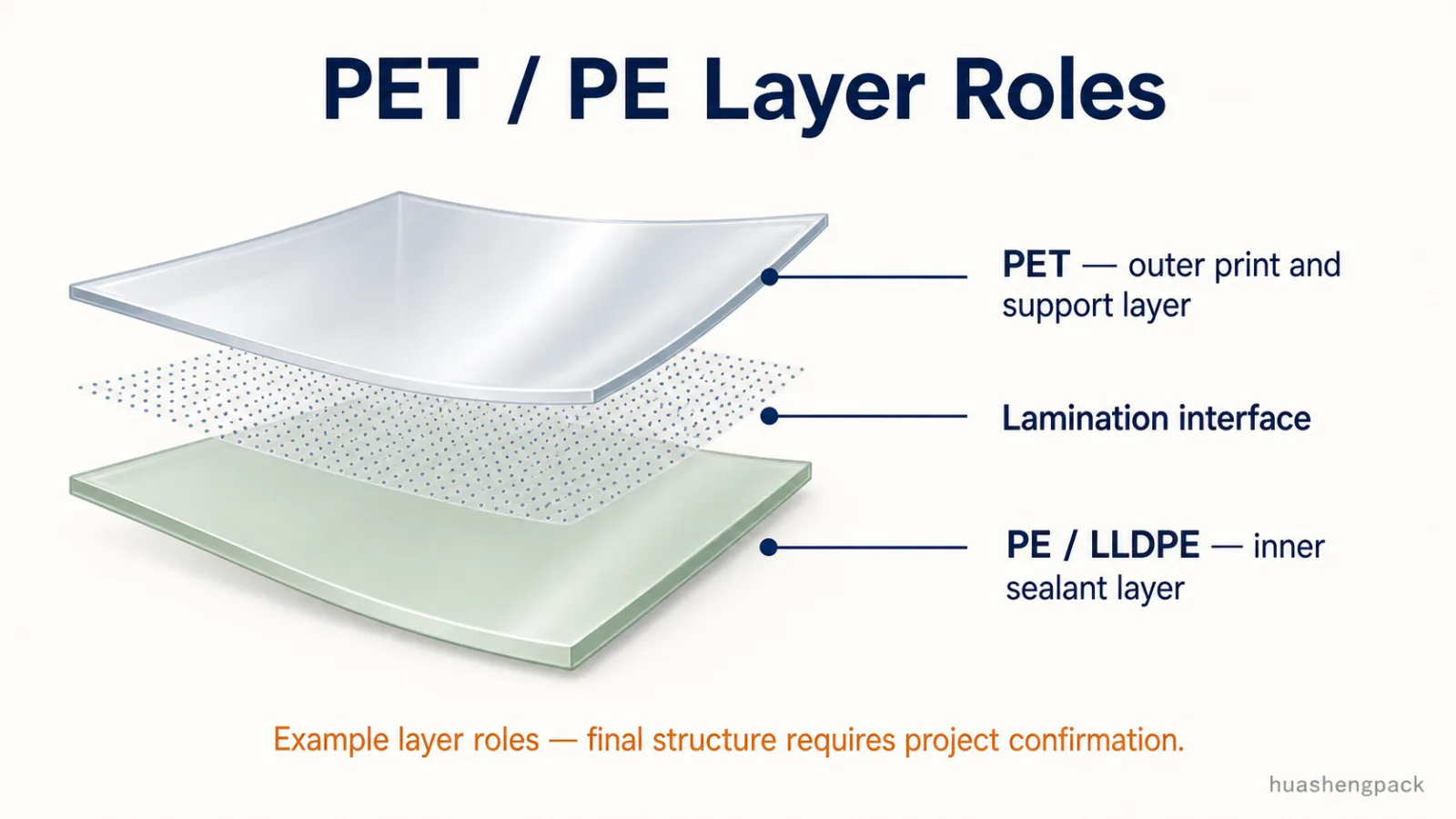
How to choose flexible packaging thickness in microns (µm) or mils: practical gauge ranges for sachets, stand up pouches, coffee bags, heavy pet food, and liquid spout pouches—plus why thicker isn't always higher barrier.
Direct answer
One of the most frequent questions overseas buyers ask on WhatsApp and email is 'How many microns thick should my pouch be—100 mic, 120 mic, or 150 mic?' Specifying too thin a laminate causes floppy retail pouches, crumpled gussets, and punctured bags in transit; specifying unnecessarily heavy thickness wastes raw resin money on every bag and can even slow down heat-sealing speeds on automatic lines. Here is a practical micron-and-mil reference guide explaining how thickness interacts with fill weight, stiffness, and barrier performance.
Contents
Evidence-reviewed technical guide
Evidence-reviewed technical guide
2026-11-26 · Huasheng Packaging Technical Editorial Review
Evidence scope
Applies to B2B custom flexible packaging specification review for thickness & gauge engineering projects sourced from direct gravure converting plants.
Scope and limitations
General engineering bands and procurement guidelines do not replace filled-pack shelf-life testing, machine compatibility trials, or destination-market regulatory review.
Key takeaways
- Thickness (Microns / Mils) vs. Barrier Chemistry: The Most Common Buyer Myth
- Typical Single-Wall Micron Reference Bands by Format & Fill Weight
- How to Lock Your Ideal Micron Thickness Fast Without Guessing
Thickness (Microns / Mils) vs. Barrier Chemistry: The Most Common Buyer Myth
One mil equals 25.4 microns (µm)—so a 4-mil pouch is roughly 100 µm per single film wall, and a 5-mil pouch is roughly 125–130 µm. Critically, total micron thickness governs mechanical stiffness, upright standing posture, and puncture/tear resistance—NOT oxygen barrier. A 150 µm clear PET/PE pouch feels thick and sturdy in hand, yet still lets oxygen pass through far faster than a thinner 100 µm PET/AL/PE aluminum-foil or PET/VMPET/PE metallized laminate. Always choose barrier layers for shelf life first, then tune PE/PA micron thickness for mechanical strength and feel.
Four Thickness Selection Errors That Hurt Cost or Performance
First, ordering ultra-thin 70–80 µm laminates for upright retail stand up pouches—while 50–70 µm works cleanly for flat VFFS chip pillow bags and single-serve sachets, stand up pouches need sufficient wall stiffness (commonly starting around 100–130 µm depending on size) to stand crisply on supermarket shelves without slumping. Second, confusing single-wall thickness with double-wall thickness—always confirm whether a quoted micron number refers to one wall (the industry standard) or front + back combined. Third, piling extra PE thickness onto a sharp-product or liquid pouch instead of adding a 15 µm biaxially oriented nylon (PA) layer—15 µm of nylon often delivers far higher puncture and drop toughness than adding 40 µm of ordinary PE. Fourth, pushing thickness above 160–180 µm on fast VFFS/HFFS machines without verifying jaw dwell time and heat-transfer capacity.
Typical Single-Wall Micron Reference Bands by Format & Fill Weight
Use these typical single-wall starting bands as engineering references (exact final thickness is always confirmed against product sharpness, barrier structure, and sample testing): (1) 45 – 75 µm (~1.8 – 3.0 mil) — High-speed VFFS/HFFS pillow bags for chips, biscuits, confectionery flow wraps, and small lightweight single-serve sachets; (2) 80 – 105 µm (~3.2 – 4.1 mil) — Flat three-side seal bags (50 g–250 g), small stand up pouches (50 g–150 g), drip-coffee outer sachets, and stick packs; (3) 110 – 135 µm (~4.3 – 5.3 mil) — Commercial workhorse range for mainstream retail stand up zipper pouches (150 g–500 g), 250 g–500 g flat-bottom coffee bags, standard 200 ml–500 ml spout pouches, and foil retort pouches; (4) 140 – 170 µm (~5.5 – 6.7 mil) — Heavy retail packs (1 kg–2.5 kg coffee, protein powder, pet kibble), heavy-duty 1 L–2 L liquid detergent/sauce spout pouches (with PA layer), and sharp frozen seafood/vacuum bags; and (5) 175 – 220+ µm (~7.0 – 8.5+ mil) — Heavy multi-kilogram pet-food/agrochemical bags (3 kg–10 kg) and 2 L–5 L bulk handle refill spout pouches requiring maximum drop resilience.
How Consistent Gauge Control Protects Both Shelf Feel and Machine Speed
Wild thickness variation across a roll causes uneven heat seals, warped pouches, and erratic roll-film yield. Inside Huasheng Packaging's ISO 22000:2018 Chaozhou plant, verified incoming film-roll thickness checks and controlled lamination curing ensure your approved sample feel—whether crisp matte retail stiffness or heavy-duty nylon drop toughness—stays uniform across commercial shipments.
How to Lock Your Ideal Micron Thickness Fast Without Guessing
If you are unsure between two adjacent gauges (for example 110 µm vs. 130 µm), share four inputs: (1) format and exact finished dimensions, (2) fill weight and product sharpness/fluidity, (3) desired shelf hand-feel (economical flexible vs. rigid premium upright stance), and (4) whether you have an existing reference pouch you love—we can match physical sample swatches side by side before finalizing your quote.
Related Products
Related Applications
Related Packaging Guides
- Matte Varnish, Spot Gloss & Metallic Effects on Gravure Pouches: Artwork & Cylinder Guide
- How to Measure Your Existing Pouch or Film Sample Accurately Before Requesting a Factory Quote
- Payment Terms, Deposit Milestones & NDA Protection When Ordering Custom Packaging Direct from China
Claim-to-source evidence matrix
| Reviewed claim | Support | Sources | Boundary |
|---|---|---|---|
| Final flexible packaging specifications require confirming product chemistry, barrier needs, dimensions, and filling conditions before bulk production. | contextual | [1], [3] | Engineering review boundary prior to cylinder engraving or commercial conversion. |
| Seal integrity and laminate suitability should be verified on representative samples using actual product and sealing equipment. | direct | [2] | Quantitative seal testing and line trials supersede nominal film descriptions. |
| Huasheng Packaging operates integrated 9-color gravure printing, lamination, and pouch converting in Chaozhou under ISO 22000:2018 (007FSMS2300214). | direct | [3], [1] | Factory capability and active management-system scope; product-specific export compliance confirmed per order. |
Authoritative References
- ISO 22000:2018 Food safety management systems · International Organization for Standardization (ISO) · standard
Food-contact packaging production management relies on documented food-safety management controls and traceability. - ASTM F88/F88M-23 Standard Test Method for Seal Strength of Flexible Barrier Materials · ASTM International · standard
Flexible pouch and roll-film heat-seal performance should be verified quantitatively rather than assumed from film appearance. - Huasheng Packaging Chaozhou In-House Converting & Quality Control Overview · Huasheng Packaging · internal-evidence
Describes Chaozhou in-house 9-color gravure printing, lamination, slitting, pouch converting, and ISO 22000:2018 scope.
Frequently Asked Questions
How do I convert flexible packaging mils into microns (µm)?
Multiply mils by 25.4 to get microns (for example, 4 mil ≈ 102 µm, 5 mil ≈ 127 µm, 6 mil ≈ 152 µm). Always specify whether you mean single-wall thickness (standard) or double-wall combined.
Does a thicker 150 µm pouch automatically give longer food shelf life than a 110 µm pouch?
Not automatically. Shelf life depends primarily on the barrier layer chemistry (aluminum foil, VMPET, AlOx, or EVOH) and hermetic seal tightness—thickness mainly controls stiffness, puncture resistance, and upright stance.
What is the most common thickness for 250 g to 500 g retail stand up or coffee pouches?
Most 250 g–500 g retail stand up and flat-bottom coffee pouches fall in the typical 110–135 µm (~4.3–5.3 mil) single-wall band depending on whether matte BOPP, kraft paper, VMPET, or aluminum foil layers are used.
Why do heavy liquid spout pouches and pet food bags add nylon (PA) instead of just thicker PE?
Biaxially oriented nylon (PA) provides dramatically superior puncture, flex-crack, and drop-impact strength per micron compared to plain PE—preventing corner ruptures without making seals overly thick and slow to weld.
Can Huasheng Packaging send physical sample pouches comparing 100 µm, 125 µm, and 150 µm feel?
Yes. Holding representative physical pouches in hand lets your team pick the exact stiffness and shelf feel that matches your brand positioning before finalizing the order.
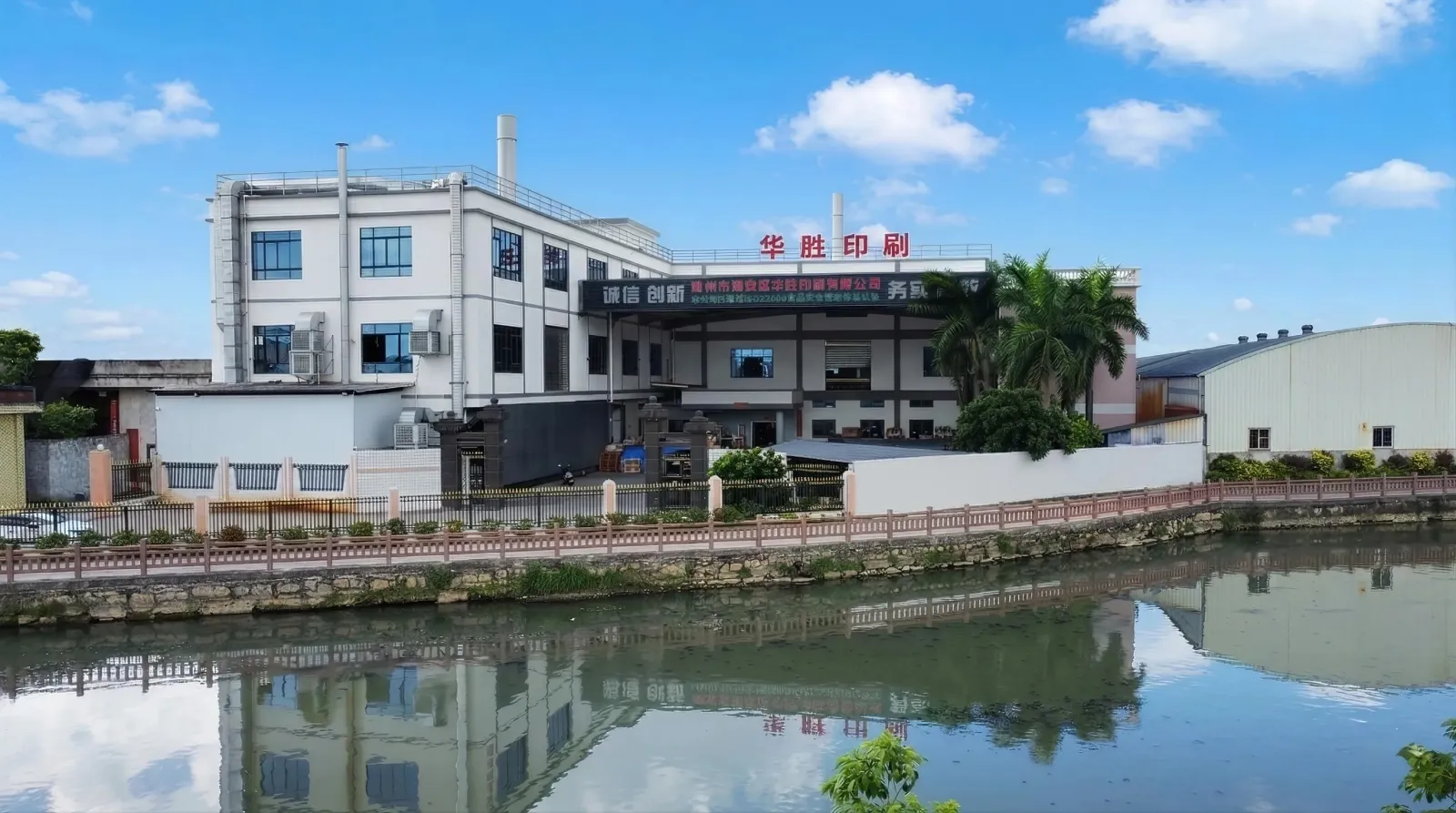
About Huasheng
In-house 9-color gravure printing, solventless lamination, slitting, and pouch converting across stand up pouches, spout pouches, retort bags, coffee bags, and automatic rollstock film.
A legacy of quality in flexible packaging since 1997.
1997 · 6,880 m²
Chaozhou · Guangdong · China
Longshewei, Neipan Management District, Dongfeng Town, Chao'an District, Chaozhou City, Guangdong Province, China