Five Packaging Checks Before Adding Fresh Foods to Unattended Retail
Huasheng Packaging Technical Content Review · Published:
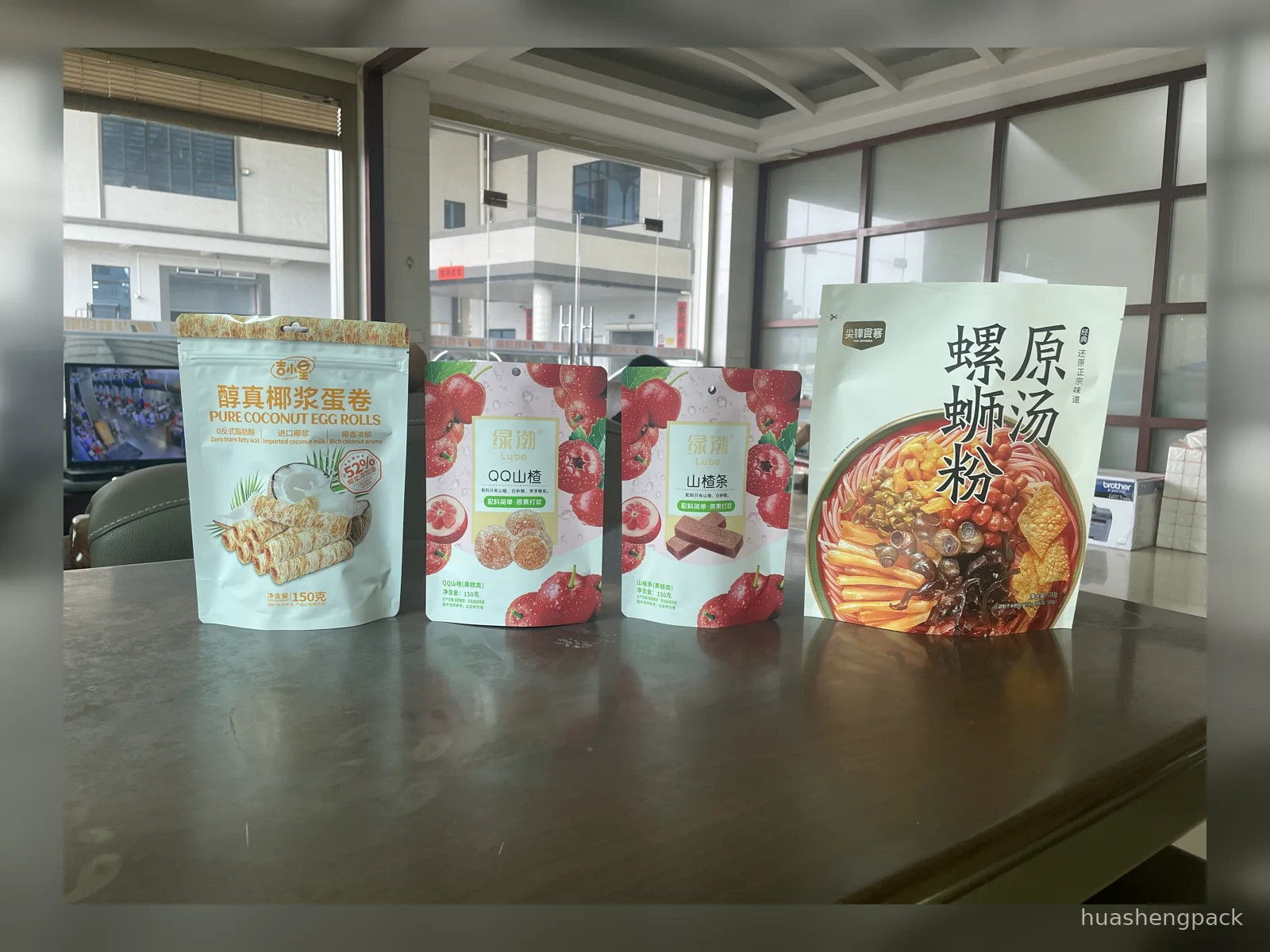 The image supports visible appearance or setting only. It does not prove material structure, performance, certification, a customer relationship or project suitability.
Review product safety ownership, temperature control, format, seal integrity, labeling and route validation before unattended retail launch.
Direct answer
Unattended retail changes how fresh food is stored, displayed, selected and monitored. Packaging is only one control inside a product-safety and temperature-management system. Before launch, the operator, food producer and packaging supplier should align product conditions, pack format, seal evidence, labeling and the actual route.
Evidence-reviewed technical guide
2026-08-31 · Huasheng Packaging Technical Content Review
Evidence scope
Five Packaging Checks Before Adding Fresh Foods to Unattended Retail
Scope and limitations
No customer identity, transcript, order-specific price, fixed MOQ, universal material recipe, performance promise, machine approval or shelf-life guarantee is published.
Key takeaways
- Define who owns formulation, processing, cooling, storage limits, shelf-life approval, replenishment and withdrawal. A packaging supplier can review contact conditions and package function, but cannot establish a universal safe process or expiry for an unknown fresh food.
- Review liquid or particulate content, headspace, reheating if any, opening, utensil use, visibility, portion, leakage consequence and disposal. Premade pouches, lidding, flow wrap or trays create different seal and handling interfaces and must be evaluated against the exact service model.
- Run a bounded pilot with representative food, packaging, replenishment and machine conditions. Record temperature, handling, seal condition, presentation, complaints and the predefined product endpoints. Expand only after the responsible parties accept the evidence and response plan.
1. Keep Food-Safety Ownership Clear
Define who owns formulation, processing, cooling, storage limits, shelf-life approval, replenishment and withdrawal. A packaging supplier can review contact conditions and package function, but cannot establish a universal safe process or expiry for an unknown fresh food.
The image supports visible appearance or setting only. It does not prove material structure, performance, certification, a customer relationship or project suitability.2. Map Temperature and Handling
Document the route from packing through transport, loading, machine storage, consumer collection and any delay after purchase. Identify condensation, puncture, compression, orientation and opening risks. A refrigerator specification or one temperature reading does not represent the complete route.
3. Choose Format from Product and Service
Review liquid or particulate content, headspace, reheating if any, opening, utensil use, visibility, portion, leakage consequence and disposal. Premade pouches, lidding, flow wrap or trays create different seal and handling interfaces and must be evaluated against the exact service model.
Draw a route map with responsible party and time-temperature handoff at production, transport, machine loading, display, purchase and withdrawal. Add alarm response, replenishment frequency, package orientation, consumer access and the consequence of leakage. The pack review should use the actual product and retail unit because condensation, contact and handling cannot be inferred from a catalogue image.
4. Verify Seals and Label Handoff
Define final seal, inspection, relevant integrity check and sampling across production. Keep preparation, storage, allergen, lot, date and market-specific labeling under the product owner’s approved copy. Packaging artwork must reserve usable areas without inventing required text.
Use a pilot log that connects every retail unit to product batch, pack batch, packing time, loading time, machine location, temperature record and withdrawal time. Inspect package condition at loading and removal, not only at production. Record condensation, swelling, leakage, puncture, label readability and consumer complaints using predefined categories. If the route includes reheating or utensils, test those interactions separately. The operator needs a clear quarantine and recall action when monitoring, package integrity or product limits fail. Document missed checks and machine downtime as deviations rather than silently treating absent data as a pass.
5. Pilot the Real Retail Route
Run a bounded pilot with representative food, packaging, replenishment and machine conditions. Record temperature, handling, seal condition, presentation, complaints and the predefined product endpoints. Expand only after the responsible parties accept the evidence and response plan.
The pilot release should state product batch, processing status, packaging specification, filling and sealing records, label revision, machine location, monitoring period, rejection triggers and who can stop sale. Packaging evidence supports only its assigned controls. Product safety, expiry and retail operation remain with the responsible food and retail parties under the applicable market requirements.
Professional evidence used in this guide includes: Food Types and Conditions of Use for Food Contact Substances; ASTM F88/F88M-23: Seal Strength of Flexible Barrier Materials; ASTM F2096-11(2019): Detecting Gross Leaks in Packaging by Internal Pressurization. Its mapped scope is: Food-contact use depends on food type and use conditions; Seal strength is interpreted with specimen, technique and failure mode; Internal pressurization is a destructive method for gross-leak detection. These sources answer specific method, use-condition or equipment-input questions; they do not automatically approve the complete package, a particular machine, commercial shelf life or the current order. To apply this guide to a Fresh Food Packaging decision, maintain a four-column condition–evidence–limitation–action record: state the current condition, identify the sample or record supporting it, name the risk that remains outside that evidence and assign the next action with its acceptance condition. Reopen the affected conclusion whenever the product, specification, process or controlling evidence changes.
Related Products
Related Packaging Guides
Claim-to-source evidence matrix
| Reviewed claim | Support | Sources | Boundary |
|---|
| Food-contact use depends on food type and use conditions | direct | [1] | The cited source supports only the named method, boundary or equipment input and does not approve the complete packaging project. |
| Seal strength is interpreted with specimen, technique and failure mode | direct | [2] | The cited source supports only the named method, boundary or equipment input and does not approve the complete packaging project. |
| Internal pressurization is a destructive method for gross-leak detection | direct | [3] | The cited source supports only the named method, boundary or equipment input and does not approve the complete packaging project. |
JSON · CSV
Authoritative References
- Food Types and Conditions of Use for Food Contact Substances · U.S. Food and Drug Administration · government
Food-contact use depends on food type and use conditions - ASTM F88/F88M-23: Seal Strength of Flexible Barrier Materials · ASTM International · standard
Seal strength is interpreted with specimen, technique and failure mode - ASTM F2096-11(2019): Detecting Gross Leaks in Packaging by Internal Pressurization · ASTM International · standard
Internal pressurization is a destructive method for gross-leak detection
Frequently Asked Questions
Can packaging make fresh food shelf stable?
Not by itself; product and process controls are required.
Is one cold temperature enough?
No, map the complete time-temperature route.
Who owns the expiry date?
The product owner using validated evidence.
Can a clear pack improve trust?
It may show product, but changes protection and artwork.
What should a pilot measure?
Route conditions, package state and product endpoints.
Does a photo prove safe retail use?
No, it only records visible conditions.