Vacuum Pouch Micron Thickness & Nylon (PA/PE) Guide for Frozen Meat, Seafood, Cheese and Rice
Huasheng Packaging Technical Content Review
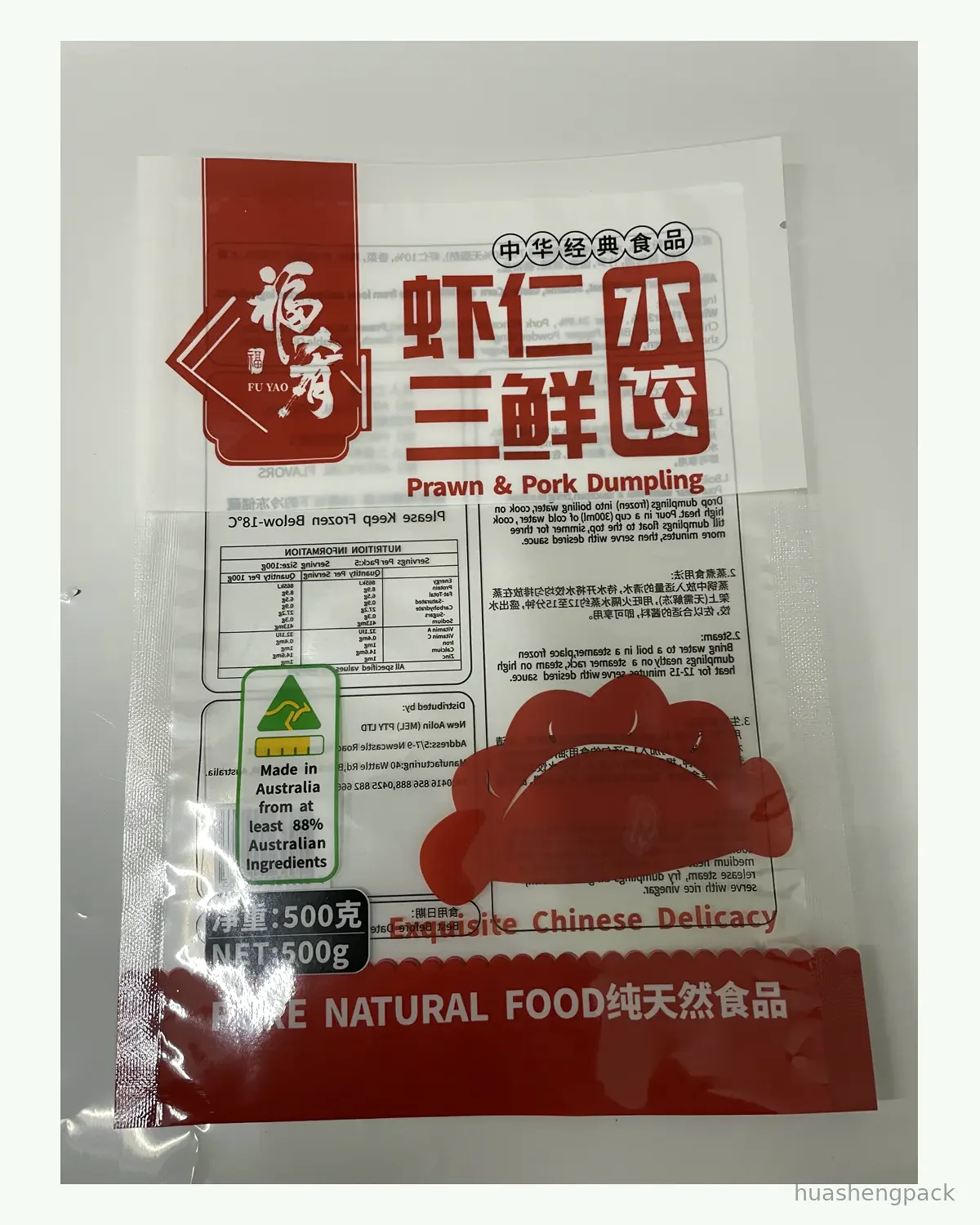
Choose the right nylon PA/PE or PET/PA/PE vacuum pouch micron thickness (80 µm to 180 µm) for frozen meat, shrimp, fish, cheese, and vacuum-brick rice—stopping vacuum loss and pinholes.
Direct answer
A vacuum pouch only has to suffer one microscopic pinhole to lose its entire vacuum seal—turning tightly packed frozen shrimp, steaks, sausages, aged cheese, or vacuum-brick rice into loose, freezer-burned rejects inside retail cases. Selecting the right nylon (PA) barrier gauge and cold-tolerant PE sealant thickness is what separates zero-leaker commercial vacuum packs from cheap plastic bags that fail in cold storage.
Contents
Evidence-reviewed technical guide
Evidence-reviewed technical guide
2026-11-26 · Huasheng Packaging Technical Editorial Review
Evidence scope
Applies to B2B custom flexible packaging specification review for vacuum & frozen engineering projects sourced from direct gravure converting plants.
Scope and limitations
General engineering bands and procurement guidelines do not replace filled-pack shelf-life testing, machine compatibility trials, or destination-market regulatory review.
Key takeaways
- Why Vacuum Packaging Demands Nylon (PA) Plus Cold-Grade PE Rather Than Ordinary PET/PE
- Typical PA/PE & PET/PA/PE Vacuum Thickness Reference Bands
- Inputs to Send for an Accurate Vacuum Pouch Thickness & Quote
Why Vacuum Packaging Demands Nylon (PA) Plus Cold-Grade PE Rather Than Ordinary PET/PE
During chamber vacuum sealing, atmospheric pressure clamps the film violently around every bone edge, shell tip, hard rice kernel, or frozen corner inside the pouch. Standard PET/PE lacks puncture elongation and tears sharply under tight drawdown, while plain PE alone transmits oxygen rapidly and loses vacuum firmness. Biaxially oriented nylon (BOPA / PA) or co-extruded PA/PE combines high puncture toughness, flex-crack durability, and strong oxygen barrier—locking tight vacuum cling across chilled and sub-zero frozen logistics.
Four Vacuum Pouch Spec Mistakes That Cause 'Leakers' in Cold Storage
First, ordering thin 70–80 µm pouches for bone-in meats, shrimp with sharp rostrums, crab, or sharp vacuum-brick rice instead of stepping up to 110–160 µm+ reinforced structures. Second, picking standard dry-ambient PE instead of cold-tolerant, grease-tolerant LLDPE/metallocene sealants—blood, brine, fat, or meat juices smeared across the top opening cause weak welds on standard LDPE, and sub-zero temperatures turn ordinary sealants brittle. Third, using printed unlaminated PA/PE without an outer PET/PA layer when sharp 9-color gravure retail branding is needed—reverse-printed PET/PA/PE locks ink cleanly inside the laminate so frozen condensation never scuffs artwork. Fourth, sealing vacuum bags too tight on chamber bars with excessive heat, burning thin notches right beside the weld line where pouches tear during carton stacking.
Typical PA/PE & PET/PA/PE Vacuum Thickness Reference Bands
Match typical single-wall vacuum gauges to product sharpness and weight (always validate with actual filled chamber-sealer trials): (1) 80 – 100 µm (~3.2 – 4.0 mil) — Soft, boneless chilled or frozen foods (boneless fillets, sliced ham, cheese blocks, peeled vegetables, soft sausages); (2) 110 – 130 µm (~4.3 – 5.1 mil) — Standard commercial frozen meat cuts, marinated poultry, nuts, dried fish, and 500 g–1 kg vacuum-brick rice or coffee; (3) 140 – 160 µm (~5.5 – 6.3 mil) — Sharp shell-on shrimp, frozen seafood, ribs, hard frozen dumplings, and 2 kg–5 kg vacuum rice bricks; and (4) 170 – 200 µm (~6.7 – 7.9 mil) — Heavy bone-in primals, thorny lobster/crab shells, and rugged long-haul frozen export blocks.
Seal Uniformity & Chamber-Sealer Compatibility at Huasheng Packaging
Huasheng Packaging manufactures both crystal-clear and up to 9-color reverse-printed vacuum pouches (3-side seal flat bags, stand-up vacuum bags, and brick-style gusseted rice vacuum bags) under ISO 22000:2018 in Chaozhou—checking uniform seal widths, smooth tear notches, and lamination peel integrity prior to shipment.
Inputs to Send for an Accurate Vacuum Pouch Thickness & Quote
Share five operational facts: (1) product packed and sharpness/bone/fat/brine profile, (2) chilled vs. deep-frozen storage temperature, (3) pouch format (3-side seal flat vacuum bag vs. gusseted vacuum rice brick) and exact outer dimensions (`W × H`), (4) clear unprinted vs. custom 9-color gravure printed retail design, and (5) quantity per SKU.
Related Products
Related Applications
Related Packaging Guides
- Dried Fruit & Tropical Snack Pouches: Preventing Sugar Sweating, Clumping and Aroma Escape
- Chili Oil, Sambal & Acidic Sauce Pouches: Preventing Adhesive Delamination and Seam Leaks
- Philippines & ASEAN Pet Food Packaging Guide: High-Barrier Kibble Bags & Wet Retort Pouches
Claim-to-source evidence matrix
| Reviewed claim | Support | Sources | Boundary |
|---|---|---|---|
| Final flexible packaging specifications require confirming product chemistry, barrier needs, dimensions, and filling conditions before bulk production. | contextual | [1], [3] | Engineering review boundary prior to cylinder engraving or commercial conversion. |
| Seal integrity and laminate suitability should be verified on representative samples using actual product and sealing equipment. | direct | [2] | Quantitative seal testing and line trials supersede nominal film descriptions. |
| Huasheng Packaging operates integrated 9-color gravure printing, lamination, and pouch converting in Chaozhou under ISO 22000:2018 (007FSMS2300214). | direct | [3], [1] | Factory capability and active management-system scope; product-specific export compliance confirmed per order. |
Authoritative References
- ISO 22000:2018 Food safety management systems · International Organization for Standardization (ISO) · standard
Food-contact packaging production management relies on documented food-safety management controls and traceability. - ASTM F88/F88M-23 Standard Test Method for Seal Strength of Flexible Barrier Materials · ASTM International · standard
Flexible pouch and roll-film heat-seal performance should be verified quantitatively rather than assumed from film appearance. - Huasheng Packaging Chaozhou In-House Converting & Quality Control Overview · Huasheng Packaging · internal-evidence
Describes Chaozhou in-house 9-color gravure printing, lamination, slitting, pouch converting, and ISO 22000:2018 scope.
Frequently Asked Questions
What is the most common thickness for frozen meat and seafood vacuum pouches?
Boneless meats and fillets typically start in the 90–110 µm range, while sharp shell-on shrimp, bone-in cuts, and heavy frozen blocks commonly step up to 130–160 µm+ nylon-reinforced PA/PE or PET/PA/PE.
Can custom printed vacuum pouches hold up in wet brine and deep-freeze storage?
Yes. Reverse-printed PET/PA/PE locks gravure inks safely beneath the outer polyester layer, preventing water, blood, oil, or frost condensation from smudging brand graphics.
Why do vacuum pouches sometimes lose vacuum 24–72 hours after sealing?
Delayed vacuum loss usually stems from microscopic pinholes punctured by sharp product edges, tiny grease/moisture channels trapped in the top seal bar, or insufficient nylon gauge for the product's weight.
Can Huasheng Packaging make brick-shaped vacuum bags for 1 kg to 5 kg rice?
Yes. We manufacture heavy-gauge nylon-reinforced side-gusset and flat vacuum bags engineered to hold tight rectangular rice bricks through export carton stacking.
Can we test unprinted PA/PE sample bags on our vacuum chamber machine first?
Yes. Testing representative gauge samples with your actual sharp or frozen product on your chamber sealer verifies drawdown toughness and sealing-bar dwell before bulk printing.
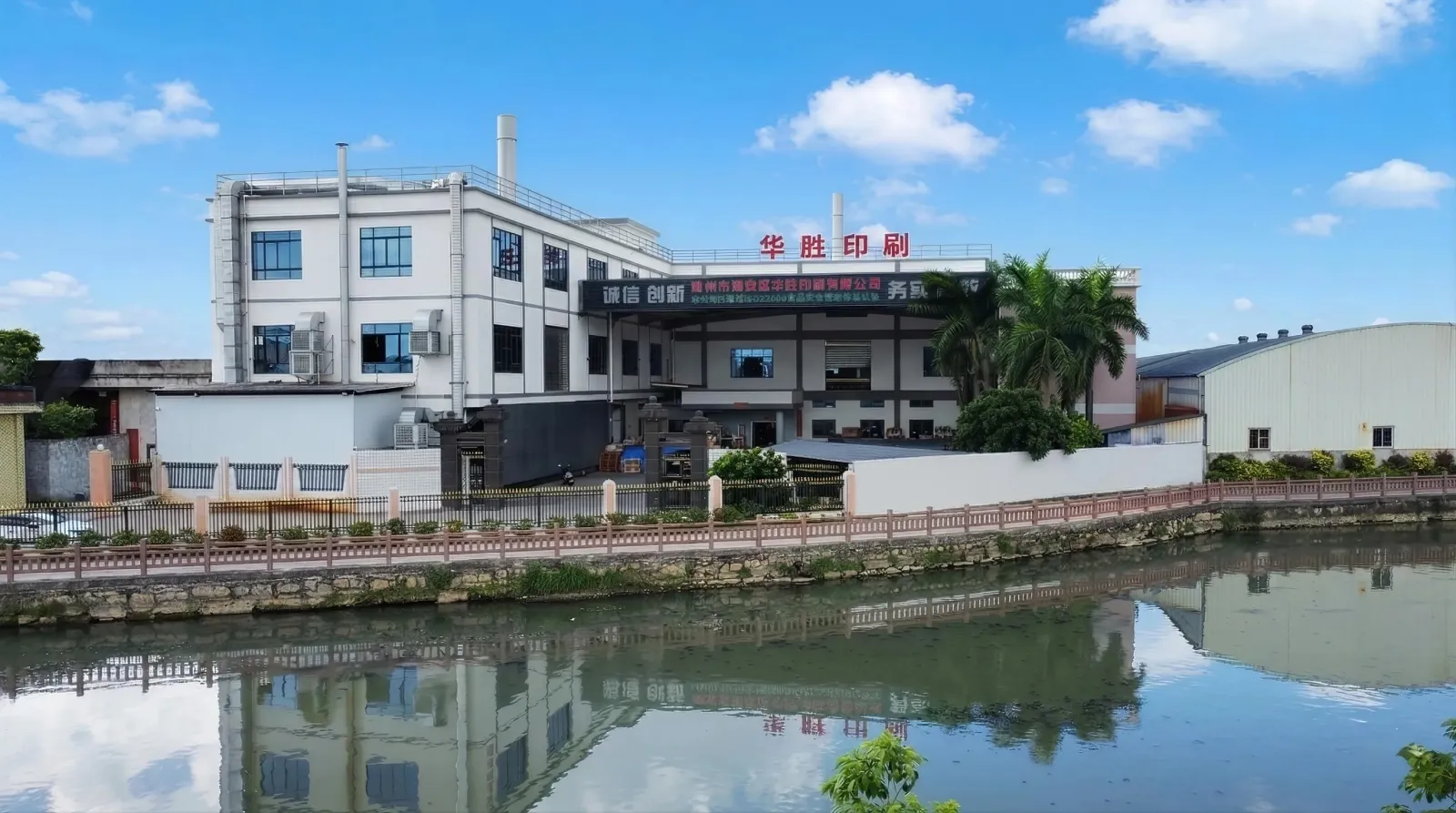
About Huasheng
In-house 9-color gravure printing, solventless lamination, slitting, and pouch converting across stand up pouches, spout pouches, retort bags, coffee bags, and automatic rollstock film.
A legacy of quality in flexible packaging since 1997.
1997 · 6,880 m²
Chaozhou · Guangdong · China
Longshewei, Neipan Management District, Dongfeng Town, Chao'an District, Chaozhou City, Guangdong Province, China