Gravure Cylinder Cost for Custom Flexible Packaging: What Buyers Should Confirm
Huasheng Packaging Technical Content Review · Published: · Updated:
 Cylinder planning depends on artwork size, repeat and printing color separation.
Understand gravure cylinder charges for flexible packaging, what changes can require new engraving, and how to compare pouch quotations without assuming a fixed fee.


Direct answer
A gravure cylinder charge is a project-specific tooling line, not a universal fee per pouch or a price that can be inferred from the number of visible colors. The confirmed artwork separation, print repeat, cylinder face width, press configuration, substrate and version plan determine what must be engraved and what may remain reusable. Ask each supplier to state the tooling scope and change rules in writing before comparing quotations.
Evidence-reviewed technical guide
2026-09-01 · Huasheng Packaging Technical Content Review
Evidence scope
Buyer-side interpretation of a gravure tooling line, quotation normalization, artwork and repeat change control, and the evidence required before an existing cylinder is treated as reusable.
Scope and limitations
No fixed cylinder price, cylinder count, ownership rule, storage period, life, discount or reuse result is stated. All commercial terms and production compatibility require a current written quotation and project approval.
Key takeaways
- A gravure cylinder is configured to an approved print job and press envelope.
- Visible artwork colors alone do not constitute a production separation or a tooling quotation.
- Existing tooling remains a reuse candidate until identity, condition, dimensions, separation and artwork version are confirmed.
What the cylinder charge covers
A gravure cylinder is a physical image carrier prepared for an approved print job. Cylinder production involves defined dimensions, engraving settings and checks; the printing press also accepts a specified cylinder-repeat range and print-unit configuration. The charge may therefore cover new cylinder preparation, engraving, proof or setup activities, but the commercial line and ownership terms must come from the current written quotation. A machine brochure explains the process boundary; it does not establish a supplier price.
Cylinder layout and film setup should follow approved artwork and production specifications.Do not calculate tooling from visible colors alone
Visible artwork colors are not a complete production separation. Process colors, spot colors, white ink, coatings or varnish, shared elements and variant-specific elements may be handled differently according to the approved prepress plan and available press configuration. Buyers should request the final separation list rather than apply a fixed “one visible color equals one charge” formula. Two quotations are comparable only when they cover the same artwork, repeat, dimensions, versions, proof scope and storage terms.
Compare quotations with a controlled tooling schedule
For each pouch or roll-film version, record the artwork code, finished size, print repeat, substrate or laminate direction, separated print units, white or coating requirements, cylinder type, new or existing status, quoted currency, included proof or setup work, storage location, ownership terms and reuse conditions. Keep tooling charges separate from material, printing, conversion, components, freight and taxes. This makes a first-order quotation easier to compare without turning a current commercial offer into a permanent rule.
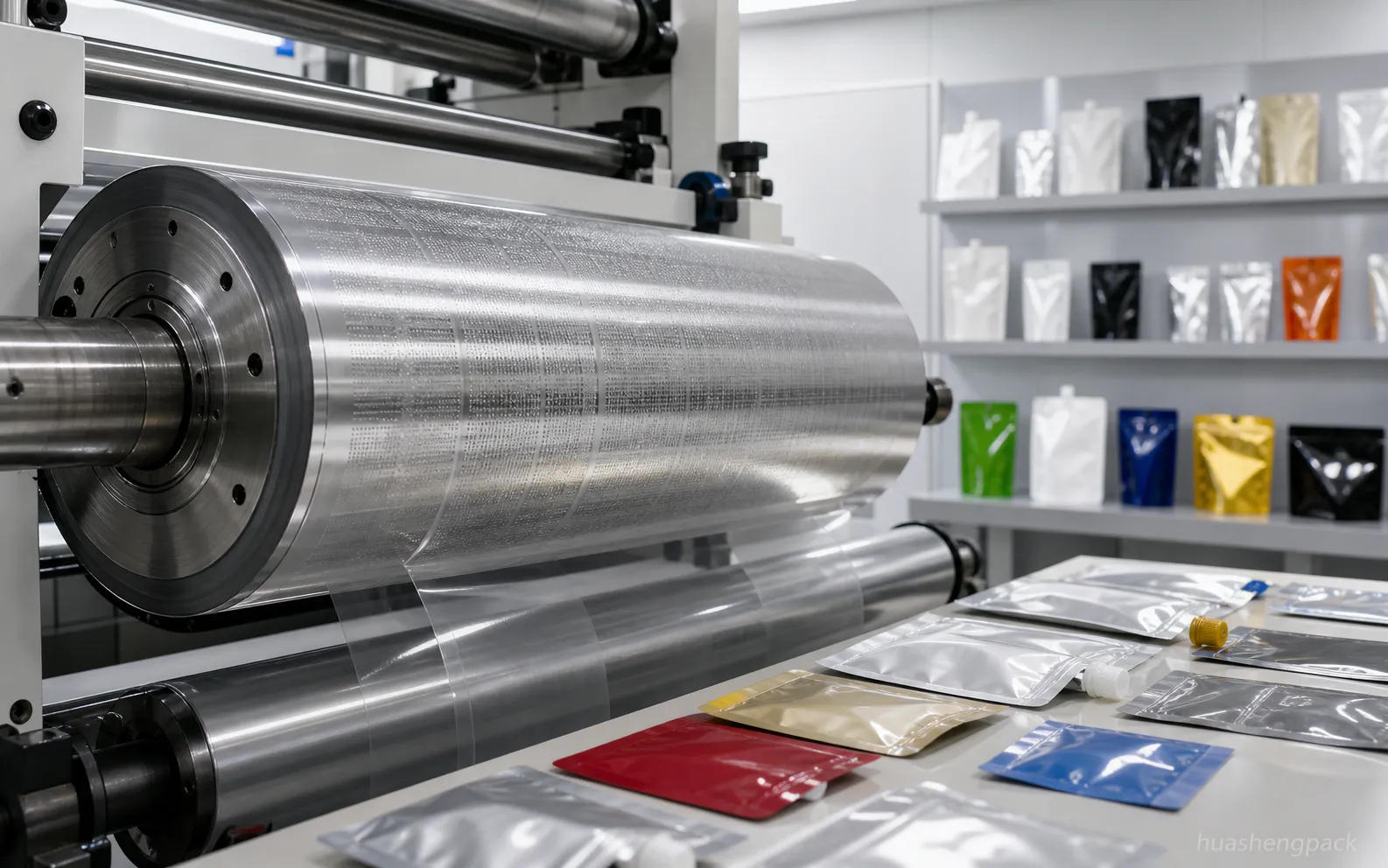 Cylinder requirements should be confirmed from approved production artwork.
When artwork or dimensions change
A previous cylinder set should be treated as a candidate for reuse, not an automatic approval. Changes to repeat, face width, design geometry, separated colors, white coverage, barcode, legal copy, varnish or press compatibility can affect whether a cylinder is reusable, modified or replaced. Before a repeat order, confirm the stored cylinder identifier, current condition, approved artwork version and compatible production route. Do not promise a cylinder life or future discount without a current inspection and quotation.
Artwork, film samples and production details should be confirmed together before an initial custom print run.Information to send for a comparable quote
Provide the editable artwork, approved dieline, finished pouch or roll-film dimensions, print repeat if known, material direction, number of SKUs, quantity per artwork, intended print effects, shared versus changing elements, barcode and legal-copy status, proof expectation and planned repeat-order scenario. Ask the supplier to return a line-by-line tooling schedule, exclusions, ownership, storage, reuse and change-control terms. Prices, timing and reuse decisions remain project-specific and require written approval.
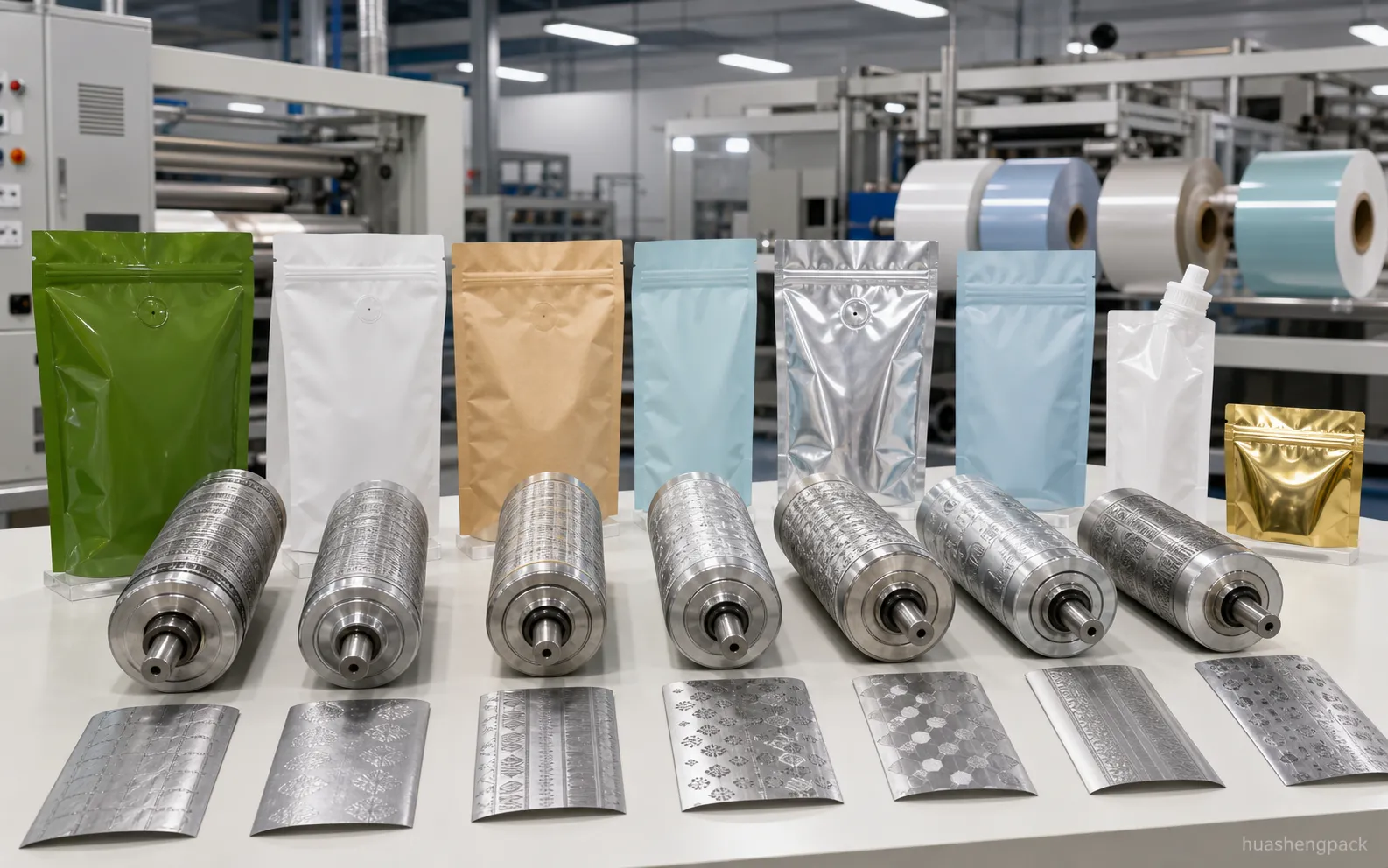 Different printed variants may require separate or changed cylinders even when size and material are shared.
Related Products
Related Packaging Guides
Claim-to-source evidence matrix
| Reviewed claim | Support | Sources | Boundary |
|---|
| Gravure production uses configured cylinders within a press-specific repeat and substrate-handling envelope. | direct | [1] | The cited press is an equipment example and does not define Huasheng cylinder dimensions, capacity or price. |
| Cylinder production involves configured engraving dimensions and inspection rather than a generic fee detached from job data. | direct | [2] | The equipment document supports process variables, not a universal commercial charge. |
| Process-colour and spot-colour targets, exchanged data and responsibility are controlled packaging-gravure inputs. | direct | [3] | The source is a working draft under development, not a published conformity standard or pricing rule. |
| Tooling quotations should be compared only after artwork, repeat, dimensions, separation, proof, ownership, storage and reuse scope are aligned. | contextual | [1], [2], [3] | This is a bounded procurement inference from the configured press, engraving and data-exchange variables. |
JSON · CSV
Authoritative References
- MASTER 6003 Gravure Printing Press · BOBST · manufacturer-data
Gravure press configuration includes defined print-cylinder repeat ranges, substrate handling and production parameter control - HelioKlischograph K500 G4 Gravure Cylinder Engraving System · HELL Gravure Systems · manufacturer-data
Gravure cylinder production is a configured engraving process with controlled cylinder dimensions and engraving checks - ISO/WD 12647-10 Packaging Rotogravure Printing (Working Draft) · International Organization for Standardization · standard
The developing packaging-gravure work item identifies process and spot-colour data exchange, printing aims and responsibility as controlled inputs
Frequently Asked Questions
Is a gravure cylinder charge the same as the pouch unit price?
No. Tooling, material, printing, conversion, components, packing and delivery are separate commercial scopes. Compare each quotation on the same specification and included work.
Does every visible color always require one new cylinder?
Do not assume that from the artwork preview. The approved separation plan and press configuration determine the required image carriers, including process, spot, white or coating units.
Can an existing cylinder be reused for a repeat order?
Possibly, if the stored cylinder, repeat, dimensions, separation and approved artwork remain compatible and its condition is accepted. Reuse should be confirmed for the current order.
Will a text, barcode or legal-copy change affect tooling?
It can. Any change in an engraved image area may require a modified or new production route. Submit the final artwork version before approval.
Who owns and stores the cylinders?
There is no universal commercial rule. The quotation or agreement should state ownership, storage location, retention terms, identification and what happens after inactivity or a supplier change.
What should I compare between two cylinder quotations?
Match artwork, repeat, face width, separation list, cylinder type, proof and setup scope, ownership, storage, reuse conditions, currency and exclusions before comparing totals.