Multi-SKU Custom Printed Packaging Guide: Artwork Variants, Cylinder Cost and OEM Handover
Huasheng Packaging Technical Content Review
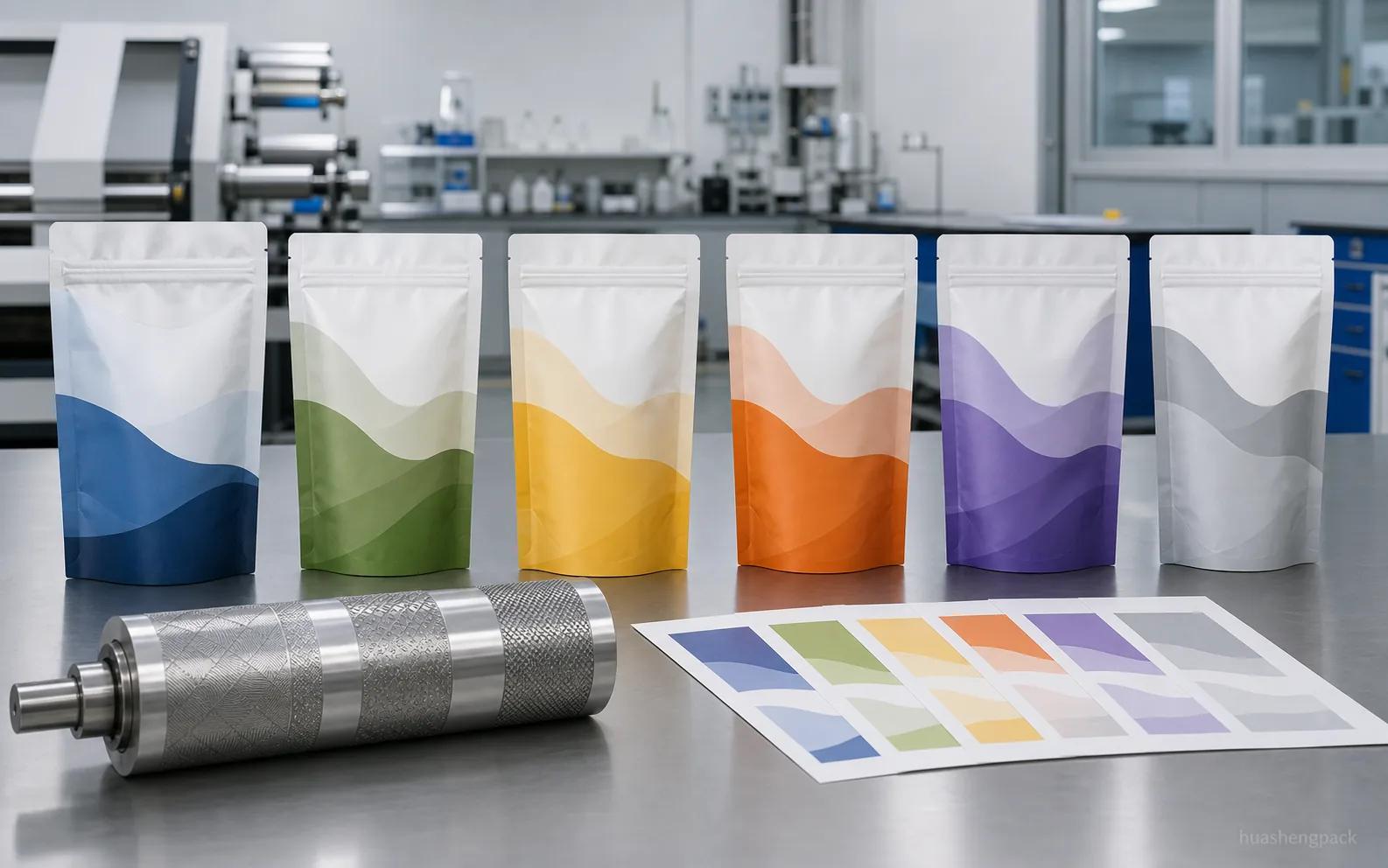
Learn how food, snack and daily chemical brands plan multi-SKU custom printed packaging with shared size and material, different artwork variants, gravure cylinder cost, quantity per design and China OEM handover.
Direct answer
Multi-SKU custom printed packaging is common for brands with different flavors, scents, formulas, sizes or regional versions. The key is to separate what can be shared, such as pouch size, material structure and finish, from what must be calculated by design, such as artwork, printing colors and gravure cylinders.
Contents
Evidence-reviewed technical guide
Evidence-reviewed technical guide
2026-10-22 · Huasheng Packaging technical content review (source-based AI review; not a production trial)
Evidence scope
English-only multi-SKU artwork, setup and requirement organization. No supplier equipment or commercial term is attributed to Huasheng from these sources.
Scope and limitations
Manufacturer examples are not universal tolerances, cylinder counts, fees or proof of Huasheng equipment. No MOQ, grouping, price, lead time, compliance or performance is approved. Future volume remains an estimate until confirmed.
Key takeaways
- Keep artwork and setup review specific to each design.
- Confirm actual dimensions, structure and machine inputs before grouping variants.
- Separate the ready first SKU from uncommitted future estimates.
Why multi-SKU packaging needs clear planning
SKU means stock keeping unit: an internal product identifier. Keep the product SKU separate from the packaging artwork revision in the project brief.
A multi-SKU project may look simple when all variants use the same pouch size and material. In production, however, each design still needs artwork review, color separation, cylinder confirmation, print registration and production tracking.
Shared specifications can help material planning and scheduling, but they do not automatically make all variants one price item. Quantity per design, printing colors, surface finish, transparent window, zipper or spout requirement and sample approval method all affect quotation.
What can be shared and what is counted by design
Usually shared across variants: - Pouch type or roll film format. - Size and gusset. - Material structure and thickness. - Matte, gloss or soft-touch finish. - Zipper, spout, valve, tear notch or window specification.
Usually counted by design: - Artwork file and color separation. - Gravure cylinders for each printing color. - Barcode, QR code or batch code area. - Printed sample or proof approval. - Production records and SKU separation.
How to reduce multi-SKU setup risk
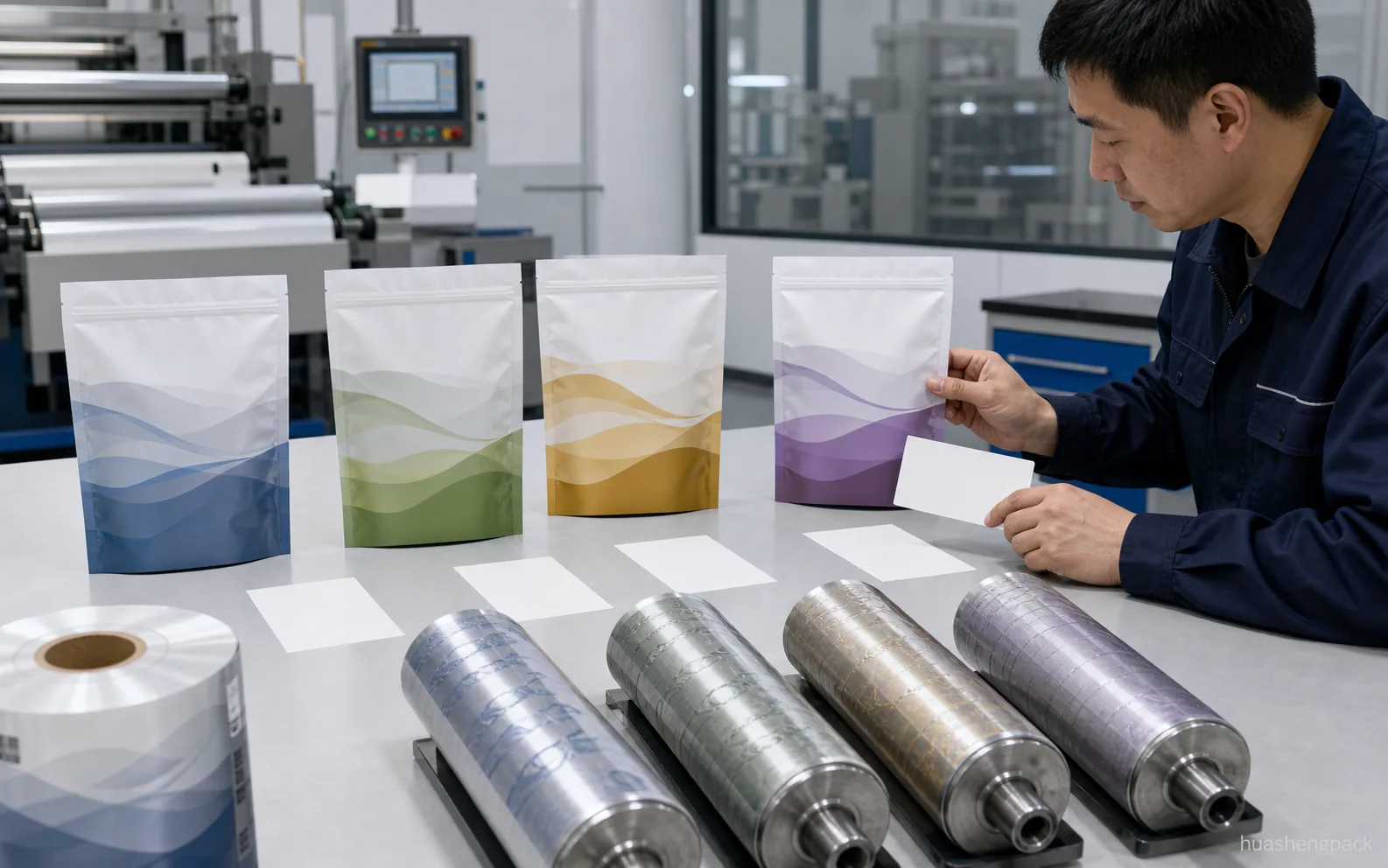
Use a shared layout system where common elements stay in the same position and variant elements are clearly separated. Confirm whether each SKU uses the same number of printing colors. Keep the bag size, material and finish stable when possible so material planning can be coordinated.
For China OEM or private label projects, send the SKU list to both Huasheng Packaging and the receiving filling factory. The receiving side should know carton labels, SKU separation rules, sample retention needs and which artwork version belongs to each product.
Production and quality control points
For multi-SKU projects, quality control should cover both packaging quality and version control. Check material structure, thickness, print registration, color consistency, seal strength, zipper or spout function, window position, matte or gloss appearance and carton labels.
Version mistakes can be expensive. Before production, confirm final artwork files, color standards, SKU names, barcode numbers, batch code area and approval responsibility. For roll film, also confirm roll direction and machine data per SKU if the artwork repeat length changes.
What to prepare before requesting a multi-SKU quotation
Prepare:
- Product category and SKU list. - Pouch type or roll film format. - Shared size, material structure and thickness. - Quantity per design, not only total quantity. - Number of artwork variants. - Printing colors per design. - Shared design elements and variant-specific elements. - Surface finish, clear window, zipper, spout or valve requirement. - Artwork files and barcode or batch code area. - Sample approval method. - Receiving China OEM factory, agent or warehouse requirement if applicable. - Packing machine information if roll film is used.
Separate confirmed first-order inputs from future brand plans:
- Current SKU: record the actual product, format, dimensions, fill weight, artwork status and expected first-order quantity. - Future designs or brands: mark each field confirmed, provisional or unknown; do not assume dimensions and structure match. - Keep annual estimates separate from committed first-order quantity. - Identify shared inputs and design-specific differences before assessing whether production can be grouped. - Start review with the SKU that is ready now. Future potential volume is planning information, not an order or an automatic combined minimum quantity or price.
Put this guide into your project brief
Use the existing editable worksheet to record what is known, what remains open and who will review it.
Artwork and proof review checklist
Record dieline, bleed, colors, white ink, windows, eye marks, barcodes, variants and revision responsibility.
Project specification and validation register
Track each requirement as known, unknown, sample-stage or production-stage, with evidence, owner and approval status in one file.
Preparation files only: not an approved specification, current quotation or performance result.
Related Products
Related Applications
Related Packaging Guides
- How to Prepare Packaging Details Before Requesting a Custom Packaging Quote
- Gravure Cylinder Cost for Custom Flexible Packaging: What Buyers Should Confirm
- China OEM and Private Label Packaging Handover Guide for Custom Pouches and Roll Film
- Flexible and Soft Packaging Materials: How to Choose a Laminate Structure
- Gravure Packaging Artwork and Proof Approval Guide
Claim-to-source evidence matrix
| Reviewed claim | Support | Sources | Boundary |
|---|---|---|---|
| Artwork data and print identity require design-specific review before engraving and approval. | contextual | [1] | No automatic cylinder replacement, count or reuse rule follows from this equipment brochure. |
| Common package dimensions do not alone establish an identical gravure setup or commercial item. | contextual | [2], [1] | Project organization recommendation, not measured costs or a Huasheng machine claim. |
| Edge layout and print registration should be checked for the actual artwork and process. | contextual | [3] | Do not transfer ePac digital-process tolerances, turnaround or MOQ to Huasheng gravure work. |
| Keep confirmed first-order inputs separate from future designs and estimates. | contextual | [1], [2] | Proposed requirement-recording template; sources provide process context, not empirical proof of this sales procedure or purchase commitments. |
Authoritative References
- HelioKlischograph K500 G4 · HELL Gravure Systems · manufacturer-data
Reproduction data is prepared for the engraving requirements; fine text and graphics require controlled prepress treatment. - MASTER 6003 Gravure Printing Press · BOBST · manufacturer-data
The described gravure platform uses print cylinders and configurable setups for substrates, inks and job lengths. - Submitting Artwork: Side to Side Registration · ePac LLC · manufacturer-data
Artwork layout near pouch edges must account for the named supplier cutting and registration process.
Frequently Asked Questions
Can several SKUs share the same material and size?
Yes. Shared size, material and finish can help material planning and production scheduling, but different artwork variants may still require separate color review, cylinders and production tracking.
Why does quantity per design matter?
Gravure printing setup, cylinder cost and production planning are affected by each artwork design. A total quantity split across many designs may not have the same cost as one single design quantity.
Do all variants need separate cylinders?
If the artwork changes in printed areas, separate or modified cylinders may be needed. If only a small variable area changes, the production approach should be reviewed with the final artwork.
How should artwork be prepared for multi-SKU projects?
Use shared layers for common design elements and separate layers for flavor, scent, formula, barcode and other variant-specific elements. Confirm final color separation before cylinder engraving.
Can multi-SKU packaging be handed over to a China OEM factory?
Yes. Buyers should provide receiving factory requirements, SKU separation rules, carton label needs, sample approval method and packing line data if the OEM factory will fill the pouches or roll film.
About Huasheng
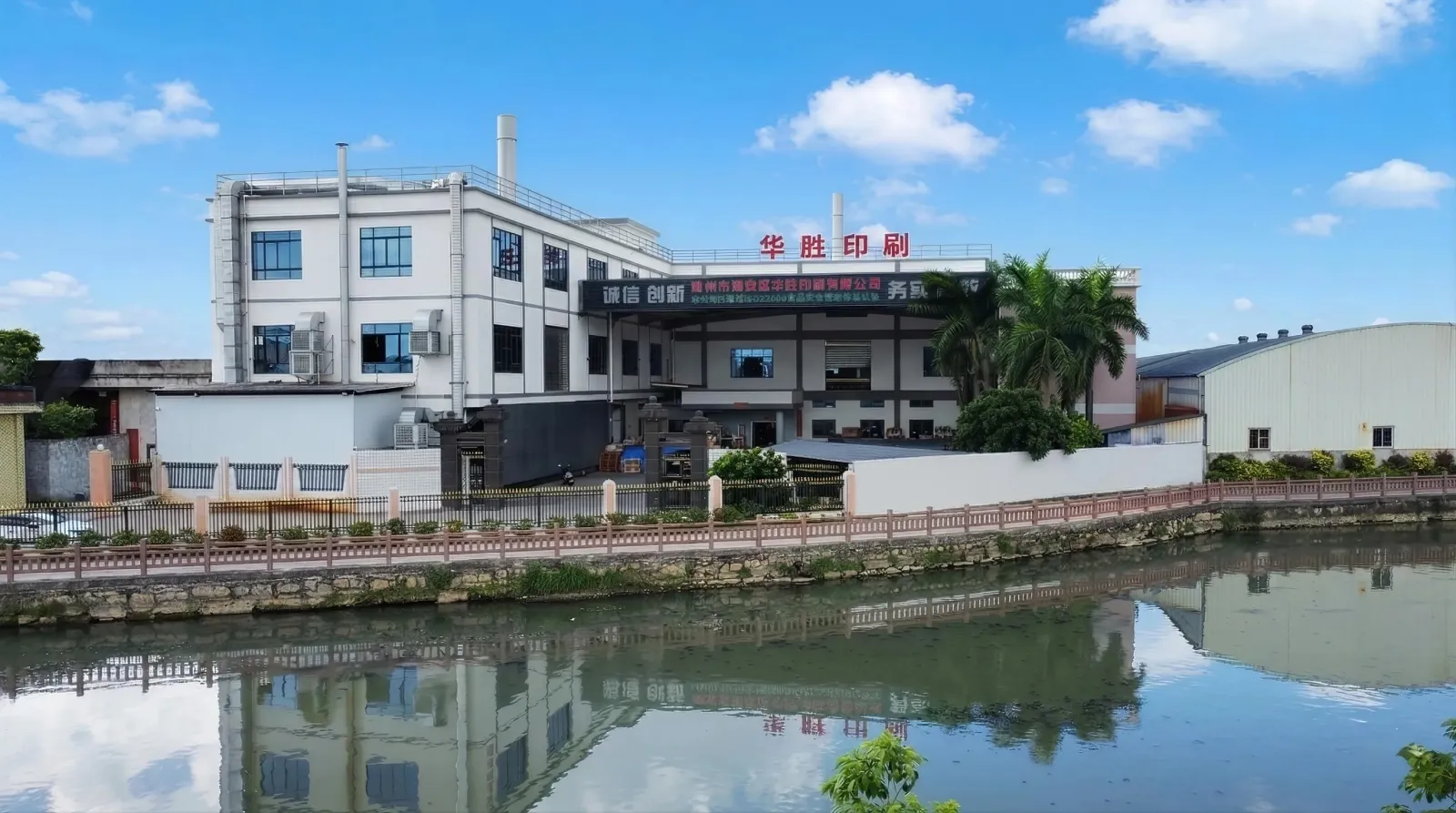
In-house 9-color gravure printing, solventless lamination, slitting, and pouch converting across stand up pouches, spout pouches, retort bags, coffee bags, and automatic rollstock film.
A legacy of quality in flexible packaging since 1997.
1997 · 6,880 m²
Chaozhou · Guangdong · China
Longshewei, Neipan Management District, Dongfeng Town, Chao'an District, Chaozhou City, Guangdong Province, China