Oatmeal and Cereal Pouches: Transparent Barrier, Clear Windows and Matte Finish
Huasheng Packaging Technical Content Review · Published: · Updated:
 Matte clear-window stand up pouch concept for oatmeal and cereal packaging.
Compare clear-window and transparent-barrier oatmeal pouches by product risk, film conversion, matte coverage, seals and filled-pack validation.
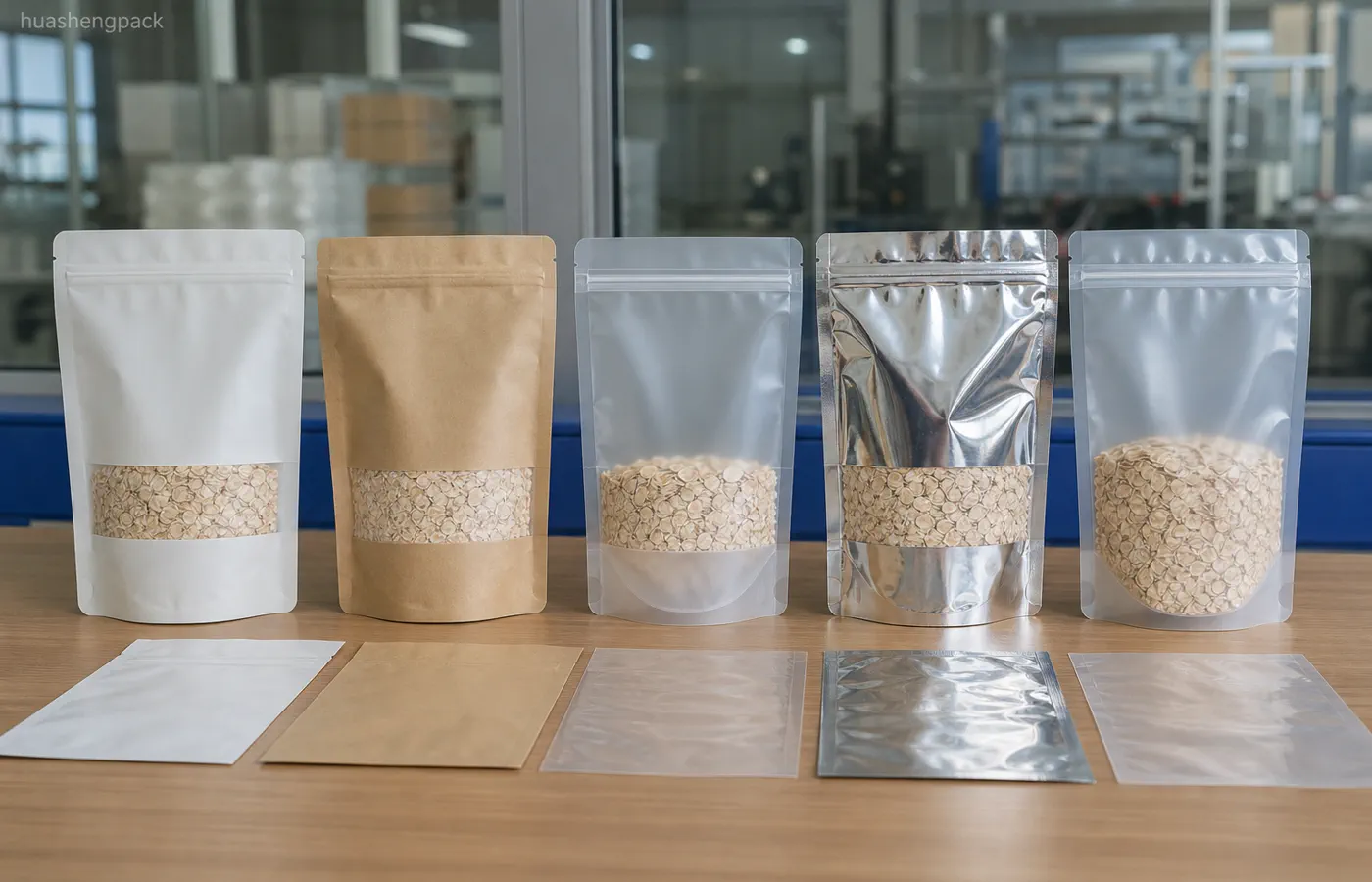
Direct answer
A clear window, an all-transparent barrier structure and an opaque high-barrier laminate are different design routes. Oatmeal and cereal buyers should first define moisture, oxygen, light, oil and shelf-life risks, then decide how much product visibility is useful. Film clarity and barrier claims must be checked after printing, lamination and pouch conversion.
Evidence-reviewed technical guide
2026-08-12 · Huasheng Packaging Technical Content Review
Evidence scope
Clear-window artwork, matte-varnish boundaries, transparent-barrier material directions and converted-pouch validation for oatmeal and cereal.
Scope and limitations
No film, window size or matte design is universally suitable. Final clarity, barrier and shelf life require the exact artwork, laminate and filled pack.
Key takeaways
- A clear window and an all-transparent barrier pouch are different routes.
- Conversion can change oxide-coated film performance.
- Final clarity depends on film, ink, white layer, varnish and the converted sample.
Start with Product Visibility and Protection Priorities
Plain oats, granola with nuts, dried-fruit cereal and high-fat mixes can have different moisture and oxidation sensitivity. Define product composition, storage climate, pack area, fill weight and shelf-life target before choosing a window or transparent-barrier direction. Visibility is a design requirement; it does not establish barrier performance.
Do Not Treat All Transparent Films as Equivalent
Clear PET/PE, oxide-coated film and EVOH-containing structures are different directions. AlOx or SiOx coating performance can change during printing, lamination, flexing and pouch making, while EVOH oxygen barrier is affected by humidity and laminate protection. Supplier grade, complete structure and stated test conditions matter more than the generic label.
Transparent and opaque barrier directions should be evaluated against the oatmeal product, window design and storage target.Control Ink, White Layer, Matte Varnish and Window Boundaries
A conventional clear window normally keeps the viewing area free of opaque ink and white backing. If matte varnish covers that zone, haze and visual clarity can change. The approved artwork should identify the transparent zone, ink and white layers, varnish boundary, zipper, tear notch and seals. Partial matte outside the window is one possible direction, not a universal solution.
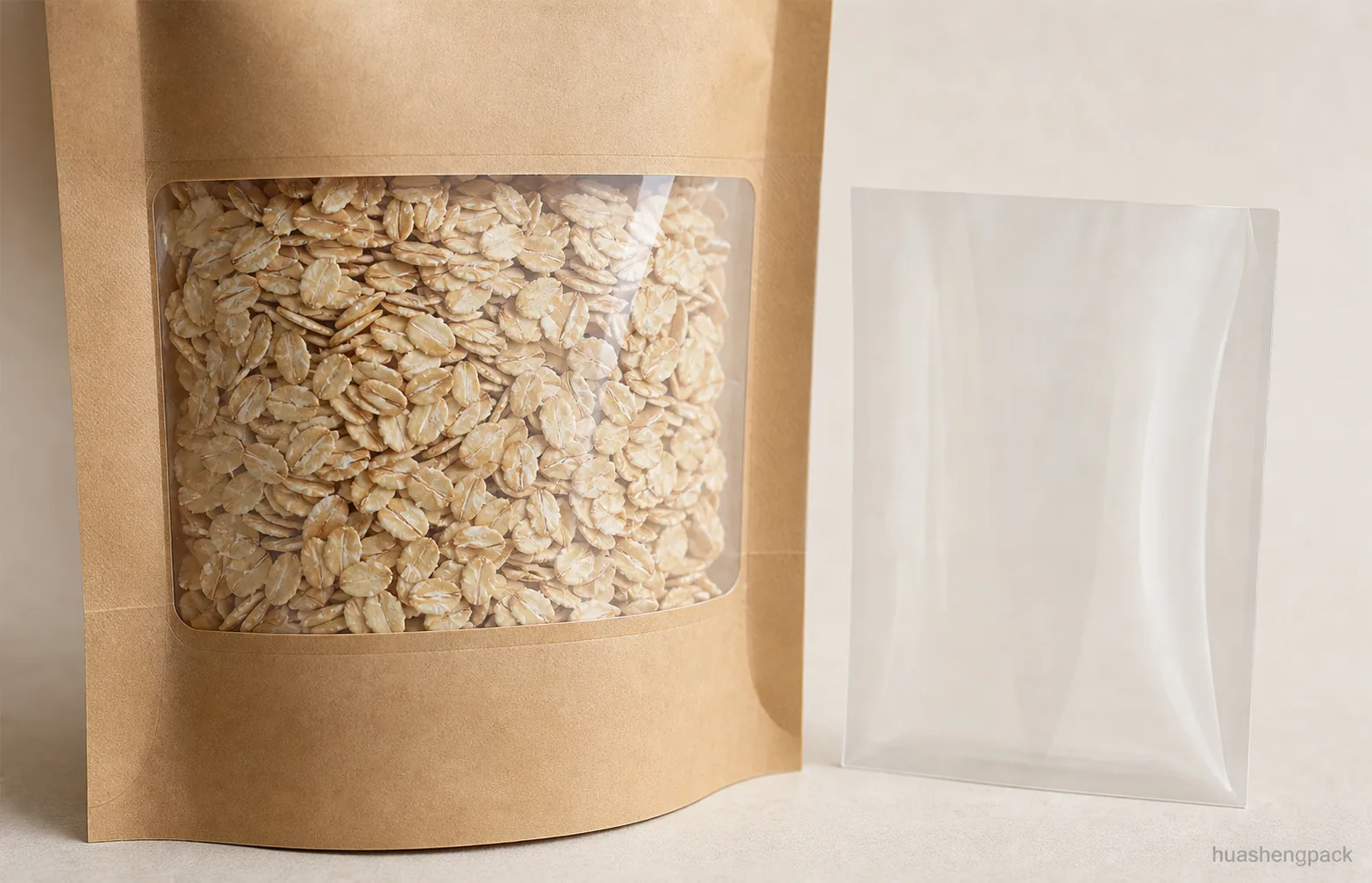 Window size, clarity, finish and barrier structure should be reviewed together for dry food pouches.
Measure the Converted Pouch and Inspect the Filled Sample
Compare candidate structures using defined OTR and WVTR methods and specimens. Then review the converted pouch for clarity, haze, scratches, coating damage, curl, delamination and seals. Fill with the intended cereal, expose the sample to expected storage and handling, and verify that the product remains visible without creating an unsupported shelf-life claim.
Oatmeal Pouch Design Brief
Provide product composition, fill weight, format and size, target shelf life, storage, transparency or window objective, desired window position, matte or gloss areas, zipper and notch, complete structure if known, OTR/WVTR targets with test conditions, artwork layers and representative filled-pack validation plan. Final window clarity should be confirmed from the artwork, varnish area and material sample.
Related Products
Related Packaging Guides
Claim-to-source evidence matrix
| Reviewed claim | Support | Sources | Boundary |
|---|
| Printing, lamination and pouch conversion can change transparent oxide-coated film performance. | direct | [1], [2] | Commercial grades still require supplier and converted-sample data. |
| EVOH oxygen-barrier behavior is sensitive to humidity and laminate design. | direct | [3] | No universal EVOH structure or thickness is assigned. |
| Transparent candidates should be compared with defined OTR and WVTR conditions. | direct | [4], [5] | Transmission data does not establish visual clarity or product shelf life by itself. |
JSON · CSV
Authoritative References
- Conversion of Aluminium Oxide Coated Films for Food Packaging Applications - From a Single Layer Material to a Complete Pouch · Food Packaging and Shelf Life · peer-reviewed
AlOx-coated transparent film performance can change during printing, lamination and pouch conversion - Aluminium Oxide Barrier Films on Polymeric Web and Their Conversion for Packaging Applications · Thin Solid Films · peer-reviewed
AlOx and SiOx are transparent inorganic barrier directions whose final behavior depends on coating and conversion - Effect of Humidity on Mechanical, Thermal and Barrier Properties of EVOH Films · Journal of Membrane Science · peer-reviewed
EVOH oxygen-barrier behavior is sensitive to moisture and therefore to laminate design and use conditions - ASTM D3985-24: Oxygen Gas Transmission Rate Through Plastic Film and Sheeting Using a Coulometric Sensor · ASTM International · standard
OTR is measured for a defined specimen under a named method and agreed test conditions - ASTM F1249-25: Water Vapor Transmission Rate Through Plastic Film and Sheeting Using a Modulated Infrared Sensor · ASTM International · standard
WVTR applies to defined flexible barrier specimens and stated test conditions
Frequently Asked Questions
Is a clear window the same as an all-transparent barrier pouch?
No. A window can be one clear area within another structure; an all-transparent pouch uses a transparent laminate across the pack.
Will matte varnish reduce window clarity?
It can if applied over the viewing area. Confirm the varnish boundary and inspect a converted sample.
Is AlOx automatically suitable for every cereal?
No. Grade, coating protection, conversion, humidity, product and shelf-life requirements must be reviewed.
Does a smaller window guarantee adequate shelf life?
No. It may change the barrier contribution, but the complete package and product still require validation.
Should barrier data be measured before or after conversion?
Raw-film data is useful, but converted-laminate or finished-pouch evidence better reflects printing, lamination, folds and seals.
What confirms final window clarity?
The approved artwork, ink and varnish separation, actual film grades and a converted material or pouch sample.