Packaging Film Roll Specifications: Width, Core ID, Reel OD and Roll Weight
Huasheng Packaging Technical Content Review · Published:
 A usable reel specification identifies web geometry, core, reel limits, unwind and artwork revision together.
Specify packaging film roll weight, core ID, reel OD, width, repeat, unwind and splice rules for VFFS, HFFS and flow-wrap machines.
Direct answer
Packaging film roll weight in kilograms is not a complete machine specification. Buyers also need web width, print repeat, core inside diameter, maximum reel outside diameter, net and gross weight, unwind direction, eye mark and splice rules. Huasheng Packaging uses these linked inputs to review printed roll film for VFFS, HFFS, sachet and flow-wrap lines.
Why Roll Weight Alone Is Not Enough
Two reels with the same weight can have different widths, lengths, thicknesses, core sizes and outside diameters. One may exceed the machine guard, shaft, brake or lifting limit even when the kilograms look acceptable. Record both the machine maximum and the planned production range, and distinguish net film weight from gross shipping reel weight.
The first specification table should include web width, print repeat, laminate and total thickness, core ID and core outside diameter, maximum reel OD and weight, unwind diagram, print side, eye-mark side, leading edge, splice limit and label revision.
Use Calculations as Estimates, Not Release Claims
A preliminary material estimate can use film area × total thickness × effective laminate density. A geometric length estimate can use reel and core diameters, but real winding includes adhesive, coatings, core tolerances, entrained air and compression. Do not publish one universal kilograms-per-metre value or treat a calculated OD as the finished-reel result.
Confirm the laminate density assumption with the converter, then compare calculated usage with measured net weight and actual OD on the first reel. Keep units consistent and identify whether diameter values are radius or diameter.
Match the Reel to the Unwind and Web Path
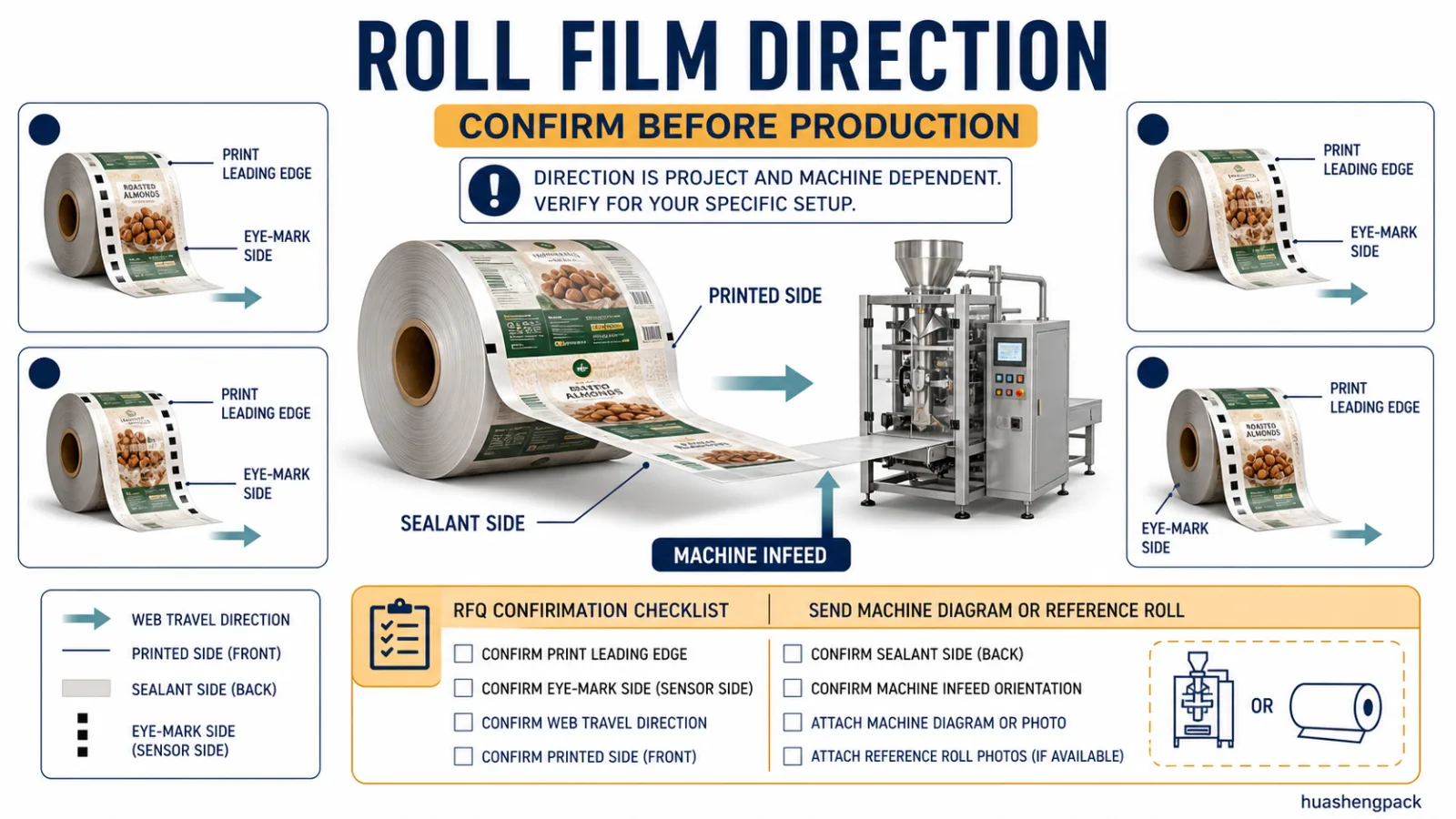
Confirm whether the machine uses an expanding shaft, air chuck or another holder; the usable core width; brake or driven unwind; maximum diameter and weight; guard clearance; edge guiding; dancer or tension control; and the safe lifting method. The unwind diagram should identify printed face, sealant face, eye-mark edge and leading image orientation.
Candy, biscuit and snack films may share a laminate family but still require different repeat, cutting, seal geometry and line settings. Approve data from the actual machine and product rather than copying another SKU.
Use a labeled drawing to remove ambiguity around unwind, print face, eye mark, core and reel limits.First-Reel Receiving and Machine Checks
At receipt, match the reel label to the approved artwork and specification revision. Check width, repeat, core, OD, net and gross weight, reel edges, telescoping, blocking, damage, splice marking, unwind and eye-mark position. On the line, record tracking, tension, registration, forming, cut position, seal appearance, startup waste, stable speed, stops and restart.
Release limits should identify the method, sampling and owner. A visually clean reel is not proof of machine compatibility, and a short hand-fed check does not replace a representative first-reel trial.
Roll Film RFQ and Change-Control Checklist
Provide product, fill weight, finished pack drawing, machine make and model, web width, repeat, eye mark, unwind diagram, print and sealant faces, laminate and thickness if known, core ID and construction, maximum OD and weight, preferred net weight range, splice rule, line speed, sealing arrangement, artwork revision and quantity per design.
After approval, review changes to film grade, thickness, adhesive, coating, artwork repeat, eye mark, core, OD, weight, winding direction, splice rule, machine or operating window before the next production release.
Related Products
Related Packaging Guides
Frequently Asked Questions
How is packaging film roll weight estimated?
A preliminary estimate uses film area, thickness and the effective density of the complete laminate. Adhesive, coatings, core weight and winding conditions create differences, so the converter calculation and scale weight should control release.
Is core ID the same as core outside diameter?
No. Core ID is the inside diameter that fits the shaft or chuck. Reel calculations also need the core outside diameter or wall thickness.
Why must maximum reel OD and weight both be specified?
A reel can fit the diameter limit but exceed the unwind or lifting weight limit, or meet the weight limit while being too large for the guard and web path.
Can the same roll specification run on every VFFS or HFFS machine?
No. Shaft or chuck, web path, brake, tension control, guards, lifting method and forming geometry differ by machine.
What should be checked on the first reel?
Verify label and artwork revision, width, repeat, unwind, core, OD, net and gross weight, reel build, splices, eye mark, tracking, forming, cutting and sealing.
Can several artworks share one roll-film production plan?
The same width, laminate and thickness can support shared material planning, but each artwork can still require separate cylinders, color setup, version control and quantity calculation.