Packaging Roll Film Machine Compatibility and Technical Handoff Guide
Huasheng Packaging Technical Content Review · Published: · Updated:
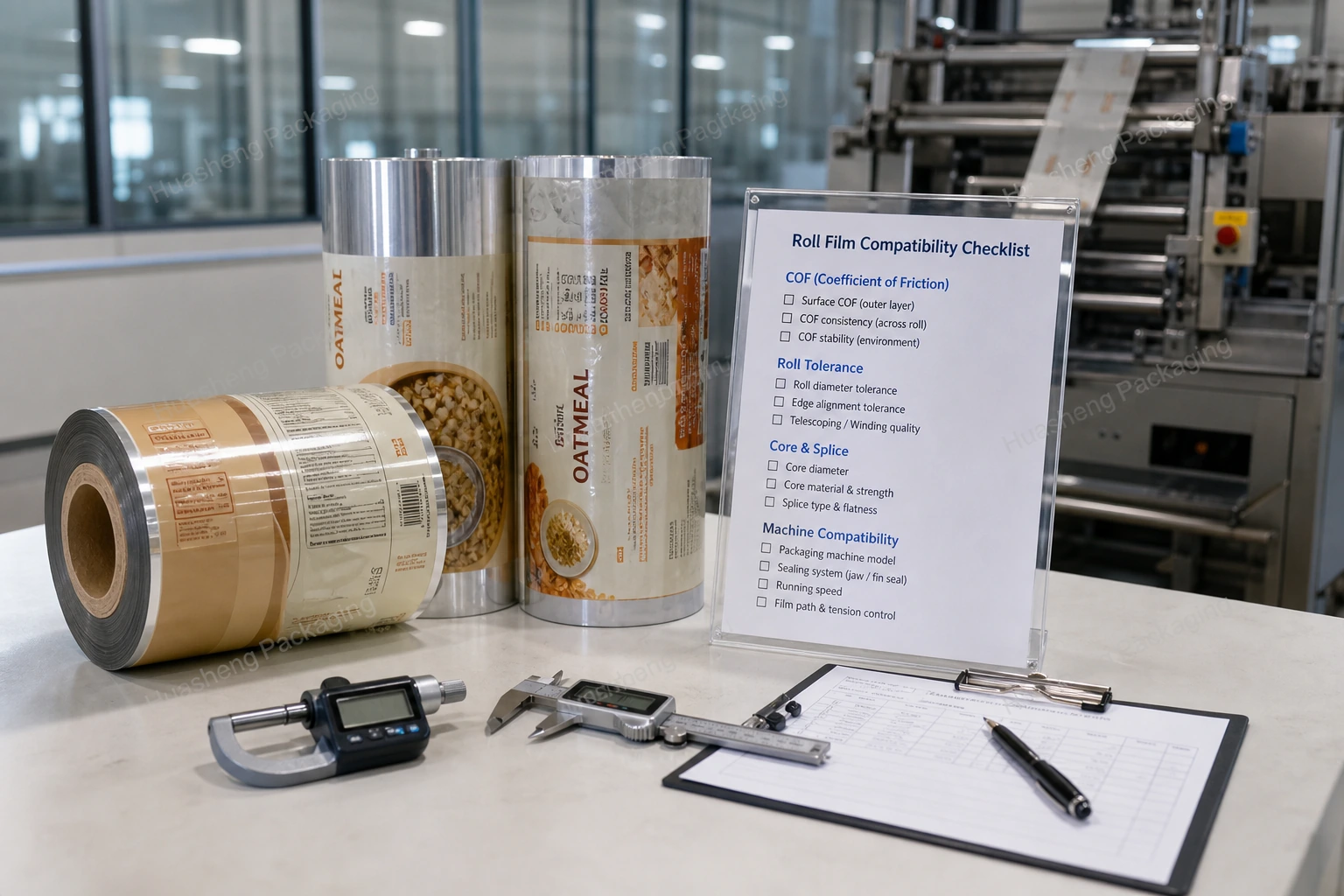 COF and roll tolerance guidance for automatic packaging film buyers.
Prepare roll film machine handoff data for VFFS, HFFS and flow wrap: width, repeat, eye mark, unwind, core, roll OD, COF, sealing and machine trials.
Direct answer
Packaging roll film must match the product, laminate and automatic packing line as one system. For VFFS, HFFS, flow wrap and sachet machines, web width, repeat length, eye mark, unwind direction, core, roll diameter, COF and sealing response can affect run stability. This guide provides a practical handoff framework for brand owners, China co-manufacturers and packaging buyers before quotation, sample trials and repeat production.
Start With the Machine, Pack Format and Product
A laminate that meets a barrier requirement can still run poorly if its physical roll specification or sealing response does not match the line. First identify the machine type and model, intended pack format, product state, filling weight, target speed, seal style and whether the film contacts a forming collar, horizontal fin-seal path or multi-lane sachet unit.
A machine manual, existing approved roll label, web-path photo and short sample of film are often more reliable than a verbal description alone. Machine compatibility cannot be guaranteed from thickness or material name only; final confirmation should use the buyer’s actual equipment and operating conditions.
COF, Sealing and Web Handling Are Connected
COF affects how the web slides over guides and forming surfaces and how consistently the drive belts or rollers pull it. A value that works on one line may slip, drag or wrinkle on another because machine surfaces, tension settings, product dust and operating speed differ. Buyers should share an existing target or approved film data where possible instead of requesting a universal COF value.
The inner sealant must also match the seal method, jaw design, temperature, pressure, dwell time and contamination risk. Powder, crumbs, oil or sauce in the seal area can change practical sealing performance. Film stiffness, thickness distribution, curl, static and roll tension can affect tracking. These variables should be reviewed together during a trial.
Roll Geometry, Print Registration and Winding Data
Confirm finished web width and acceptable tolerance; print repeat or cut length; eye-mark size, color, pitch, edge distance and sensor side; print face; web travel and unwind direction; fin-seal or lap-seal orientation; core ID and core width; maximum roll OD and roll weight accepted by the unwind; winding tension; splice type, location, identification and permitted count; and roll-label information.
The artwork proof should show the repeat, cut line, seal zones, eye mark and orientation. Do not choose an unwind diagram by number alone because numbering systems vary between suppliers and machine makers. Use a physical orientation sketch showing the printed face, leading edge and sensor side. If several SKUs share a machine, confirm whether repeat, web width and eye-mark logic remain identical across variants.
 Roll core width and tolerance review for packaging film.
Machine Trial and Problem Feedback Loop
A controlled trial should record the film lot, machine, line settings, actual speed, seal temperature, pressure or dwell setting where available, tension, tracking, registration, cut position, seal appearance and rejection reason. Start-up waste and stable-run behavior should be separated. Samples from both acceptable and failed packs help distinguish artwork registration, slitting, winding, COF, sealant and machine-setting issues.
If a problem occurs, send photos or video of the full web path and defect, the roll label, remaining roll condition, machine alarm or sensor behavior, settings used and several consecutive failed packs. Avoid changing many settings at once without recording them. The packaging supplier can review film and production data, while final line settings and machine safety remain under the co-manufacturer or machine operator’s control.
Roll Film Technical Handoff Checklist
Provide product and fill weight; target shelf life and storage condition; machine type, brand and model; pack style and seal type; current web width and repeat; drawing or approved finished-pack dimensions; core ID and width; maximum roll OD and weight; unwind orientation with printed face and leading edge; eye-mark side, size, pitch and sensor type; target and current speed; known COF or approved reference film; seal conditions if available; material structure and thickness; artwork and SKU list; splice rules; roll-label requirements; existing sample roll; and contacts for the brand owner, co-manufacturer and machine operator.
For a China co-manufacturer handoff, all parties should approve one revision-controlled specification. Record which party confirms artwork, machine data, trial result and repeat-order changes. A successful trial on one machine should not be assumed to cover another line without checking its web path, unwind and sealing conditions.
Related Products
Related Packaging Guides
Frequently Asked Questions
What machine data is required for packaging roll film?
Provide the machine type and model, pack style, web width, repeat, core, maximum roll size, unwind orientation, eye-mark and sensor details, speed, seal method and an approved reference roll when available.
Is one COF value suitable for every packing machine?
No. COF interacts with the web path, forming surfaces, drive system, tension, product contamination and speed. Confirm it against the actual line or a proven reference film.
How should roll film unwind direction be confirmed?
Use an orientation drawing showing the printed face, leading edge, web travel and eye-mark sensor side. Do not rely only on a numbered unwind convention because numbering can vary.
What should an eye-mark specification include?
Confirm the mark size, color or contrast, pitch, distance from the web edge, sensor side and relationship to the cut position. The sensor type and artwork repeat also matter.
Can Huasheng Packaging guarantee film will run on my machine?
Compatibility is reviewed from the supplied specification and reference material, but final confirmation requires a controlled trial on the buyer’s actual machine, product and operating settings.
What should I record during a roll film machine trial?
Record the roll lot, machine, speed, tension, seal settings, tracking, registration, cut position, accepted and failed packs, start-up waste and any setting changes.
Can the film be sent directly to a co-manufacturer in China?
Yes, the technical specification can be coordinated with the designated co-manufacturer. The brand owner, co-manufacturer and packaging supplier should approve the same revision and define responsibility for artwork, machine data and trial acceptance.