Supplement Powder Stick Pack and Sachet Packaging: High Barrier, First Launch and Contract Manufacturing Guide
Huasheng Packaging Technical Content Review · Published: · Updated:
 Stick packs, sachets and roll film formats for supplement powder packaging projects.
A buyer guide for protein powder, supplement powder stick pack and sachet packaging, covering high barrier materials, first launch planning, co-packer coordination, artwork, filling weight and sample testing.
Direct answer
Protein powder stick pack, supplement powder sachet and single-serve powder packaging are often used by brands that want trial packs, travel packs or contract manufacturing supplement packaging for a first launch. The packaging decision is not a medical or product efficacy decision. It is a technical purchasing decision covering powder sensitivity, filling weight, seal area, high barrier stick pack materials, artwork, machine compatibility, launch quantity and sample testing. Buyers should confirm packaging details with their co-packer or contract manufacturer before asking for quotation, because a stick pack for supplement powder and a flat sachet can run on different equipment and require different roll data.
Introduction: why powder supplement packaging needs technical review
Powder supplement packaging can be sensitive to moisture, oxygen, odor transfer, static, filling dust and sealing contamination. A premium-looking design is not enough if the powder clumps, the seal area becomes dusty or the filling machine cannot run the roll film smoothly. Buyers should review the product powder, serving size, filling method and storage expectations before choosing a pouch or roll film direction.
For first launch supplement packaging, the common challenge is that the brand, contract manufacturer and packaging supplier may each hold only part of the required information. The brand may know the formula and market plan, the co-packer may know filling equipment limits, and the packaging supplier may advise on material structure and printing. A clear checklist reduces quotation delays and helps avoid samples that cannot be tested properly.
Material / format options: stick pack vs sachet
Stick pack and sachet are both single-serve formats, but they are not identical. A stick pack is narrow and long, often selected for powders that need controlled pouring, compact display or small serving sizes. A sachet is usually wider and flatter, suitable for powder supplement packaging, sample packs, sachet cartons or multipack formats. The final format should be confirmed according to filling equipment, target serving weight, seal width, tear notch position and consumer opening behavior.
High barrier material may be considered when the powder is sensitive to moisture or oxygen. Common review directions can include PET/PE, PET/VMPET/PE, PET/AL/PE or other laminated structures, depending on barrier target, stiffness, printing, sealing and product sensitivity. The material name alone does not confirm performance. Buyers should request sample testing with the actual powder, filling speed, seal condition and storage condition.
Related products and guides:
- Three Side Seal Pouch: /products/three-side-seal
- Food Packaging Roll Film: /products/food-packaging-roll-film
- Protein Powder, Spice, Tea and Nut Packaging Solutions: /solutions/powder-spice-tea-nuts-packaging
- Sachet and Stick Pack Packaging Solutions: /solutions/sachet-stick-pack-packaging
- South Asia Food Packaging: /markets/india-food-packaging
- Pakistan Food Packaging: /markets/pakistan-food-packaging
- Custom Sachet and Stick Pack Packaging Guide: /blog/custom-sachet-and-stick-pack-packaging-guide
- How to Prepare Packaging Details Before Requesting a Quote: /blog/how-to-prepare-packaging-details-before-requesting-a-quote
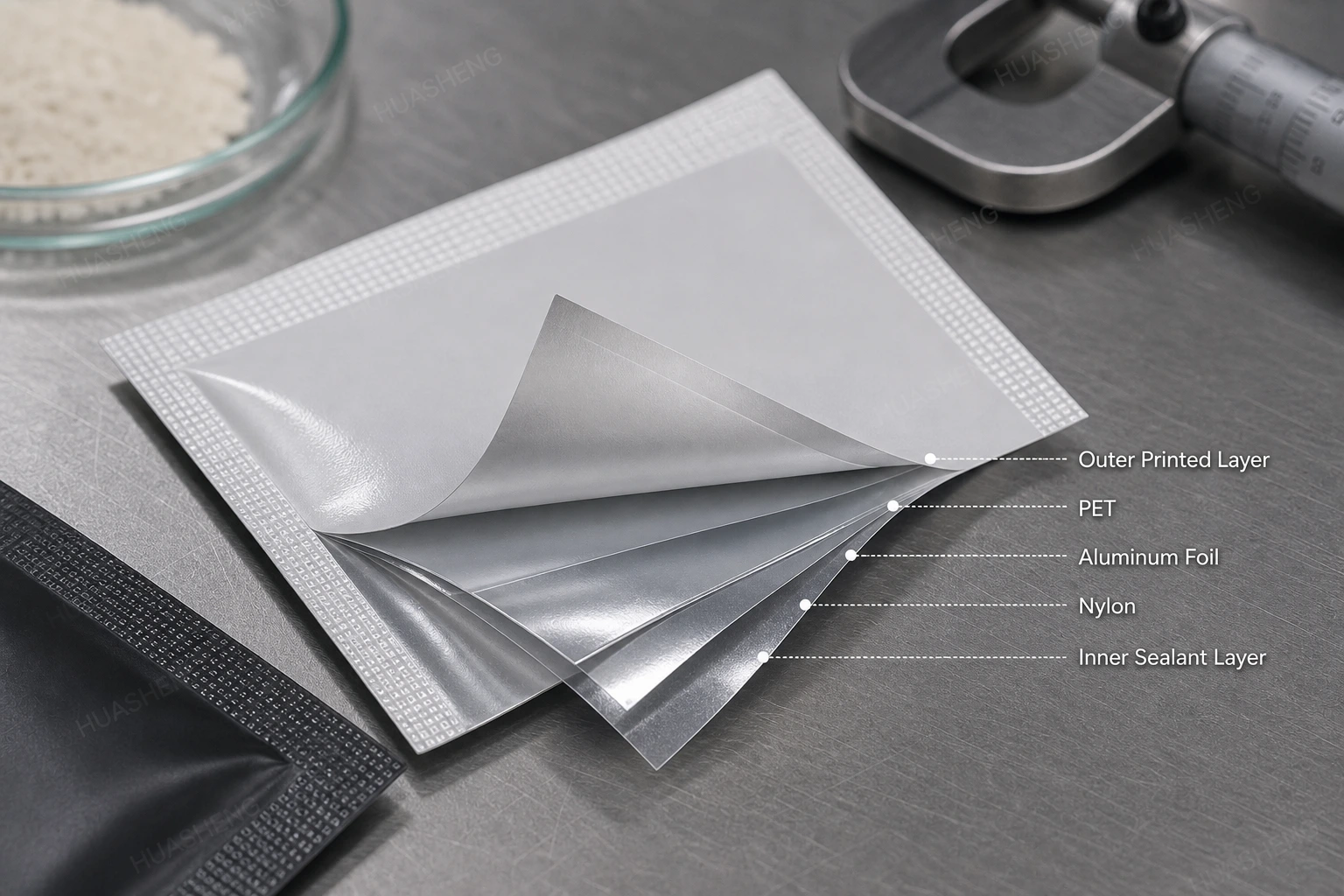 Powder sensitivity should guide barrier material selection.
Decision table for first launch projects
| Decision item | Why it matters | What buyers should confirm |
| Format | Affects filling equipment, unit appearance and carton packing | Stick pack, three side seal sachet or another format should be confirmed with the co-packer |
| Filling weight | Controls pouch volume, seal clearance and roll film repeat length | Target grams per unit, powder density and acceptable tolerance |
| Barrier level | Supports moisture and oxygen protection review | Product sensitivity, expected storage condition and testing method |
| Material structure | Affects stiffness, sealing and cost comparison | Structure direction should be reviewed by product and filling process |
| Artwork | Controls print repeat, color count and regulatory panel layout | Final dieline, color count, barcode position and design version |
| Launch quantity | Affects planning, cylinder cost and production scheduling | First launch quantity, forecast and SKU count |
| Co-packer data | Determines whether the packaging can run | Machine type, film width limit, core ID, roll diameter and winding direction |
| Sample testing | Reduces launch risk | Test with actual powder, filling line and storage condition |
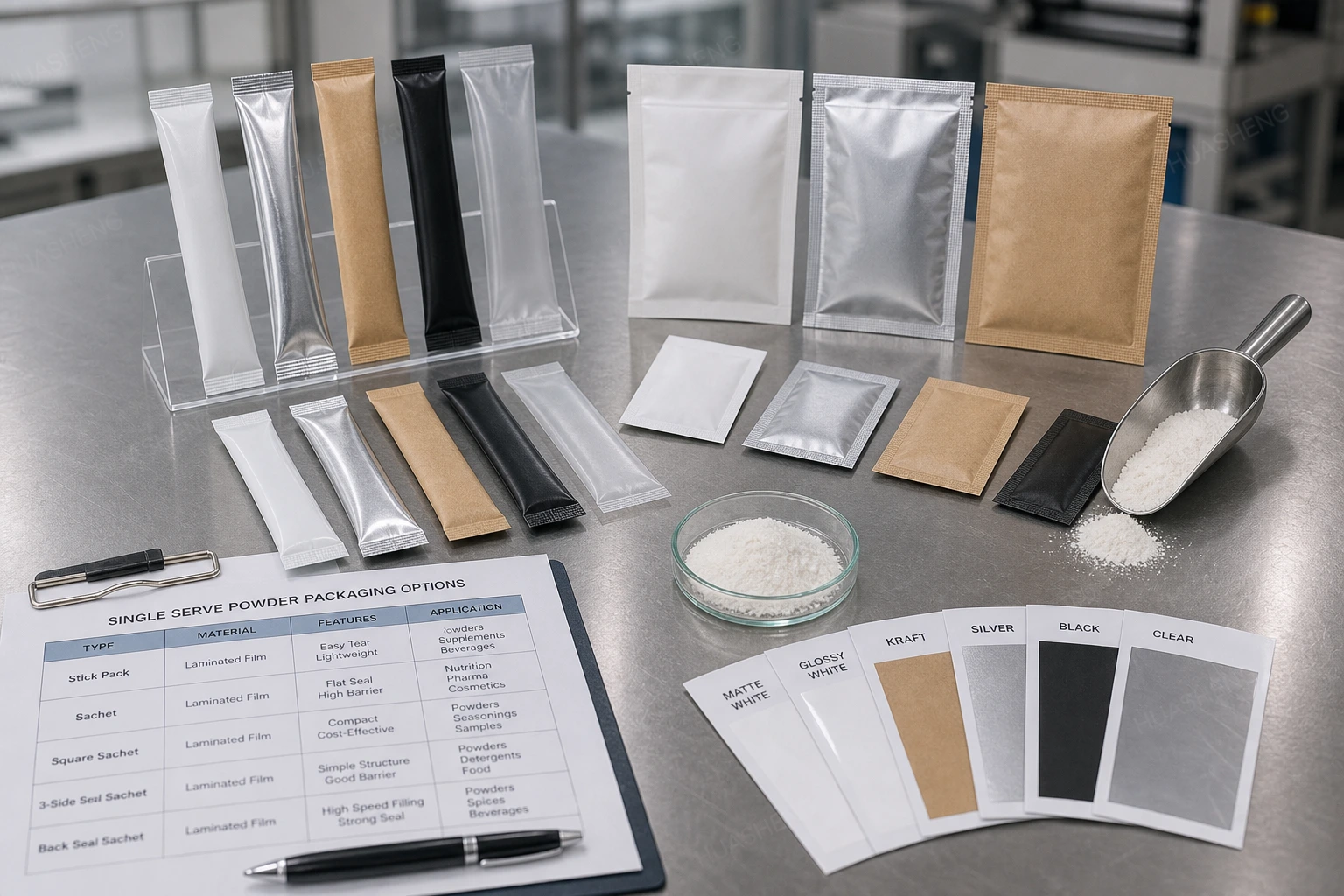 Stick pack and sachet dimensions should match co-packer equipment.
Common mistakes in supplement sachet packaging projects
Common mistakes include choosing a format before confirming filling equipment, comparing only pouch unit price, ignoring powder density, selecting a barrier structure without testing, sending artwork before dieline confirmation, forgetting tear notch and seal width, not confirming roll core ID or winding direction, and treating supplement sachet packaging as a standard commodity item.
Another frequent issue is poor coordination between brand owner and contract manufacturer. If the co-packer has a fixed machine width, a fixed core ID or a preferred roll diameter, those limits should be shared before quotation. If the brand plans multiple flavors or SKUs, each design should confirm repeat length, printing colors and final artwork version. Packaging can support product protection and presentation, but final product stability should be validated through appropriate testing by the buyer or project owner.
What to prepare before quotation
Before asking for a quotation, buyers should prepare product type, powder form, serving weight, powder density if available, target stick pack or sachet size, expected material structure if known, barrier concerns, artwork files, number of SKUs, printing colors, tear notch position, filling machine or co-packer information, roll film width limit, core ID, maximum roll diameter, winding direction, first launch quantity, forecast quantity, carton or display pack requirement, destination market and sample testing plan.
For a first launch, it is practical to separate technical validation from commercial scaling. The first sample round should confirm whether the powder fills, seals and opens as expected. Later purchasing discussions can then compare cost, production planning and repeat orders with fewer unknowns.
For South Asia, Pakistan and nearby market buyers using a China co-packer, supplement factory, inspection office or appointed domestic warehouse, packaging specifications should be aligned before production. The receiving party should confirm roll width, core ID, maximum roll diameter, winding direction, eye mark, carton label and SKU separation requirements before bulk roll film or sachet production.
Related Products
Related Packaging Guides
Frequently Asked Questions
What is the difference between a supplement stick pack and a sachet?
A stick pack is usually narrow and long, while a sachet is wider and flatter. The best format depends on filling weight, powder flow, machine type, carton packing and user opening requirements.
Does supplement powder always need high barrier packaging?
Not always. Moisture and oxygen sensitivity depend on the powder formula, storage condition and shelf target. Buyers should confirm the barrier direction through specification review and sample testing.
What should a first launch supplement brand prepare?
Prepare serving weight, target format, artwork status, SKU count, launch quantity, co-packer machine data, barrier concerns and sample testing requirements before quotation.
Can the same roll film run at every contract manufacturer?
No. Co-packers may use different machine widths, core IDs, roll diameter limits, winding direction and sealing conditions. Machine data should be confirmed before production.
Can protein powder packaging be handed over to a China co-packer?
Yes. If the buyer nominates a China supplement factory, co-packer, agent or appointed domestic warehouse, pouch or roll film specifications, samples and finished packaging handover can be coordinated after details are confirmed.
Why is filling weight important for stick pack packaging?
Filling weight affects pack size, powder headspace, seal clearance, repeat length and carton count. It should be confirmed before dieline and artwork finalization.
Should buyers test samples with the actual powder?
Yes. Actual powder testing helps review filling behavior, dust in seal area, seal quality, opening and storage response under the project conditions.