Sachet and Stick Pack Packaging Solutions
Sachet and stick pack packaging solutions for powder, seasoning, coffee sugar, sauce and single-serve food products, including roll film and three side seal pouches.
Review printed film for sachet or stick-pack filling lines, or a separate premade sachet format, from your actual product and equipment inputs.
This enquiry concerns empty packaging supply, not manufacturing, blending or filling the product inside it. On a stick-pack line, printed film is formed, filled and sealed by the buyer or its appointed packing plant. A premade three-side-seal sachet is a different supply format and is not automatically interchangeable with film for a stick-pack machine. Identify the intended filling route first, then review the product, pack size, laminate, artwork and machine inputs together.
What roll-film supply looks like
This workshop photograph illustrates printed film supplied on reels, not a finished supplement product or a validated stick-pack project.
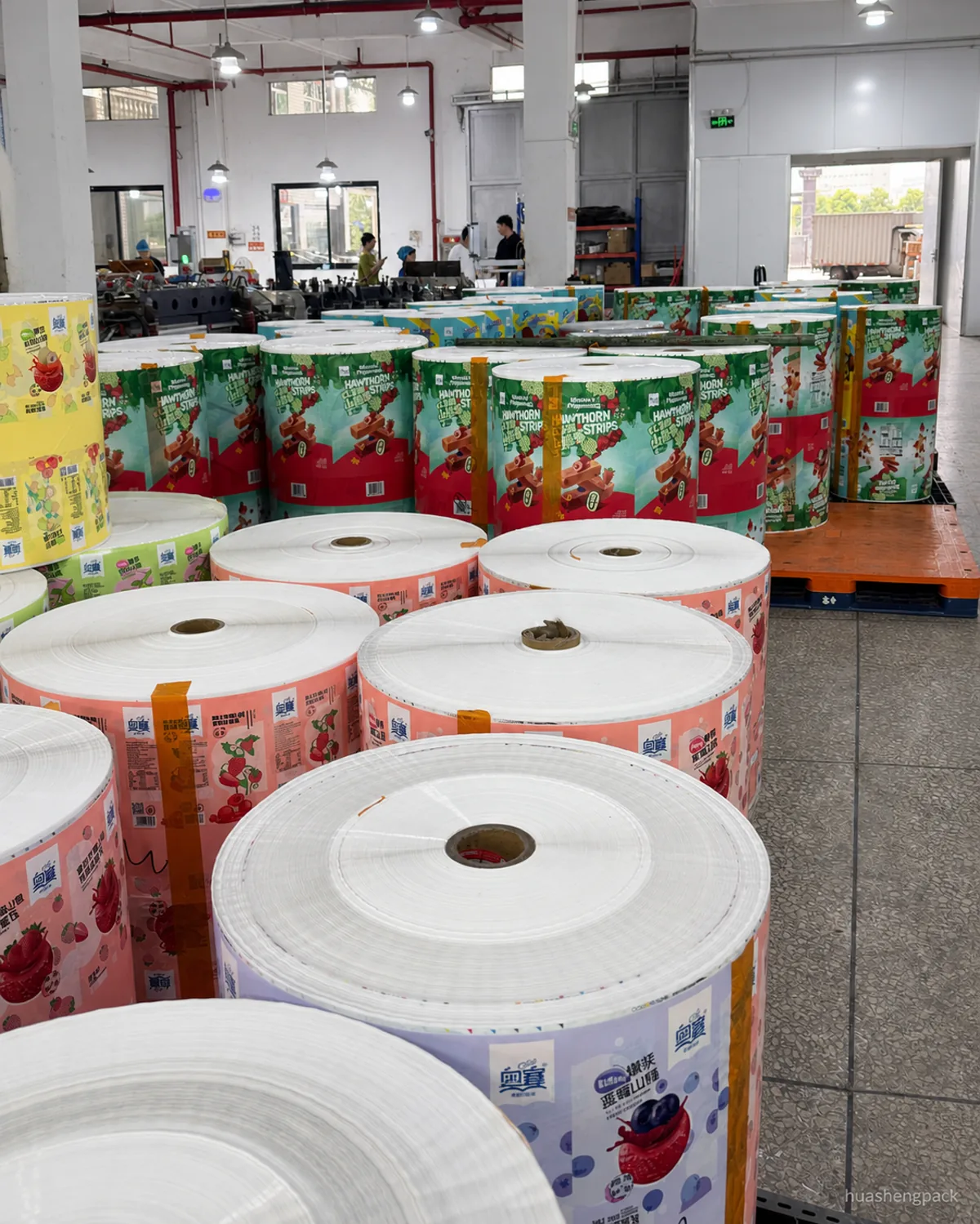 Existing printed food film reels, shown as a roll-supply reference only. The image does not establish supplement suitability, laminate identity, reel dimensions or compatibility with a particular stick-pack line.
Product Categories
- Powder or granule portions, including drink mixes, seasoning and supplement projects subject to product and process review
- Coffee or sugar portions where the actual product form and packing conditions are identified
- Liquid or sauce sachets requiring their own sealing, filling and finished-pack validation rather than a powder-film assumption
- Sample or single-serve projects with the supply format confirmed before artwork and quotation
Recommended Packaging Types
- Printed roll film for an identified sachet or stick-pack form-fill-seal line
- Premade three-side-seal sachets when the receiving process fills formed pouches
- Stand-up zipper pouches for a separate multi-use format, not a substitute for narrow single-serve stick film
- Cup or tray lidding only for a separate reviewed container-sealing project, not as a universal sachet film
Material and Customization Notes
- PET/PE or BOPP/CPP: possible directions to review against the actual product, final seals and packing line
- PET/VMPET/PE or PET/AL/PE: distinct metallized-film and foil-containing directions, not interchangeable names or a shelf-life guarantee
- Sealing layer, total thickness and relevant film properties require agreed specifications and trials; an acronym alone is insufficient
Common Problems
- Requesting filled sticks when the quotation concerns empty packaging film or sachets
- Approving artwork from finished-pack dimensions without the machine web width, repeat and lane layout
- Confusing unwind numbering, print face or sensor side between the film supplier and filling plant
- Using a powder-film reference for a liquid product without reviewing filling, seals and storage conditions
- Assuming a successful short sample validates every lane, start/stop condition or later specification change
Quality Control
- Align the product form, fill weight, supply format and receiving filling plant before finalising the packaging specification
- Use an agreed drawing for web width, repeat, lane count, print orientation, seal/cut areas and eye marks
- Confirm reel core, maximum diameter/weight, unwind direction and relevant splice rules with the actual equipment operator
- Agree trial conditions and acceptance criteria for feeding, registration, seals and opening with representative product
- Record the approved material, artwork, dimensions and changes; neither a photo nor machine model alone approves production
Related formats, materials and packing inputs
Frequently Asked Questions
Does this enquiry include filling the powder or supplement?
No. This enquiry is for empty packaging supply. Product manufacture, blending and filling must be arranged with your own operation or appointed packing plant; this page does not quote those services or promise a co-packer referral.
Is a premade sachet the same as film for a stick-pack line?
No. A premade sachet arrives as a formed empty pouch. Printed film is formed, filled and sealed on the filling line. Confirm the actual machine and supply route before choosing dimensions or artwork.
What if I do not know the machine specifications yet?
Send the intended product, fill weight, current pack or a machine/packing-plant reference and estimated quantity. Unknown inputs can be listed for review, but final film and artwork approval require the receiving line requirements.
What drawing is needed for a multi-lane stick-pack project?
Ask the equipment operator for the approved web width, lane layout, repeat, seal/cut positions, print orientation, eye-mark location and unwind reference. Do not calculate the full web from one finished-stick width alone.
Can the material name or a successful sample confirm shelf life and line performance?
No. Review the complete laminate, product, filling and storage conditions, then agree representative machine and finished-pack checks. A short sample or photograph does not validate every production condition.
What should I prepare for an initial quotation review?
Provide product form, fill weight, roll film or premade-sachet preference, machine or filling-plant details if known, dimensions or drawing, artwork status and quantity per design. The existing project input builder can help organise these inputs; it is not production approval.
Project specification and validation register
Track each requirement as known, unknown, sample-stage or production-stage, with evidence, owner and approval status in one file.
Start with your product, pack reference and quantity per artwork. Identify printed roll film or premade sachets, and leave unresolved machine or material fields marked unknown for project review.
Editable English template
Download CSV · Open finished PDF · Downloadable Packaging Project Checklists
Review your empty-packaging supply requirements
Send the product, fill weight, current pack or machine reference and quantity per artwork. Distinguish printed film supply from product filling; unknown technical inputs can be reviewed together.